


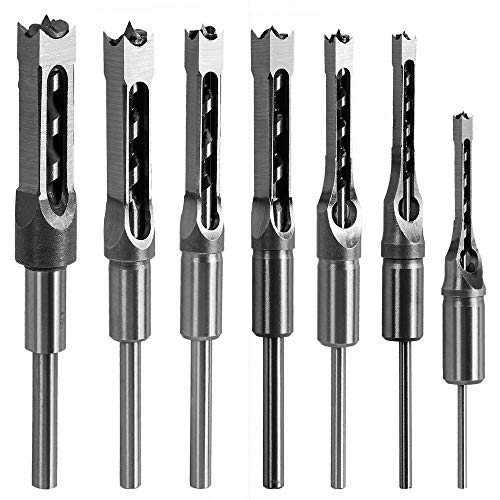
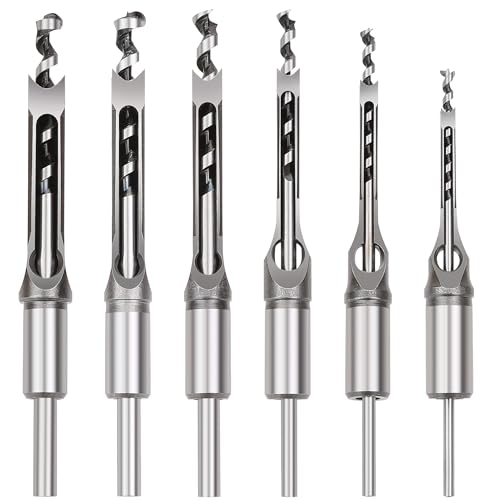
Drilling square mortise pockets by hand often leaves rough edges, wander marks, and sloppy tenon fits that weaken furniture joints. Fitting your shop with the best drill bit for mortise transforms standard plunge drilling into crisp mortising without requiring an expensive standalone mortiser. Many woodworkers rely on a dedicated hollow chisel bit and auger system to bore clean clearance holes while four hardened shearing edges square the corners in a single stroke. Smooth chip evacuation and rigid collar support keep the bit centered so you avoid friction heat that burns oak or maple workpieces.
Standard drill press chucks handle vertical boring well, but hollow mortise chisels demand rigid sleeve mounting to withstand heavy downforce without shifting. Pairing clean tenon pockets with an oscillator sander for woodworking creates seamless, gap-free assemblies on tables, cabinets, and chairs. Based on manufacturer specifications and real-world workshop feedback, picking the right setup comes down to heat treatment hardness, shank sizing, and clean collar adapters. Investing in dependable cutting edges ensures sustained drilling torque and tight mortise-and-tenon joints that hold solid for generations.




Frequently Asked Questions
Can you use a mortise chisel drill bit in a standard hand drill?
No, hollow mortise chisel bits cannot work in a handheld drill. A handheld power tool lacks the rigid vertical plunge alignment and clamping collar required to force the square outer chisel into the wood. Without a dedicated mortising machine or a rigid drill press collar adapter, the spinning internal auger bit will catch and the square sleeve will spin dangerously out of control.
What makes the best drill bit for mortise effective in dense hardwoods?
High-carbon alloy steel and bearing steel hardened to between 48 and 56 HRC provide the edge retention needed for dense hardwoods. These cutting edges withstand substantial plunge pressure without rolling the square chisel rim. Large U-shaped chip discharge slots also prevent packed sawdust from generating excessive heat, which prevents burning inside the pocket.
How do you mount a mortise bit set to a drill press?
You must install a dedicated collar adapter bracket over the quill of your benchtop drill press. Kits like the BMTURNING attachment include reducer rings to fit collar diameters from 40mm up to 65mm. Once clamped securely, the outer hollow chisel sits inside the bracket while the three-jaw chuck grips the central twist bit shank.
How do you prevent square hole mortise bits from jamming or overheating?
Setting the proper clearance gap between the inner auger point and the outer chisel rim prevents heat buildup and binding. Always leave roughly 1/16 inch of clearance so wood shavings eject smoothly through the chisel slot instead of wedging between the sleeve and bit. For tight furniture joints, smoothing adjacent stock with a detailing sander for detail work keeps surfaces aligned during dry fit-up.
What chisel bit sizes are most useful for general furniture projects in 2026?
Chisel bit sizes of 1/4 inch, 3/8 inch, and 1/2 inch handle the vast majority of cabinet and table mortises. The 1/4-inch size works well for 3/4-inch face frames, while 3/8-inch and 1/2-inch bits suit structural leg joints and heavy rail mortises. Multi-piece sets like WYNNsky or SaferCCTV give you intermediate sizes such as 5/16 inch and 5/8 inch for custom joinery.
Why is sawdust ejection so critical when cutting mortises?
Blocked chips create severe thermal friction that dulls the chisel corners and scorches the workpiece. The inner spiral bit must swiftly carry chips up to the chisel window. If chips cannot escape, plunge resistance increases dramatically, putting excessive strain on your drill press pinion gear and motor.




Write Your Review
No reviews yet. Be the first to share your experience!