


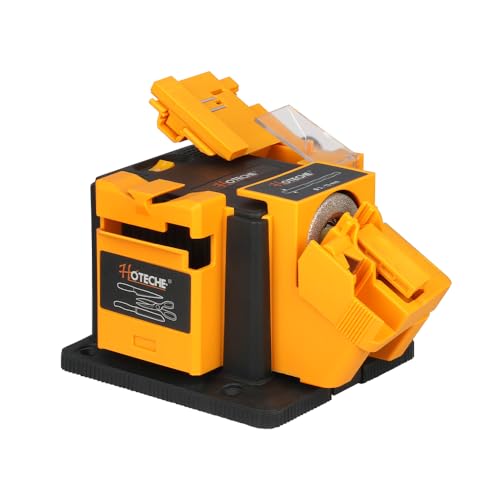
Drilling through dense steel or seasoned oak with a dulled cutting edge creates excessive friction, motor heat, and wander across your workpiece. When dull bits force you to lean into the chuck, you risk snapping the flute or burning out your drill motor prematurely. Investing in the best drill bit and scissor sharpener restores factory relief angles so your twist drills cut cleanly rather than grinding into materials. A properly dressed tip pulls chips efficiently, preserves motor runtime, and stops keyless chuck slippage caused by excessive downward force.
Multi-station bench units also restore dull shop shears and chisels, bridging the gap between heavy fabrication and fine detail work. Much like using a small area sander for careful surface preparation, keeping sharp edges on your cutting inventory prevents project slowdowns. Based on manufacturer motor ratings, chuck capacities, and user feedback, reliable sharpening stations eliminate the cost of discarding worn high-speed steel and masonry bits.



Frequently Asked Questions
Can a multi-task sharpener sharpen both drill bits and scissors accurately?
Yes, dedicated multi-task sharpening stations feature modular guides designed specifically for separate tool profiles. While a twist drill requires precise relief angles and facet grinding, scissor blades need a flat bevel along a fixed plane. Multi-station units switch between dedicated sharpening ports to maintain the correct geometry for each tool without damaging cutting edges.
What is the difference between 118-degree and 135-degree drill bit angles?
Standard 118-degree angles work best for general-purpose drilling in mild steel and wood, whereas flatter 135-degree split points excel in hard metals. Flatter angles bite into stainless steel and dense alloys faster without walking across the surface. Choosing the Best Drill Bit And Scissor Sharpener options in 2026 that support dual angles lets you customize tips to match specific jobsite materials.
Can these sharpeners restore broken or split point drill bits?
Yes, advanced models like the Drill Doctor DD750X can grind a fresh point onto snapped bits and recreate split-point geometries. Split points eliminate the dead center chisel edge of a twist bit, allowing the bit to self-center without a pilot hole. Budget 3-in-1 units sharpen dulled cutting facets but generally lack split-point creation ports.
How does motor power impact sharpener performance during extended workshop use?
Higher motor power prevents wheel stalling when grinding larger high-speed steel or masonry bits. Multi-function sharpeners with pure copper motors between 65W and 96W offer stable RPM delivery under load while venting heat through internal slots. Just like managing heat buildup when smoothing workpieces with an oscillating sander, controlled grinding passes prevent bits from losing their temper.
Will sharpening drill bits ruin their protective coatings?
Sharpening removes titanium nitride or black oxide coatings only from the cutting tip facet, but the bit retains full cutting capability. Because cutting occurs strictly at the tip lips and chisel edge, grinding away dull metal exposes fresh high-speed steel that cuts aggressively. Lubricating the bit during drilling helps preserve the newly ground cutting edge.
Can carbide or masonry drill bits be sharpened on these machines?
Only sharpeners equipped with diamond grinding wheels can sharpen carbide and masonry bits effectively. Standard abrasive wheels wear down rapidly against hardened carbide tips. Dedicated units designed for masonry and carbide bits utilize industrial diamond wheels that maintain their profile without grooving.




Write Your Review
No reviews yet. Be the first to share your experience!