


Wandering cuts and ragged shoulders can quickly ruin a mortise and tenon joint before assembly even starts. Achieving airtight wooden joints demands a rigid blade, balanced weight, and sharp teeth that track a layout line without drifting into the waste wood. Woodworkers often pair bench tools like compound miter saws for rough stock prep with specialized back saws for final joint fitting. Finding the best saw for cutting tenon projects requires matching your cutting style to the right blade design, whether you prefer classic Western brass-backed saws that track on the push stroke or slender Japanese pull saws that clear waste with minimal effort.
Careful analysis of blade geometry, tooth count, and handle balance reveals clear performance differences across hand saws. Traditional heavy brass spines, such as those on 12-inch or 10-inch high-carbon steel blades from Spear & Jackson and Robert Sorby, deliver downward pressure that keeps the kerf straight through long cheek cuts. Meanwhile, flexible high-carbon steel Japanese ryoba saws provide dedicated rip and crosscut edges on the same plate, reducing cut resistance in dense hardwoods. Based on product specifications and user feedback, choosing the best saw for cutting tenon cheeks and shoulders comes down to the balance between cutting speed, kerf thickness, and the depth of cut required for your furniture projects.
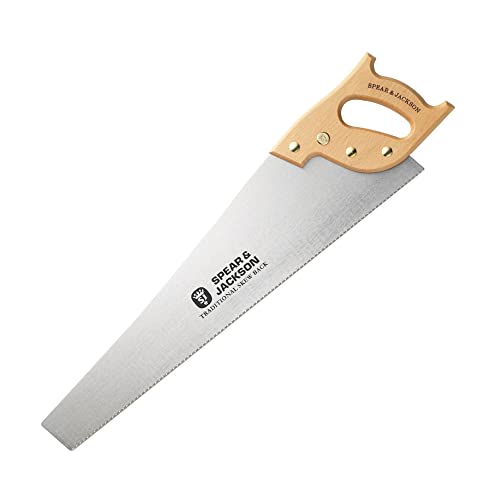
Pros
- Resharpenable teeth offer long-term service life without having to discard the saw
- Skew back design improves balance and reduces blade drag during deep cuts
- Universal tooth design eliminates the need to switch saws between ripping and crosscutting
- Lightweight build provides excellent directional control
Cons
- 10 PPI cuts slower through thick framing lumber than aggressive 7 or 8 TPI saws
- Requires proper saw filing tools and technique to maintain teeth over time
- Blade requires periodic light oiling to prevent surface corrosion in humid garages
The Spear & Jackson 22-Inch Skew Back Hand Saw is a classic manual cutting tool engineered for general woodworking and carpentry. Featuring a 560 mm blade equipped with 10 teeth per inch (PPI), this saw provides a versatile tooth configuration designed to cut both along and across wood grain. Unlike modern disposable handsaws with impulse-hardened teeth, this model features precision cross-ground teeth that can be resharpened, making it an appealing option for woodworkers who prefer traditional maintenance and long service life.
This tool is well suited for finish carpenters, DIY homeowners, furniture makers, and general workshop users. Whether trimming interior molding, sizing 2x4 studs on a jobsite without power, or cutting sheets of plywood and chipboard in a home garage, this saw delivers reliable, quiet cutting capability. It provides a practical backup for contractors when power outlets are unavailable or when quick, precise cuts are needed without setting up a circular saw.
In practical cutting applications, the skew back profile plays a noticeable role in handling. By tapering the upper spine of the blade toward the toe, the saw achieves better overall balance and lower blade weight without compromising cutting depth at the heel. This design reduces surface contact within the kerf, helping to lower friction and prevent annoying blade pinch during extended push strokes. The 10 PPI tooth count delivers a clean cut on solid timber and composite boards without tearing out fibers excessively.
Build quality reflects classic hand tool design with a functional grip that allows the user to extend an index finger along the handle for enhanced directional accuracy. The steel blade retains adequate stiffness along its length to resist buckling on the push stroke when guided with a steady hand. Because the blade is made from serviceable tool steel, users will want to maintain it with a light coat of tool oil or paste wax to protect against rust in non-climate-controlled shops.
The primary consideration for potential buyers is the maintenance requirement. Saws with resharpenable teeth provide years of reliable service, but they require occasional dressing with a proper triangular saw file. Additionally, while the 10 PPI setup yields smooth edges on trim and sheet goods, it cuts slower through heavy structural lumber than a coarse 7 PPI framing saw.
For woodworkers, DIY remodelers, and workshop enthusiasts who appreciate serviceable hand tools with excellent balance, the Spear & Jackson 22-Inch Skew Back Saw offers dependable cutting performance and genuine long-term value for any workbench setup.
In daily workshop routines, this saw functions as a capable general-purpose workhorse. The universal teeth are set to clear sawdust effectively on both push and pull movements, allowing users to crosscut boards to length or rip narrower stock without changing tools.
The skew back geometry shifts the center of gravity closer to the handle, which noticeably decreases wrist strain during long sessions. For garage builders crafting workbenches, sawhorses, or cabinetry, the tool offers predictable line tracking and easy kerf correction.

Pros
- Solid brass spine provides excellent balance and prevents blade deflection
- Resharpenable high carbon steel teeth extend tool lifespan significantly
- Comfortable wooden handle delivers confident control during delicate cuts
- Leaves smooth surfaces that require minimal cleanup with a hand plane or sandpaper
Cons
- Fine tooth count cuts slowly and is unsuitable for rough lumber breakdown
- High carbon steel requires regular oiling to maintain rust resistance in humid shops
The Spear & Jackson 12-Inch Tenon Saw represents classic hand tool design built specifically for controlled, clean woodworking joinery. Featuring a 12-inch high carbon steel blade reinforced with a heavy solid brass spine, this backsaw is made to tackle delicate joinery and finish carpentry where straight, clean cuts are mandatory.
This saw is best suited for woodworkers, cabinetmakers, trim carpenters, and serious DIY hobbyists. Anyone fabricating tenons, trimming dowels, fitting skirting boards, or cutting delicate architraves will benefit from the fine cut control it provides. While general contractors might reach for an aggressive pull saw or standard hand saw for rough framing, this backsaw serves those who focus on detailed benchwork.
In real-world workshop applications, cutting efficiency is defined by accuracy rather than speed. The 13 points-per-inch cross-ground teeth produce a slower, controlled cut that minimizes breakout on delicate grain. The solid brass back adds substantial downward weight, allowing the saw to track true under its own mass without forcing pressure onto the workpiece.
The build quality reflects traditional British toolmaking standards. The blade is forged from high carbon steel and coated with a protective lacquer to resist shop corrosion. Fastened securely with solid brass screws, the shaped wooden handle feels balanced in the hand, reducing fatigue during repetitive cutting sessions at the workbench.
Maintenance is straightforward for those accustomed to traditional hand tools. Unlike disposable hardened-tooth saws, this carbon steel blade features resharpenable teeth, meaning a skilled craftsman can tune and sharpen it for decades of reliable use. Users should wipe the blade with a light coat of machine oil or camellia oil before hanging it on a tool wall or storing it in a dry chest.
For woodworkers seeking dependable joinery results without breaking the bank on boutique tools, this backsaw is a practical workshop staple. It delivers the rigidity, tactile feedback, and fine cutting precision needed to produce tight-fitting wood joints on furniture and home repair projects alike.
The foundation of this tenon saw is its rigid solid brass spine, which locks the high carbon steel blade firmly in place. This reinforcement prevents flexing along the cutline, ensuring that tenon cheeks and shoulders remain square and accurate.
The wooden handle is shaped for comfort and locked into place with traditional brass fixings, avoiding the cheap plastic construction common in modern utility saws. Combined with a lacquer-finished carbon steel plate, the tool offers durable construction built for long-term bench duty.

Pros
- Heavy brass spine provides balanced downforce and stops blade flexing
- Fine 15 PPI tooth pitch yields clean, precise cuts with minimal tear-out
- Classic riveted wooden handle offers dependable ergonomics and tool balance
- Versatile tooth pattern handles both rip and crosscut tasks in joinery
Cons
- Fine tooth spacing cuts slower on thick dimensional lumber
- High carbon steel blade requires periodic oiling to resist workshop moisture
The Spear & Jackson 12-Inch Tenon Saw is a classic backsaw designed specifically for accurate, controlled woodworking cuts. Featuring a heavy brass back spine, high carbon steel construction, and a fine 15 points-per-inch tooth profile, this hand tool focuses on stability and precision rather than rough cutting speed. It is engineered to give users clean kerfs when cutting joinery components, small moldings, or precision craft stock.
This handsaw is best suited for woodworkers, furniture makers, trim carpenters, and serious DIY hobbyists who build custom cabinetry or restore vintage millwork. General homeowners tackling light finish work or small garage repairs will also find it useful for jobs where a powered miter saw or coarse hand saw might produce too much tear-out. While it is not designed for rough framing on construction sites, it excels in any workshop where joinery accuracy is paramount.
In practical workshop use, the cutting efficiency of this saw stands out during detailed joint work like mortise and tenon shoulders, half-laps, and small dovetails. The universal tooth pattern handles both rip cuts and crosscuts smoothly, reducing the need to swap between separate dedicated saws for small components. The solid brass back adds substantial stiffness along the top edge, preventing the thin steel plate from buckling on the push stroke and helping the saw track in a straight line without wandering.
Build quality reflects traditional toolmaking standards with a durable high carbon steel blade held firmly by a solid brass spine. The classic wooden handle is shaped to fit comfortably in the hand, secured through the blade plate with durable mechanical rivets to eliminate wobble over time. Because the blade is high carbon steel, it maintains sharpness well and can be resharpened with a fine saw file, though it will require a light coat of protective oil after use to prevent corrosion in humid garage environments.
A realistic limitation of this saw is its cutting speed and depth capacity. With 15 teeth per inch, wood removal is measured and deliberate, making it unsuitable for quickly breaking down thick construction lumber or cutting deep panels. The brass spine also limits the maximum cutting depth to the distance between the tooth line and the brass back, which is standard for backsaws but something users should keep in mind.
Overall, the Spear & Jackson 12-Inch Tenon Saw is a reliable, value-conscious addition to any woodworking shop, garage workbench, or home repair tool kit. For anyone seeking clean joints, fine trim cuts, and dependable manual control without stepping up to premium custom-boutique pricing, this traditional backsaw provides a solid balance of rigidity, comfort, and cutting accuracy.
Precision joinery requires a saw that tracks true without wandering off your marked layout lines. The solid brass spine on this Spear & Jackson backsaw serves an essential mechanical function by adding rigid structural support directly above the tooth line, preventing the high carbon steel plate from bending mid-stroke.
The 15 PPI universal tooth design produces a narrow kerf that minimizes wood waste and prevents rough splintering at the cut exit. This fine tooth density allows woodworkers to start cuts gently along a knife line or pencil mark, giving maximum control over delicate tenon cheeks, sliding dovetails, or picture frame miters.
The natural heft provided by the brass back also aids in vertical tracking by supplying gentle downward pressure, allowing the user to guide the tool with steady forward strokes instead of pushing down with excessive hand force. This natural balance reduces wrist fatigue and helps maintain consistent squareness throughout the cut.

Pros
- Heavy brass spine adds natural cutting momentum and prevents blade flexing during deep cuts
- Resharpenable carbon steel blade provides long-term workshop value compared to disposable impulse-hardened saws
- Smooth wooden grip fits comfortably in hand to reduce fatigue during extended joinery sessions
- 13 TPI pitch strikes an ideal balance between cutting speed and glass-smooth cut finishes
Cons
- Carbon steel blade requires routine light oiling to protect against ambient workshop moisture
- Resharpening 13 TPI teeth requires a dedicated saw file and basic hand-tool maintenance knowledge
- Rigid brass back naturally limits cutting depth to the clearance below the spine
The Robert Sorby RS-5412K Professional Tenon Saw is a dedicated woodworking handsaw designed for precise joinery and clean cross-grain or rip cuts. Built with a traditional heavy brass back and a 12-inch carbon steel blade, this tool belongs in the backsaw family, where rigid blade support is essential for executing accurate wood-to-wood joints. It delivers the controlled tracking required for cutting tenon cheeks, mortise shoulders, half-laps, and small timber components with high fidelity.
This saw is tailored specifically for fine woodworkers, cabinetmakers, furniture builders, carpenters, and detail-oriented DIY hobbyists. While rough framing crews rely on aggressive hand saws or power tools, joinery work demands absolute straightness and zero blade flutter. Woodworkers who prefer the tactile feedback, quiet operation, and tight tolerance of hand tools will appreciate how naturally this saw tracks along a marked knife line.
Performance centers on the interaction between the hardened, tempered carbon steel blade and the solid brass back. Weighing around 1.6 pounds, the saw supplies enough natural mass that you rarely need to bear down heavily on the stroke. The weight of the brass back does the cutting work for you, allowing you to focus on smooth, rhythmic forward pushes. At 13 teeth per inch, the blade removes stock briskly while leaving clean edges that require minimal clean-up with a bench chisel or shoulder plane.
Build quality highlights classic British toolmaking traditions. The carbon steel blade provides the right balance of flexibility and edge retention, while brass screws firmly lock the wooden handle to the blade and spine. The handle features a contoured shape that encourages a relaxed three-finger grip with the index finger extended forward, giving the user direct feedback and fine directional steering along cut lines.
Maintenance is straightforward for anyone familiar with traditional workshop cutlery and bench tools. Because the blade is carbon steel rather than stainless, storing it in a dry environment and wiping it down with camellia oil or paste wax prevents surface oxidation. Unlike modern disposable saws with induction-hardened teeth that must be discarded once dull, this blade features resharpenable teeth that can be touched up with an appropriate saw file, extending the life of the tool across decades of projects.
For woodworkers setting up a hand-tool station or looking to elevate their furniture-making precision, the Robert Sorby RS-5412K offers an outstanding blend of balance, edge durability, and classic craftsmanship. It represents a practical, long-lasting investment that delivers true lines and dependable joints directly at the woodworking bench.
Joinery success depends entirely on kerf control and blade rigidity. The solid brass back folded over the top edge of the RS-5412K keeps the carbon steel blade completely stiff, eliminating the wandering and bowing often experienced with unbacked utility handsaws. This stiffness ensures that tenon cheeks remain parallel and tenon shoulders meet square to the workpiece face.
The 13 TPI tooth geometry provides clean engagement on both hardwoods like oak and walnut and fibrous softwoods like pine. By pairing this saw with a crisp marking knife line, users can establish a clean starting notch and follow vertical layout lines with minimal effort and dependable accuracy.
To maintain peak cutting efficiency, the carbon steel plate should be kept clean and free of pitch or resin buildup. After heavy sawing sessions, wiping the blade with mineral spirits and applying a thin coat of tool oil or paste wax protects the steel against ambient humidity and sweat from handling.
When the teeth eventually begin to drag or require increased forward pressure, they can be refreshed using a standard triangular saw file. Keeping the brass back polished or letting it develop a natural workshop patina is purely aesthetic, but keeping the teeth sharp ensures clean, effortless cuts every time you step up to the bench.

Pros
- Heavy steel back prevents blade flutter for straight, accurate kerfs
- Fine tooth pattern leaves a clean finish that minimizes sanding time
- Comfortable rubberized grip provides excellent slip resistance
- Built-in angle guide offers quick 45-degree and 90-degree marking
Cons
- Spine height limits cutting depth on thicker stock
- Fine tooth count cuts slowly on rough construction lumber
The Spear & Jackson Predator B9812 is a traditional 12-inch tenon saw designed specifically for fine carpentry and detailed woodworking tasks. Featuring a reinforced steel back running along the top of the blade, this hand saw is engineered to keep the cutting edge flat and rigid. This rigidity helps woodworkers and carpenters avoid blade deflection, ensuring true, square cuts every time the saw enters the workpiece.
This tool suits DIY homeowners, trim carpenters, cabinetmakers, and general workshop hobbyists who frequently handle moulding, pelmets, dowels, and classic tenon joinery. Whether fitting baseboards, trimming architraves, or cutting intricate furniture joints, the tool offers the control needed for delicate tasks where a standard rough-cut hand saw would easily chew up the edges and tear out wood fibers.
In terms of performance, the 15-point tooth pattern cuts cleanly across wood fibers as well as along the grain. The fine pitch leaves a smooth surface that often requires little to no cleanup with a chisel or sandpaper. Thanks to the reinforced spine, downward pressure translates directly into cutting action rather than bowing the blade, giving users consistent feedback and tracking along their cut lines.
The build quality centers on practicality and user comfort. Spear & Jackson fitted this saw with a high-impact polystyrene handle coated in a soft-touch Suregrip material. The handle includes a contoured index finger rest that promotes proper alignment and grip technique, which enhances line-of-sight tracking. Additionally, the molded handle incorporates quick 45-degree and 90-degree reference angles, allowing users to scribe lines directly without constantly reaching for a try square.
As with any back saw, there are inherent depth limitations. The steel spine prevents deep continuous rip or cross cuts through boards thicker than the blade depth, making it unsuitable for framing timber or dimension lumber breakdown. For deep stock breakdown, a traditional handsaw is preferred, leaving this tool dedicated to precise joinery and shallow trim operations.
For anyone setting up a home workshop or looking for a dependable joinery saw that does not require an artisan price tag, the Spear & Jackson Predator Tenon Saw offers a practical balance of stiffness, cutting speed, and ergonomic control. It makes a dependable addition to any carpenter toolbox or garage workbench.
This saw excels in finish carpentry, making short work of small trim, quarter round, and window casings. The rigidity allows it to pair exceptionally well with standard miter boxes for repeatable angle cuts.
Furniture makers and hobbyists can rely on the 15-point configuration for cutting clean tenon cheeks and shoulders, flush-cutting exposed dowels, and fitting cabinetry trim without splitting delicate hardwoods.

Pros
- Fast and accurate cutting with razor-sharp blade right out of the box.
- Lightweight and easy to handle, reducing user fatigue during extended use.
- Beautiful craftsmanship with a durable wooden handle and brass accents.
- Versatile dual-edge design eliminates the need for multiple saws.
- Made in Japan with high-quality steel for long-term durability.
Cons
- No protective blade cover included; storage requires care to avoid damaging teeth.
- Learning curve for users accustomed to Western push saws; pull stroke may feel unfamiliar.
- Higher price point compared to basic hardware store saws.
The Temple Tool Co. Japanese Pull Saw is a 9.5-inch Ryoba hand saw designed for woodworkers who value precision and efficiency. This saw features a double-edged blade: one side has rip teeth for cutting with the grain, while the other side has crosscut teeth for cutting across the grain. It is a versatile tool suitable for dovetails, tenons, joinery, and cutting boards to length or width.
This saw is best suited for woodworkers, DIY homeowners, furniture makers, and professional carpenters who need clean, accurate cuts without the bulk of a power saw. Its lightweight design and razor-sharp edge make it accessible to beginners yet capable for experienced craftsmen.
Regarding performance, the pull-stroke action allows for a thin kerf blade that removes less material, resulting in smoother cuts with less effort. The high-grade Japanese steel maintains long-lasting sharpness, enabling precise cuts in both softwoods and hardwoods. User feedback highlights its ability to cut cleanly without tearing out grain, making it ideal for fine joinery.
Build quality is excellent: the handle is crafted from Wingnut wood (a walnut family species) with brass fittings, offering a comfortable and secure grip. The blade is handcrafted in Japan by artisans with over a century of saw-making tradition, ensuring reliable construction and durability. The saw does not include a storage case, so users should store it safely to protect the teeth.
In terms of ease of use, the pull-stroke technique may require some adjustment for those used to Western push saws, but most users adapt quickly. The saw is lightweight and well-balanced, reducing fatigue during repetitive cuts. Maintenance is minimal: keeping the blade clean and dry prevents rust. No separate tool storage is needed, but a blade guard or sleeve would be a helpful accessory.
A realistic limitation is the absence of a blade cover, which could lead to accidental damage or injury if not stored properly. Additionally, the premium price might deter casual DIYers who only occasionally need a saw. However, for woodworking projects where precision matters, this saw offers excellent value. Overall, the Temple Tool Co. Japanese Pull Saw is a worthwhile investment for any workshop, garage, or job site where clean, accurate hand cutting is a priority.
The Temple Tool Co. Japanese Pull Saw is built with premium materials. The handle is made from Wingnut wood, which belongs to the walnut family, providing a dense, durable grip with natural beauty. Brass components add both aesthetic appeal and corrosion resistance. The blade is crafted from high-grade Japanese steel, heat-treated for hardness and edge retention. The entire saw is hand-assembled in Japan by skilled artisans, reflecting a heritage of meticulous craftsmanship. While no case is included, the saw's build quality suggests it will withstand regular use in a workshop or job site environment.
In a workshop setting, this Japanese pull saw excels at precision joinery tasks like dovetails, tenons, and box joints. The rip side cuts quickly along the grain, while the crosscut side leaves clean, splinter-free edges across the grain. The thin kerf reduces waste and makes tight curves easier to follow. Users report that the saw cuts smoothly on the pull stroke, offering excellent control and minimal binding. It handles both softwoods (pine, cedar) and hardwoods (oak, maple) effectively. The lightweight design reduces user fatigue during extended cutting sessions, making it a reliable choice for furniture makers, cabinet builders, and hobbyists.
The ergonomics of this saw are designed for comfort and control. The wooden handle has a contoured shape that fits securely in the hand, even during prolonged use. The brass fasteners add weight balance, and the overall lightweight construction reduces strain on the wrist and forearm. The pull-stroke action naturally aligns the user's arm and shoulder muscles, which can be easier on the body than pushing a saw. This makes the saw particularly suitable for woodworkers with arthritis or hand fatigue concerns. The grip does not require excessive force, allowing for precise, controlled cuts.
Durability is a strong point for this Japanese pull saw. The blade is made from high-grade Japanese steel that resists dulling and can be resharpened when needed. The handle is solid wood, not plastic, ensuring it won't crack or break under normal use. Brass components are rust-resistant and add longevity. As with any fine saw, proper storage is essential: keeping it dry and away from other tools prevents damage to the teeth. With basic care, this saw should provide years of reliable service in a workshop or job site environment.

Pros
- Exceptional cutting accuracy for fine joinery work
- Comfortable and ergonomic handle reduces hand fatigue
- Thin kerf minimizes waste and effort on pull stroke
- High-quality steel stays sharp through many cuts
- Beautiful craftsmanship with a classic, durable design
Cons
- Not suitable for crosscuts; primarily a rip-cut saw for with-grain cuts
- Pull stroke requires a slight learning curve for those used to Western push saws
- Premium price point may be higher than entry-level pull saws
The Temple Tool Co. Japanese Pull Saw Rip-Cut 9.5 is a purpose-built hand saw for woodworkers who demand precision in fine joinery. This saw is designed specifically for rip cuts along the grain, making it an excellent choice for cutting dovetails, tenons, and other detailed joints. Whether you are a professional woodworker, a dedicated hobbyist, or a DIY homeowner tackling furniture projects, this saw can help you achieve cleaner, more accurate results.
One of the standout features of this saw is its pull-stroke design. Unlike Western push saws, the blade cuts when you pull it toward you, which allows for a thinner kerf and a lighter blade. This reduces the effort required and gives you better control over the cut. The 18 TPI rip teeth are razor sharp and leave a smooth finish that minimizes the need for sanding or planing. According to user feedback, the saw works well in both softwoods like pine and hardwoods like oak, delivering consistent performance across different materials.
Build quality is a strong point for this tool. The handle is made from Wingnut wood (a type of walnut) and features solid brass fittings, giving it a heirloom-quality look and feel. The ergonomic shape fits the hand naturally, reducing fatigue during extended use. The blade is crafted from high-grade Japanese steel, known for its hardness and ability to hold an edge over time. The entire saw is made in Japan, reflecting a tradition of precision craftsmanship that has been refined over generations.
In terms of practicality, the saw is lightweight and easy to store. It comes without a case, but its compact size means it can be hung on a pegboard or stored in a drawer without taking up much space. Maintenance is straightforward: keep the blade clean and dry to prevent rust, and occasionally apply a light oil to the steel. The handle requires no special care, just an occasional wipe to remove sawdust.
However, this saw has limitations. It is a rip-cut saw, so it is not designed for crosscuts or cutting across the grain. If you need a saw for general-purpose cutting, you might want to pair it with a crosscut model. Additionally, the pull stroke may take some getting used to if you are accustomed to Western saws. Yet many users find that after a short practice, the pull stroke feels natural and even more efficient. The price, around $65, reflects the high-quality materials and craftsmanship, but it may be a bit steep for casual DIYers who only occasionally need a fine joinery saw.
Overall, the Temple Tool Co. Japanese Pull Saw is a solid investment for anyone serious about woodworking. It excels in precision tasks like dovetails and tenons, where accuracy and a clean finish matter most. If you value a well-made tool that combines traditional craftsmanship with modern performance, this saw is worth considering. For workshop users, furniture makers, and dedicated DIYers, it can become a go-to tool for detailed joinery work.
The build quality of the Temple Tool Co. Japanese Pull Saw is top-notch. The handle is made from Wingnut wood, a dense and attractive hardwood from the walnut family, and is paired with brass fittings that add both strength and visual appeal. The handle is shaped to fit comfortably in the hand, with a smooth finish that prevents slipping during use.
The blade is made from high-grade Japanese steel, known for its ability to take a very sharp edge and hold it through repeated use. The teeth are precision-ground to ensure consistent cutting performance. The steel is also resistant to corrosion, though it is still wise to wipe the blade clean after use and store it in a dry environment. The overall construction feels solid and durable, with no noticeable flex or weakness.
Craftsmanship is evident in every detail. The saw is handcrafted in Japan by artisans with over a century of experience in saw making. This heritage translates into a tool that not only performs well but also looks beautiful on the bench. While the price is higher than some mass-produced options, the quality of materials and construction justifies the cost for those who appreciate fine tools.

Pros
- Sharp out of the box with hardened teeth that hold an edge well for a budget-friendly saw.
- Double-edge design adds versatility for cutting both hardwoods and softwoods without changing blades.
- Thin kerf allows precise, clean cuts with minimal material waste, perfect for fine woodworking.
Cons
- Small 6-inch blade limits capacity for larger stock; best suited for detail and trim work.
- Pull saw requires a different cutting technique than Western saws, which may take some getting used to.
- Beech handle, while comfortable, may not be as durable as hardwood or composite handles under heavy daily use.
The RUITOOL Japanese Hand Saw 6 Inch Double Edge Ryoba is a compact pull saw designed for precise woodworking cuts. Unlike traditional Western push saws, this pull saw cuts on the pull stroke, allowing a thinner blade and finer control. With a dual 14/17 TPI configuration, one side is optimized for rip cuts in softer woods while the other handles crosscuts in hardwoods, making it a versatile addition to any workshop or garage.
This saw is best suited for DIY homeowners, woodworkers, and hobbyists who need clean, flush cuts in trim, moldings, dovetails, and other detailed joinery. The 6-inch blade length is ideal for small to medium workpieces, giving you excellent maneuverability and access in tight spaces. The SK5 high-carbon steel blade is hardened to HRC 60-63, delivering strong edge retention and reliable cutting performance for many projects.
In use, the saw provides smooth, fast cutting with minimal effort thanks to the three-sided ground teeth that clear sawdust efficiently. The thin kerf helps you achieve accurate cuts with less waste, which is particularly valuable for furniture making and cabinetry. The beech wood handle feels comfortable in the hand and offers a secure grip, though the small size might not suit users with larger hands who prefer a full palm grip.
Build quality is good for the price point. The blade is securely fixed to the handle, and the teeth are consistently sharp out of the package. While the metal is flexible enough to avoid binding, it still maintains enough rigidity for clean cuts. One realistic limitation is the blade length; this saw won't handle large dimensional lumber or heavy framing tasks. It's clearly a detail tool, not a construction saw.
Storage is simple - it fits easily in a tool drawer or wall rack without taking up much space. Maintenance is minimal: keep the blade clean and dry to avoid rust, as SK5 steel is not stainless. A light oil wipe after use can help extend its life. Overall, the RUITOOL Ryoba saw offers excellent value for anyone doing fine woodworking, trim carpentry, or repair work where precision matters more than brute force.
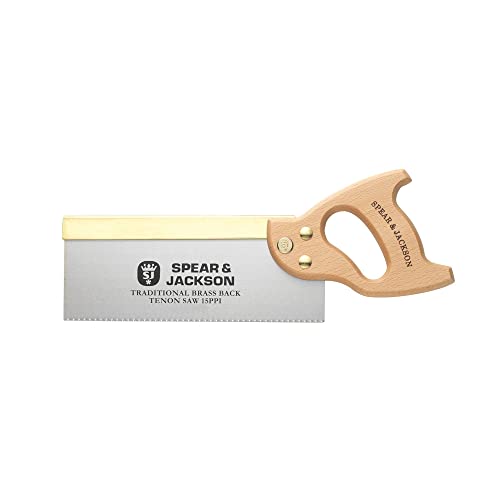
Pros
- Solid brass back adds downward weight and keeps the blade tracking straight
- 15 PPI teeth leave a smooth cut face requiring minimal chisel cleanup
- Classic wooden handle feels comfortable during repetitive joinery work
- Versatile tooth pattern cuts efficiently both with and across grain
Cons
- 10-inch blade length and spine height limit maximum cut depth on thicker timbers
- High carbon steel requires light oiling to protect against humidity and surface rust
- Finer tooth pitch cuts slower through dense hardwoods than aggressive coarse saws
The Spear & Jackson 10-Inch Tenon Saw represents a traditional approach to fine woodworking and precision joinery. Designed as a classic backsaw, this hand tool features a rigid reinforced spine that holds the cutting blade under tension. It is particularly well suited for woodworkers, finish carpenters, cabinetmakers, and detail-oriented DIY homeowners who want to cut clean wood joints by hand rather than firing up noisy power tools for every small cut.
In practical workshop applications, cutting efficiency and cut quality depend heavily on tooth geometry and blade stability. With a 15 points-per-inch (PPI) universal tooth layout, this saw cuts neatly across the grain as well as along it. The teeth leave a crisp kerf with minimal splintering or tear-out, which is critical when fitting tenon shoulders, cutting small lap joints, or trimming delicate moldings. The fine tooth count requires a deliberate, steady rhythm, but it rewards the user with clean surfaces that require very little cleanup with a hand plane or wood chisel.
Build quality centers on functional materials that match traditional joinery standards. The blade is formed from high carbon steel, providing reliable tooth hardness and edge retention during routine bench work. Along the top edge, a solid brass back stiffens the blade entirely, keeping it from bending or flexing mid-stroke. The added weight of the brass spine also assists user control by providing natural downward pressure, allowing the teeth to bite without forcing the stroke. Anchoring the blade is a contoured wooden handle attached securely with mechanical rivets, providing a tactile, non-slip grip that feels natural during extended bench sessions.
Every specialized hand tool carries practical limitations based on its intended design. Because of the brass backing, the maximum depth of cut is restricted to the blade area below the spine, making this saw unsuitable for deep resawing or dimensioning large framing lumber. Additionally, high carbon steel lacks the passive corrosion resistance of stainless steel, so keeping the blade wiped down with a light coat of camellia oil or paste wax is necessary to avoid surface tarnish in humid garages or damp workshop environments.
For woodworkers looking to build out an accurate hand tool setup for furniture making, trim work, or precision hobby crafts, this tenon saw offers solid value. It delivers the control, straight tracking, and clean cutting performance required for accurate joinery without requiring complex setup or maintenance.
The structural backbone of this tenon saw is its folded brass spine. Brass provides the necessary rigidity to keep the high carbon steel blade completely flat under forward pushing pressure, preventing the snaking and wandering common in unbacked handsaws. The solid spine also adds balanced mass directly above the cutting edge, stabilizing the stroke.
The traditional wooden handle is shaped to fit the natural curve of the hand, providing solid control over the saw angle. Fastened with heavy-duty rivets directly through the steel plate, the assembly resists loosening over time, making it a reliable addition to any standard woodworking tool chest or shop pegboard.

Pros
- Heavy-duty steel spine prevents blade flex during precise joinery work
- Double-ground teeth deliver smooth cuts on both the forward and backward stroke
- Induction-hardened tooth tips maintain sharpness across hardwoods and plywood
- Ergonomic handle with triple-bolt mounting provides solid control and comfort
Cons
- Rigid back spine restricts the maximum cutting depth on wide stock
- 11 TPI tooth count cuts slower on thick framing timber compared to coarse hand saws
- Induction-hardened teeth cannot be easily touched up with standard saw files
The HAUTMEC 12-inch Dovetail Saw is a specialized hand-cutting tool engineered for clean, controlled cuts where standard handsaws are too coarse. Designed as a traditional tenon back saw, it features an 11 TPI blade supported by a stiff steel back spine that eliminates the deflection common in thinner blade styles. This makes it an essential bench tool for cutting dovetails, tenon shoulders, lap joints, small molding, and delicate interior trim pieces.
This saw is best suited for woodworkers, cabinetmakers, finish carpenters, and dedicated DIY hobbyists who prioritize tight-fitting joints over raw cutting speed. While a rough framing saw tears through lumber quickly, this back saw focuses on producing clean edges with minimal splintering. Anyone building furniture, assembling picture frames, or trimming dowels on a workbench will appreciate the controlled tracking that a dedicated joinery saw offers.
In terms of performance, the double-ground tooth geometry cuts efficiently on both the push and pull strokes. This reduces the muscle fatigue required during extended shop sessions while helping maintain a consistent rhythm. The 65Mn high-manganese steel blade is 0.8mm thick and finished with a polished surface, which reduces friction and keeps the blade from catching inside kerfs. The induction-hardened teeth offer extended edge life when slicing through dense hardwoods such as oak, maple, and walnut, as well as abrasive materials like MDF and engineered plywood.
The build quality centers on structural stability and comfort. A reinforced steel spine grips the top edge of the blade, keeping the cutting line true and perpendicular to the workpiece. The handle is shaped for a natural grip, providing positive indexing to guide cuts along fine layout lines. Triple-bolt attachment firmly anchors the handle to the blade, eliminating looseness or wobble that can ruin precise woodwork.
Maintenance and storage are simple. A light coating of mineral or camellia oil after handling will protect the high-manganese steel from ambient garage humidity and rust. Because the blade includes a stiff spine, maximum cut depth is naturally limited to the height between the teeth and the spine. Additionally, induction-hardened teeth cannot be easily sharpened with a hand file once they eventually dull. For transport, its 12-inch blade profile fits neatly inside standard jobsite tool chests, shelf organizers, or wall-mounted saw racks.
Overall, this saw represents a practical, dependable option for anyone needing dependable joinery performance without spending top dollar on boutique handsaws. It provides the stiffness, tooth geometry, and ergonomic balance necessary to achieve clean woodworking results right out of the box.
Accurate joinery depends on a blade that tracks straight from the initial scoring cut to the bottom of the kerf. The rigid steel spine on this back saw provides the necessary downward weight and stiffness to prevent the blade from wandering or twisting under light cutting pressure.
With an 11 TPI tooth pattern, the saw leaves a clean surface on crosscuts and rip cuts alike. The double-ground tooth profile ensures clean entry and exit wounds on delicate wood fibers, reducing tearout on expensive cabinet-grade lumber and pre-finished trim boards.
Manufactured from 0.8mm 65Mn spring steel, the blade offers excellent elasticity and wear resistance compared to standard low-carbon alternatives. The induction hardening process brings the tooth hardness up to HRC 50-58, allowing it to withstand prolonged contact with hard woods and glue lines.
The molded handle uses a textured, non-slip pattern that stays secure in dusty shop conditions. Reinforced with three mechanical fasteners through the steel blade, the handle assembly resists rotational play and ensures direct power transfer with every stroke.
Frequently Asked Questions
What makes a dedicated back saw ideal for cutting tenons?
A reinforced brass or steel back spine prevents blade flex, which keeps cut lines straight across deep cheek slices. Without that rigid spine, thin hand saw blades tend to bow under downward pressure and produce cupped tenon faces. The added weight of the spine also supplies natural downward momentum, allowing the teeth to cut cleanly without requiring forced downward arm pressure.
Should tenon cheeks be cut with rip teeth or crosscut teeth?
Tenon cheeks should be cut with rip-profile teeth because the blade travels parallel to the wood grain. Rip teeth act like tiny chisels, peeling away wood fibers along the length of the workpiece rather than tearing across them. For tenon shoulders, switch to fine crosscut teeth or a dedicated crosscut saw to slice cleanly across grain lines without splintering the visible baseline.
What tooth count works best on a tenon saw?
A tooth pitch between 11 TPI and 15 TPI offers the best balance of speed and surface smoothness for joint work. Coarser configurations around 10 to 11 TPI clear sawdust quickly on thick furniture rails, while finer 13 to 15 TPI plates leave glass-smooth tenon cheeks that require minimal chisel cleanup. Woodworkers focusing on smaller joinery often opt for 15 TPI or higher for maximum cut-line control.
Can Japanese pull saws replace traditional Western tenon saws?
Yes, Japanese pull saws like double-edged ryoba saws handle tenon cheeks and shoulders exceptionally well due to ultra-thin kerfs and razor-sharp teeth. Because they cut on the pull stroke, the blade stays in tension and resists buckling even without a reinforced steel spine. Many woodworkers who tackle fine trim work or use a miter saw for crown molding appreciate having a lightweight Japanese pull saw nearby for quick, delicate tenon trimming.
How deep of a tenon can a standard 12-inch back saw cut?
A standard 12-inch back saw typically provides between 2.5 and 3 inches of usable cut depth below its metal spine. If your joinery requires longer tenons for large timber structures or heavy architectural framing, the rigid back spine will eventually bottom out on the workpiece. For tenons deeper than 3 inches, woodworkers switch to spine-free hand saws or thin-kerf Japanese saws that allow unobstructed pass-through cuts.


Write Your Review
No reviews yet. Be the first to share your experience!