


Rough cuts and overheated teeth often ruin chromoly alloy tubing before a project even gets off the ground. Slicing through tough chromium-molybdenum steel requires careful tooth pitch selection, proper tool speed, and heat control to avoid work-hardening the metal. Selecting the best saw blade for 4130 means matching your shop tooling to the density and wall thickness of your stock. While many metalworkers rely on horizontal band saws with bi-metal M42 teeth, others use abrasive cut-off discs or cold-cut setups on job sites. Setting up your cut properly on equipment like compound miter saws fitted with proper abrasive blades or dedicated metal band saws ensures straight tracking without binding.
Based on product specifications and user feedback, using blades with fine tooth pitches such as 10/14 variable TPI or high-density abrasive grains prevents tooth breakage on thin-walled structural tubing. Cheap blades dull quickly on chromoly, creating jagged burrs that require extra grinding. Reviewing blade dimensions, kerf thickness, and material hardness ratings before purchasing saves valuable shop time and keeps your cuts square. Here is a look at the top options to tackle your alloy metal fabrication needs.
Pros
- Durable M42 bi-metal teeth resist chipping, stripping, and premature dulling
- Variable pitch design cuts both thin-wall tubing and solid metal stock cleanly
- Direct drop-in replacement for widely used 4x6 horizontal garage bandsaws
- Well-ground weld seam prevents jarring vibrations against blade guides
Cons
- Not engineered for aluminum or other soft non-ferrous metals due to potential tooth loading
- Restricted only to machines configured for 64-1/2-inch blades
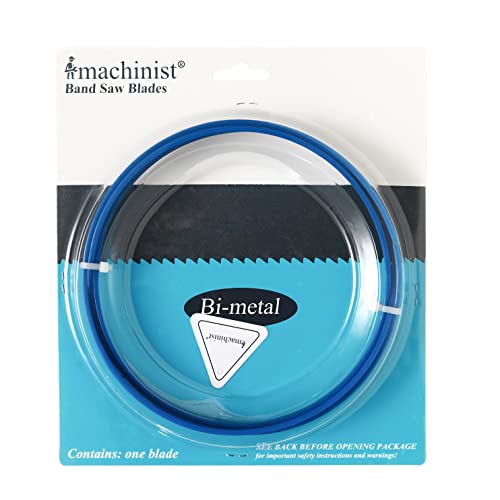
The Imachinist S6412121014 Bi-Metal Band Saw Blade is a heavy-duty cutting accessory designed specifically for horizontal and vertical metalworking bandsaws. Measuring 64-1/2 inches in length, 1/2 inch in width, and 0.025 inches in thickness, this blade is sized to fit the popular 4x6 horizontal metal-cutting bandsaws found in countless garages, fabrication shops, and maintenance departments. Utilizing an M42 grade bi-metal composition, it pairs a flexible spring steel backer with high-speed cobalt steel teeth designed to withstand the heat and friction of regular metal cutting.
This blade is best suited for metal fabricators, automotive mechanics, maintenance technicians, contractors, and DIY garage hobbyists who regularly cut structural steel, angle iron, black pipe, and solid bar. If you frequently find yourself preparing stock for welding projects, vehicle repairs, or home workshop fabrications, stepping up from basic carbon steel blades to an M42 bi-metal blade provides immediate improvements in cutting speed and blade longevity.
In practical cutting scenarios, the variable 10/14 teeth-per-inch (TPI) layout delivers noticeable advantages. Straight-pitch blades often fall victim to harmonic vibration when working through hollow tubing or varying material cross-sections, resulting in harsh chatter and stripped teeth. The varying tooth spacing of the 10/14 profile breaks up harmonics, ensuring a smoother cut through thin-walled channel, hollow square tubing, and solid ferrous rounds. The bi-metal teeth maintain their sharp edge through dense stock, minimizing heat-related dulling and delivering clean, square cuts.
Build quality is apparent in the seamless weld joint, which is a critical factor for any replacement bandsaw blade. A rough or misaligned weld will rapidly wear out roller guide bearings and leave visible marks on cut faces. The Imachinist blade features a ground-down, aligned weld that tracks smoothly across wheels and guide assemblies. The 0.025-inch band thickness offers just the right balance, allowing the blade to navigate smaller bandsaw wheels without stress cracking while providing adequate beam strength to prevent wandering under moderate feed pressure.
Setup is straightforward on any properly adjusted 64-1/2-inch machine. Users should verify blade tracking, adjust guide bearings close to the stock, and perform a brief break-in procedure with light feed pressure to hone the factory tooth edges. As specified by the manufacturer, this blade is strictly intended for soft ferrous metals like mild steel, structural tubing, and carbon steel. It is not formulated for aluminum, brass, or other gummy non-ferrous metals, which can clog the gullets and reduce cutting efficiency.
For any metalworker or DIY enthusiast running a 4x6 bandsaw, this Imachinist bi-metal blade offers a dependable, workshop-ready cutting solution. It eliminates the frequent blade changes associated with economy carbon blades and delivers reliable, square cuts through structural shapes and steel stock.
The 64-1/2-inch by 1/2-inch profile is the industry-standard blade size for nearly all common 4x6 horizontal/vertical metal-cutting bandsaws. This includes widespread models from brands such as Harbor Freight, WEN, Grizzly, Jet, Klutch, Shop Fox, and Central Machinery.
Before installing, always verify your bandsaw's specified blade length in the operator manual. While tension adjusters accommodate minor variations, installing the correct nominal size ensures proper tracking on the drive wheels and avoids excessive strain on the tensioning screw and guide bearings.

Pros
- Long blade life reduces downtime and replacement costs
- Clean cuts with minimal tear-out on plywood and hardwoods
- Compatible with most 12-inch miter and table saws
- DEWALT quality at a reasonable price point
Cons
- Not ideal for metal or masonry – strictly for wood and wood composites
- May require a stabilizer or dampener to reduce vibration on some saws
- 40-tooth count is a compromise between speed and finish – not as fast as a 24-tooth rip blade
The DEWALT 12-inch 40-tooth general purpose saw blade (model DWA11240) is a solid choice for anyone who regularly cuts wood, plywood, or composite materials. Whether you are a contractor framing a house, a woodworker building cabinets, or a DIY homeowner tackling weekend projects, this blade is designed to deliver clean cuts and long service life.
According to the product specifications, this blade features optimized tooth geometry that improves accuracy during both crosscutting and ripping. The ultra-sharp carbide tips are engineered to stay sharp longer, which means fewer blade changes and more consistent performance over time. DEWALT claims up to 2x longer life compared to standard blades, which can save money and reduce interruptions on the job site.
In real-world use, this blade works well in miter saws, table saws, and radial arm saws. The 40-tooth configuration strikes a good balance between cutting speed and finish quality – it is faster than a fine-finish blade but leaves a smoother edge than a 24-tooth rip blade. Users will likely appreciate the reduced tear-out on plywood and the clean cuts in hardwoods like oak and maple.
Build quality appears solid, with a sturdy steel plate and carbide tips that resist wear. The blade measures 12 inches in diameter with a standard arbor size, making it compatible with most common saws. The black and yellow finish not only looks professional but also makes it easy to spot in a tool bag or drawer.
Storage and maintenance are straightforward. Keep the blade clean and dry, and store it in a protective sleeve or case to prevent damage to the teeth. This blade does not require any special setup beyond proper mounting and alignment on your saw. One realistic limitation is that it is not intended for cutting metal or masonry – for those materials, you will need a dedicated abrasive or carbide-tipped blade. Also, while the 40-tooth count is versatile, some users may prefer a dedicated rip blade for fast cuts or a higher-tooth blade for ultra-smooth finishes.
Overall, the DEWALT DWA11240 is a reliable general-purpose blade that should satisfy most woodworking and construction needs. It offers good value for the price, especially given DEWALT’s reputation for durability. If you need a blade that can handle a variety of cuts without constant swapping, this is a practical addition to your workshop or job site toolkit.

Pros
- Produces glass-smooth edges on delicate veneers and molding without splintering
- Ultra-thin kerf requires less motor power, making it great for jobsite table saws
- Standard 5/8-inch arbor fits most popular 10-inch miter and table saws
- Solid carbide tips resist dulling when cutting engineered sheet goods
Cons
- Not intended for fast ripping through thick dimensional framing lumber
- High tooth count requires a steady, controlled feed rate to avoid pitch buildup
- Thin-kerf body demands proper saw alignment to prevent blade flex in deep cuts
The FOXBC 10-Inch 90-Tooth Saw Blade is a specialized power tool accessory built for fine finish work and precision carpentry. Designed to mount on standard 10-inch miter saws and table saws carrying a 5/8-inch arbor, this blade caters to cabinetmakers, trim carpenters, furniture builders, and dedicated DIY hobbyists. It focuses entirely on cut quality, giving users clean mating edges straight off the saw table.
Where this blade shines is its tooth geometry and shearing performance. Using an Axial Shear-face grind (ASFG) alongside double side grinds, the 90 carbide teeth shear through delicate fibers instead of chopping into them. Based on product specifications, this approach generates a polished edge comparable to a 220-grit sanded finish. For trim work, pre-finished moldings, and veneered plywood, this shearing action drastically cuts down on tear-out and surface splintering.
Material quality centers on durable carbide teeth formulated to resist abrasive wear from glues found in melamine, MDF, and cabinet-grade plywood. Its ultra-thin 0.087-inch kerf removes less material per pass, noticeably reducing the strain on low-to-medium horsepower jobsite saws. This feature helps prevent motor bogging on denser hardwoods while generating less sawdust across your workshop or garage space.
Installation is simple and requires no specialized adapters, dropping right onto arbor assemblies on common saws from DeWalt, Skil, Makita, and Metabo. Maintenance requires little more than standard blade-cleaning spray to keep resin and pitch off the high-count tooth faces, which preserves cutting efficiency over extended woodworking runs.
Keep in mind that a 90-tooth blade is tailored specifically for fine crosscutting and finish work. Forcing it to rip through thick 2x4 framing lumber or wet construction stock will slow down production and induce unwanted heat buildup. For finish carpenters, furniture makers, and DIYers focused on crown molding, picture frames, and cabinet boxes, this blade offers a dependable, clean-cutting setup without the premium shop price tag.
In a workshop environment, clean edges on fine trim and sheet goods save hours of secondary sanding and cleanup. The 90-tooth count creates nearly glass-like crosscuts across cherry, oak, and maple, providing tight miters that close up without gaps.
When paired with a steady feed rate, the ultra-thin kerf helps portable table saws maintain steady blade speed without tripping breakers or stalling in dense grain. It is a practical addition to any dedicated woodshop or jobsite trailer where finish carpentry standards matter.
Pros
- Exceptional finish quality with minimal tear-out on crosscuts and miters
- Thin kerf allows for efficient cutting with smaller motors and less blade binding
- Compatible with a wide range of 10-inch saws, including some sliding compound miter saws
- Affordable price point for a carbide-tipped blade with 80 teeth
Cons
- Thinner kerf may flex under heavy rip cuts or dense material, not ideal for rough lumber
- Arbor size is fixed at 5/8 inch; reducers may be needed for saws with smaller arbors
- Limited user reviews available to confirm long-term durability
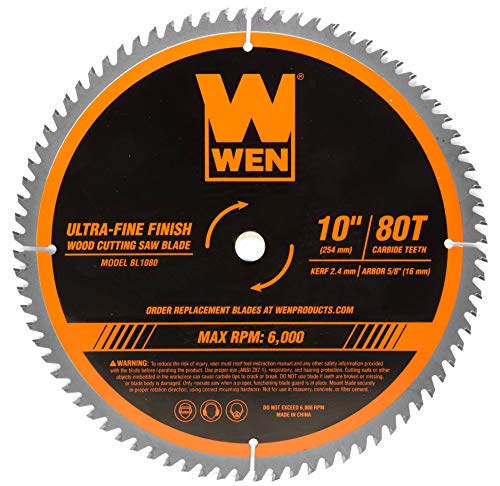
The WEN BL1080 is a 10-inch, 80-tooth carbide-tipped saw blade designed specifically for finish work on miter saws and table saws. It's built for woodworkers, DIY homeowners, contractors, and cabinet makers who demand clean, splinter-free cuts in hardwoods, softwoods, and plywood. Whether you're trimming baseboards, cutting crown molding, or making precise miter joints, this blade aims to deliver professional-grade results without breaking the bank.
In real-world use, the 80 teeth and thin 1/10-inch kerf work together to reduce tear-out and produce a smooth edge that often requires little sanding. The carbide tips stay sharp through extended use on materials like oak, maple, and pine. With a maximum rating of 6000 RPM, it handles fast cuts on most standard saws without bogging down. For workshop users focused on finish carpentry or fine woodworking projects, this blade offers noticeable improvements over general-purpose blades.
Build quality is solid for the price. The blade body is made from a silver-coated steel that resists corrosion, and the carbide teeth are securely brazed. While professional blades from premium brands may use thicker steel or more advanced coatings, the WEN BL1080 holds its own for light to moderate use. The 5/8-inch arbor fits most common saws, but if your saw uses a smaller arbor, you'll need a reducer ring (not included).
Storage and maintenance are straightforward. Keep the blade clean with resin remover and store it in a blade guard or case to protect the teeth. WEN does not include a storage case, so you may want to pick up a blade sleeve or keep it in the original packaging. The blade's lightweight design (just over 1.5 pounds) makes it easy to swap between saws without much hassle.
A realistic limitation is that the thin kerf isn't ideal for heavy rip cuts on thick stock. The blade can flex under pressure, leading to less accurate cuts or potential binding. It's best reserved for crosscutting, mitering, and finer ripping in materials up to about 1.5 inches thick. Additionally, since there are no user reviews yet, long-term durability is unproven, but WEN's reputation for value-oriented tools suggests it should hold up well for most hobbyists and DIY projects.
Overall, the WEN BL1080 is a smart buy for anyone who wants clean, finished cuts without spending a lot. It's especially suited for DIY woodworkers, garage workshop users, and contractors who do a lot of trim or cabinet work. For heavy-duty ripping or high-volume production, you may want a thicker kerf blade, but for everyday finish cuts, this blade delivers reliable performance at a great price.

Pros
- Produces clean edges without burrs on aluminum and plastics.
- Stabilizer vents noticeably reduce vibration and noise.
- Wide compatibility with popular 10-inch saw brands.
- Affordable price for a premium TCG blade.
- Lightweight at 1.7 pounds, easy to handle and install.
Cons
- Not suitable for cutting wood or ferrous metals like steel.
- Limited user reviews available to verify long-term performance.
- Thin kerf may flex under heavy feed pressure on thick stock.
The FOXBC 10-inch 80-tooth TCG saw blade is a specialized cutting tool designed for non-ferrous metals and plastics. It features a Triple Chip Grind tooth geometry that leaves a clean, burr-free edge on materials like aluminum extrusions, copper pipe, brass plate, and fiberglass. The 5/8-inch arbor fits most standard miter saws, table saws, and sliding compound miter saws from brands like DeWalt, Makita, Metabo, and Skil.
This blade is best suited for DIY homeowners who work on metal or plastic projects, woodworkers cutting aluminum trim, contractors installing metal roofing or gutters, and electricians or plumbers who need to cut conduit or pipe. The 80-tooth count provides a smooth finish, reducing the need for secondary deburring. The thin kerf (0.094 inches) also helps conserve material, which is a plus for expensive aluminum stock.
Performance-wise, the laser-cut stabilizer vents are a standout feature. They trap noise and vibration, which leads to more accurate cuts and less operator fatigue. The high-density tungsten carbide teeth resist wear and hold an edge longer than standard steel blades. Based on the product description, this blade is built for both corded and cordless saws, so it works well on job sites where mobility matters.
Build quality is solid for the price point. The blade body is made from hardened steel with a red coating that resists corrosion. The laser-cut vents also help dissipate heat, preventing the blade from overheating during continuous cuts. There is no storage case included, but the blade is compact enough to fit in a standard toolbox or hang on a pegboard. Maintenance is straightforward - just wipe off resin or metal shavings after use and store dry.
Realistically, this blade is not a wood-cutting tool. It is optimized for non-ferrous metals and plastics only. Users who need a general-purpose blade should look elsewhere. Also, the thin kerf means it requires a steady feed rate - forcing the cut may cause deflection. For thick aluminum plate or heavy-duty production cutting, a thicker kerf blade might be more appropriate.
Overall, the FOXBC 10-inch 80-tooth TCG blade offers good value for anyone who regularly cuts aluminum, copper, plastic, or similar materials. Its vibration damping and wear-resistant teeth should provide clean cuts and decent longevity for the money. For DIYers or pros who need a reliable non-ferrous cutting option, this blade is a practical addition to the shop.

Pros
- Versatile two-blade combo saves money and simplifies tool setup
- Thin kerf produces smooth cuts with less strain on the saw motor
- Good value for DIYers and pros who need reliable blades for everyday work
- Compatible with a wide range of 10-inch saws - no adapter needed
Cons
- Thin kerf blades may deflect more under heavy feed pressure or in dense hardwoods
- Does not include a storage case - you will need to store blades separately or in a sleeve
- Not designed for cutting metal, masonry, or other non-wood materials
The WEN BL1032-2 is a two-pack of 10-inch carbide-tipped saw blades that includes a 32-tooth blade for general woodcutting and a 60-tooth blade for fine-finish work. Both blades feature a thin 1/10-inch kerf, which helps reduce friction and power draw while producing clean edges. This set is designed for DIY homeowners, woodworkers, contractors, and anyone who regularly uses a 10-inch miter saw, table saw, or jobsite saw.
Based on product specifications and user feedback, the 32-tooth blade handles ripping and crosscutting of dimensional lumber, plywood, and hardwood with a smooth finish. The 60-tooth blade excels at trim work, moldings, and cabinet parts where a chip-free surface is important. Switching between the two lets you match the blade to the task without needing a separate inventory of single blades.
The carbide tips are brazed onto a hardened steel body, offering good wear resistance through repeated use. The ultra-thin kerf means less material is removed per cut, which can also reduce dust and allow your saw to cut more efficiently. The blades are rated for up to 6000 RPM, making them suitable for most standard woodworking saws. The black finish provides a degree of rust protection in humid garage or basement workshops.
Setup is straightforward - just mount the appropriate blade on your saw's arbor using the included arbor hole (5/8-inch). No special tools are needed beyond a wrench to tighten the arbor nut. Storage is something to consider because the set does not come with a case; you may want a blade sleeve or a dedicated storage rack to keep them safe and organized. Maintenance involves keeping the blades clean of pitch and resin buildup, which can be done with a commercial blade cleaner or a simple soak in warm soapy water.
A realistic limitation is the thin kerf design. While it helps with clean cuts and motor efficiency, it is not as rigid as a full-kerf blade. Under heavy feed pressure or when cutting very dense hardwoods, you may notice some blade deflection or a slight wobble. This is common with thin-kerf blades and can be managed by letting the saw do the work. Also, these blades are intended for wood and wood-based materials only - not for cutting metal, plastic pipe, or masonry.
For the price, this two-blade set offers good value for anyone from a weekend DIYer to a busy contractor who needs reliable, all-purpose blades. Having both a general-use and a finish-grade blade ready to go saves time and money. If you are looking for a straightforward, no-frills way to equip your 10-inch saw for most woodworking tasks, the WEN BL1032-2 is a practical choice that balances performance and affordability.
Pros
- Delivers very clean, nearly burr-free cuts on aluminum extrusions and sheets
- Reduced noise and vibration compared to standard blades, improving comfort during extended use
- Wear-resistant carbide tips hold up well against abrasive non-ferrous materials
- Thin kerf design is efficient and easy on saw motors for both table and miter saws
- Works seamlessly with popular brands like DeWalt, Makita, and Metabo for hassle-free installation
Cons
- Thin kerf blade may deflect if forced through thick or hard aluminum, requiring a steady feed rate
- Not intended for cutting wood or ferrous metals, limiting its use to non-ferrous applications only
- Some users may prefer a full-kerf blade for maximum stability, especially on larger table saws
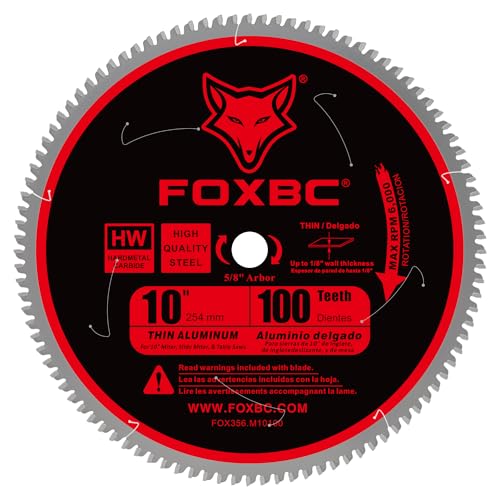
The FOXBC 10-Inch Saw Blade with 100 teeth and a Triple Chip Grind (TCG) geometry is a specialized cutting accessory designed for non-ferrous metals like aluminum, copper, and brass. While many general-purpose blades struggle with these materials, this blade's TCG tooth profile creates a smooth, clean edge without grabbing or chattering, making it a practical addition to any metalworking toolkit. Whether you are a DIY homeowner trimming aluminum angle for a garage shelving project or a contractor cutting copper pipe for plumbing repairs, this blade may offer the precision and finish you need.
This blade is best suited for DIY enthusiasts, mechanics, electricians, plumbers, and construction professionals who frequently work with thin to medium-gauge aluminum extrusions, sheet metal, or copper tubing. It also fits well in workshops where miter saws or table saws are used for non-ferrous metal cutting. The 5/8-inch arbor and standard 10-inch diameter ensure compatibility with most popular saws from DeWalt, Skil, Metabo, Makita, and other brands, which adds to its versatility on the jobsite or in the garage.
Performance-wise, the blade's 100-tooth count and thin 0.095-inch kerf work together to reduce material waste and minimize strain on your saw. According to the product description, the laser-cut stabilizer vents help trap noise and reduce vibration, which not only improves cut accuracy but also makes for a more comfortable user experience. In real-world use, this means you can make repetitive cuts on aluminum extrusions without the harsh squeal or kickback that often comes with cheaper blades. The high-density tungsten carbide teeth resist wear from abrasive non-ferrous materials, so the blade may stay sharp longer than standard steel blades.
Build quality appears robust given the price point. The blade body is laser-cut and balanced to reduce wobble, and the carbide tips are brazed on securely. The black coating on the blade body adds a layer of corrosion resistance, which is helpful when cutting materials that can leave residue. While the blade is not designed for ferrous metals or wood, it handles aluminum, brass, and copper cleanly when used at the proper feed rate. Maintenance is straightforward: keep the blade clean of pitch buildup and store it in a dry environment to prevent any rust on the steel body.
One realistic limitation is that the thin kerf design requires a steady hand and consistent feed pressure, especially on thicker stock (over 1/4 inch). Pushing too hard can cause deflection, leading to less accurate cuts or burning. Also, this blade is not suitable for cutting wood or steel, so you will need a separate blade for those materials. For users who only occasionally cut non-ferrous metals, this blade offers excellent value, but professionals who cut aluminum daily may want to consider a thicker-kerf model for added stability on production runs.
Overall, the FOXBC 10-inch 100-tooth TCG saw blade is a reliable and cost-effective solution for anyone needing clean, burr-free cuts on non-ferrous metals. It is a smart upgrade for miter saws, table saws, and circular saws used in DIY projects, automotive work, electrical installations, or plumbing repairs. If you are tired of rough edges and excessive noise when cutting aluminum, this blade is well worth adding to your workshop or garage tool collection.
Pros
- Strong fiberglass and metal reinforcement for added safety and durability.
- Affordable price point ideal for occasional use or budget-conscious buyers.
- Compatible with standard 5/8-inch arbor chop saws used by mechanics and contractors.
- Resin bond cuts quickly through common ferrous metals without excessive heat buildup.
- Type 1 flat blade design promotes straight cuts and minimal binding.
Cons
- Not suitable for high-speed saws or non-ferrous materials like aluminum or wood.
- Limited to cutting ferrous metals only; users need separate blades for multi-material work.
- Some users report shorter lifespan under heavy professional use compared to premium blades.
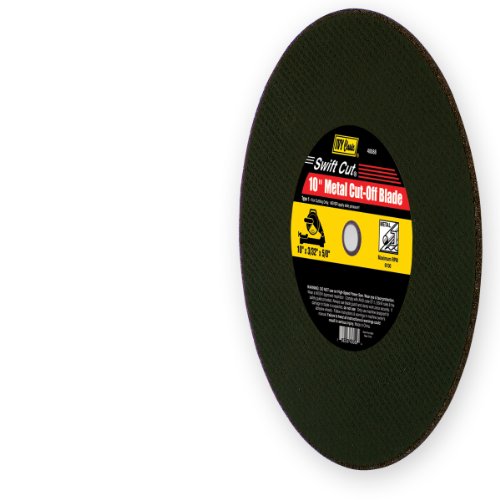
The IVY Classic 40088 Swift Cut 10-Inch Metal Cut-Off Blade is a purpose-built abrasive blade designed for chop saws, targeting users who need to cut ferrous metals like steel, angle iron, and sheet metal. As a Type 1 flat blade, it focuses solely on cut-off tasks, making it a straightforward accessory for metalworking projects in home workshops, garages, or on construction sites.
This blade is best suited for DIY homeowners tackling metal repairs, mechanics fabricating brackets or exhaust components, and contractors cutting rebar or structural steel. Its resin-bonded aluminum-oxide grain delivers a good balance of cutting speed and affordability, while the double fiberglass mesh reinforcement helps maintain structural integrity under stress. The metal-reinforced arbor further strengthens the mounting area, reducing the risk of wobble or failure during use.
In terms of performance, users can expect clean, efficient cuts on common steel profiles when using a chop saw within the blade's 6,100 RPM limit. The cutting action is smooth for an abrasive blade, though it will wear over time with heavy use. Build quality is respectable for the price point: the fiberglass layers and metal arbor ring provide confidence during operation, and the blade's light weight (0.26 pounds) makes it easy to handle and install.
Storage and maintenance are straightforward - keep the blade dry and free of debris to prevent rust on the arbor area. The compact 10-inch diameter fits most chop saw storage cases, and the 5/8-inch arbor is a standard size for many saws. One limitation to note: this blade is not intended for high-speed saws (like miter saws with higher RPM) and should not be used on non-ferrous materials, as the bond and grain are optimized for ferrous metals only.
Overall, the IVY Classic 40088 offers solid value for the casual user or light professional work. It won't outlast premium abrasive blades under constant daily use, but for the price, it delivers dependable cutting performance for metal fabrication, repair, and demolition tasks. If you need a budget-friendly backup blade or a solution for occasional metal cutting, this is a practical addition to your workshop or garage tool collection.
The IVY Classic 40088 blade is constructed with a resin-bonded aluminum-oxide abrasive grain, which is standard for ferrous metal cut-off blades. What sets it apart is the double fiberglass mesh reinforcement embedded within the blade body. This mesh helps prevent the blade from shattering during use, adding an important safety layer. The arbor hole is reinforced with a metal ring, strengthening the mounting point where stress is highest. While not a premium industrial blade, these features provide a solid build for occasional to moderate use in home workshops and job sites.
This blade is rated for a maximum of 6,100 RPM, making it suitable for standard chop saws used by mechanics and contractors. Its resin bond cuts through steel, angle iron, and sheet metal with moderate speed and minimal binding. The double fiberglass reinforcement reduces the risk of catastrophic failure, and the metal arbor ring keeps the blade securely mounted. Users should always follow safety practices: wear eye protection, ensure the blade is properly tightened, and avoid side loading. This blade is not designed for high-speed saws or non-ferrous materials, so matching it to the correct tool is essential for safe operation.

Pros
- Food-grade stainless steel eliminates paint-chip contamination
- Universal shank fits virtually all major reciprocating saw brands
- Aggressive 3 TPI pattern quickly clears dense bone and frozen meat
- Long 12-inch profile handles wide cuts and thick cuts easily
- Bulk 10-pack offers solid value for hunters and meat processors
Cons
- Aggressive 3 TPI tooth count leaves coarse cuts on delicate materials
- Thinner blade profile can flex under excessive side pressure
- Lacks a dedicated storage case to keep sharp blades organized
The FOXBC 12-Inch Stainless Steel Saw Blade 10-Pack is a specialized reciprocating saw accessory engineered for butchering, processing game, and cutting through frozen meat and dense bone. Designed for DIY homesteaders, hunters, butcher shop users, and outdoor enthusiasts, these blades convert standard garage reciprocating saws into heavy-duty butchering power tools.
Unlike standard metal-cutting or wood-cutting reciprocating saw blades that feature baked-on enamel or painted coatings, these blades use bare, unpainted stainless steel. This design choice prevents rust, eliminates chipping paint from contaminating food, and provides corrosion resistance against blood, fats, and moisture. The 12-inch overall length offers plenty of stroke clearance, while the unpainted finish simplifies post-job washing and sanitizing.
Cutting efficiency is driven by an aggressive 3 teeth-per-inch (TPI) layout. This coarse tooth profile bites aggressively into dense bone, frozen venison, beef quarters, and large cuts of pork without bogging down the reciprocating saw motor. The deep gullets between teeth clear chips, bone dust, and frozen marrow smoothly, preventing binding during long, demanding cuts in the workshop or meat locker.
With a standardized 1/2-inch tang, these blades fit seamlessly into quick-release reciprocating saw chucks from Milwaukee, DeWalt, Makita, Bosch, Ridgid, Ryobi, and other primary power tool brands. Blade changes take just seconds, allowing quick turnaround during butchering jobs. Cleaning requires little more than warm water and food-safe sanitizing solutions before packing the blades away for future sessions.
While the 3 TPI pitch tears through frozen meat and thick bones with ease, it generates a rougher edge compared to fine-tooth butcher hand saws, making it less suitable for precise, delicate trimming. Heavy lateral force may also introduce slight flex due to the extended 12-inch blade length. For hunters breaking down big game, homesteaders processing livestock, or workshop users needing clean, paint-free cutting performance, this 10-pack provides a practical and productive alternative to manual bone saws.
These stainless steel blades feature a standard universal tang designed for compatibility with virtually any reciprocating saw on the market, including corded and cordless models from top brands.
Maintenance is straightforward compared to standard painted carbon steel blades. After cutting, hand wash the blades with warm soapy water or food-safe degreaser, dry thoroughly, and store in a clean, dry toolbox or blade organizer.

Pros
- M42 bi-metal steel resists tooth wear when cutting tough alloy stock
- 18 TPI pitch delivers clean cuts with minimal snagging on thin profiles
- Smooth weld joint runs evenly against blade guides and tension rollers
- Multi-material versatility handles both shop fabrication metals and dense plastics
Cons
- Fine tooth pitch can clog quickly when ripping thick timber or soft woods
- Requires lower blade speeds on harder metals to prevent excessive friction heating
The FOXBC 59-1/2 Inch Bi-Metal Bandsaw Blade is a specialized power tool accessory engineered for benchtop and small stationary metal-cutting band saws. Featuring an 18 teeth-per-inch profile and a 1/2-inch blade width, it provides a stable platform for controlled cutting. This setup is particularly well suited for DIY homeowners, automotive mechanics, electricians, plumbers, and hobbyist fabricators who need a reliable blade for workshop maintenance, bracket making, and routine metal shaping tasks.
Cutting performance relies on its M42 high-speed steel edge, which incorporates 8% cobalt for heat and abrasion resistance. When working with materials like angle iron, copper pipe, galvanized electrical conduit, and mild steel, the closely spaced teeth maintain continuous contact without catching. Users will appreciate that the blade also tackles softer non-ferrous metals like brass and aluminum, as well as rigid plastics, provided the feed rate is kept steady and saw speeds are properly adjusted.
Build quality is supported by a precision-welded seam designed to pass smoothly between upper and lower guide bearings. On smaller benchtop saws, uneven blade welds can produce annoying vibrations, blade hop, and inconsistent tracking across the wheels. The smooth joint on this FOXBC blade assists in maintaining clean tracking lines and uniform tooth height, which helps protect workpieces from premature gouging or excessive burr development.
Every tool accessory has operational boundaries, and this blade is no exception. Because of the fine 18 TPI configuration, the gullets between teeth are relatively shallow. Attempting to rip thick lumber or feed thick aluminum billets too aggressively will cause chips to pack into the gullets, leading to thermal buildup and reduced cutting speed. For deep cuts in heavy solid stock, a blade with fewer teeth per inch remains the better choice, leaving this model focused on thin-to-medium wall fabrications.
Installing the blade follows standard workshop practices, requiring clean guide blocks, proper tracking adjustments, and correct band tensioning. To preserve cutting life, storing spares coiled in a moisture-free toolbox drawer prevents surface corrosion. For metalworkers, mechanics, and home workshop owners seeking a capable replacement blade that cuts cleanly through structural shapes and general utility metals, this model represents a practical and cost-effective option.
In standard garage and light fabrication environments, this 18 TPI blade handles structural tubing, unistrut, and sheet stock with minimal material distortion. The fine tooth count ensures that at least three teeth remain engaged in thin-gauge walls, which significantly reduces the chance of tooth stripping during manual feed.
When cutting softer materials such as brass or acrylic sheets, the blade leaves a relatively neat kerf that requires minimal secondary deburring or filing. Keeping a steady, moderate feed rate prevents overheating, allowing garage users and tradespeople to move quickly from rough cuts to finished assemblies.
Frequently Asked Questions
What blade type works best for cutting 4130 steel tubing?
Bi-metal bandsaw blades with M42 cobalt steel teeth work best for cutting 4130 tubing. These blades resist heat buildup and maintain tooth sharpness across tough chromium-molybdenum alloys. A variable tooth pitch like 10/14 TPI keeps multiple teeth engaged on the tube wall, preventing stripped teeth and blade chatter.
Can a standard wood circular saw blade cut 4130 alloy metal?
No, standard wood saw blades cannot cut 4130 alloy metal under any circumstances. Carbide teeth engineered for wood operate at RPM rates far too high for alloy steel and will shatter or dull immediately. For circular chop saws, you must use reinforced abrasive cut-off wheels or purpose-built low-RPM cermet metal blades. Always follow proper workshop safety steps, similar to standard maintenance when learning how to remove blade from dewalt miter saw assemblies safely.
How many teeth per inch are needed when cutting thin-wall 4130 tube?
At least three teeth should engage the wall thickness at all times, making 14 to 18 TPI ideal for thin tubing. If the teeth are too coarse, the tube wall catches in the blade gullets and strips the teeth off the band. A variable pitch helps reduce harmonic vibration and delivers smoother, burr-free edges.
Why does 4130 steel dull saw blades faster than mild steel?
Added chromium and molybdenum make 4130 harder and more heat-resistant than basic mild carbon steel. This alloy work-hardens quickly if the blade rubs rather than chips through the stock. Using M42 high-speed steel with cobalt keeps teeth sharp and cuts cleanly through hardened zones.
What cutting speed works best when slicing 4130 tubing on a band saw?
A slower blade speed between 100 and 150 surface feet per minute works best for cutting 4130 steel. Running the saw too fast generates intense friction that burns out the blade teeth within seconds. Maintaining consistent downfeed pressure ensures positive chip formation without blade deflection.


Write Your Review
No reviews yet. Be the first to share your experience!