


Upgrading a workshop often forces woodworkers and DIY builders to reconsider the boundaries of their standard cutting equipment. When you face tasks like trimming structural angle iron, cutting aluminum extrusions, or sizing conduit, asking can you cut metal with a miter saw becomes an immediate priority. A standard woodworking miter saw spins at high motor speeds designed for timber, which creates serious safety and mechanical concerns when processing dense metals. However, understanding the exact material properties, blade compatibility, and speed dynamics allows you to determine whether your saw can handle non-ferrous stock or if dedicated metal-cutting equipment is necessary.
Material thickness and metal composition dictate whether a standard miter saw or a dedicated metal chop saw is appropriate. For softer non-ferrous materials, many woodworkers review our guide on cutting aluminum with a miter saw to learn about tooth count and lubrication requirements. Ferrous metals like carbon steel produce intense friction, fine metal swarf, and hot sparks that can quickly ruin a woodworking saw motor or ignite sawdust in the housing. Evaluating your specific cutting goals against the correct tool designs helps protect your equipment, maintain cutting accuracy, and keep your workshop safe.
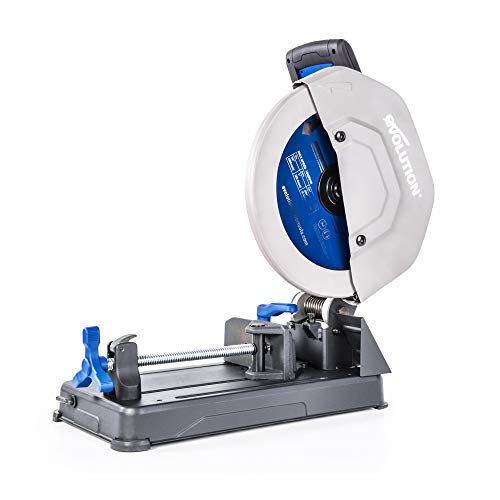
Pros
- Cuts cleanly without burrs or heat discoloration, reducing secondary finishing work.
- Adjustable miter from 0 to 45 degrees for flexible angled cuts on the job site.
- Durable carbide blade lasts significantly longer than abrasive discs, offering better value.
- Relatively quiet operation compared to abrasive chop saws, improving workshop comfort.
- Easy to set up and use right out of the box with minimal adjustments needed.
Cons
- Heavier than some portable options, though the pressed steel base helps manage weight.
- Blade not optimized for stainless steel or aluminum; requires separate Evolution blade for those materials.
- Price point is higher than abrasive chop saws, but long-term blade savings offset the cost.
The Evolution S355CPSL is a 14-inch dry cut metal chop saw designed for professionals and serious DIYers who demand clean, precise cuts without the mess of sparks and grinding dust. Unlike traditional abrasive saws, this saw uses a carbide-tipped blade that slices through mild steel quickly while leaving a smooth, burr-free edge that's ready to weld or paint immediately.
This saw is best suited for contractors, mechanics, metal fabricators, and workshop enthusiasts who regularly cut angle iron, flat bar, tubing, or solid stock. The dry-cut technology means no coolant or lubricant is needed, and the integrated chip deflector directs debris away from the operator for easier cleanup. It's a practical choice for job sites, garages, and fabrication shops where clean cuts and productivity matter.
Performance-wise, the 15 Amp motor delivers consistent torque to maintain blade speed under load, preventing binding and ensuring straight cuts. The carbide-tipped blade is engineered to stay sharp for hundreds of cuts, reducing downtime for blade changes. Users appreciate the lack of heat buildup, which eliminates blueing or warping of the metal. The adjustable miter from 0 to 45 degrees with positive stops makes repeatable angled cuts simple and accurate.
Build quality is solid: the cast steel vise and fence provide a sturdy workholding platform, and the quick-release mechanism speeds up clamping. The pressed steel base is lightweight yet rigid enough to keep the saw stable during heavy cuts. The saw's compact footprint fits well on a workbench or portable stand, and the built-in chip deflector helps keep the work area clean.
One realistic limitation is the weight — at around 35 pounds, it's not the lightest saw to carry around, but the base design makes it manageable for moving between job sites. Also, while the included blade excels at mild steel, cutting stainless steel or aluminum requires swapping to Evolution's dedicated blades, which are sold separately. The higher upfront cost compared to abrasive saws is offset by the long blade life and reduced consumable expenses.
Overall, the Evolution S355CPSL is a worthwhile investment for anyone who cuts metal regularly and values precision, cleanliness, and durability. It's a reliable tool that will save time and frustration on projects ranging from home repairs to professional fabrication work.
The Evolution S355CPSL is built with a heavy-duty cast steel vise and fence that provide a rigid clamping surface for accurate cuts. The pressed steel base is lightweight but stiff, minimizing vibration during operation. The carbide-tipped blade is premium quality, designed for long life in continuous use. All controls, including the miter lock and quick-release vise handle, feel robust and precise. The saw carries a 3-year warranty, reflecting confidence in its construction.
Thanks to its 15 Amp motor and dry-cut design, the S355CPSL cuts through mild steel up to 4 inches thick with minimal effort. The blade spins at a lower RPM than abrasive saws, reducing heat and spark generation. Cuts come out clean and square, often requiring no deburring. The 0-45° miter adjustment is smooth and locks securely, with clear angle markings for repeatability. The quick-release vise allows fast workpiece changes without losing alignment.
This saw is ideal for metal fabricators, contractors, mechanics, and serious DIYers who need a clean, efficient way to cut steel. It's a great upgrade for anyone tired of messy abrasive saws that leave rough edges and create lots of sparks. If you work on gates, railings, structural steel, or automotive frames, the Evolution S355CPSL will improve your workflow and finish quality. It's also a solid choice for workshops that value low maintenance and long blade life.

Pros
- Sturdy build with reinforced vise reduces blade wobble for more accurate cuts.
- Powerful 2300W motor delivers consistent 3600 RPM for efficient metal cutting.
- Tool-less angle adjustment saves time on the job site or in the shop.
- Spark guard adds an important safety layer during operation.
- Comes ready to cut a variety of metal shapes right out of the box.
Cons
- Abrasive blade may wear faster on heavy-duty use compared to carbide-tipped blades.
- Heavy at 30 pounds, which may limit portability for some users.
- Limited to cutting ferrous and non-ferrous metals; not suitable for wood or masonry.
The VEVOR Abrasive Chop Saw is a straightforward, no-frills metal cutting machine built for the workshop, garage, or construction site. This 14-inch saw packs a 2300W motor that spins at 3600 RPM, making it capable of cutting through steel bars, rebar, angle iron, and aluminum with relative ease. It is designed for anyone who needs to make clean, straight cuts in metal without the high cost of a cold saw or plasma cutter.
This saw is ideal for DIY homeowners tackling fencing or gate projects, mechanics working on exhaust systems or brackets, contractors framing metal structures, and metal fabricators who need a dependable cutoff tool. The adjustable miter feature allows cuts from 0 to 45 degrees, which is handy for corner joints or angled frames. The tool-less adjustment knob lets you change angles quickly without hunting for a wrench.
In terms of real-world performance, the thicker vise with wave patterns provides excellent grip on the workpiece, reducing movement and blade wobble during cuts. The 80-tooth abrasive blade is designed to handle heavy grinding pressure and maintain a smooth cutting edge over many uses. Users will appreciate the consistent cutting action, which minimizes burrs and saves time on cleanup. The spark guard is a practical safety feature that contains flying debris, which is especially important in crowded or flammable environments.
Build quality is solid for the price point. The saw is constructed from heavy steel components, and the vise feels substantial. The black finish is functional and resists rust from normal shop use. The base is stable, though at 30 pounds, this saw is best left in a fixed spot rather than carried from job to job. Setup is straightforward: attach the blade, mount the saw to a workbench or stand, and you are ready to cut. No complicated assembly or calibration is needed.
Storage is simple if you have a sturdy bench or a dedicated stand; the saw does not come with a carrying case, so plan accordingly. Maintenance mainly involves checking the blade for wear and replacing it when performance drops. The abrasive blade will eventually dull, but replacements are widely available and affordable.
Realistic limitations include the fact that this is an abrasive saw, so it will leave some sparks and a slightly rougher edge than carbide-tipped alternatives. It is also limited to metal cutting, so do not plan on using it for wood or masonry. Additionally, the weight makes it less portable than smaller saws. Overall, the VEVOR Abrasive Chop Saw offers strong cutting capabilities and good build quality at a budget-friendly price, making it a practical addition to any metalworking setup.
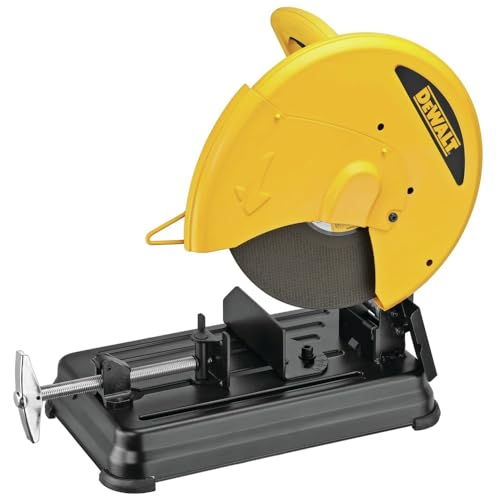
Pros
- Powerful 2300W motor with overload protection for sustained heavy use
- Quick-Lock vise speeds up clamping and increases cutting efficiency
- Ergonomic handle improves comfort and control during long cutting sessions
- 45-degree pivoting fence allows precise angle cuts without extra setup
Cons
- Weighs over 45 pounds, which may limit portability for some users
- One-size design may not accommodate very large or oddly shaped materials without additional support
- Limited to metal cutting; not ideal for wood or masonry without proper blade changes
The DEWALT D28730 is a 14-inch chop saw built for serious metal cutting. Powered by a 2300W motor with overload protection, it delivers consistent torque for cutting through rebar, angle iron, pipe, and other ferrous materials. This is a tool designed for contractors, mechanics, welders, and advanced DIYers who need reliable, repetitive cuts in a workshop or on a construction site.
Performance-wise, the saw excels at fast, clean cuts thanks to its powerful motor and robust build. The Quick-Lock vise clamps material securely with minimal effort, allowing you to switch between different sizes quickly. The 45-degree pivoting fence makes angle cuts straightforward without needing to reposition the workpiece. This setup is ideal for framing, fabrication, and automotive repair tasks where accuracy and speed matter.
Build quality is typical DEWALT: heavy-duty construction with a durable base and guard. The ergonomic handle is well-placed and reduces fatigue during extended use. The saw's 22-inch length and 17-inch height mean it fits comfortably on a workbench or in a truck bed. However, at over 45 pounds, it's not a lightweight tool, so you'll want a dedicated spot or a rolling stand for frequent moves.
Storage and maintenance are straightforward. The saw's compact footprint allows it to sit on a shelf or in a garage corner when not in use. Keeping the vise and pivot points clean and lubricated will ensure long-term smooth operation. The overload protection is a nice safety feature that prevents motor burnout if you push too hard.
One realistic limitation is weight. While the heft adds stability, it can be a drawback if you need to carry it up stairs or between job sites daily. Also, this saw is optimized for metal; if you plan to cut wood or masonry, you'll need to swap blades and adjust technique. For most metal-cutting needs, however, this chop saw delivers dependable performance that professionals and serious hobbyists will appreciate.
Overall, the DEWALT D28730 is a solid investment for anyone who regularly cuts metal. It combines power, ease of use, and durability in a package that's built to last. If you're a contractor, mechanic, or dedicated DIYer looking for a reliable chop saw for your garage or workshop, this model is well worth considering.
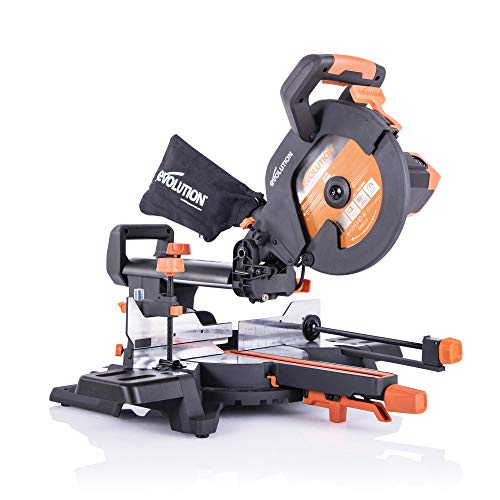
Pros
- Cuts metal, plastic, and wood reliably without requiring blade swaps
- Produces minimal sparks and leaves steel cuts cool enough to handle immediately
- Dual quick-release clamps hold varied materials securely against the tall fences
- Wide miter capability up to 50 degrees in both left and right directions
Cons
- At roughly 42 pounds, moving it frequently between job sites requires solid lifting effort
- Standard fabric dust bag captures only a fraction of metal shavings and fine sawdust
- Ultra-fine woodworking trim may still require a dedicated high-tooth finish blade
The Evolution R255SMS+ is a 10-inch sliding compound miter saw built around multipurpose cutting technology. Unlike traditional woodworking miter saws that spin at high speeds suited only for lumber, this machine uses an optimized gearbox and motor combination paired with a specialized tungsten carbide-tipped (TCT) blade. This configuration allows the tool to cleanly cut structural wood, wood embedded with framing nails, composite materials, plastic pipe, and mild steel tubing without changing blades.
This tool suits a wide range of users, including residential general contractors, deck builders, fence installers, metal fabricators, plumbers, electricians, and dedicated home shop woodworkers. For tradespeople who regularly tackle remodel projects where lumber often hides fasteners, or where electrical conduit and copper lines need quick trimming alongside framing studs, having a single benchtop saw that handles both soft and hard materials saves measurable time.
In terms of performance, the saw provides clean, fast cuts with impressive control. When cutting mild steel box section or flat bar, it generates virtually no sparks compared to abrasive chop saws, and the cut material remains cool to the touch immediately afterward. The sliding arm mechanism provides smooth linear travel across broad boards, while the bevel range up to 45 degrees and miter range up to 50 degrees left and right handle common baseboard, fascia, and framing joinery angles with dependable accuracy.
The physical construction features rugged cast aluminum components and thoughtful practical upgrades found on the PLUS edition. It includes dual quick-release material clamps that make fastening irregular profiles fast and secure, taller support fences for standing crown or baseboard upright, and a slide rail protector to keep metal chips out of the bearing channels. Built-in carry handles assist with transport, while a long 3-meter rubber power cable reduces the need for awkward extension cord connections right at the workbench.
Setting up the saw is straightforward right out of the box, though verifying angle stops with a reliable combination square before critical trim cuts is always good practice. Maintenance involves clearing out chips from the turntable track and checking the sliding rails for smooth movement. While the saw excels at handling mixed jobsite materials, users should keep in mind that fine cabinet-grade woodworking may still benefit from a dedicated fine-tooth wood blade, and high-volume metal cutting produces swarf that standard dust bags cannot fully catch.
For homeowners, mechanics, fabricators, and contractors who want a capable workshop station that eliminates the need for separate wood and metal cutting machines, the Evolution R255SMS+ delivers tremendous utility. It combines strong structural build quality, versatile angle capabilities, and reliable multi-material cutting into a practical, hard-working package.
In a busy garage or maintenance workshop, workspace is at a premium and having separate chop saws for metal, plastic, and lumber can quickly clutter the floor. The multi-material gearbox runs at a balanced RPM that preserves blade tooth life whether tackling conduit, aluminum threshold strips, or pressure-treated 2x8 lumber.
The dual clamping system provides substantial holding pressure, which is vital when working with rigid steel tubing or slippery PVC pipe. By holding materials firmly from both sides, the saw reduces workpiece chatter and vibration, resulting in square, repeatable cuts that require minimal post-cut deburring or sanding.

Pros
- Keyless blade change mechanism eliminates downtime searching for misplaced arbor tools
- Sturdy solid steel base delivers high stability and features pre-drilled bench mounting holes
- Reliable 15-amp motor powers through dense metal profiles with minimal bogging
- Tool-free fence and quick-clamping vise simplify setup for miter and bevel cuts
Cons
- At 39 pounds, it requires noticeable physical effort when moving frequently between job sites
- Abrasive wheel cutting produces substantial sparks and dust, requiring thorough workspace protection
- Abrasive disc diameter decreases with use, which gradually reduces maximum cutting depth
The DEWALT D28715 14-inch chop saw is an abrasive metal-cutting benchtop tool built for heavy-duty fabrication, repair work, and structural metal preparation. It fits naturally into the workflow of metal fabricators, general contractors, mechanics, pipefitters, and serious home garage hobbyists who routinely cut through angle iron, solid bar stock, heavy conduit, and steel box tubing.
Driving the saw is a high-torque 15-amp motor with plenty of power reserves, giving it dependable cutting efficiency when slicing through dense metal cross-sections. A major productivity advantage is the Quick-Change keyless arbor mechanism, which lets operators swap abrasive discs quickly without fumbling for specialized wrenches. Paired with the tool-free Quick-Fence that adjusts up to 45 degrees, the unit helps keep multi-angle fabrication moving smoothly.
DEWALT built this machine on an extra-wide solid steel base that anchors the tool against vibration and supports long workpieces with confidence. The base includes pre-drilled holes for permanent bench mounting, and fabricators can even tack-weld custom stops or alignment jigs directly onto the steel surface. Smooth head travel is handled by a heavy-duty compression spring rather than standard torsion springs, providing predictable downward feed resistance and extended component durability through the comfortable D-handle.
Weighing around 39 pounds, the saw provides adequate portability for truck bed transit using the built-in head lock-down pin, though it performs best when bolted down to a dedicated cutting bench or stand. As with any abrasive saw, users should anticipate hot sparks and metal particulate, making a clean workspace and appropriate eye and ear protection essential. The natural wear of abrasive cutting wheels also means cut depth slightly decreases over the life of each disc.
For tradespeople, agricultural mechanics, and DIY fabricators seeking reliable cutting capacity without the high initial cost of dry-cut cold saws, the DEWALT D28715 offers a rugged, straightforward solution. Its tool-free adjustments, resilient steel base, and generous capacity make it a practical asset for demanding workshop metal prep.
In a busy shop environment, workflow speed depends on fast stock repositioning. The quick-lock vise on the DEWALT D28715 allows operators to clamp down round pipe, square tubing, and flat stock in seconds without spinning a threaded rod end-to-end.
The cutting envelope easily accommodates up to 5-inch round stock and 4-1/2 by 6-1/2-inch rectangular material. This wide throat allows users to process common structural sizes without flipping the workpiece repeatedly, making it well-suited for fence building, trailer repairs, and mechanical frame construction.
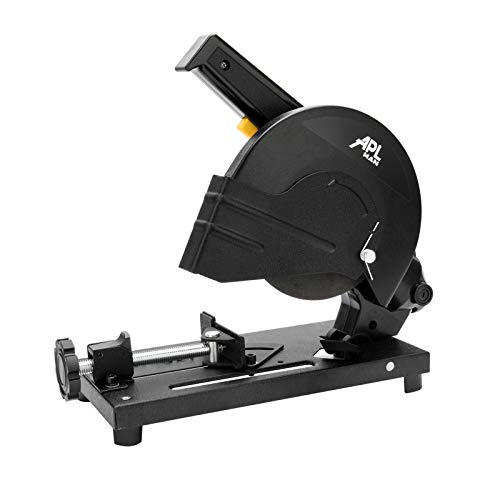
Pros
- Powerful 1800W motor handles a variety of metal and plastic cutting tasks with ease.
- Adjustable 0-45 degree miter fence enables accurate angle cuts for versatile projects.
- Sturdy steel base minimizes wobble and enhances cutting precision.
- Comfortable ergonomic handle reduces fatigue during prolonged use.
- Replaceable brushes add to the tool's durability and serviceability.
Cons
- Limited to 6-inch cutting capacity, which may not suit larger stock or heavy-duty industrial applications.
- Some users may find the included blade basic for frequent, demanding cuts; upgrading to a premium blade could improve performance.
- Lack of a laser guide or depth stop might require extra setup for repeat cuts.
The APLMAN 6 Inch Cut Off Saw is a compact metal cutting chop saw designed for DIY homeowners, mechanics, contractors, electricians, plumbers, woodworkers, and construction professionals who need a reliable tool for cutting angle iron, rebar, iron, and plastic. This saw packs a 1800W motor that spins at 3900 RPM, providing enough power to slice through common metal stock quickly and efficiently. Its small footprint makes it easy to store in a garage or workshop, yet it delivers performance that can handle regular job site tasks.
When it comes to real-world cutting performance, this saw offers solid efficiency for its class. The heavy-duty steel base keeps the tool stable during operation, reducing vibration and helping you maintain a straight line. The 0-45 degree miter capability allows you to make accurate angle cuts for projects like metal framing, rebar bending, or custom brackets. According to user feedback, the spark deflector is a practical safety feature that keeps debris away from your face and improves visibility, which is especially helpful in tight workshop spaces.
Build quality is decent for the price point. The steel base feels robust, and the motor housing appears well-constructed. The ergonomically designed horizontal handle places your wrist in a more comfortable position, which can help reduce fatigue during longer cutting sessions. While the included blade is adequate for general use, some users may prefer to upgrade to a higher-quality abrasive or carbide-tipped blade for smoother, faster cuts on tougher materials. The replaceable brushes are a nice touch, as they extend the motor's lifespan and make maintenance straightforward.
Setup is straightforward: the saw comes mostly assembled, and you just need to mount the blade and secure the fence. Storage is convenient thanks to its compact size, and the saw can fit on a shelf or in a tool cabinet without taking up too much space. Maintenance mainly involves checking and replacing the brushes when needed and keeping the blade sharp for optimal performance.
One realistic limitation is the 6-inch cutting capacity, which may not be sufficient for larger stock or heavy-duty industrial applications. Additionally, the saw lacks a laser guide or depth stop, so making repeat cuts may require extra measuring and marking. This is a minor inconvenience for most DIY and professional users who are accustomed to manual setups.
Overall, the APLMAN 6 Inch Cut Off Saw is a practical choice for anyone who needs a budget-friendly, portable chop saw for light to medium-duty metal cutting. It suits DIY enthusiasts working on home repairs, mechanics cutting bolts or brackets, contractors on job sites, and workshop users who need a versatile saw for various materials. While it won't replace a full-size industrial chop saw, it offers good value for its price and should serve well for everyday cutting tasks in the garage, workshop, or construction site.
Pros
- Versatile multi-material cutting capability reduces need for multiple saws
- Clean cuts with minimal sparks and burrs on metal, improving safety and finish quality
- Powerful 15 Amp motor handles tough materials with ease and long motor life
- Adjustable bevel up to 45 degrees increases project flexibility
- Backed by a strong 3-year warranty for reliability
Cons
- Weighs 47 pounds, which can be heavy for frequent portability without a wheeled stand
- Price point may be higher than single-purpose saws, though the multi-material versatility offsets cost
- Some users may prefer a built-in laser guide for precise alignment, though the TCT blade design already reduces wandering
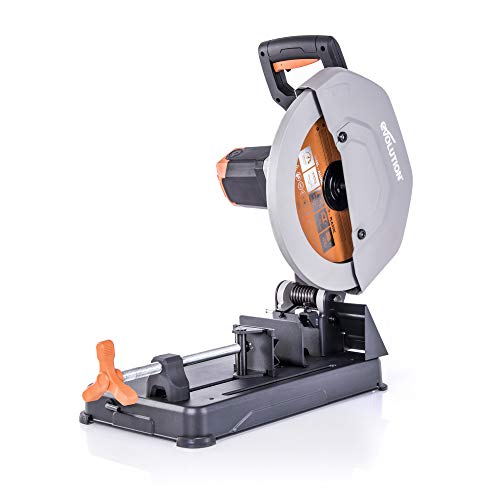
The Evolution Power Tools R355CPS is a 14-inch chop saw designed to handle a wide range of materials with a single blade. Unlike traditional saws that require swapping blades for metal, wood, or plastic, this model uses a 32-tooth Tungsten Carbide Tipped (TCT) blade that cuts through mild steel, wood (even with embedded nails), composite decking, and plastics. This makes it a flexible tool for DIY homeowners, mechanics, contractors, electricians, plumbers, woodworkers, and anyone who works in a garage or workshop and needs clean, efficient cuts across different materials.
When it comes to performance, the R355CPS delivers consistent results. The high-torque 15 Amp motor provides enough power to slice through steel without bogging down, and the TCT blade produces cuts with virtually no heat, burrs, or sparks. This is especially beneficial for metalworking, as it reduces the need for secondary finishing and minimizes fire hazards in the workspace. The saw also offers a miter range up to 45 degrees, allowing for angled cuts that are common in framing, welding, and fabrication projects. Based on product specifications, the motor is rated for a minimum 160-hour life, which should handle frequent job site or workshop use over time.
Build quality appears solid, with a robust steel base and a compact design that fits into most workshops. The 47-pound weight gives it stability during cuts, though it does make the saw less portable without a dedicated stand or cart. Many users may find it works well as a stationary tool, placed on a workbench or rolling base. The included TCT blade is ready to use out of the box, so there is no need to purchase a separate blade for metal or wood right away. The 3-year warranty adds a layer of confidence, covering defects and supporting long-term reliability.
Ease of use is straightforward: the saw features a clear trigger lock and a sturdy handle for controlled operation. Changing bevel angles requires a simple adjustment, and the fence remains square for accurate straight cuts. For storage, the tool can be placed on a shelf or in a tool shed, but its weight means you will likely want a dedicated spot. Maintenance involves keeping the blade clean and periodically checking the motor vents for dust or metal shavings, which is standard for any shop tool. The absence of a laser guide may be a minor inconvenience for those who prefer projected cutting lines, but many users find the TCT blade’s natural tracking sufficient.
Realistic limitations include the price, which is higher than basic single-material saws, and the weight, which may deter users who need to move it frequently between job sites. Additionally, while the saw handles mild steel well, thicker or hardened metals may require slower feed rates or multiple passes. However, for the target audience of DIY enthusiasts and professionals who frequently switch between materials, the R355CPS offers a practical all-in-one solution that reduces tool clutter and speeds up workflow.
Overall, the Evolution R355CPS is a strong choice for anyone in need of a versatile, multi-material cutting tool. It excels in workshops, garages, and construction sites where efficiency, clean cuts, and durability matter. If you value not having to change blades for different materials and want a saw that can tackle wood, metal, and plastic with equal ease, this saw is worth serious consideration.
The Evolution R355CPS is built with a heavy-duty steel base and a rugged motor housing that can withstand regular use in workshops and construction environments. The 15 Amp motor is designed for a minimum 160-hour lifespan, which translates to years of intermittent or even daily cutting tasks. The TCT blade is made from durable tungsten carbide, providing long edge retention even when cutting through mild steel and abrasive materials like composite decking. The overall construction feels solid, and the 3-year warranty backs up the manufacturer's confidence in its durability.
With a high-torque motor and a 14-inch TCT blade, the R355CPS delivers smooth, clean cuts across a variety of materials. It cuts mild steel with virtually no heat, sparks, or burrs, which means less cleanup and safer operation. The saw handles wood, including wood with nails, as well as plastics and composites without swapping blades. The 45-degree miter capability allows for bevel cuts useful in metal frames, trim work, and general fabrication. Maximum cutting capacities are 95x180mm for rectangles, 120x120mm for squares, and 130mm for round stock, making it suitable for most common sizes.
Comprehensive Technical Breakdown: Cutting Metal Safely and Accurately
The short answer to whether can you cut metal with a miter saw is conditional: yes for certain non-ferrous metals with specialized blades, but generally no for ferrous steel on standard woodworking saws. Woodworking miter saws operate between 3,500 and 5,000 revolutions per minute, which is far too fast for cutting thick steel safely. Dedicated metal-cutting saws, such as the Evolution S355CPSL or specialized abrasive chop saws, operate at tailored speeds and incorporate containment features designed for hot metal debris. Understanding the mechanical differences between tool classes prevents blade failure, motor burnout, and workshop fires.
Ferrous vs Non-Ferrous Metals: Critical Differences
Distinguishing between ferrous and non-ferrous metals is the first critical step before attempting any cut on a miter saw. Ferrous metals contain iron, including carbon steel, cast iron, structural tubing, and rebar. These materials are dense, generate intense heat when cut, and produce hot sparks that can damage equipment. Standard woodworking miter saws are not engineered to withstand the thermal strain or hot swarf generated by thick ferrous metals.
Non-ferrous metals include aluminum, brass, copper, and bronze. These materials do not contain significant amounts of iron and cut with less resistance than steel. When equipped with a negative rake carbide-tipped blade and proper clamping, a standard miter saw can cleanly process thin aluminum extrusions or copper pipe. However, operator caution is still required because non-ferrous chips can easily clog standard dust ports and accumulate around unguarded switch assemblies.
Attempting to cut steel with a woodworking miter saw blade will quickly destroy the blade teeth and overheat the motor. The high rotational speed of a typical 10-inch or 12-inch wood saw creates excessive friction against mild steel, causing rapid thermal breakdown. If your project involves recurring cuts through angle iron or square tubing, transitioning to a purpose-built cold-cut saw or chop saw is the safest and most reliable approach.
Why Woodworking Miter Saws Struggle with Steel
The primary barrier to cutting steel on a standard miter saw is blade rotational velocity, measured in revolutions per minute. Wood requires high surface speeds to produce clean shear cuts without tearing grain fibers. In contrast, metal cutting requires lower rotational speeds and high torque to allow the blade teeth to bite into the material without generating extreme friction. When a high-speed wood saw engages steel, the blade teeth rub rather than shear, leading to instant heat accumulation.
Another major issue stems from internal motor ventilation and housing materials. Woodworking miter saws rely on fan-cooled universal motors with open air intake vents located near the motor casing. When you cut metal, hot sparks and conductive steel shavings get drawn directly into the motor windings, which can short-circuit the tool. Wood miter saw housings also contain plastic components and rubber dust boots that can melt when exposed to showers of red-hot sparks.
Sawdust contamination creates an immediate fire hazard when cutting metal on equipment previously used for woodworking. Fine timber dust settles into every crevice, base cavity, and dust collection channel of a shop miter saw. Introducing hot sparks or glowing metal swarf into an uncleaned saw base can ignite smoldering dust pockets almost instantly. For this reason, operating a woodworking saw for metalwork requires thorough decontamination of the tool and workspace.
Dedicated Metal Chop Saws vs Woodworking Miter Saws
Metal chop saws are specifically built to withstand the rigorous demands of slicing through structural steel and heavy tubing. Models like the DEWALT D28730 feature robust 2300-watt motors with overload protection designed to handle continuous heavy resistance. These tools incorporate heavy-gauge pressed or cast steel bases, all-metal guards, and spark deflectors to divert glowing particles safely downward. Their vises are engineered with quick-locking steel clamps to hold round pipe and irregular shapes firmly in place.
Standard woodworking miter saws prioritize intricate angle settings, dual bevels, and sliding mechanisms for broad lumber crosscuts. When evaluating different projects, some owners also reference our article on cutting vinyl flooring with a miter saw to see how synthetic composite materials compare with wood or metal. Unlike wood saws, standard abrasive chop saws do not slide along rails; they pivot straight down to minimize blade flex and maintain rigidity during heavy plunge cuts.
Advanced dry-cut metal saws like the Evolution S355CPSL combine the precision of a miter fence with specialized low-RPM motors. They run at speeds around 1,450 to 1,600 RPM, allowing tungsten carbide-tipped blades to cut mild steel without creating significant sparks or surface heat. This provides a burr-free cut that is cool to the touch immediately after parting, unlike conventional abrasive wheels that leave jagged, hot slag edges.
Multi-Material Miter Saws: A Hybrid Solution
For workshops that need to transition between timber, plastic, and mild steel without housing multiple large tools, multi-material miter saws offer a balanced compromise. The Evolution Power Tools R255SMS+ PLUS 10-inch sliding miter saw uses a high-torque motor combined with a specialized gearbox designed to run at optimized RPM levels. Paired with a proprietary multi-material carbide blade, it can slice through wood containing embedded nails, aluminum channel, and mild steel square tubing with minimal spark generation.
These hybrid machines feature dual-bevel and miter capabilities similar to traditional woodworking saws while retaining the protective shielding required for metal cutting. The slide rail protectors and taller fences on models like the Evolution R255SMS+ PLUS help keep debris away from critical sliding mechanisms. The resulting cut through mild steel remains cool to the touch, minimizing paint burning and edge distortion on finished parts.
However, multi-material miter saws still possess limitations when compared to heavy industrial 14-inch metal chop saws. They are primarily designed for mild steel up to specified wall thicknesses, such as 1/8-inch or 1/4-inch plate depending on manufacturer limits. Slicing through massive solid steel bars or high-tensile rebar on a regular basis will strain a 10-inch hybrid saw motor and accelerate tooth wear on the blade.
Selecting the Proper Blade for Metal Applications
Attempting to cut metal with an improper blade is hazardous and leads to poor cutting results. If you are adapting a compatible saw for non-ferrous aluminum or brass, you must select a dedicated non-ferrous metal blade featuring a triple-chip grind (TCG) tooth pattern. This blade profile utilizes alternating trapezoidal and flat-top teeth to shear through soft metal without snagging or pulling the workpiece into the blade.
Tooth rake angle is another vital specification when selecting a metal-cutting blade for a miter saw. Standard wood blades employ positive rake angles where teeth lean forward aggressively into the cut. Metal blades require a zero or negative rake angle, typically between -5 and 0 degrees. The negative rake prevents the blade from grabbing thin metal walls aggressively, ensuring smooth operator control and reducing the risk of material ejection.
For dedicated ferrous steel cutting on low-speed dry-cut saws like the Evolution Power Tools R355CPS, carbide-tipped metal blades are engineered with thick steel plates and shock-resistant tungsten carbide tips. These blades maintain their cutting diameter throughout their service life, unlike abrasive discs that shrink as they wear. Selecting a blade with the appropriate arbor size, diameter, and RPM rating ensures optimal stability and operator protection.
Abrasive Wheels vs Dry-Cut Carbide Blades
Traditional metal chop saws, such as the DEWALT D28715 and VEVOR Abrasive Chop Saw, commonly utilize consumable abrasive cut-off wheels. These composite resin discs grind through steel at high operating speeds, offering an economical method for slicing rebar, angle iron, and rusted pipe. However, abrasive wheels generate significant volumes of abrasive dust, unpleasant odors, and massive spark plumes. They also experience wheel wear, which gradually reduces the maximum cutting depth over repeated cuts.
Dry-cut carbide-tipped blades offer an advanced alternative by physically cutting chips rather than grinding material away. Saws like the Evolution S355CPSL utilize premium tungsten carbide tips to produce clean, square, and virtually burr-free cuts. Because the blade maintains a constant 14-inch diameter, cutting capacity remains uniform from the first cut to the last, making it easier to achieve consistent repeatable lengths on production jobs.
The choice between abrasive and dry-cut carbide technology comes down to material requirements and workshop conditions. Abrasive chop saws tolerate rough, scale-covered structural steel, rusty pipes, and hardened metals that could chip brittle carbide teeth. Conversely, carbide cold-cut saws excel in clean fabrication environments where accurate angles, clean weld-ready edges, and minimal spark production are essential.
Workpiece Clamping and Secure Workholding
Workholding safety is far more critical when cutting metal than when processing common dimensional lumber. Wood fibers give slightly under blade pressure, but rigid metal parts will instantly bind, kick back, or warp if they shift during a cut. Hand-holding metal workpieces against a miter saw fence is dangerous and should never be attempted under any circumstances.
Chop saws designed for metalwork feature integrated mechanical vises with cast steel fences to lock workpieces solidly to the table base. The DEWALT D28715 features an exclusive Quick-Fence and quick-lock vise system that clamps irregular structural shapes without requiring separate hand tools. Similarly, the VEVOR Abrasive Chop Saw employs a wave-pattern vise jaw to increase friction and stop round pipes from rolling under downward cutting force.
When cutting non-ferrous aluminum extrusions on a miter saw, support thin-walled hollow profiles with wooden sacrificial backing blocks. Hollow shapes can collapse under heavy clamp pressure or distort when the blade teeth penetrate the profile. Clamping a flat wood backer behind and under the aluminum profile stabilizes the material, minimizes exit tear-out, and keeps hands completely out of the blade pathway.
Essential Safety Protocols and Shop Protection
Operating any saw on metal requires strict adherence to personal protective equipment standards. High-velocity metal chips and abrasive sparks can cause severe injuries to unprotected operators. Always wear impact-rated safety glasses accompanied by a full-face shield, heavy-duty work gloves, hearing protection, and natural-fiber clothing that resists ember ignition. Avoid synthetic fabrics like polyester, which can melt when struck by hot metal particles.
Before initiating any metal cut on a tool stationed in a wood shop, inspect the immediate environment for fire hazards. Completely empty dust collection bags, clean out the internal lower blade guard cavity, and remove sawdust accumulations from around the saw base. Keep a fully charged Class ABC fire extinguisher within immediate arm reach whenever performing abrasive cutting or metal parting operations.
Allow the saw motor to reach full operating speed before gently plunging the blade into the metal workpiece. Maintain steady, moderate feed pressure throughout the cut without forcing the motor to bog down or stall. For compact jobs, smaller dedicated units like the APLMAN 6-inch cut-off saw offer manageable control for trimming rebar, small angle iron, and light tubing while keeping workspace clutter to a minimum.
Determining whether to cut metal with your current miter saw depends on matching material density, rotational tool speed, and proper blade geometry. Non-ferrous aluminum and brass can be cut safely on a standard woodworking saw when fitted with a negative-rake carbide blade, proper mechanical clamping, and appropriate safety guards. For carbon steel, structural pipe, and regular metal fabrication, investing in a dedicated abrasive chop saw or dry-cut metal saw provides the power, stability, and spark containment required for reliable long-term performance.




Write Your Review
No reviews yet. Be the first to share your experience!