


Cutting metal in a home garage or professional fabrication shop often raises practical questions about which tools can handle tough stock without burning through equipment or ruining workpieces. You can definitely achieve clean, reliable cuts on bar stock, tubing, angle iron, and sheet goods if you know how to configure your setup properly. Many woodworkers and fabricators wonder, can you use a band saw to cut metal safely without damaging the machine or dulling teeth immediately? While the straightforward answer is yes, achieving good results depends heavily on using the proper blade, selecting the right speed range, and securing your material properly during the cut.
Attempting to feed dense metal into a machine running at typical woodworking speeds quickly generates excessive friction, which destroys standard blades and creates severe safety hazards. Similar questions often arise when fabricators ask can I use A miter saw to cut metal, proving that tool speed and blade metallurgy dictate what materials a machine can safely handle. Unlike high-speed circular tools or general woodworking stations detailed in our overview of what A table saw is used for, dedicated metal-cutting band saws and portable units operate at drastically reduced surface speeds. Reviewing the equipment options below will help you compare portable band saws, dedicated stationary setups, and alternative cutting tools for your shop.
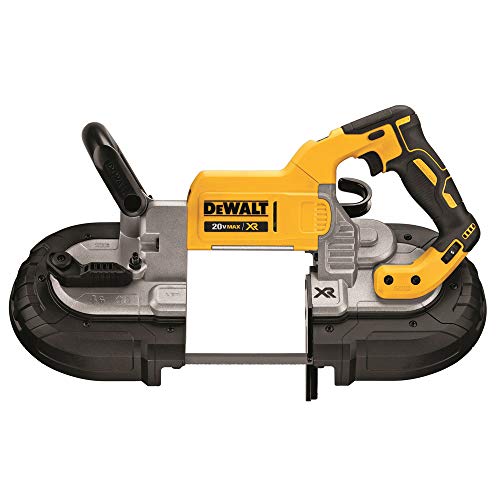
Pros
- Powerful brushless motor for efficient cutting through metal, conduit, and wood
- Tool-less blade changes speed up setup and material swaps
- Integrated hang hooks offer practical storage and job site convenience
- LED light with delay improves cutting accuracy in low-light conditions
- Variable speed trigger gives user control for different materials
Cons
- Bare tool requires separate purchase of DEWALT 20V battery and charger, adding upfront cost
- At 12.4 pounds, it may feel heavy for prolonged overhead or one-handed use
- Limited to 5-inch cutting capacity, not suitable for larger stock without multiple passes
The DEWALT DCS374B is a 20V MAX cordless band saw designed for professionals and serious DIYers who need a portable yet powerful cutting solution. With a 5-inch cutting capacity and a brushless motor, this saw is built to handle deep cuts in a variety of materials, including metal pipe, conduit, PVC, and dimensional lumber. It's a bare tool, meaning you'll need a DEWALT 20V battery and charger to get started, but for those already invested in the platform, it's a natural addition to the tool kit.
This saw is ideally suited for contractors, electricians, plumbers, mechanics, and woodworkers who frequently make on-site cuts. On a construction site, the variable speed trigger lets you match cutting speed to the material, reducing burrs on metal and preventing tear-out on wood. The tool-less blade change lever is a real time-saver, allowing you to swap blades quickly without fumbling for a hex key. The integrated hang hooks are a clever touch, letting you hang the saw from rebar, scaffolding, or a workbench hook when it's not in use, which keeps it accessible and off the ground.
In terms of real-world performance, the brushless motor provides consistent power and longer runtime per battery charge compared to older brushed models. The LED work light with a 20-second delay is a practical feature for cutting in dark crawl spaces, attics, or under sinks, helping you follow your cut line accurately. The saw's build quality feels robust, with a rigid frame that resists flex during heavy cuts, and the rubberized grip on the handle offers a secure, comfortable hold even when wearing work gloves.
Portability is a key advantage here. At 12.4 pounds, the DCS374B is light enough to carry up a ladder or through a job site, yet heavy enough to stay planted during operation. The lack of a cord means you can work in tight spaces without worrying about power outlets or extension cords. Storage is straightforward: hang it on a wall hook or toss it in a toolbox, and it takes up minimal space. Maintenance is minimal, mainly keeping the blade guides clean and replacing blades as they dull.
One realistic limitation is the 5-inch cutting capacity. While this covers most common pipe and stock sizes, you won't be able to cut through larger beams or thick lumber in a single pass. Some users may also find the weight a bit much for extended overhead work, though the hang hooks can help reduce strain by letting you support the saw at the cut line. Additionally, as a bare tool, the initial investment is higher if you don't already own DEWALT 20V batteries and a charger.
Overall, the DEWALT DCS374B is a solid choice for anyone who needs a dependable, portable band saw for job site or workshop use. It combines power, convenience, and thoughtful features like the hang hooks and LED light into a package that's ready to work. For contractors, electricians, plumbers, and serious DIY homeowners, this saw offers excellent cutting performance and long-term value when paired with the DEWALT 20V ecosystem.
The DEWALT DCS374B is built with a rigid, impact-resistant housing that can handle the bumps and drops of a busy job site. The blade housing and frame are constructed from durable polymers and metal components, ensuring the saw maintains its alignment over time. The brushless motor is sealed against dust and debris, extending its lifespan. The rubber overmold on the handle provides a non-slip grip, even in wet or oily conditions. Overall, the build quality reflects DEWALT's reputation for professional-grade tools.
On a construction site, the DCS374B shines as a portable cutting tool for metal studs, rebar, conduit, and PVC pipe. The variable speed trigger allows precise control for clean cuts, and the tool-less blade changes keep the workflow moving. The integrated hang hooks are especially useful for keeping the saw within reach while working on scaffolding or ladders. The LED light is a bonus for cutting in dimly lit basements or attics. For electricians and plumbers, this saw is a reliable companion for rough-in work and service calls.
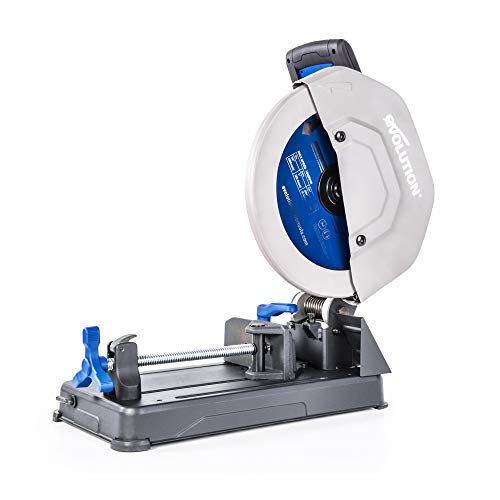
Pros
- Cuts cleanly without burrs or heat discoloration, reducing secondary finishing work.
- Adjustable miter from 0 to 45 degrees for flexible angled cuts on the job site.
- Durable carbide blade lasts significantly longer than abrasive discs, offering better value.
- Relatively quiet operation compared to abrasive chop saws, improving workshop comfort.
- Easy to set up and use right out of the box with minimal adjustments needed.
Cons
- Heavier than some portable options, though the pressed steel base helps manage weight.
- Blade not optimized for stainless steel or aluminum; requires separate Evolution blade for those materials.
- Price point is higher than abrasive chop saws, but long-term blade savings offset the cost.
The Evolution S355CPSL is a 14-inch dry cut metal chop saw designed for professionals and serious DIYers who demand clean, precise cuts without the mess of sparks and grinding dust. Unlike traditional abrasive saws, this saw uses a carbide-tipped blade that slices through mild steel quickly while leaving a smooth, burr-free edge that's ready to weld or paint immediately.
This saw is best suited for contractors, mechanics, metal fabricators, and workshop enthusiasts who regularly cut angle iron, flat bar, tubing, or solid stock. The dry-cut technology means no coolant or lubricant is needed, and the integrated chip deflector directs debris away from the operator for easier cleanup. It's a practical choice for job sites, garages, and fabrication shops where clean cuts and productivity matter.
Performance-wise, the 15 Amp motor delivers consistent torque to maintain blade speed under load, preventing binding and ensuring straight cuts. The carbide-tipped blade is engineered to stay sharp for hundreds of cuts, reducing downtime for blade changes. Users appreciate the lack of heat buildup, which eliminates blueing or warping of the metal. The adjustable miter from 0 to 45 degrees with positive stops makes repeatable angled cuts simple and accurate.
Build quality is solid: the cast steel vise and fence provide a sturdy workholding platform, and the quick-release mechanism speeds up clamping. The pressed steel base is lightweight yet rigid enough to keep the saw stable during heavy cuts. The saw's compact footprint fits well on a workbench or portable stand, and the built-in chip deflector helps keep the work area clean.
One realistic limitation is the weight — at around 35 pounds, it's not the lightest saw to carry around, but the base design makes it manageable for moving between job sites. Also, while the included blade excels at mild steel, cutting stainless steel or aluminum requires swapping to Evolution's dedicated blades, which are sold separately. The higher upfront cost compared to abrasive saws is offset by the long blade life and reduced consumable expenses.
Overall, the Evolution S355CPSL is a worthwhile investment for anyone who cuts metal regularly and values precision, cleanliness, and durability. It's a reliable tool that will save time and frustration on projects ranging from home repairs to professional fabrication work.
The Evolution S355CPSL is built with a heavy-duty cast steel vise and fence that provide a rigid clamping surface for accurate cuts. The pressed steel base is lightweight but stiff, minimizing vibration during operation. The carbide-tipped blade is premium quality, designed for long life in continuous use. All controls, including the miter lock and quick-release vise handle, feel robust and precise. The saw carries a 3-year warranty, reflecting confidence in its construction.
Thanks to its 15 Amp motor and dry-cut design, the S355CPSL cuts through mild steel up to 4 inches thick with minimal effort. The blade spins at a lower RPM than abrasive saws, reducing heat and spark generation. Cuts come out clean and square, often requiring no deburring. The 0-45° miter adjustment is smooth and locks securely, with clear angle markings for repeatability. The quick-release vise allows fast workpiece changes without losing alignment.
This saw is ideal for metal fabricators, contractors, mechanics, and serious DIYers who need a clean, efficient way to cut steel. It's a great upgrade for anyone tired of messy abrasive saws that leave rough edges and create lots of sparks. If you work on gates, railings, structural steel, or automotive frames, the Evolution S355CPSL will improve your workflow and finish quality. It's also a solid choice for workshops that value low maintenance and long blade life.

Pros
- Compact form factor reaches confined areas where full-size frames cannot fit
- Tool-free blade changes save time on the job
- Accepts standard 10-inch and 12-inch hacksaw blades
- Ergonomic handle provides solid control during precision trimming
Cons
- Shorter stroke length requires more hand strokes than full-size frame saws
- Not intended for large structural steel or thick stock cutting tasks
The American Mutt Tools Mini Hacksaw is a specialized cutting tool designed to solve a common workshop headache: making clean cuts in spaces where a traditional, bulky hacksaw simply will not clear. Featuring a slim, reinforced frame and an adjustable blade setup, this mini saw serves as a go-to utility cutter for precision trim work, flush cutting, and restricted-access fabrication.
This tool fits the daily workflow of trade professionals and home mechanics alike. Plumbers frequently encounter corroded bolts and tight drain pipes under sinks, while electricians regularly need to trim conduit or threaded rod inside utility boxes. For DIY homeowners and automotive hobbyists, having a lightweight metal-cutting hand tool in a mobile toolbox makes quick work of rusted hardware, bracket modifications, and plastic tubing without needing power tools.
In practical cutting tasks, the included bimetal blade cuts cleanly through aluminum, mild steel, brass, and PVC. The ergonomic handle is contoured to fit the palm comfortably, providing positive leverage and minimizing hand fatigue on stubborn materials. Because the frame supports a rigid blade mount, tracking a straight line is straightforward, helping reduce binding during delicate flush cuts.
The build quality emphasizes jobsite utility and simplicity. A reinforced frame helps maintain rigidity, while the tool-free blade change mechanism eliminates the frustration of hunting down a screwdriver or pliers just to tension a new blade. The design also supports standard 10-inch and 12-inch blades, giving users the freedom to swap in specialized tooth counts for distinct materials like fine copper or tough plastics.
While the compact size is its primary strength, buyers should consider its natural limitations. The shorter exposed blade length means a reduced cutting stroke, requiring more back-and-forth movement to finish a cut compared to a standard 12-inch high-tension hacksaw. It is best suited for small-diameter conduit, tubing, rod, and sheet metal rather than heavy structural iron or thick solid stock.
For anyone who regularly encounters awkward angles or tight clearances in plumbing, electrical, or garage repair tasks, this mini hacksaw provides dependable cutting capability in a compact package. It is an affordable, practical backup saw that deserves a permanent spot in any everyday tool bag or workshop drawer.
On commercial jobsites and residential service calls, efficiency depends on having the right tool for tight spaces. This mini hacksaw excels behind drywall, under vehicle chassis, and within congested utility closets where standard handsaws cannot swing freely. The tool-free tensioner allows swift blade changes in the field without delaying work progress.
Because it weighs only a few ounces, tradespeople can slip it directly into a tool belt or cargo pocket for quick overhead tasks. Compatibility with standard 10-inch and 12-inch blades ensures that sourcing replacements at any local hardware store or supply house remains simple and convenient.

Pros
- Powerful 10A motor cuts through mild steel, aluminum, and other metals smoothly
- Variable speed control provides versatility for cutting different thicknesses and hardness levels
- Dual workbenches offer flexibility – large for long stock, small for detailed work
- Solid construction with safety eyeshield supports consistent, worry-free operation
- Reasonable price point for a shop-grade metal band saw with this capacity
Cons
- At 37 pounds, it is not easily portable and may require dedicated bench space
- No included blade: users must purchase a suitable metal-cutting blade separately
- Lack of user reviews makes it hard to gauge long-term durability or customer support experience
If you regularly cut metal for fabrication, knife making, or garage projects, a dedicated metal band saw can make a huge difference in speed and accuracy. The KFMK 10A Variable Speed Metal Band Saw brings together a powerful motor, adjustable blade speed, and a clever dual workbench design to handle a wide range of metalworking tasks. With a 5-inch cutting capacity, it can easily handle round stock, angle iron, or flat bar up to that thickness, while the smaller precision workbench allows for more controlled cuts on smaller pieces.
This saw is best suited for DIY homeowners who tackle metal projects in their garage, mechanics fabricating brackets or custom parts, and woodworkers who also work with metal accents. It is also a practical choice for knife makers and small-scale fabricators who need clean, straight cuts without the heat distortion of a cutoff wheel. The adjustable speed range from 137 to 472 FPM means you can slow the blade down for harder metals like stainless steel or speed it up for softer materials like aluminum, giving you better control over cut quality and blade life.
Build quality appears solid with a heavy-duty steel base and a large workbench that provides stability for longer pieces. The 10-amp motor delivers consistent torque, and the included eyeshield is a welcome safety feature that every metal worker should appreciate. The saw's 37-pound weight gives it a reassuring heft, but it also means you'll probably want to keep it stationary on a bench or a rolling cart. The compact dimensions (16 x 13 x 23 inches) help it fit into smaller workshop spaces without taking over your entire bench.
Setting up the saw is straightforward: mount it to a work surface, install a suitable metal-cutting blade (not included), and adjust the blade tension according to the manual. The variable speed dial is easy to reach and adjust on the fly, and the dual workbench design adds versatility for different project sizes. Keep in mind that like any band saw, proper blade selection and tension are key to achieving long blade life and straight cuts. The machine does not come with a blade, so factor that into your initial purchase.
In terms of limitations, the lack of user reviews means we have to rely on the specifications and features. Some buyers may wish for a more robust stand or a built-in coolant system for heavy production work, but for the average shop or garage use, this band saw offers a good balance of power, adjustability, and price. The safety eyeshield is a plus, though some may prefer a full blade guard for added protection. Overall, it's a worthwhile investment for anyone looking to bring professional-grade metal cutting capability into their workshop without breaking the bank.

Pros
- Compatible with widely available DeWalt 20V battery platform
- Brushless motor provides efficient power and lower noise
- 6-speed dial gives precise control for different materials
- Lightweight and compact for one-handed use in tight spots
- Tool-free blade changes reduce downtime
Cons
- Battery and charger not included, requiring separate purchase
- Limited to 2-1/2-inch cutting capacity may not suit larger stock
- Relatively new product with limited user reviews available for long-term assessment
The Ecarke Cordless Portable Band Saw is a practical solution for anyone who needs to cut metal, pipe, conduit, or plastic on the go. Designed as a tool-only model, it works with DeWalt 20V batteries, which means if you already own that battery platform, you can add this bandsaw to your kit without investing in new batteries or chargers. It is a handheld, brushless bandsaw with a 2-1/2-inch cutting capacity and six-speed variable control, making it versatile for a range of materials and thicknesses.
This saw is well-suited for electricians, plumbers, metalworkers, mechanics, and DIY homeowners who regularly cut metal stock, EMT conduit, copper pipe, or threaded rod. Its lightweight and compact design (under 10 inches wide) allows one-handed operation, which is especially useful when working overhead or in tight spaces like crawlspaces, attics, or inside electrical panels. The brushless motor contributes to longer runtime and less vibration compared to brushed motors, which can reduce fatigue during extended use.
Performance-wise, the 630 SFPM no-load speed and six-position speed dial give you control to match the blade speed to the material. Slower speeds are ideal for thicker or harder metals like steel, while faster speeds work well for aluminum or plastic. Users report clean, spark-free cuts with minimal burrs, which reduces cleanup time and improves cut accuracy. The built-in LED work light helps illuminate the cut line in dim job site conditions, and the safety lock switch prevents accidental startups.
Build quality appears solid for a mid-range cordless tool. The housing is a durable yellow plastic typical of the brand, and the blade change system is tool-free: you flip the quick-tension cover, release the blade, install a new one, and tension it without needing a wrench. The dual-bearing blade guide helps keep the blade tracking straight, which extends blade life and maintains cut quality. While it is not the most heavy-duty bandsaw on the market, it feels sturdy enough for regular professional use.
Storage and maintenance are straightforward. The saw does not come with a hard case, so you may want to store it in a toolbox or hung on a wall hook. Keeping the blade tension adjusted properly and the guide bearings clean will help prolong its life. The compact size means it takes up minimal space in a service van or workshop drawer.
One realistic limitation is the 2-1/2-inch cutting capacity. While that covers many common sizes of pipe and small stock, it will not handle larger beams or 4-inch conduit. Also, since this is a tool-only item, you must already own DeWalt 20V batteries and a charger, or purchase them separately, which adds to the total cost. For tradespeople and DIYers who frequently cut metal and are already invested in the DeWalt 20V system, this Ecarke bandsaw offers a capable and affordable cordless option. It is a good value for its features, and the speed control and lightweight design make it a practical addition to a metal-cutting toolkit.

Pros
- Powerful 10-amp motor handles a wide range of metals and wood with ease
- Variable speed control provides versatility for different materials and cut types
- Automatic shut-off and emergency switch enhance safety on the job
- Lightweight aluminum base with carrying wheels makes the saw easy to move and set up
- Tool-free blade changes and LED light save time and improve accuracy
Cons
- Weighs 31 pounds (14 kg), which may be heavy for overhead or prolonged handheld use
- Premium price point around $390 may be a consideration for budget-conscious DIYers
- Limited to 5-inch depth of cut; larger material may require multiple passes or a different saw
The MAXXT band saw is a versatile handheld cutting tool designed to handle both metal and wood with professional-grade results. Powered by a 10-amp motor, this saw delivers consistent torque for slicing through steel, stainless steel, aluminum, angle iron, pipe, solid steel, and even composite cable. Its variable speed control ranges from 60 to 420 ft/min across six levels, giving you precise control over cutting speed based on the material you're working with.
This saw is best suited for mechanics, contractors, woodworkers, electricians, plumbers, and serious DIY homeowners who need a portable yet powerful cutting solution for garage, workshop, or job site use. The lightweight aluminum base (with integrated carrying wheels) makes it easy to move around, and the tool-free blade change system minimizes downtime. An integrated LED light illuminates the cutting area, which is a big help in dimly lit spaces like crawlspaces or basements.
Performance-wise, the 10-amp motor handles tough cuts without bogging down, leaving a clean, burr-free kerf. The automatic shut-off stops the saw as soon as the cut is complete, which is great for repetitive production cuts and reduces the risk of over-cutting. The adjustable cutting angle (0-45 degrees) adds flexibility for bevel cuts, and the sturdy aluminum table provides a stable platform for manual operation.
Build quality appears solid, with an aluminum alloy table top and a durable motor housing. The soft-grip handle reduces fatigue during longer cutting sessions, and the self-locking switch prevents accidental startup. The included metal cutting blade (10/14 TPI) is ready for immediate use, and the three Allen wrenches cover basic maintenance needs.
Storage is straightforward given the included carrying wheels, but the saw's 31-pound weight means it's not something you'd want to carry by hand for long distances. The 5-inch depth of cut is generous for most metal and wood cutting tasks, though larger materials may require multiple passes or a larger bandsaw. The price point of around $390 reflects its professional-level capabilities and included accessories.
Overall, the MAXXT band saw is a strong choice for users who need a reliable, portable metal-cutting saw with variable speed, safety features, and ease of use. It's well-suited for automotive work, metal fabrication, plumbing, electrical conduit cutting, and woodworking projects where clean, precise cuts are essential. If you're a tradesperson or serious DIYer looking for a versatile bandsaw that performs well out of the box, this model deserves serious consideration.
The MAXXT band saw features a lightweight aluminum base that provides stability without adding unnecessary weight. The motor housing feels robust, and the soft-grip handle is securely attached. The tool-free blade change mechanism is built from metal components for long-lasting reliability. The aluminum alloy table top resists corrosion and provides a flat, secure surface for material support. Overall construction appears designed to withstand regular use in a workshop or on a job site.
With a 10-amp motor and variable speed from 60 to 420 ft/min, this bandsaw handles a wide range of materials efficiently. It cuts through steel pipe, angle iron, solid steel, aluminum profiles, PVC, and wood with minimal effort. The auto-stop feature helps prevent blade damage and material waste. Users can dial in the exact speed for the material, from slower speeds for hardened steel to faster speeds for softer metals or wood. The 5-inch depth of cut accommodates most common stock sizes found in automotive, plumbing, and construction work.
Technical Guide to Cutting Metal with a Band Saw
The core principle behind successful metal cutting on a band saw is managing heat and mechanical resistance at the cut line. Metal requires high cutting force distributed across hardened teeth moving at relatively low feet per minute. When you understand the operational boundaries of your equipment, cutting structural shapes, conduit, and plate becomes an efficient, virtually spark-free operation that leaves clean edges ready for welding or assembly.
Wood Band Saws vs. Metal Band Saws
A standard vertical woodworking band saw generally operates at blade speeds between 2,000 and 3,500 feet per minute (FPM). These speeds work wonders for rapidly clearing sawdust from hardwood or softwood fibers, but they are catastrophic for cutting ferrous metals. If you attempt to feed mild steel or stainless steel into a blade traveling at 3,000 FPM, the blade teeth will overheat in seconds, lose their temper, and dull completely before penetrating the stock.
In contrast, metal-cutting band saws operate in a much lower window, commonly ranging between 60 and 500 FPM depending on the density of the alloy. Dedicated metal saws also feature reinforced frames, heavier guide bearings, and specialized gear reduction systems designed to endure constant side loads and downward cutting pressure. While non-ferrous metals like thin aluminum can sometimes be cut on a wood band saw with specialized blades and caution, ferrous metals strictly require the lower speed reduction found on dedicated metal band saws.
Workshop safety also differs significantly between these machines due to how metal chips behave compared to organic wood dust. Fine metal shavings can collect around electrical switches, bearings, and rubber tire wheels inside a woodworking cabinet, creating short circuits or accelerated mechanical wear. Dedicated metal units feature sealed gearboxes, metal drive pulleys, and integrated chip collection brushes that keep metal shavings from damaging internal components.
Understanding Blade Speed and Feet Per Minute
Controlling blade surface speed is essential because excessive velocity creates heat faster than the metal shavings can carry it away. Harder materials like stainless steel and tool steel demand the lowest speeds, often between 60 and 150 FPM, to prevent thermal breakdown of the cutting edge. Softer alloys such as mild structural steel cut cleanly around 200 to 300 FPM, while brass and structural aluminum can tolerate higher rates upwards of 400 FPM.
Variable-speed handheld units and benchtop metal band saws use electronic speed dials or mechanical step pulleys to achieve these rates. For example, benchtop models like the KFMK variable speed metal band saw provide ranges between 137 and 472 FPM, allowing users to dial down the speed when slicing thick bar stock and dial it up for thin-walled copper pipe. Similarly, portable models like the MAXXT band saw offer continuous adjustments between 60 and 420 FPM, giving operators direct control over heat buildup during field fabrication.
Monitoring the color of the chips produced during cutting provides immediate feedback regarding whether your blade speed is set correctly. Silver or natural metal chips indicate an efficient cutting temperature where the tooth maintains its structural integrity. If you observe dark blue, straw-colored, or smoking metal chips during a dry cut, your blade speed is set too high or you are applying excessive downward feed pressure.
Selecting the Right Blade Metallurgy and Tooth Geometry
A blade designed for cutting wood will fail almost instantly on steel because carbon steel teeth cannot handle the abrasion and localized heat of metalworking. Metal band saws rely primarily on bimetal blades, which feature high-speed steel (HSS) tooth tips electron-beam welded to a flexible spring-steel backing strip. This composite construction allows the blade to flex repeatedly around drive wheels without snapping while keeping cutting edges sharp under heavy mechanical stress.
Tooth pitch, measured in teeth per inch (TPI), must be matched directly to the thickness of the material you intend to cut. The standard rule of thumb states that at least three consecutive teeth must engage the workpiece cross-section at all times to prevent teeth from straddling the edge and stripping off. Cutting thin-walled electrical conduit or sheet metal demands a fine pitch such as 18, 24, or 14/18 variable TPI, whereas solid thick bar stock requires a coarser 8/12 or 10/14 TPI blade to provide adequate gullet capacity for clearing chips.
Variable-pitch blades, such as a 10/14 TPI configuration, combine different tooth spacings along the band to suppress harmonic vibration and chatter during the cut. Reducing chatter extends blade life and significantly improves the smoothness of the resulting cut face. For occasional hand cutting or small adjustments in tight quarters where powered tools cannot fit, tools like the American Mutt Tools mini hacksaw with a fine bimetal blade offer an affordable way to make clean, manual adjustments without stripping teeth.
Portable Band Saws vs. Stationary Band Saws
Fabricators and tradespeople choose between handheld portable band saws (commonly called portabands) and stationary horizontal or vertical band saws based on job requirements. Portable models excel in versatility, letting electricians, plumbers, and ironworkers cut installed conduit, unistrut, and pipe directly on the jobsite. Tools such as the cordless DEWALT 20V MAX band saw with its 5-inch cutting capacity allow deep cuts on heavy structural stock without dragging extension cords across jobsite floors.
Stationary horizontal band saws remain the workhorses for production shops that frequently cut bulk lengths of solid rod or heavy square tubing. These machines use gravity or hydraulic downfeed cylinders to apply consistent, repeatable cutting pressure across the workpiece, freeing the operator to prepare the next piece. Many stationary models also include integrated flood coolant systems that continuously wash away chips and dissipate heat, maximizing blade longevity during continuous cycling.
Hybrid designs bridge this gap by mounting portable band saws onto removable benchtop miter bases. Units like the MAXXT deep cut saw feature a lightweight aluminum base with an integrated vise, allowing users to make straight or 45-degree cuts at a workbench before unlatching the saw for handheld mobile tasks. When comparing workshop cutting setups, fabricators evaluating different methods often compare band saw capabilities against whether can you cut metal with A miter saw, where stationary chop stations deliver rapid straight chops at the expense of higher noise, sparks, and kerf loss.
Comparing Band Saws to Abrasive and Dry Cut Chop Saws
Band saws are not the only powered option for sectioning structural metal, making it important to understand their strengths relative to chop saws. Traditional abrasive chop saws use resin-bonded grinding wheels to melt and abrade through steel quickly, but they throw voluminous showers of sparks, create noxious dust, and leave hot, ragged burrs that require extensive grinding. Dedicated dry-cut saws like the Evolution S355CPSL heavy duty chop saw solve these issues by utilizing a 14-inch carbide-tipped blade that cuts mild steel cool to the touch with virtually no sparks.
A band saw remains superior when material conservation, minimal kerf width, and precision contour cutting are required. The continuous thin band wastes far less material per cut than a thick circular blade, making band saws the preferred choice when cutting expensive alloy billets, thick plate, or delicate tubing. Furthermore, band saws operate at significantly lower acoustic levels, allowing fabricators to work comfortably in compact garage workshops without deafening noise levels.
Chop saws, however, provide unmatched speed when crosscutting heavy structural steel in straight production runs. While a band saw gently shears its way through a 4-inch steel beam over a couple of minutes, a high-torque carbide chop saw can slice through the same cross-section in seconds. Fabricators who primarily need rapid, repeatable 90-degree and 45-degree miters often gravitate toward dedicated metal chop saws, whereas those needing tight curved contours, silent operation, and versatile pipe cutting rely on band saws.
Coolant Systems vs. Dry Cutting Practices
Industrial metal band saws frequently employ recirculating water-soluble oil coolant systems to lubricate the tooth gullets and cool both the workpiece and the blade. Coolant prevents chips from welding themselves to the tooth faces, which is a common failure mode when cutting sticky materials like soft aluminum or gummy stainless steels. If chips fuse into the blade gullets, subsequent teeth cannot penetrate the steel, leading to immediate tooth breakage.
Most portable handheld band saws and small benchtop units are designed strictly for dry cutting, relying on optimized blade speed and tooth design rather than liquid coolant. Tools like the compact Ecarke cordless portable band saw operate dry to keep work areas clean and portable for overhead electrical or plumbing tasks. When dry cutting solid stock or structural tubing on these tools, applying a quick swipe of solid wax stick lubricant across the blade teeth provides sufficient lubrication to keep teeth cool without creating liquid mess on jobsites.
When dry cutting on any metal saw, clearing away chips manually between cuts is essential for equipment longevity. Metal shavings caught between the band and the rubber guide wheels will cause the blade to track erratically or slip off the drive hubs entirely. Taking ten seconds to wipe the guide rollers with a brush or shop cloth prevents tracking errors and maintains clean cutting alignment over hundreds of cuts.
Workpiece Clamping and Preventing Blade Chatter
Proper workholding is the single most critical safety factor when cutting metal stock on a band saw. Unlike wood, which yields predictably to cutting teeth, an unsecured piece of steel can snag on a band saw blade, wrenching the material violently out of your hands or snapping the blade instantly. You must securely clamp pipe, bar stock, and angle iron in a rigid machinist vise or clamping base before initiating contact with the running blade.
Workpiece orientation inside the vise directly dictates cut quality and blade survival. When clamping angle iron or rectangular channel, never position the workpiece flat so that the blade encounters a massive horizontal web all at once. Positioning structural profiles on an edge or at an angle allows the blade teeth to cut through a relatively constant, uniform cross-sectional thickness, which prevents sudden blade stalling and tooth shear.
When operating a handheld band saw freehand on round pipe or unistrut, always seat the tool’s integrated bumper shoe firmly against the workpiece before pulling the trigger. The bumper shoe absorbs the reactive torque generated by the cutting action, preventing the tool from bouncing, bucking, or wandering off the cut line. Maintaining steady, moderate inward pressure against the bumper shoe stabilizes the cut and ensures smooth, burr-free edges.
Feed Pressure and Operating Technique
Letting the weight of the saw do the cutting is the golden rule of metal band saw operation. Forcing a portable band saw through structural steel by bearing down on the handle does not speed up the cut; instead, it deflects the thin flexible blade, causes angled wandering cuts, and accelerates tooth wear. Modern high-torque brushless motors, such as those integrated into DEWALT or Ecarke handheld saws, maintain consistent blade RPM under moderate tool weight alone.
On stationary or benchtop models equipped with downfeed mechanisms, adjust the feed control valve or counterweight so the saw head drops gradually into the cut. If the blade bogs down or emits a high-pitched screeching tone, the feed rate is too aggressive for the material thickness. A smooth, rhythmic shearing sound accompanied by steady chip ejection indicates the ideal balance of downward pressure and blade surface speed.
Never start the motor with the blade teeth resting directly in contact with the workpiece. Starting under load can blow motor fuses, trip battery overload protection circuits, or instantly shear teeth off the band. Always engage the switch, allow the blade to achieve full selected operating speed in free air, and then smoothly lower the blade into the cut line to initiate contact.
Routine Inspection and Blade Tensioning
Maintaining proper blade tension ensures that the band tracks straight through guide bearings without twisting or bowing under lateral cutting pressure. Insufficient blade tension allows the band to wander laterally during deep cuts, producing visibly bowed or out-of-square cut faces on thick stock. Most modern metal band saws feature tool-free quick-release tension levers that simplify blade changes while providing consistent factory-calibrated operating tension.
Regular inspection of the guide bearings and blade tracking alignment will save countless blades from premature failure. Bearings should spin freely and sit snug against the sides of the blade without pinching it tightly enough to create friction heat. Inspect the rubber tires on the drive wheels periodically for embedded metal fragments, grooves, or dry rot, as compromised tires lead directly to blade slippage and tracking instability.
Adhering to sensible workshop safety practices guarantees reliable, injury-free fabrication whenever working around high-torque cutting equipment. Always wear ANSI-approved eye protection, heavy leather gloves to handle sharp burrs, and avoid wearing loose clothing, jewelry, or dangling sleeves near running drive wheels. Disconnecting the power cord or removing the battery pack before swapping blades, adjusting guide bearings, or cleaning chip trays ensures that you work safely and maintain your cutting tools effectively for years of dependable performance.




Write Your Review
No reviews yet. Be the first to share your experience!