


Cutting dense fiber cement siding with a standard carbide blade will chew through sharp teeth within minutes while throwing thick plumes of abrasive silica dust across your workspace. Tough siding planks demand specialized polycrystalline diamond (PCD) teeth designed to withstand harsh abrasive materials without dulling prematurely or causing rough, chipped edges. Upgrading to a purpose-built saw blade for hardie board delivers significantly longer tool life, crisper edges, and much cleaner jobsite conditions. While standard woodworkers often rely on traditional circular saw blades for fine cuts, tackling fiber cement siding requires an entirely different tooth geometry and gullet profile to clear heavy debris efficiently.
Careful evaluation of tooth geometry, kerf thickness, and arbor sizing ensures you get seamless cuts instead of bogging down your motor. Most siding installers lean toward four-tooth or six-tooth designs because fewer contact points reduce friction and generate noticeably less respirable dust during continuous cutting. Based on manufacturer specifications and real-world installer feedback, pairing an ultra-thin kerf with anti-vibration slots keeps circular saws running smoothly without blade wander. Matching the exact blade diameter and arbor specifications will keep your siding installation clean, accurate, and completely on schedule.

Pros
- Exceptional longevity - PCD tips last many times longer than carbide, saving money on replacements
- Reduced dust generation is a real advantage for indoor or enclosed worksites and for user health
- James Hardie approval gives confidence the blade is optimized for fiber cement cutting
- Smooth, accurate cuts with less vibration and noise compared to standard blades
Cons
- Premium price compared to standard carbide blades, but the longer life offsets the cost for frequent users
- Designed specifically for fiber cement; not ideal for cutting wood, metal, or other common materials
- Limited tooth count (4 teeth) means a slower feed rate compared to blades with more teeth
The Diablo D0704DH HardieBlade is a specialized 7-1/4-inch circular saw blade engineered specifically for cutting fiber cement materials like HardiePlank and other James Hardie products. This is not a general-purpose blade—it's a dedicated tool for a tough, abrasive material that quickly dulls standard carbide blades. The key innovation here is the use of polycrystalline diamond (PCD) tips, which are far harder than carbide and provide an extraordinary lifespan.
This blade is best suited for contractors, construction crews, and serious DIYers who regularly work with fiber cement siding, trim, or panels. If you're a professional installer or a homeowner tackling a big siding project, this blade can save you significant time and money by reducing blade changes and dust cleanup. For occasional use on other materials, you'll want a different blade.
Performance-wise, the HardieBlade delivers on its promises. The PCD tips stay sharp for an extremely long time—Diablo claims up to 75 times longer than standard carbide. In real-world use, that means fewer interruptions to swap blades and more consistent cut quality over the life of the blade. The thin kerf design also helps the blade cut quickly and with less material waste, which is a plus when you're working with expensive siding.
One of the standout features is the reduced dust generation. Fiber cement dust is a known health hazard, so any reduction is significant. The blade's design reportedly produces up to 50% less respirable dust, which is a major benefit for both your lungs and your job site cleanliness. The anti-vibration slots also help keep the blade running smoothly, reducing noise and improving cut control.
Build quality is typical of Diablo—solid, with precise grinding on the PCD tips and a laser-cut body. The blade is lightweight at under half a pound, which helps reduce fatigue during long cutting sessions. Storage is straightforward; it fits in any standard blade case or on a wall hook. Maintenance is minimal—just keep it clean and sharp, though resharpening PCD blades requires specialized equipment, so many users treat them as disposable after their long life ends.
The main limitation is the price. At around $34, this blade costs significantly more than a standard carbide fiber cement blade. However, for frequent users, the extended lifespan makes it a better value. Also, with only 4 teeth, you'll need to feed the blade at a moderate pace—it's not a ripping blade for wood. Overall, if you cut fiber cement regularly, the Diablo HardieBlade is a smart investment that pays for itself in reduced downtime and better cuts.
Pros
- Exceptional cutting life with PCD tips, far outlasting standard carbide blades on abrasive materials like fiber cement.
- Clean, precise cuts with reduced dust and noise thanks to the anti-vibration and thin kerf design.
- Excellent value with 2 blades included, perfect for high-volume cutting or as a backup.
- Broad compatibility with most 7-1/4 inch saws, including circular, miter, table, tile, and track saws.
- Versatile enough for fiber cement, hardie plank, laminate, MDF, and other super hard materials.
Cons
- May not be ideal for cutting wood or soft materials; best performance is on abrasive, hard materials.
- Some users might find the 4-tooth design produces a slightly rougher finish on certain materials compared to higher tooth-count blades.
- Limited to 7-1/4 inch saws; not compatible with larger saws without an adapter.
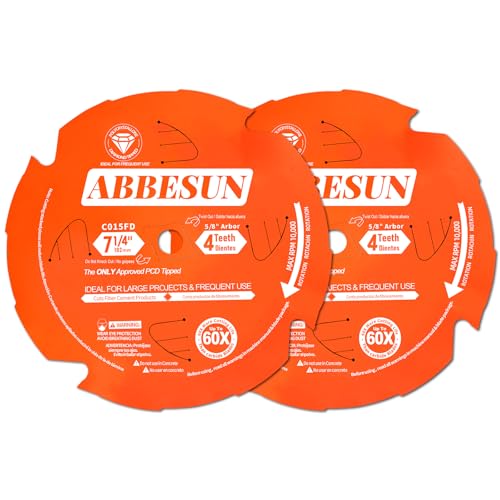
The Abbesun 2-pack 7-1/4 inch PCD Tipped Hardie Blade is a purpose-built circular saw blade designed to tackle the toughest fiber cement, hardie plank, and laminate flooring materials. This blade is a solid choice for contractors, woodworkers, and DIY homeowners who regularly cut abrasive materials that would quickly dull standard carbide blades. With its polycrystalline diamond tips, it promises up to 75 times longer cutting life, making it a practical investment for high-volume job sites or ambitious home projects.
In real-world use, the laser-cut thin kerf and anti-vibration design help deliver fast, clean cuts while minimizing dust and noise. This is a big plus for anyone working in occupied spaces or trying to keep a jobsite clean. The blade's 4-tooth configuration is optimized for speed, so you can rip through fiber cement and cement board efficiently. According to user feedback, the blade maintains its sharpness well over many cuts, reducing downtime for blade changes and keeping productivity high.
Build quality is solid, with a 5/8 inch DMK arbor that fits most standard 7-1/4 inch circular saws, miter saws, table saws, tile saws, and track saws. The diamond-tipped teeth are designed to withstand the abrasive nature of fiber cement and similar materials, which is where carbide blades often fail. The blade's construction also helps reduce vibration, which translates to better control and a cleaner cut edge. For those who value a quieter, less dusty cutting experience, this blade delivers.
Storage and maintenance are straightforward. The blades come in a simple pack, and since they last so long, you won't need to replace them often. There's no complex sharpening required; just keep them clean and store them dry to prevent rust. The 2-pack is convenient for keeping a spare on hand or for using one blade for rough cuts and another for finer work. The compact 7-1/4 inch size also makes them easy to store in a toolbox or on a wall rack.
One realistic limitation is that this blade is specifically designed for hard, abrasive materials. It's not ideal for cutting wood or softer materials, where a higher tooth count would give a smoother finish. Some users might find the 4-tooth design leaves a slightly rougher edge on certain materials, but for most fiber cement and laminate jobs, the cut quality is more than acceptable. Also, the blade is limited to 7-1/4 inch saws, so you'll need an adapter for larger saws.
Overall, the Abbesun 2-pack PCD Hardie Blade is a smart buy for anyone who frequently cuts fiber cement, hardie plank, laminate flooring, or similar materials. It offers exceptional durability, clean cuts, and good value with two blades. Whether you're a contractor tackling multiple job sites or a DIY homeowner working on a major renovation, this blade will save you time and money by staying sharp longer. It's a reliable addition to any workshop or jobsite tool kit.

Pros
- PCD diamond teeth resist extreme abrasion far longer than standard carbide blades
- Deep gullet geometry manages heavy fiber cement dust efficiently
- Standard 5/8-inch arbor fits standard 6-1/2-inch circular saws
- Low tooth count reduces drag and helps preserve cordless tool battery life
Cons
- Engineered strictly for fiber cement products and not suitable for wood or metal cutting
- Four-tooth setup produces a functional siding cut rather than a fine finish edge
The TOMAX PCDM61204 is a specialized 6-1/2-inch circular saw blade built specifically for cutting abrasive fiber cement materials. Standard carbide blades dull quickly when cutting silica-heavy siding products, making polycrystalline diamond (PCD) tipping the practical choice for these demanding applications. Featuring a four-tooth design and a standard 5/8-inch DMK arbor, this blade delivers a dedicated cutting solution for cordless and compact corded circular saws commonly used across residential jobsites.
This blade is ideally suited for siding contractors, general construction crews, remodelers, and DIY homeowners taking on exterior cladding or interior tile backer projects. Installing James Hardie lap siding, Cemplank, or cement backer boards requires specialized tooling to avoid ruined blades and rough edges. For professionals hanging siding daily or ambitious homeowners tackling a bathroom renovation, having a dedicated fiber cement blade keeps the work moving without constant trips to the hardware store for replacements.
In terms of jobsite performance, the polycrystalline diamond tips provide substantial wear resistance against the harsh silica aggregates found in composite cement boards. The low 4-tooth configuration lowers motor resistance, which is especially useful when running 18V or 20V cordless circular saws on high scaffolding or staging. Cuts through siding planks proceed quickly and smoothly, minimizing blade binding and keeping the saw operating at optimal cutting RPM throughout the project.
Dust control and build quality are central to this blade's design. Fiber cement creates fine, hazardous dust, and the extra-large gullet design behind each diamond tooth helps scoop debris out of the kerf rapidly. This efficient material removal keeps the cutting zone clear, minimizes airborne dust dispersion, and prevents excess heat buildup in the steel plate. The rigid core resists flexing, helping maintain straight and true cuts along long siding passes.
There are practical limitations to keep in mind before mounting this blade. Because it features only four diamond teeth and wide gullets, it is engineered exclusively for fiber cement, backer board, and similar composites. It is not suitable for framing lumber, plywood, trim work, or metals. Trying to use it on general building materials will produce rough results and risk damaging the diamond teeth.
For builders, remodelers, and homeowners facing a fiber cement siding installation or tile underlayment project, the TOMAX 6-1/2-inch PCD blade represents a practical, cost-effective accessory. It fits common jobsite circular saws, protects your power tool motors with low-drag cutting, and handles abrasive composite materials with dependable durability.
Fiber cement products present unique challenges on the jobsite due to the high density and abrasive nature of Portland cement and silica sand. The TOMAX PCD blade tackles these challenges directly by utilizing diamond-tipped teeth that maintain their cutting edges across dozens of siding squares, where standard carbide teeth would dull within a handful of cuts.
The 6-1/2-inch form factor is especially well matched with cordless sidewinder circular saws favored on scaffolding, pump jacks, and staging. By pairing low drag with deep gullets, the blade helps maximize run-time per battery charge while keeping cut lines visible and workable for installers.
Pros
- Durable PCD diamond tips outlast standard carbide on abrasive siding
- Thin-kerf geometry lowers airborne dust and reduces saw motor drag
- Diamond knockout arbor provides versatile saw fitment options
- Extra-large gullets prevent debris clogging during rapid panel cuts
Cons
- Four-tooth layout is not suitable for fine woodworking or trim cuts
- Requires a steady feed rate to prevent chipping on brittle materials
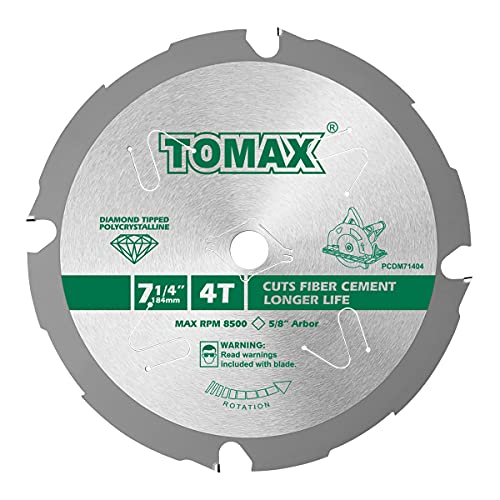
The TOMAX PCDM71404 is a specialized 7-1/4-inch circular saw blade built specifically for slicing through dense, abrasive materials like fiber cement siding and laminate planks. Unlike standard wood blades that dull rapidly in cementitious materials, this blade utilizes polycrystalline diamond (PCD) teeth designed to withstand extreme friction. Fitting common handheld circular saws, it provides a dedicated cutting solution for tough remodeling and exterior construction tasks.
Siding installers, framing contractors, exterior renovation crews, and serious DIY remodelers will find this blade particularly practical. Installing lap siding, cement backer boards for tile underlayment, or dense composite materials quickly ruins general-purpose framing blades. For homeowners prepping a bathroom remodel or trade pros wrapping an entire house, having a dedicated diamond-tipped blade maintains cut quality and prevents unnecessary downtime.
Cutting performance centers on the ultra-thin 1.8 mm kerf and an aggressive four-tooth layout. Thinner kerfs reduce the load on cordless or corded saw motors while generating less airborne particulate, which is a major jobsite safety consideration when dealing with respirable silica dust. Extra-large gullets quickly eject debris away from the cut line, preventing heat buildup and allowing the saw to glide smoothly through full-length siding panels without bogging down.
The core of the blade features a heat-treated steel body paired with brazed PCD cutting tips that provide outstanding wear resistance. It includes a standard 5/8-inch round arbor equipped with a diamond knockout (DMK), giving it flexible compatibility with standard sidewinder saws and high-torque worm drive units alike. The rugged construction resists warping under sustained cutting heat, maintaining a straight, predictable kerf line across continuous cuts.
Because this blade is engineered exclusively for tough composites, users should avoid using it for finished carpentry, fine woodworking, or standard lumber framing. The coarse four-tooth configuration delivers speed and dust evacuation rather than glass-smooth edges on wood trim. Maintenance is straightforward, requiring occasional clearing of cement build-up around the gullets to maintain balanced rotation and optimal dust expulsion.
For exterior remodeling and cement board installation, the TOMAX 7-1/4-inch PCD blade provides dependable cutting efficiency and exceptional edge retention. It serves as a dependable upgrade over disposable carbide blades on demanding jobsites, making it a reliable addition to any contractor truck or DIY workshop tackling siding projects.
Polycrystalline diamond technology offers a significant advantage when cutting abrasive building materials. Synthetic diamond particles sintered onto a robust base create a cutting face that resists the abrasive silica found in fiber cement board. This metallurgical design significantly reduces tooth erosion compared to standard tungsten carbide blades.
The steel plate is balanced to reduce vibration during high-speed rotation, preventing micro-fracturing along the tooth brazing. By combining resilient plate engineering with diamond-grade hardness, this blade handles dense exterior wall cladding, cementitious backer boards, and tough composite flooring planks without premature degradation.

Pros
- Extremely long service life thanks to PCD teeth, reducing blade replacement frequency.
- Thin kerf cuts quickly and minimizes wasted material, improving efficiency on large projects.
- Anti-stick coating helps prevent rust and keeps cuts clean, especially in humid workshop environments.
- Versatile across multiple hard materials including fiber cement, MDF, and Corian.
Cons
- 4-tooth design may produce a slightly rougher finish compared to higher tooth count blades on some materials.
- Limited to materials like fiber cement, MDF, and Corian; not intended for general wood or metal cutting.
- PCD blades can be more brittle than carbide; avoid side loading or sudden impacts.
The TWIN-TOWN PCDT61204 is a specialized 6-1/2 inch circular saw blade designed for cutting fiber cement boards, MDF, and Corian. It features four polycrystalline diamond-tipped teeth and a thin 0.071 inch kerf, which helps reduce material waste while delivering fast, smooth cuts. This blade is particularly suited for contractors, woodworkers, and DIY homeowners who work with siding materials like HardiePlank, or who need to cut other dense materials like Eternit or countertop surfaces.
When it comes to real-world performance, the blade's PCD teeth claim to last up to 50 times longer than standard carbide blades, making it a durable choice for high-volume cutting. The thin kerf design enhances cutting efficiency by requiring less power from the saw, which can help reduce fatigue during extended use on job sites or in home workshops. The anti-stick coating on the blade body resists rust and corrosion, adding to its longevity even when stored in humid garages or workshop environments.
Build quality is focused on heavy-duty use, with polycrystalline diamond tips that handle abrasive materials like fiber cement without dulling quickly. The blade includes a 5/8 inch arbor, making it compatible with most circular saws used by professionals and serious DIYers. The max RPM rating of 8500 ensures it can be safely operated with a variety of saws, from cordless models to larger contractor-grade units.
Setup and storage are straightforward since this is a standard blade. Simply mount it on your circular saw with the arbor size matching your tool, and you are ready to cut. For storage, a blade guard or protective sleeve can protect the PCD tips when not in use. Maintenance typically only involves occasional cleaning of the blade body and teeth to remove resin or pitch buildup, which can happen when cutting materials like MDF.
One realistic limitation is that the 4-tooth design may not produce as fine a finish as a blade with more teeth, especially on materials like MDF or Corian. Additionally, this blade is specifically intended for fiber cement and similar hard materials, so it is not a general-purpose blade for wood or metal. Users should also handle PCD blades with care to avoid chipping the tips from side impact.
Overall, the TWIN-TOWN PCDT61204 is a practical investment for anyone who frequently cuts fiber cement siding, MDF, or countertop materials. Its long blade life, rust-resistant coating, and efficient cutting performance make it a solid choice for contractors, woodworkers, and experienced DIYers looking to reduce downtime and improve productivity on tough cutting tasks.

Pros
- Exceptional longevity compared to carbide blades, especially on abrasive fiber cement materials.
- Smooth, clean cuts with reduced chipping thanks to the thin kerf and diamond-tipped teeth.
- Anti-stick coating keeps the blade free from resin and rust, extending usable life.
- Compatible with most 7-1/4 inch circular saws, easy to install and use.
Cons
- Designed primarily for fiber cement and hard materials, not ideal for general wood cutting or softer materials.
- Only 6 teeth may produce a slightly rougher finish on some materials compared to higher-tooth-count blades.
- Premium PCD construction comes at a higher upfront cost than carbide blades, though long life may offset this.
The TWIN-TOWN 7-1/4 Inch 6 Tooth Polycrystalline Diamond Tipped (PCD) saw blade is a specialized cutting tool built for tackling the toughest fiber cement boards and other hard materials. Whether you are a contractor installing HardiePlank siding, a woodworker working with MDF or Corian, or a DIY homeowner taking on a cement board project, this blade aims to deliver fast cuts and extended service life.
Performance-wise, the blade's 0.071 inch thin kerf design helps it slice through material quickly while removing less waste, which can be a real time-saver on large jobs. The six PCD teeth are the star here: they stay sharp far longer than standard carbide teeth, with the manufacturer claiming up to 50 times the cutting life. For anyone who regularly cuts fiber cement, that means fewer blade changes and less downtime. The anti-stick coating is another practical touch, reducing rust, corrosion, and the buildup of resin or cement dust that can gum up a blade over time.
Build quality appears solid for the price point. The blade is lightweight at under 0.7 pounds, which helps reduce strain on your saw and your arms during extended use. The 5/8 inch arbor fits most standard circular saws, and the blade is rated for up to 8500 RPM, making it compatible with both corded and high-torque cordless saws. The black coating not only looks professional but also serves a functional purpose in protecting the steel.
Setup is straightforward: just mount it on your saw like any other 7-1/4 inch blade. No special tools or adapters are needed for the arbor. Maintenance mainly involves keeping the blade clean and storing it in a dry place to prevent corrosion. The anti-stick coating helps here, but it is still wise to wipe off any residue after heavy use.
One realistic limitation is that this blade is purpose-built for hard, abrasive materials. It will not perform well for ripping softwood or plywood, where a general-purpose carbide blade would be more appropriate. Also, the 6-tooth count means the finish cut may not be as smooth as what you would get from a blade with more teeth, but for fiber cement, speed and durability are often the priority.
Overall, the TWIN-TOWN PCD blade is a practical investment for anyone who regularly cuts fiber cement, HardiePlank, MDF, or Corian. Its long life and efficient cutting can save time and money on professional job sites or serious DIY renovations. If you work with these materials frequently, this blade is worth considering for your circular saw.
The polycrystalline diamond tips on this blade are engineered to withstand the extreme abrasiveness of fiber cement, providing significantly longer edge retention than standard carbide. The anti-stick coating adds another layer of protection against rust and corrosion, which is especially valuable in humid job site conditions or when cutting wet materials. The thin kerf steel body is heat-treated for strength, helping the blade resist warping under heavy use. While no blade lasts forever, this one is built to handle many more cuts than a typical carbide alternative.
This blade is specifically designed for cutting fiber cement boards such as HardiePlank and Eternit, as well as MDF, Corian, and other ultra-hard materials. It is ideal for contractors installing siding, DIY homeowners doing bathroom or kitchen remodels involving cement board, and woodworkers shaping Corian countertops. It is not intended for general wood cutting or metal, and users should stick to the recommended materials to get the best performance and longevity.
Pros
- Exceptional durability for cutting fiber cement and laminate without dulling quickly
- Clean, chip-free cuts thanks to the 4-tooth PCD design and thin kerf
- Wide compatibility with standard 7-1/4-inch saws, including track saws and tile saws
- Lightweight and easy to handle, reducing fatigue during prolonged use
Cons
- Limited to fiber cement and laminate flooring; not suitable for general wood cutting or metal
- Only 4 teeth may produce a slower cut speed on some materials compared to higher-tooth-count blades
- Premium PCD construction may be overkill for occasional DIY users who don't frequently cut abrasive materials
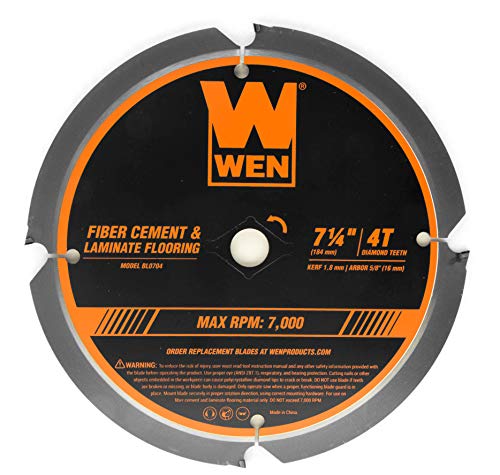
The WEN BL0704 is a 7-1/4-inch circular saw blade engineered with four polycrystalline diamond-tipped (PCD) teeth, purpose-built for cutting tough, abrasive materials like fiber cement board and laminate flooring. This is a specialized tool that trades the versatility of a general-purpose blade for exceptional longevity and cutting performance on demanding surfaces. For professionals and dedicated DIYers who frequently work with these materials, it presents a practical upgrade over standard carbide blades.
This blade is best suited for contractors, woodworkers, and serious DIY homeowners who regularly install siding, trim laminate floors, or cut fiber cement panels. Its design prioritizes durability and clean cuts in these specific applications, making it a valuable addition to a workshop or jobsite tool kit. While not a replacement for a general-purpose saw blade, it excels where standard blades quickly dull and chip.
In real-world use, the BL0704's PCD teeth maintain their edge far longer than carbide alternatives, reducing downtime for blade changes. The thin 1/15-inch kerf cuts with less resistance, which can improve cutting speed and reduce strain on the saw motor. This combination of wear resistance and efficient cutting translates to better productivity on the job, especially during long days of cutting cement board or dense laminate. Users should expect smooth, relatively chip-free cuts when the blade is used correctly.
Build quality appears solid, with a sturdy steel body that remains true at high RPMs (rated to 7000 RPM). The diamond-tipped teeth are designed to withstand the abrasive nature of fiber cement, a material known to quickly dull standard carbide blades. The blade's 5/8-inch arbor fits most circular saws, tile saws, and track saws, offering broad compatibility. Its relatively lightweight construction (just over 0.7 pounds) helps keep the saw balanced and reduces user fatigue during overhead or prolonged cutting.
Storage and maintenance are straightforward: like any specialty blade, it's best kept in a protective sleeve or case when not in use to prevent damage to the carbide tips. No special care is required beyond the usual cleaning of pitch or debris. One realistic limitation is its narrow focus; this blade is not designed for cutting wood, metal, or plastic. Additionally, the four-tooth design can produce a slightly slower cut speed on some materials compared to blades with more teeth, though the trade-off is improved chip clearance and blade life.
Overall, the WEN BL0704 is a smart investment for anyone who regularly cuts fiber cement or laminate flooring. It offers tangible benefits in durability, cut quality, and reduced downtime compared to non-specialized blades. For the occasional DIYer, the cost may be harder to justify, but for contractors, trim carpenters, and dedicated hobbyists tackling these specific materials, it's a reliable and practical choice that can pay for itself over time through fewer blade replacements and cleaner results.
Frequently Asked Questions
Why do fiber cement blades have so few teeth?
Fiber cement blades feature low tooth counts, typically 4 to 6 teeth, to reduce friction and minimize dangerous respirable silica dust. Fewer polycrystalline diamond teeth allow larger gullets to clear heavy cement particles rapidly without packing the blade body. This low-tooth architecture keeps cutting temperatures down and prevents premature edge wear during high-volume siding projects. Selecting a dedicated saw blade for hardie board with 4T or 6T geometry ensures fast, clean cuts across thick planks.
Can I use a regular carbide woodworking blade to cut Hardie board?
No, a standard carbide woodworking blade will dull almost immediately when cutting fiber cement products. Highly abrasive silica cement quickly destroys soft carbide tips within just a few cuts, creating jagged plank edges, high motor strain, and excessive airborne dust. Dedicated blades utilize polycrystalline diamond (PCD) tips that offer up to 50 to 75 times the wear resistance of standard carbide. When using a general power saw for home use, always switch out conventional wood blades before cutting HardiePlank or Cemplank.
What blade diameter and arbor size do I need for siding cuts?
Most siding installations require either a 7-1/4 inch blade or a 6-1/2 inch blade equipped with a standard 5/8-inch arbor. The correct choice depends strictly on your circular saw model, where 6-1/2 inch sizes suit compact cordless saws and 7-1/4 inch blades fit full-sized corded or high-voltage saws. Many 7-1/4 inch blades also feature a diamond knockout (DMK) arbor to accommodate worm drive framing saws. Checking your tool spindle size before ordering ensures safe blade mounting and eliminates wobble during operation.
Can a Saw Blade For Hardie Board be used in a miter saw?
Yes, you can run a Saw Blade For Hardie Board in a miter saw as long as the blade diameter, arbor size, and maximum RPM rating match your tool. Using a miter saw helps deliver square 90-degree cuts and crisp bevels on siding trim, much like setting up a miter saw for trim work. However, fiber cement dust is abrasive to electric motor components, so connecting a high-efficiency dust collection vacuum to the saw port is essential when cutting indoors or on finished sites.
How does thin kerf design benefit fiber cement cutting in 2026?
A thin kerf design reduces motor resistance and lowers the overall volume of silica dust generated per pass. Blades with a 1.8 mm kerf remove less material, preserving battery life on cordless saws while allowing faster linear feed rates. Laser-cut expansion slots and thin-kerf steel plates also absorb vibration, preventing edge chipping and blade deflection on long plank rips.



Write Your Review
No reviews yet. Be the first to share your experience!