


Ever tried laying 4×4 tiles and ended up with mortar squeezing out everywhere? Or worse, tiles that don’t stick? The right trowel size makes all the difference. A 1/4-inch square-notch trowel is the standard go-to for most 4×4 ceramic and porcelain tiles. It balances coverage and control, preventing messy gaps or weak bonds. But not all trowels are created equal. Some have tougher blades, better handles, or special notch patterns that can save you time and frustration. If you’re tackling a bathroom floor, kitchen backsplash, or any small tile project, picking the proper tool isn’t just about convenience – it’s about getting a long-lasting, professional finish. We’ve broken down the specs and user feedback for seven popular trowels to help you choose wisely. For deeper insights on notched trowels for wall tile, check out The Best Notched Trowel for Wall Tile 2026: Top Picks for Precision and Comfort.
Trowel size directly affects how much mortar stays under your tile. Too small a notch means poor adhesion; too big makes a mess. For 4×4 tiles, a 1/4-inch square-notch is ideal for most installations. But what if your subfloor is uneven? Or you’re using thicker porcelain? Then you might need a 3/8-inch notch or a specialized sawtooth pattern. We’ve looked at brands like QEP, Marshalltown, and DIXIANG, ranging from $8.72 to $22.99. The goal is to match the trowel to your tile and job. Learn more about trowel sizes for larger tiles in our guide on What Size Trowel for 12×24 Tile: Find the Best Fit.
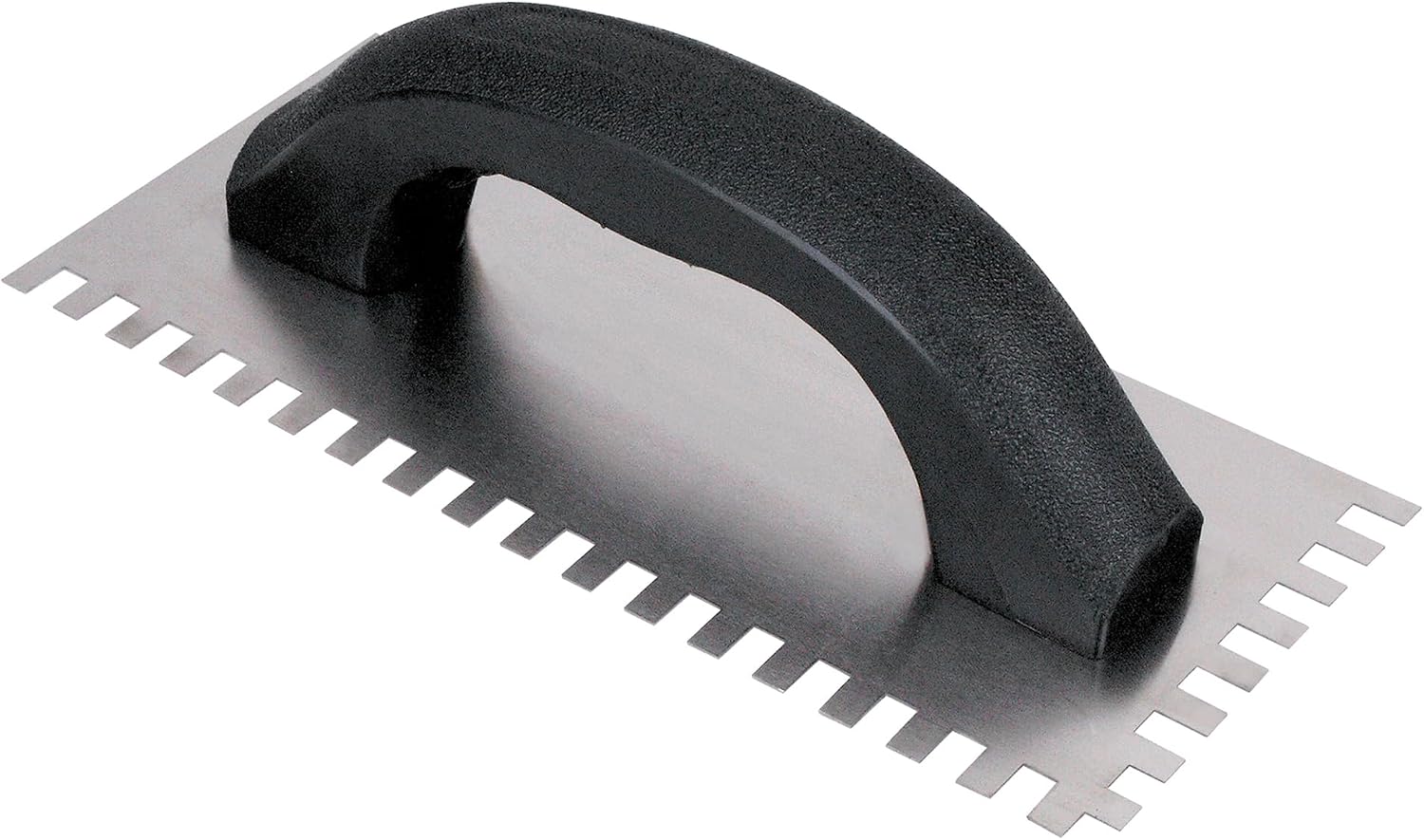
Pros
- Affordable price point makes it ideal for budget-conscious DIYers
- Steel blade resists wear and stays effective for many applications
- Lightweight and easy to handle, reducing hand strain
Cons
- Plastic handle may not be as comfortable for extended use compared to rubberized grips
- Blade size (9" x 4") limits its use to smaller tile projects
- Not suitable for large format tiles or natural stone applications
The QEP 1/4" x 3/8" x 1/4" Square-Notch Economy Flooring Trowel is a straightforward tool designed for one primary job: applying thinset mortar for ceramic tile installations. It's specifically engineered for tiles ranging from 8" x 8" up to 16" x 16", making it a solid choice for smaller floors, backsplashes, or wall projects. This trowel fits well into the hands of DIY homeowners and contractors alike who need a reliable tool without a premium price tag.
In terms of real-world performance, the cold-rolled steel blade is the standout feature. It's hard and holds up well against the abrasive nature of thinset, resisting premature wear that can plague cheaper stamped blades. The 9" x 4" surface area is ample for covering moderate sections efficiently. While the plastic handle is basic, it's high-impact and crack-resistant, and its smooth surface wipes clean easily after use. Many users appreciate that it's made in the USA, which often speaks to consistent quality.
Build quality is practical for the price point. The blade attaches securely to the handle, and the square notches are cleanly cut to deliver consistent mortar ridges. There's no rust-resistant finish mentioned, but the steel can be wiped dry after cleaning to prevent corrosion. The tool's lightweight design (7.5 ounces) makes it easy to maneuver, and its compact dimensions (9 x 4 x 2.5 inches) mean it stores neatly in a toolbox or on a shelf without taking up much space.
Ease of use is a strong suit here. There's no setup required other than attaching the handle (if needed), and cleaning involves just rinsing with water before the thinset dries. For maintenance, keeping the blade free of dried mortar will extend its life. However, the plastic handle, while functional, lacks the cushioned grip that some users might prefer for long days of tiling, especially on larger areas.
A realistic limitation is that this trowel is not intended for large-format tiles or heavy-bodied mortars. Its economy construction means it's best for occasional use or smaller projects. For professionals tiling entire homes, a more robust trowel with a better handle might be worth the investment. But for a homeowner laying a bathroom floor or a contractor on a small job, this trowel delivers solid value.
Overall, the QEP economy square-notch trowel is a practical, budget-friendly tool for its intended use. It's well-suited for DIY enthusiasts and pros who need a dependable tool for standard ceramic tile work. If your project falls within its size range and you're looking for an affordable, USA-made option, this trowel is a sound choice that won't let you down.
The QEP 1/4" x 3/8" x 1/4" Square-Notch Economy Flooring Trowel features a cold-rolled steel blade that is hardened for longer wear compared to standard steel. The blade is attached to a high-impact plastic handle that resists cracking and is designed for easy cleaning. Overall, the construction is sturdy for an economy tool, with no sharp edges or wobble in the handle-to-blade connection. While it's not a premium trowel, it offers reliable build quality for its price range.
The cold-rolled steel blade is the key to this trowel's durability. It holds up well against thinset abrasion and won't deform quickly under normal use. The plastic handle is impact-resistant and can withstand occasional drops on the job site. However, the blade lacks a corrosion-resistant coating, so it's important to clean and dry it after each use to prevent rusting. With proper care, this trowel should last for many small to medium tiling projects.
This trowel is perfect for DIY homeowners tackling ceramic tile installations such as kitchen backsplashes, bathroom floors, or entryways. Its 1/4" x 3/8" x 1/4" notch size is ideal for standard thinset thickness on 8" to 16" tiles. The lightweight design and simple handle make it easy for beginners to use, and the affordable price means it's not a major investment. For weekend warriors, the QEP economy trowel offers a great balance of cost and functionality.
While aimed at the economy segment, this QEP trowel can still serve contractors for quick jobs or as a backup tool. It works well for small floor repairs, backsplash installations, or other tasks where a full-size trowel is overkill. The durable blade handles thinset well, and the easy-clean handle means less downtime between jobs. However, for heavy daily use on large areas, professionals might prefer a model with a padded handle or larger blade. Nonetheless, it's a reliable addition to any tile setter's kit.

Pros
- Sawtooth pattern provides excellent mortar coverage for large tiles, reducing voids
- Sturdy thru-rivet construction ensures the blade stays securely attached to the handle
- Comfortable, ergonomic handle reduces fatigue during extended use
- Made in the USA with high-quality materials for long-lasting performance
- Lightweight design (12.3 oz) makes it easy to maneuver
Cons
- Some users have reported occasional quality control issues, such as bent teeth upon arrival
- May require a learning curve for those accustomed to traditional square-notch trowels
- Limited availability in big-box stores; often must be ordered online
The MARSHALLTOWN Sawtooth Notched Trowel (model SAW11SD) is a purpose-built tool for installing large format tiles, such as 12x24 inch or larger. Unlike traditional square-notch trowels, the sawtooth pattern creates ridges that collapse more easily under the tile, leading to improved mortar coverage and reduced voids. This trowel is an excellent choice for DIY homeowners tackling a bathroom or kitchen floor, as well as professional contractors and tilers who demand consistent results on high-end jobs.
In terms of performance, user reviews consistently highlight the trowel's ability to achieve minimum 95% coverage, which is critical for preventing tile lippage and ensuring a strong bond. The hard-tempered steel blade holds up well to repeated use, and the sawtooth notches maintain their shape over time. Many users note that the ergonomic DuraSoft handle provides a comfortable, confident grip even when hands are wet from thin-set. The thru-rivet mounting connects the blade to the aluminum alloy Xtralite mount, creating a durable assembly that won't loosen during heavy use.
Build quality is a standout feature. The blade is made of hard-tempered steel, and the mounting is an aluminum alloy that keeps the overall weight low (just 12.3 ounces). The handle is made of a soft, long-lasting material that reduces fatigue. The entire tool is assembled in the USA with global materials, which adds to its appeal for those who prefer American-made products. The finish is a brushed steel, and the red handle provides a nice visual contrast.
Storage and maintenance are straightforward. The trowel can be cleaned with a solvent like mineral spirits to remove uncured thin-set, and wiping it down after use prevents rust. It fits easily into a standard tool bag or tray. There is no included case, but the compact size (11.5 x 4.57 inches) makes it easy to store.
A realistic limitation is that a few users have reported receiving a trowel with a bent tooth, which suggests occasional quality control issues. However, most reviews praise the tool's overall quality. Additionally, if you are used to a square-notch trowel, the sawtooth pattern may require a brief adjustment period to achieve optimal coverage. Some users also note that the trowel is not always available at local home centers, so ordering online is often necessary.
Overall, the MARSHALLTOWN Sawtooth Notched Trowel offers excellent value for anyone working with large format tiles. Its combination of thoughtful design, durable construction, and ergonomic comfort makes it a worthwhile investment for both DIYers and professionals. If you are looking to improve your tile installation results, this tool is a solid choice.
The MARSHALLTOWN Sawtooth Notched Trowel is built to last, with a focus on durability and reliability. The blade is made from hard-tempered steel, which resists bending and maintains sharp notches through many jobs. The mounting is aluminum alloy Xtralite, which reduces weight while providing a strong foundation. The thru-rivet connection between the blade and mounting is a key feature: it eliminates the risk of the blade separating from the handle, a common failure point in lower-quality trowels. The DuraSoft handle is molded onto the mount, providing a seamless, secure grip that won't slip or rotate. This trowel is proudly made in the USA with global materials, reflecting a commitment to quality control and craftsmanship.
The primary advantage of the sawtooth notch pattern is improved mortar coverage for large format tiles. Unlike square notches that hold a rigid ridge, the sawtooth pattern's ridges collapse more easily under the weight of the tile, spreading the thin-set evenly and reducing air pockets. According to product specifications, this trowel achieves minimum 95% coverage, which is critical for preventing lippage and ensuring a strong bond. Users report that this trowel works exceptionally well with 12x24 inch tiles and larger formats. The blade's hard-tempered steel maintains its shape, so the notches remain consistent throughout the job. The ergonomic handle allows for comfortable extended use, making it easier to maintain a steady hand and apply even pressure. Overall, performance is excellent for its intended application.

Pros
- Stainless steel blade resists rust and corrosion for long life
- No-rivets design prevents snagging and leaves a clean finish
- Comfortable handle with non-slip rubber reduces hand fatigue
- Lightweight at 12 ounces for easy handling and control
Cons
- 11x4 inch size may be too small for large-area concrete finishing
- Handle material may feel slightly slick in wet conditions
- No included storage or carry case – requires separate tool storage
This DIXIANG stainless steel flat finishing trowel is a straightforward hand tool designed for applying and smoothing concrete, cement, mortar, and drywall joint compound. At 11 inches by 4 inches, it fits comfortably between a larger finish trowel and a smaller pointing trowel, making it useful for both small repairs and medium-sized finishing work.
This tool is best suited for DIY homeowners taking on basement patches or small concrete slabs, masons and brick layers working on mortar joints, and drywall finishers smoothing joint compound. Contractors on job sites will appreciate its lightweight design and easy cleanup, while workshop users can rely on it for leveling grout or thin-set on tile backsplashes.
Based on product specifications and user feedback, the stainless steel blade offers excellent resistance to rust and corrosion – a major plus when working with wet materials. The no-rivets construction means there are no raised fasteners to catch on the surface, allowing for a smooth, snag-free finish. The aluminum shank keeps the tool light (only 12 ounces), which helps reduce arm fatigue during extended use.
The ergonomic handle is made of plastic and rubber mounted over the shank, providing a secure grip that stays comfortable even with wet or gloved hands. Cleaning is straightforward: just rinse off any residue after use and wipe dry. For storage, you’ll need a spot in your toolbox or on a magnetic strip – no included pouch.
A realistic limitation is the size. At 11x4 inches, it works great for small to medium flatwork but may be too small for large concrete slabs where a 16- or 20-inch trowel would be faster. Also, the handle, while comfortable, can get a bit slippery if your hands are wet or have oil, so keeping a dry rag nearby is helpful.
Overall, if you need a reliable, easy-to-clean finishing trowel that won’t rust after a few uses, this DIXIANG model is a practical buy. It delivers good performance for the price and fits well into the kit of any serious DIYer or professional looking for a quality stainless steel option.
The build quality of this DIXIANG finishing trowel centers on its stainless steel blade and no-rivets design. The blade is pressed from a single sheet of stainless steel, which eliminates weak points common with riveted trowels. The aluminum shank is lightweight yet sturdy, and it’s bonded securely to the blade. The plastic and rubber handle is molded over the shank with a textured grip that doesn’t slip during use. Overall construction feels solid and well-balanced for a tool in this price range.

Pros
- Rustproof stainless steel blade resists corrosion and stays sharp
- Comfortable ergonomic handle with non-slip grip reduces hand fatigue
- Durable aluminum shank with multiple rivets withstands heavy use
- Compact and lightweight for easy storage in a toolbox or tool belt
Cons
- Notched size is limited to 1/4 inch, not suitable for larger notch tile work
- May be too small for large floor tile projects requiring bigger trowels
The QEP Comfort Grip Stainless Steel Trowel is a square notch trowel designed specifically for spreading thin-set mortar during tile installation. With a blade size of 11 inches by 4.5 inches and 1/4 inch notches, this tool is a solid choice for setting wall tiles, backsplashes, and smaller floor tiles. It's built for both DIY homeowners tackling bathroom renovations and professional tilers who need a reliable hand tool for everyday use.
Performance-wise, the stainless steel blade stands out for its rustproof qualities. Unlike carbon steel trowels that can corrode when exposed to moisture from mortar, this blade stays clean and sharp. The Comfort Grip handle is shaped to fit the hand naturally, and the extra clearance between the handle and shank lets you rotate your hand fully without bumping knuckles. This makes a real difference during long tiling sessions where repetitive motions are common.
Build quality is solid for the price point. The shank is made from aluminum die-cast and attached with nine rivets, giving the trowel good rigidity without adding unnecessary weight. The blade is securely fastened to the shank, so there's no wobble or flex during use. At only 1.76 ounces, it's light enough to carry in a tool belt or pouch without dragging you down.
Storage and maintenance are straightforward. The stainless steel blade rinses clean with water and resists mortar buildup. You can store it in a standard toolbox or hang it on a pegboard. The compact size means it won't take up much space, which is handy for cramped workshops or garage setups.
One realistic limitation is the notch size. The 1/4 inch square notch is ideal for tiles up to about 12 inches, but if you're installing large-format floor tile, you may need a bigger notch depth. Also, the 4.5 inch blade width might feel narrow for spreading mortar on large areas quickly. Still, for most residential tile work, this trowel hits the sweet spot between control and efficiency.
Overall, this QEP trowel is a practical buy for anyone involved in tile setting. DIYers will appreciate the comfortable grip and easy cleanup, while contractors will value the durability and corrosion resistance. If you stick to wall tiles, backsplashes, or small floor projects, this trowel delivers reliable performance without breaking the bank.
The QEP Comfort Grip trowel uses a stainless steel blade that resists rust and mortar stains, keeping the edge sharp over time. The aluminum die-cast shank is reinforced with nine rivets, creating a strong bond between the handle and blade. This construction minimizes flex and helps maintain even mortar coverage. The handle is secured with a sturdy rivet, and the overall assembly feels solid for a tool in this price range.
The lightweight design is a bonus when working overhead or on walls. The shank's extended length provides extra leverage while still allowing the user to rotate their hand freely. This is a subtle but important detail that improves control on vertical surfaces.
This trowel's 1/4 inch square notch is best suited for wall tiles, mosaics, and backsplash tiles up to 12 inches. It applies thin-set mortar evenly, creating consistent ridges for good tile adhesion. For floor tile larger than 12 inches, you'll want a trowel with a bigger notch size, such as 1/2 inch. The 4.5 inch blade width works well for spreading mortar on small to medium areas, but it may slow you down on large floor jobs where a wider trowel is more efficient.
DIYers will find it easy to control, and the stainless steel blade simplifies cleanup. Professional tilers can use it as a backup or for detail work around edges and corners. Overall, it's a versatile trowel for typical residential tile projects.

Pros
- Durable cold-rolled steel blade for long-lasting use
- Comfortable plastic handle with good grip
- Affordable price point for occasional tiling projects
- Correct notch size for small-format tiles and wallbase
- Easy to clean with water after use
Cons
- Plastic handle may not feel as premium as wood or rubber alternatives
- Not suitable for large-format tiles or heavy commercial use
- Economy construction might not withstand daily abuse on job sites
The QEP 3/16" x 5/32" V-Notch Economy Flooring Trowel is a basic but capable tool designed for applying thinset adhesive to smaller tiles, wallbase, and mosaics. This trowel is an excellent option for DIY homeowners tackling bathroom backsplashes, contractors doing light tile work, or tilers who need a budget-friendly backup tool.
Performance-wise, the V-notch pattern evenly distributes thinset, ensuring proper coverage for tiles up to 6" x 6". The notch size (3/16" deep and 5/32" wide) is ideal for wall tiles, mosaics, and plastic or metal tile applications. Many users report that it leaves consistent ridges, which helps with adhesion and reduces waste. It's not meant for large floor tiles, but for small installations it does the job well.
Build quality is straightforward: the blade is made from hard cold-rolled steel, which holds its shape and resists bending under normal use. The high-impact plastic handle is firmly attached and provides a decent grip, even with wet hands. While the handle isn't as ergonomic as some premium models, it's functional and easy to clean. Being Made in the USA adds to its appeal for buyers who prioritize domestic manufacturing.
In terms of storage and maintenance, this trowel is lightweight (just over 6 ounces) and small enough to fit in any toolbox or hanging on a pegboard. After use, simply rinse the blade with water and dry it to prevent rust. The plastic handle won't absorb moisture, so it's low-maintenance. One limitation is that the economy construction may not hold up to heavy daily use on large commercial projects, but for occasional or light professional work, it's perfectly adequate.
Overall, the QEP 3/16" x 5/32" V-Notch Economy Flooring Trowel is a great value buy for anyone who needs a reliable trowel for small tile jobs. It delivers honest performance at a very reasonable price, making it a practical addition to any DIYer's or contractor's toolkit.

Pros
- Stainless steel blade won't rust, even with frequent cleaning and exposure to moisture
- Comfortable cushioned grip helps reduce hand fatigue during long tiling sessions
- Rigid yet lightweight design provides good control and consistent notch depth
- Reinforced rivets at stress points add durability for heavy daily use
- Easy to clean and maintain, saving time between jobs
Cons
- Wood handle may be less durable than a full rubber or plastic grip over many years
- Notch size is fixed, so users needing other depths will need additional trowels
- Some users may prefer a wider blade for very large floor areas
The QEP Comfort Grip Stainless Steel Trowel is a purpose-built tool for applying mortar, thinset, and adhesive during tile and stone installations. It features a 1/4-inch by 3/8-inch by 1/4-inch square-notch design that creates consistent grooves for proper tile bonding. This trowel is ideal for DIY homeowners tackling bathroom or kitchen renovations, as well as professional contractors and tile setters who need reliable performance on a daily basis.
Based on product specifications and user feedback, the stainless steel blade stands out for its rust resistance. Unlike standard carbon steel trowels that can corrode quickly when exposed to wet mortar or frequent cleaning, this QEP trowel maintains its finish and cutting edge over time. Users report that it cleans easily and does not rust, which is a major advantage for anyone working with cement-based products. The 11-inch by 4.5-inch blade size offers a good balance between coverage and control for walls and floors.
Build quality is solid for the price point. The aluminum die-cast shank is reinforced with nine rivets, and the first and last rivets are welded for extra strength. This construction helps the trowel resist flexing under pressure, giving you a consistent notch depth across the entire blade. The extra clearance between the handle and shank allows for full hand rotation, which improves maneuverability in tight corners or around obstacles. The cushioned grip is contoured and comfortable, reducing strain during long tiling sessions.
In terms of storage and maintenance, the trowel is straightforward. It can be rinsed clean with water after use and wiped dry, and the stainless steel blade does not require special storage to prevent rust. The lightweight 11.2-ounce design makes it easy to carry in a tool bag or bucket without adding unnecessary weight. That said, the wood handle may not be as long-lasting as a fully rubberized grip, especially if exposed to moisture repeatedly without proper drying.
One realistic limitation is that this trowel is specifically designed for square-notch applications, so it works best with thinset for tile and stone. If you need a different notch pattern for other masonry tasks, you will need additional tools. Also, while the blade is durable, it is not impact-rated for heavy prying or scraping, so it should be used only for spreading adhesive.
Overall, this QEP trowel is a practical, well-built choice for anyone installing tile, porcelain, or natural stone. Its rustproof blade and comfortable grip make it especially appealing for DIYers who may not use the tool every day, while the reinforced construction holds up to professional use. For the price, it delivers dependable performance and long-term value in the workshop, garage, or jobsite.

Pros
- Comfortable non-slip rubber grip reduces fatigue during repetitive troweling
- Bucket hook keeps the tool handy and organized on the job site
- Flexible yet durable steel blade conforms to surfaces while resisting wear
- Compact 6-inch blade length fits easily into buckets and tight corners
- Easy to clean and maintain with just water
Cons
- Notch size is specific to smaller tiles (up to 8x8 inches) and may not suit larger formats
- Plastic handle may feel less premium than full rubber or wood handles
- Limited to thinset application; not designed for heavy mortar or leveling compounds
The QEP 42114 margin trowel is a specialized hand tool for flooring work, specifically designed to apply thinset mortar in tight, hard-to-reach areas. With its 1/4-inch square notches and compact 6-inch blade, this trowel is best suited for installing floor tiles up to 8x8 inches, making it a practical choice for both DIY homeowners and professional tilers.
This trowel shines in real-world performance where precision and access matter. The 1/4 x 1/4 x 1/4 inch notch pattern delivers consistent mortar coverage for small-format tiles, helping ensure good adhesion without excess squeeze-out. The blade is made from ground, tempered, and hardened alloy steel, offering a good balance of flexibility for contouring to subfloors and durability to resist bending or breaking under normal use. Users will appreciate the tool's ability to work efficiently under toe kicks, around cabinets, and in other cramped spaces where a standard trowel simply can't fit.
Build quality is practical for the price point. The co-molded plastic handle features a non-slip rubber grip that provides a secure hold even with wet or gloved hands, reducing hand fatigue during repetitive tasks. The patent-pending bucket hook is a thoughtful addition, allowing you to hang the trowel on the side of your mixing bucket for quick access and organized storage. While the handle material is plastic, it feels sturdy enough for regular job site use and is easy to clean by simply rinsing with water.
Storage and maintenance are straightforward. The trowel's compact size (10.5 x 2 x 2.5 inches) means it won't take up much space in a toolbox or on a shelf. Cleaning requires just a hose or a bucket of clean water after use, preventing thinset from hardening on the blade. The bucket hook also helps keep the tool off the floor, reducing the risk of damage or mess.
One realistic limitation is that the notch size is specifically designed for tiles up to 8x8 inches. If you're working with larger format tiles or need a different notch pattern, you'll need a separate trowel. Additionally, while the plastic handle is functional, some users might prefer a full rubber or wood handle for a more premium feel. This trowel is also not intended for heavy mortar or leveling compounds, so keep that in mind for larger projects.
Overall, the QEP 42114 margin trowel is a reliable, ergonomic, and affordable tool for anyone tackling small tile installations or needing to apply thinset in tight spaces. DIY homeowners will find it easy to use and clean, while contractors will appreciate its durability and the convenience of the bucket hook. If your work involves 8x8 inch or smaller floor tiles and you frequently deal with confined areas, this trowel is a smart addition to your toolkit.
Frequently Asked Questions About Choosing the Right Trowel for 4×4 Tile
Is a 1/4-inch square-notch trowel always the best for 4×4 tile?
Yes, for standard 4×4 ceramic or porcelain tiles, a 1/4-inch square-notch trowel is the most commonly recommended size. It provides enough mortar for solid adhesion without excessive squeeze-out. However, if your tiles are thicker or your subfloor is uneven, you may need a 3/8-inch notch.
What happens if I use a trowel that’s too small for 4×4 tile?
Using a trowel with notches that are too small leads to insufficient mortar coverage. This can cause tiles to not bond properly, resulting in loose tiles, cracks, or hollow sounds. You’ll also have to work harder to spread enough adhesive, wasting time and material.
Can I use a V-notch trowel for 4×4 tile?
V-notch trowels are generally used for wall tiles, mosaics, or small-format applications. For 4×4 floor tiles, a square-notch trowel is preferred because it leaves more consistent ridges and better coverage. A V-notch may not deliver enough mortar for a secure bond on floor installations.
How do I know if my trowel notch size is correct for 4×4 tile?
After combing mortar, lay a tile and press it down. Remove the tile and check the back: you should see full coverage (at least 80% for wet areas, 95% for floors). If you see bare spots, your trowel is too small. If excess mortar oozes out, it’s too big. A 1/4-inch square-notch usually hits the sweet spot.
Does the blade quality affect trowel performance for 4×4 tile?
Absolutely. A stainless steel or hardened steel blade stays sharp and resists rust, ensuring clean, uniform notches. Dull or bent teeth will leave inconsistent mortar ridges. For a budget-friendly yet durable option, the QEP Economy Square-Notch Trowel uses cold-rolled steel. For premium performance, the Marshalltown Sawtooth offers a special pattern for large-format tiles.
Should I back-butter 4×4 tiles with my trowel?
Back-buttering (applying a thin layer of mortar to the tile back) is recommended for dense porcelain or natural stone tiles to improve adhesion. Use the flat side of your trowel to skim-coat the back. For standard ceramic 4×4 tiles, it’s often optional but can help ensure full coverage in tricky spots.
What should I look for in a trowel handle for comfortable use on many tiles?
For a job with many 4×4 tiles, ergonomic handles with non-slip grips reduce hand fatigue. Look for rubberized or contoured grips like the QEP Comfort Grip series. A longer shank with extra handle clearance also allows for a full range of motion, making spreading easier and more uniform.



Write Your Review
No reviews yet. Be the first to share your experience!