


Demolition and remodeling tasks frequently require cutting through dense structural metals, which leads many tool owners to wonder about tool capabilities before ruining hardware. Knowing whether can a reciprocating saw cut steel and rebar saves both project time and money on dull consumables. A standard reciprocating saw can easily cut both structural steel and heavy rebar provided you choose the proper blade type, match motor speeds to the workpiece thickness, and maintain steady contact between the saw shoe and the metal surface. Equipping the tool with standard wood blades will instantly strip cutting teeth, whereas selecting suitable reciprocating saw blades for demolition and metal fabrication allows clean separation through solid round bar and structural tubing.
Material thickness, motor power, and blade tooth configuration ultimately determine how fast and cleanly a cut progresses. Thin-wall electrical conduit and steel framing require fine tooth counts to avoid snagging, while solid reinforcing bars demand sturdy carbide or bi-metal construction capable of enduring high friction and heat. Corded tools like the Skil 9206-02 7.5-Amp Variable Speed Reciprocating saw deliver continuous cutting current that prevents bogging down when powering through dense Grade 40 or Grade 60 rebar. Understanding the mechanical relationship between blade material, tooth pitch, cutting lubrication, and tool speed turns an otherwise frustrating, spark-filled chore into a smooth, repeatable cutting operation.

Pros
- Unpainted stainless steel finish keeps food prep clean and sanitary
- Universal shank pairs seamlessly with standard reciprocating saws
- Cuts efficiently through dense frozen quarters and tough bone
- Resists rust and cleans up easily after garage or workshop processing
Cons
- Six-inch blade length may limit single-pass cuts on thick beef quarters
- Stainless steel teeth will dull more quickly against heavy bone than carbide alternatives
- Specialized design is not suited for standard construction lumber or metal cutting
The Caliastro 6-inch stainless steel reciprocating saw blades represent a dedicated power tool accessory built specifically for food processing, game dressing, and home butchery. For DIY processors, homesteaders, hunters, and garage mechanics who break down venison or bulk primal cuts, standard demolition or wood blades are unsuitable due to painted finishes and rust-prone carbon steel. This five-pack provides an unpainted, food-grade alternative that pairs the power of a standard reciprocating saw with butcher-ready utility.
In practical cutting tasks, the blade profile focuses on rapid separation of frozen meats and dense animal bone. The aggressive tooth geometry cuts quickly through fibrous muscle and chilled marrow without binding excessively in the cut. Because reciprocating saws transfer significant cutting force directly to the blade, users benefit from reduced physical effort compared to traditional manual bone saws, speeding up processing sessions considerably during busy hunting seasons or meat prep days.
Build quality centers on solid stainless steel construction. Because there is no painted coating, users do not have to worry about paint chips flaking into food portions during heavy vibration. The stainless composition also provides natural rust resistance, which is critical when working with wet proteins, ice crystals, and frequent sanitizing rinses. The universal tang locks securely into standard keyless chucks from major brands like DeWalt, Milwaukee, Makita, and Ryobi, ensuring solid tool control and minimal chatter.
Cleanup and routine care are straightforward. Unlike standard painted blades that trap grease and debris in textured finishes, the smooth metal surface rinses clean with hot water and food-safe detergents. Storage requires minimal footprint in a workshop drawer or meat processing bin. While they wash easily, drying them thoroughly before storing them ensures long-lasting surface cleanliness for future seasons.
The primary trade-off comes down to blade length and tooth longevity. At six inches, these blades excel at handling smaller game, poultry, fish, and standard bone cuts, but they may feel short when splitting thick beef carcasses or large pork quarters where a nine-inch blade offers deeper reach. Additionally, stainless steel is naturally softer than bi-metal or carbide, meaning hard bone will eventually dull the cutting edge over time.
For home butchers, outdoor enthusiasts, and garage workshop users looking to process game quickly and hygienically, this 5-pack delivers dependable cutting efficiency and great utility. It turns an ordinary reciprocating saw into a fast, sanitary meat processing tool without breaking the bank.
Using a reciprocating saw for game processing saves tremendous time in a garage or workshop setup. The Caliastro blades provide steady bite without excessive wandering, allowing users to make straight cuts through frozen roasts and thick joints with confident control. The six-inch working length reduces flex, translating the tool stroke into productive cutting speed rather than blade whip.
Vibration remains manageable when paired with a variable-speed reciprocating saw. Running the saw at medium speed allows the teeth to clear bone dust efficiently without heating up the meat, making this setup a practical choice for seasonal hunters and bulk meat purchasers looking to streamline their workflow.

Pros
- Exceptional heat and wear resistance in high-alloy steels, rebar, and stainless steel
- Long 12-inch profile handles deep cuts and large diameter pipe demolition
- Stout tooth retention prevents stripping during aggressive metal teardown work
- Standard 1/2-inch universal shank fits virtually all modern reciprocating saws
Cons
- Aggressive 8 TPI configuration is too coarse for very thin sheet metal applications
- Extended length may be unwieldy in cramped plumbing chases or tight engine bays
- Single-pack packaging means having to purchase multiples for massive teardown jobs
The EZARC 12-Inch 8 TPI Carbide Reciprocating Saw Blade is a specialized power tool accessory built to slice through demanding, thick metal stock. Demolition contractors, automotive salvage mechanics, commercial plumbers, and structural metalworkers often need heavy-duty cutting gear that will not strip teeth immediately. While DIY homeowners can certainly use it for tough backyard demo or cast iron pipe removal, it specifically caters to tradespeople who regularly face reinforced materials like rebar, structural beams, and automotive chassis components.
Based on manufacturer specifications, this blade uses individually welded, precision-ground carbide teeth that resist extreme heat friction far better than typical bi-metal blades. Cutting into hardened alloys or stainless steel can dull standard blades in seconds, but the robust 8 teeth-per-inch geometry balances cutting speed with clean chip clearance. Whether you are slicing 1/2-inch steel plate or dismantling car frames, the carbide edge maintains tooth integrity to deliver steady, predictable cuts through difficult media.
The 12-inch overall reach gives users significant leverage and depth of cut, making it easier to power through thick-walled pipes, structural tubing, or deep demolition assemblies. A reinforced blade body reduces excessive flexing and blade wander during aggressive plunge or push cuts. The standard 1/2-inch universal shank slots easily into major reciprocating saw brands like Milwaukee Sawzall, DeWalt, Makita, Bosch, and Ridgid, ensuring seamless integration into your existing cordless or corded tool setup.
While the 8 TPI profile excels in heavy metals between 1/8-inch and 1/2-inch thickness, it is less suitable for ultra-thin sheet metal where tooth snagging can occur. Additionally, the extended 12-inch length requires adequate clearance around the work area, so tight plumbing chases or confined engine bays might require a shorter counterpart. Because it is sold as a single-blade pack, users taking on massive teardown projects should evaluate their overall volume needs before heading to the jobsite.
For mobile repair mechanics, metal fabricators, and demolition crews handling hardened steel, cast iron, or reinforced construction framing, this blade offers a dependable alternative to disposable bi-metal packs. It eliminates constant blade swaps, keeps jobsite productivity moving forward, and handles the punishing materials that stop ordinary blades in their tracks.
On commercial construction sites, heavy structural framing and reinforced concrete embeds quickly ruin standard cutting accessories. This carbide reciprocating blade is engineered to slice directly through embedded rebar, steel studs, and heavy-wall conduit without overheating or losing tooth segments.
In automotive salvage yards and custom exhaust shops, cutting through hardened frame rails, rusted exhaust brackets, and bumper supports requires a resilient tooth edge. The extended reach allows technicians to slice around subframes and suspension components without having the saw housing obstruct the cut line.
Pros
- Wide range of blade types and sizes covers most common cutting applications in one kit
- Cr-V steel and bi-metal construction offer good durability for heavy use
- Organizer pouch keeps blades accessible and tidy in a toolbox or tool bag
- Compatible with nearly all reciprocating saws, no special adapters needed
Cons
- Pouch is fabric and may not hold up to heavy jobsite abuse as well as a hard case
- Some users may prefer more aggressive tooth geometries for specific materials like thick metal or nail-embedded wood
- Blade tang design may vary slightly, but compatibility with standard saws is generally fine
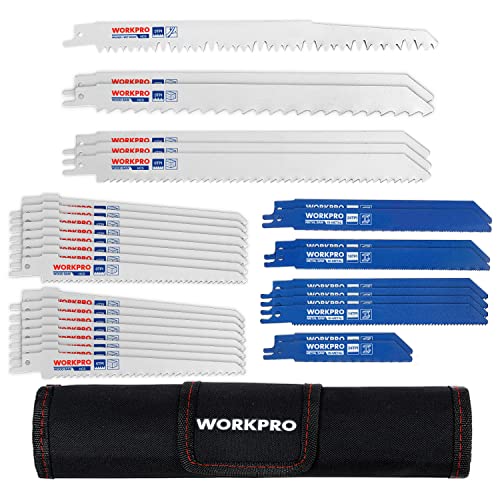
The WORKPRO 32-Piece Reciprocating Saw Blade Set is designed to be a comprehensive solution for anyone who frequently uses a reciprocating saw. Whether you are a DIY homeowner tackling weekend projects, a mechanic cutting exhaust pipes, or a contractor framing a house, this set provides the blades you need most. The combination includes wood blades with 6 and 8 TPI for general wood cutting, 3 and 6 TPI for faster ripping, plus thin and thick metal blades ranging from 14 to 24 TPI. There is also a dedicated pruner blade for wet wood and branches.
Performance-wise, the wood blades are made from chrome vanadium steel, which offers good edge retention and resistance to bending. They cut through dimensional lumber, plywood, and even thick firewood smoothly. The metal blades feature bi-metal construction, meaning they use high-speed steel teeth bonded to a flexible steel body. This design prevents tooth breakage when cutting through metal pipes, angle iron, or thin sheet metal. Based on the product specifications, these blades should handle typical workshop and construction materials without excessive wear.
Build quality is solid for the price point. The blades are heat-treated to reduce brittleness, and the coatings help resist rust. While they may not be the absolute toughest blades on the market, they offer reliable performance for most users. The inclusion of a fabric organizer pouch is a practical touch it keeps the blades separated by type and size, making it easy to grab the right one quickly. The pouch fits comfortably inside a standard toolbox or can be hung on a pegboard.
One realistic limitation is that the pouch is not a hard case, so it may not protect blades from heavy drops or crushing in a packed truck bed. Also, the set does not include specialty blades for cutting nail-embedded wood or abrasive materials. However, for general wood and metal cutting tasks around the home, garage, or job site, this kit covers the basics very well.
Overall, the WORKPRO 32-Piece Reciprocating Saw Blade Set is a practical investment for anyone who wants a versatile blade collection without breaking the bank. It suits DIYers working on home repairs, mechanics performing automotive work, woodworkers shaping lumber, and contractors tackling demolition. The combination of durable materials, thoughtful blade selection, and convenient storage makes it a smart addition to any workshop or job site toolbox.
The wood blades in this set are constructed from chrome vanadium (Cr-V) steel, known for its strength and edge-holding ability. The metal blades use bi-metal technology, which fuses high-speed steel teeth to a flexible steel body, reducing the chance of tooth breakage under stress. Heat treatment during manufacturing adds hardness and wear resistance. While the blades are not the thickest or stiffest available, they are appropriate for typical cutting tasks in wood, metal, and plastic. The pruner blade features a specially ground tooth pattern for efficient branch cutting. Overall, the build quality meets expectations for a mid-priced kit aimed at both DIY and professional users.
The set includes 32 blades in a variety of sizes and tooth configurations: 2x 4-inch thin metal blades (24 TPI), 4x 6-inch thick metal blades (14 TPI), 2x 6-inch thin metal blades (18 TPI), 2x 6-inch thin metal blades (24 TPI), 8x 6-inch wood blades (6 TPI), 8x 6-inch wood blades (8 TPI), 3x 9-inch wood blades (6 TPI), 2x 9-inch wood blades (3 TPI), and 1x 9-inch pruner blade (5 TPI). A bonus fabric organizer pouch is included, which has designated pockets for different blade sizes, making it easy to keep the set organized and portable.

Pros
- Bi-metal construction offers excellent durability and heat resistance for heavy-duty metal cutting
- 14 TPI provides a good balance of cutting speed and smooth finish on medium-thickness metals
- Universal fit works with all major reciprocating saw brands, easy to swap blades quickly
- Affordable 5-pack provides great value, especially for DIYers and tradespeople who go through blades regularly
Cons
- 6-inch length may be too short for cutting larger diameter pipes or thicker stock in a single pass
- Orange color may not appeal to all users, though it does help with quick identification
- Limited user reviews available, so long-term performance data is not yet established
The Amartisan 5-Piece 6 Inch 14TPI Heavy Metal Cutting Reciprocating Saw Blades are a practical addition to any workshop, garage, or jobsite. Designed specifically for cutting metal, these blades can handle metal pipes, steel bars, and sheet metal with relative ease. This set is aimed at a broad audience, from DIY homeowners tackling home repairs to mechanics working on vehicles, and contractors facing daily cutting demands on construction sites.
When it comes to real-world performance, the bi-metal construction is a standout feature. It provides a smart blend of high hardness and good toughness, which translates into decent wear resistance and the ability to withstand prolonged use without dulling quickly. The 14 TPI tooth design strikes a good balance between cutting speed and accuracy, helping to reduce chatter and vibration during operation. For medium-thickness metals, these blades should deliver clean, efficient cuts, which is a real productivity boost for any cutting task.
Build quality is solid for the price point. The bi-metal material is heat-treated, offering good heat and wear resistance, which is essential when cutting tough materials. The universal shank design means they fit most reciprocating saws on the market, making installation straightforward and hassle-free. The blades come in a sturdy, compact package that protects them during storage and transport, a nice touch for keeping your workshop or toolbox organized.
Setup and use are simple: just insert the blade into your saw's collet, tighten, and you are ready to cut. Maintenance is minimal, but keeping blades clean and dry will extend their life. The compact packaging also makes it easy to store in a toolbox or drawer without taking up much space.
One realistic limitation is the 6-inch blade length. For larger pipes or thicker stock, you might need to reposition the saw or opt for longer blades. Also, with zero user reviews at launch, real-world feedback is still pending, so consider this an initial assessment based on specifications. However, given the value and the reputation of bi-metal blades, this set is likely a reliable choice for most metal cutting needs.
Overall, the Amartisan 5-piece reciprocating saw blade set is a cost-effective solution for anyone who regularly cuts metal. Whether you are a DIY homeowner, a mechanic, or a contractor, these blades offer solid performance and convenience. For the price, they are a worthwhile investment for your workshop or garage, providing a handy supply of blades that should handle the majority of everyday metal cutting tasks.
The Amartisan reciprocating saw blades are made from high-quality bi-metal, which is known for offering both durability and flexibility. The material is heat-treated to enhance hardness and wear resistance, helping the blades stay sharp longer when cutting tough metals. The universal shank is precision-machined for a secure fit in most saws, reducing wobble during use. Overall, the build quality seems solid for a budget-friendly set, with attention to material selection and construction that should hold up under regular use.
These 6-inch, 14 TPI blades are a great fit for DIY projects and professional maintenance tasks in the workshop or garage. Cutting metal pipes, rebar, or steel brackets is a common need, and having a 5-pack on hand means you always have a sharp blade ready. The compact size of the blades makes them easy to store in a toolbox or on a pegboard, and the universal compatibility ensures they work with your existing reciprocating saw without any adapter. For anyone who does regular metal cutting, this set offers a practical and affordable solution.

Pros
- High-strength bi-metal construction offers excellent durability and wear resistance on tough metals
- 14 TPI provides a good balance of cutting speed and smooth finish for steel pipe and sheet metal
- Universal shank ensures broad compatibility with most reciprocating saw brands
- Protective case keeps blades organized and prevents damage during storage or transport
- Affordable price point for a 6-pack, making it a practical choice for regular metal cutting
Cons
- Blades are specifically designed for metal cutting and may not perform well on wood or other materials
- Some users may prefer a variable TPI blade set for more versatility across different materials
- Storage case is basic and may not withstand heavy jobsite abuse over time
The HORUSDY 6PCS 9-Inch 14TPI Bi-Metal Reciprocating Saw Blades are a practical addition to any metalworker's toolbox. This set includes six blades engineered specifically for cutting steel pipe, rebar, and sheet metal, making them a solid choice for contractors, mechanics, plumbers, electricians, and dedicated DIY homeowners who regularly work with ferrous metals.
Performance-wise, these blades are built around a bi-metal construction that combines high-speed steel teeth with a flexible steel backing. This design helps the blades resist heat buildup and wear during prolonged cuts while reducing the risk of bending or breaking. The 14 teeth-per-inch (TPI) configuration strikes a nice balance between cutting speed and surface finish, allowing for reasonably fast cuts on steel pipe and rebar while still producing a cleaner edge on sheet metal. Users will likely appreciate the reduced vibration and smoother operation compared to coarser blades, which translates to better control and less fatigue during extended jobs.
Build quality appears solid given the price point. The bi-metal material is a proven choice for metal-cutting reciprocating blades, and the universal 1/2-inch shank ensures compatibility with most major reciprocating saw brands, including DeWalt, Milwaukee, Makita, and Ryobi. The blades come in a simple plastic storage case that keeps them organized and protected from damage when not in use. While the case isn't heavy-duty, it does the job for keeping blades together in a toolbox or workshop drawer.
Setup is straightforward: just insert the shank into your saw's blade clamp, and you're ready to cut. No special tools or adapters are needed. Maintenance is minimal, though wiping blades clean after use and storing them in the case will prolong their sharpness and prevent rust. The orange color makes them easy to spot among other tools.
One realistic limitation is that these blades are purpose-built for metal. They'll struggle with wood, drywall, or other materials, so you'll want a separate set for general demolition work. Also, while the 14 TPI works well for steel pipe and rebar, cutting very thick metal might require slower speeds or a different blade pitch. The storage case, while functional, is fairly basic and may not survive heavy jobsite abuse long-term.
Overall, the HORUSDY 6-pack offers good value for anyone who regularly cuts metal on the job site or in the workshop. They're durable enough for professional use, yet affordable enough for DIYers who need reliable blades without breaking the bank. If metal cutting is a regular part of your work, this set is a practical buy.
The HORUSDY blades feature a bi-metal construction that combines high-speed steel teeth with a flexible steel backing. This design provides good resistance to heat, wear, and bending during demanding metal-cutting tasks. The teeth are precision-ground to maintain sharpness longer than standard carbon steel blades. While not indestructible, the build quality is appropriate for the price and intended use, offering reliable performance for cutting steel pipe, rebar, and sheet metal.
In the workshop, these 9-inch blades are well-suited for cutting steel pipe, rebar, and metal sheets. The 14 TPI configuration allows for relatively fast cuts while producing a smoother edge than coarser blades. Reduced vibration and friction help improve control and user comfort during extended use. The universal shank ensures compatibility with most reciprocating saws, making them a versatile addition to any metalworking setup.
The blades come in a sturdy plastic storage case that keeps them organized and protected. The case is compact enough to fit in most toolboxes or tool bags, and it helps prevent blade damage and dulling during transport. While not ruggedized for heavy jobsite abuse, it's a practical solution for keeping blades together and ready for use.
Pros
- Tool-less blade change speeds up blade swaps on busy project days
- Counter balance system assists in managing cutting vibration
- Sturdy metal gear housing adds solid protection against rough handling
- Pivoting foot helps maintain contact with irregular or curved materials
Cons
- Corded design requires an extension cord and continuous access to an electrical outlet
- At 7.05 pounds, sustained overhead cutting may cause arm fatigue over long sessions
- Does not include an adjustable-depth shoe mechanism in the listed specifications
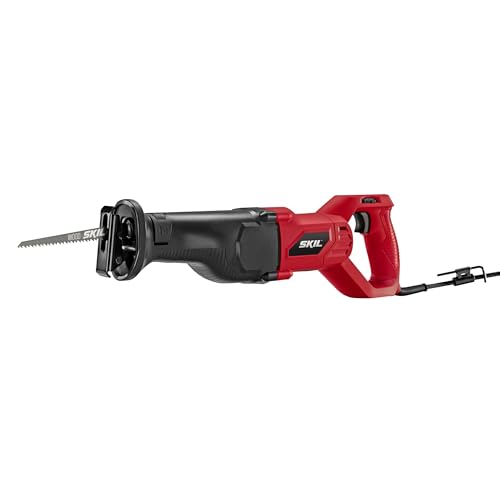
The Skil 9206-02 reciprocating saw is designed for DIY homeowners, remodelers, and property owners who need steady, uninterrupted cutting power for general demolition, framing adjustments, and rough maintenance cuts. Powered by a 7.5-amp corded electric motor, this saw eliminates the concern of drained batteries, making it a reliable option for all-day pruning, pipe trimming, and tearing down old wall assemblies.
In practical cutting scenarios, power management and control are essential. The variable-speed trigger provides immediate feedback, allowing the user to start cuts cleanly before ramping up speed through tough lumber, plastics, or metals when fitted with the appropriate blade. The pivoting foot assists by bracing securely against the workpiece, which helps stabilize the tool and prevents erratic bucking during aggressive rough cuts.
Durability and vibration dampening are central to the saw's construction. Skil built the 9206-02 with a heavy-duty metal gear housing, protecting the drive assembly from the knocks and drops common to demolition environments. Operating alongside the housing is an internal counter balance system engineered to mitigate excess vibration, helping you maintain a firmer grip and reducing physical fatigue during extended cutting sessions.
Everyday handling is straightforward thanks to the tool-less blade change system. Instead of tracking down hex keys mid-project, you can swap between wood-cutting and metal-cutting blades quickly. At roughly 18 inches in length and weighing 7.05 pounds, the tool remains reasonably maneuverable between wall studs, rafters, and tight crawl spaces, while retaining enough physical heft to let the saw's weight do the work.
As with any corded demolition tool, there are practical boundaries to keep in mind. You will need a suitable heavy-gauge extension cord to work across large yards or jobsites lacking nearby power outlets. Additionally, the tool does not feature an adjustable-depth shoe in its listed specifications, meaning blade tooth wear cannot be redistributed along the stroke length as easily as on some higher-end saws.
Overall, the Skil 9206-02 offers a solid balance of power, mechanical durability, and user comfort. For budget-conscious homeowners and weekend renovators tackling rough cuts and teardown projects, this corded reciprocating saw provides consistent utility without the ongoing investment of a proprietary cordless battery platform.
The 7.5-amp motor in the Skil 9206-02 provides consistent, line-powered performance that handles dense framing lumber, PVC, and metal conduit without motor stall under standard load. Because it draws power straight from an electrical outlet, cutting cadence remains steady from the first cut to the last.
Handling is improved by the integrated counter balance mechanism, which directly counteracts the reciprocating mass of the shaft. Combined with the pivoting shoe that stays planted against your cut line, the tool provides the stability needed for cleaner rough openings and reduced kickback tendencies during challenging demolition tasks.

Pros
- Rust-resistant stainless steel holds up well in moist or frozen conditions, unlike standard carbon steel blades.
- Cuts through frozen bone and meat efficiently without excessive vibration or binding.
- Universal shank fits virtually all reciprocating saws, including popular brands used by mechanics and contractors.
Cons
- Designed specifically for frozen meat and bone; not suitable for cutting wood, metal, or drywall.
- May require frequent cleaning and drying to maintain food-grade surface between uses.
- Some users might find the 12-inch length a bit unwieldy for tight cuts or precision work.
The Caliastro 12-inch frozen meat bone cutting saw blades are a specialized accessory for reciprocating saws, tailored for those who process meat at home or in a workshop setting. Made from food-grade stainless steel, these blades are built to resist rust and corrosion, a key advantage when cutting through frozen meat and bone where moisture and temperature changes are common.
These blades are best suited for hunters, homesteaders, butchers, and DIY homeowners who regularly break down frozen meat, fish, or game. While not a typical workshop tool, they fill a valuable niche for anyone who needs to cut large frozen portions without a dedicated bandsaw. The 5-pack offers good longevity for heavy use, and the universal shank ensures compatibility with most reciprocating saws from brands like DeWalt, Makita, Milwaukee, Ridgid, and Ryobi.
Real-world performance is centered on cutting speed and durability. The proprietary tooth design is said to slice through frozen bone and meat faster than standard blades, reducing effort and time during processing. The stainless steel construction holds up well against the stress of cutting through hard frozen bone without chipping or dulling quickly. Users report clean cuts with less splintering compared to cheaper blades, which is important for maintaining meat quality.
Build quality is straightforward but effective. The blades are made from a single piece of stainless steel with no paint or coatings that could peel or contaminate food. The shank is reinforced for a secure fit in the saw, reducing wobble during operation. Storage is simple – the blades come in a plastic sleeve but can be kept in a dry toolbox or hung on a pegboard. They require minimal maintenance: just wash with soapy water and dry thoroughly after each use to prevent any residue build-up.
One realistic limitation is that these blades are not intended for general cutting tasks like wood or metal. They excel only in their intended role of cutting frozen meat and bone. Additionally, the 12-inch length may feel awkward for smaller cuts or precise trimming, so a shorter blade might be better for detail work. The price point is reasonable for a 5-pack of specialized blades, offering good value for regular processors.
Overall, if you regularly process deer, beef, pork, or large fish, the Caliastro frozen meat blades are a practical addition to your toolkit. They deliver dependable performance, resist rust, and work with saws you likely already own. For occasional use or for those who only cut fresh meat, other general-purpose blades might suffice, but for frozen bone-in cuts, these are a solid choice.
These blades are purpose-built for one job: cutting through frozen meat and bone. The tooth geometry is designed to clear chips quickly, reducing binding and overheating. The stainless steel material also helps maintain sharpness longer than plain steel when cutting through hard frozen materials. Many users report that a single blade can handle multiple large cuts, which is a testament to its durability for heavy butchering tasks.
For processing deer or beef hindquarters, the 12-inch length provides enough depth to cut through thick sections without needing to reposition the saw repeatedly. The blades also work well on smaller game like chicken or turkey, though they may feel oversized for delicate work. Overall, if you're setting up a game processing station in your garage or workshop, these blades can save time and effort compared to using a handsaw or cleaver.

Pros
- Food-grade stainless steel is safe for contact with meat and fish
- Rust-resistant design extends blade life in wet or cold environments
- Fits all popular reciprocating saws without adapter
- 5-pack offers good value for hunters and butchers
- 9-inch length handles large cuts efficiently
Cons
- Designed specifically for frozen meat and bone, not suited for general construction or demolition work
- Thin blade may flex under heavy side loads in non-food applications
- Lack of a storage case may require separate organization in a toolbox
These Caliastro 9-inch reciprocating saw blades are a specialized tool for anyone who regularly processes frozen meat, poultry, or fish. Unlike standard demolition or wood-cutting blades, these are made from food-grade stainless steel with no paint or coatings, so they won't contaminate your food during use. They are designed as butcher saw blades for cutting through bone and frozen meat quickly.
The best fit for these blades is hunters, butchers, and DIY homeowners who process their own game or bulk meat purchases. If you frequently break down whole deer, beef, pork, or lamb quarters, these blades will save you time and effort compared to sawing by hand. They also work well for fish and poultry, making them versatile for any meat processing task.
Performance-wise, the proprietary stainless steel design is engineered for faster cutting and added durability. Users report clean cuts through frozen bone without excessive heat buildup or blade wear. The rust-resistant material is a big plus, as these blades will be exposed to moisture and blood during use. They won't corrode or require special cleaning beyond a simple rinse.
Build quality is solid for the price point. The blades are made of high-quality stainless steel, and the teeth are sharp out of the pack. They fit all major reciprocating saw brands, including DeWalt, Makita, Milwaukee, Ridgid, and Ryobi, so you don't need a special saw. The 9-inch length is ideal for large pieces, but might be too long for tight spaces. Storage is basic since there's no included case. You may want to use a blade holder or roll to keep them organized in a toolbox.
One realistic limitation is that these blades are not intended for general construction, metal cutting, or wood demolition. Using them on nails, concrete, or drywall would quickly dull the teeth. They are a niche tool. Also, the blades are thin, so they may wobble if you apply heavy side pressure. They work best with a straight, back-and-forth motion.
Overall, if you process meat at home or in a small butchering operation, this 5-pack is a practical buy. The food-grade stainless steel, rust resistance, and universal fit make them a reliable choice for frozen meat and bone cutting. They are not for every tool user, but for the specific task they serve well.
The Caliastro blades are made from food-grade stainless steel, which is a significant advantage for meat cutting. Food-grade stainless is non-toxic, non-reactive, and resists rust even with repeated exposure to moisture and animal fats. The blades have no paint or coatings that could chip off into your food. The steel is heat-treated for hardness, providing good edge retention on frozen bone. Each blade is 9 inches long, 1 inch wide, and about 0.04 inches thick. The thickness is typical for reciprocating saw blades, offering a balance between flexibility and rigidity. The shank is universal and fits all standard reciprocating saws. Overall, the construction is appropriate for the intended use, focusing on safety and durability in a food processing environment.
One of the strong points of this product is universal compatibility. These blades work with any reciprocating saw that accepts a standard 1/2-inch universal shank. That includes major brands like DeWalt, Makita, Milwaukee, Ridgid, Porter & Cable, Skil, Ryobi, Black & Decker, Bosch, Hitachi, and many more. There is no need to buy a special saw or adapter. Simply insert the blade into the blade clamp of your saw, and you're ready to cut. This makes them a convenient option for anyone who already owns a reciprocating saw. If you have a Sawzall or a traditional reciprocating saw, these blades will work without issue.
How a Reciprocating Saw Handles Structural Steel and Rebar
A reciprocating saw cuts steel and rebar by driving a hardened cutting blade in a rapid back-and-forth stroke against the secured metal. The mechanical leverage generated by the tool motor, combined with specialized metal-cutting teeth, sheers through structural carbon steel far more safely than an abrasive cutoff wheel when operating in tight framing bays or ground trenches. Success depends entirely on matching the blade composition, tooth geometry, and stroke speed to the density and diameter of the steel workpiece.
When tradespeople and DIYers ask whether can a reciprocating saw cut steel and rebar, the answer is an absolute yes, provided the saw has adequate motor strength and the operator uses blades engineered specifically for ferrous metals. Trying to slice solid rebar using general-purpose or wood-cutting blades will strip the cutting teeth in seconds. With the correct setup, a reciprocating saw offers exceptional maneuverability, cold-cut safety with minimal sparks, and precise flush cutting against masonry surfaces.
Bi-Metal Versus Carbide Teeth for Dense Ferrous Metals
Blade metallurgy plays the most decisive role in determining whether a reciprocating saw cuts through solid steel or stalls out. Standard high-carbon steel blades are far too soft for steel cutting and must be reserved strictly for soft timber or plastics. For light to medium steel cutting, bi-metal blades combine a flexible spring-steel backing with high-speed steel cutting edges, which prevents sudden blade snapping under twisting forces while maintaining reasonable edge sharpness.
Solid reinforcing bar presents an aggressive challenge because its manufacturing process produces high-tensile carbon steel ribs designed to resist deformation. Bi-metal options, such as the HORUSDY 6PCS 9-Inch 14TPI Bi-Metal Reciprocating blades or the AMARTISAN 5-Piece 6 Inch 14TPI Heavy Metal Cutting set, handle medium steel pipe, sheet metal, and small-diameter rebar with steady feed pressure. However, heavy repetitive cutting on thick Grade 60 rebar can generate enough frictional heat to soften high-speed steel teeth prematurely.
When handling thick structural beams, high-alloy steels, or dense rebar cages, carbide-tipped blades represent the superior technological choice. A dedicated option like the EZARC Carbide Reciprocating Saw Blade features individually welded micro-grain carbide teeth designed to endure temperatures that quickly ruin conventional teeth. Carbide maintains its cutting hardness even at high friction levels, providing substantially extended working life when sawing through dense construction steel, stainless steel tubing, and embedded foundation rebar.
Understanding Tooth Count and TPI for Metal Cutting
Tooth count, measured in teeth per inch (TPI), governs how smoothly a blade engages the metal surface and prevents violent tool bucking. The primary rule of thumb for metal cutting requires keeping at least two to three teeth in constant contact with the wall thickness of the workpiece at all times. If the tooth pitch is too coarse, individual teeth straddle thin walls, catch violently, and snap off the blade shank.
For thin sheet metal, electrical metallic tubing, or thin steel profiles, fine blades featuring 18 to 24 TPI provide clean, chatter-free cuts. Multi-packs like the WORKPRO 32-Piece Reciprocating Saw Blade Set supply these higher tooth counts for light gauge metal fabrication alongside specialized wood profiles. By engaging several teeth simultaneously along thin metal walls, fine-pitch blades prevent the material from vibrating out of control or tearing rough burrs along the cutline.
Solid rebar and thick structural plate reverse this requirement because fine teeth quickly choke on accumulated metal swarf. Cutting thick solid metal calls for lower tooth counts, typically ranging from 8 TPI to 14 TPI, which offer deeper gullets between teeth to evacuate metal shavings efficiently. An 8 TPI carbide blade cuts thick structural bar with rapid progress because the generous gullet clearance prevents heat buildup caused by recutting trapped metal dust.
Motor Power and Variable Speed Control
Cutting through dense steel requires steady torque rather than blinding stroke speed. High reciprocating speeds generate immense friction, rapidly overheating the blade teeth until they temper soft and lose their cutting edge. A tool with variable speed control allows the operator to dial back stroke rates to a slow or medium cadence, giving the cutting teeth time to bite into the steel without glazing.
Corded tools engineered for sustained resistance offer dependable power delivery during demanding metal fabrication tasks. The Skil 9206-02 7.5-Amp Variable Speed Reciprocating saw provides a robust 7.5-amp motor that maintains stroke momentum through solid metal without suffering the thermal cutoffs or voltage drops common in compact battery platforms. Its built-in counterbalance mechanism dampens the heavy vibrations transmitted through the tool body when cutting rigid ferrous profiles.
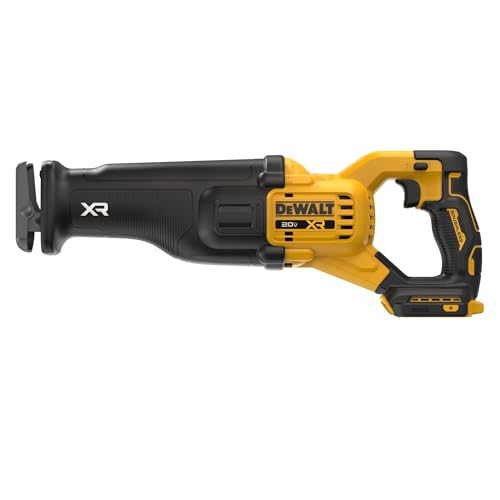
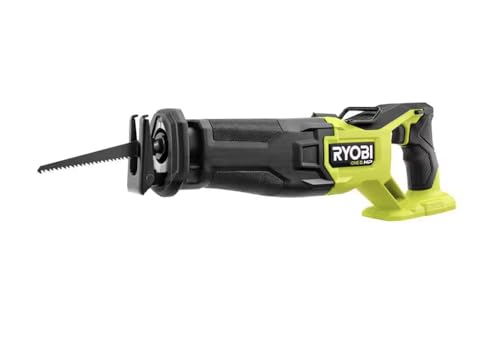
When selecting a cordless reciprocating saw for jobsite metal cutting, brushless motor technology and high-capacity battery packs become essential. Cutting solid reinforcing bars draws sustained high amperage that depletes small batteries rapidly. Regardless of power source, ensuring the saw features smooth trigger-sensitive variable speed or a dial-adjusted speed limiter remains vital for preserving blade sharpness when working through dense iron alloys.
Technique: Applying Shoe Contact and Feed Pressure
Proper physical technique separates smooth metal cutting from violent vibration and bent blades. The single most crucial operational requirement when cutting steel or rebar is maintaining firm, continuous contact between the saw shoe and the workpiece. The metal shoe acts as a solid mechanical fulcrum that absorbs reciprocal recoil and stabilizes the cutting axis against the moving blade.
Allowing the saw shoe to float away from the material forces the cutting blade to absorb full lateral oscillation, which immediately leads to uncontrollable tool rattling, severe hand fatigue, and broken blade shanks. Resting a pivoting shoe firmly against the rebar stabilizes the cut and lets you rock the saw body gently through the stroke. This slight rocking motion varies the contact angle, helping individual teeth penetrate the round profile instead of grinding over a wide flat contact patch.
Operators must let the sharpness of the blade perform the actual cutting work rather than leaning heavy body weight into the saw handle. Excessive downward force binds the blade inside the kerf, stalls the motor, and creates friction that accelerates tooth wear. Firm, consistent forward guidance combined with controlled rocking delivers the fastest cutting progress while protecting the saw gearbox from unnecessary thermal strain.
Heat Management and the Use of Cutting Lubricants
Friction generates substantial thermal energy whenever hardened teeth slice into dense carbon steel bar. Uncontrolled heat expansion causes blades to warp, softens tempered high-speed steel edges, and can even melt surrounding building materials during indoor remodeling work. Managing heat during the cut significantly extends blade life and ensures cleaner metal separation.
Applying a dedicated metal cutting fluid, wax stick, or light machine oil directly along the cutline cools the tool interface and reduces tooth friction. For thick structural rebar cuts, pausing briefly every twenty to thirty seconds allows heat to dissipate from the blade body. While carbide teeth tolerate dry cutting better than bi-metal teeth, even carbide performs more efficiently when cutting temperatures are moderated with lubrication.
If you regularly fabricate diverse construction materials, comparing specialized blades is essential. Exploring saw blades for cutting metal illustrates how tooth rake angles and lubricating fluids differ when transitioning from non-ferrous metals like aluminum to dense ferrous bars. Similarly, keeping dedicated blades for cutting pipe on hand prevents cross-contaminating soft plastic or butcher blades with abrasive metal shavings.
Blade Length Selection and Stroke Dynamics
Selecting the correct blade length prevents dangerous blade buckling during heavy metal demolition. Reciprocating blades for metal cutting typically range between 6 inches and 12 inches in length. Choosing a blade that is excessively long for a small-diameter workpiece creates unnecessary flex and vibration, whereas selecting a blade that is too short risks popping the blade tip out of the cut kerf.
When cutting a standard #4 (half-inch) or #5 (five-eighths-inch) reinforcing bar, a compact 6-inch blade like the AMARTISAN 14TPI model provides maximum structural rigidity with minimal deflection. Shorter blades focus motor energy directly into the cutline rather than wasting energy through blade whip. The stiffer blade shank helps maintain a straight kerf and ensures clean, square cut ends on exposed rebar stubs.
Longer 9-inch and 12-inch blades, such as the HORUSDY 9-Inch or the EZARC 12-Inch 8TPI blade, become necessary when cutting embedded rebar inside deep concrete footings or slicing large-diameter steel pipes. When operating with long blades, ensure the stroke length of your saw does not drive the tip of the blade into internal obstructions, which can instantly bend the shank. Carefully measuring clearance behind the cut prevents blade jamming and motor shock.
Securing the Workpiece and Vibration Reduction
Unsecured steel workpieces pose serious safety hazards and ruin cutting efficiency. Cutting free-standing rebar or unbolted steel pipe allows the metal to oscillate in sympathy with the reciprocating saw blade. This vibrational resonance neutralizes cutting action, as the teeth simply push the steel back and forth rather than biting into the metal grain.
Always clamp loose steel stock firmly in a heavy bench vise, pipe clamp, or locking pliers anchored to a rigid surface before initiating a cut. When cutting reinforcing bars embedded in concrete slabs or footings, the surrounding masonry provides natural rigidity, making these cuts exceptionally smooth. For demolition work involving loose structural mesh, clamping the wire close to the cutline prevents chatter and saves your blade teeth from snapping.
Vibration dampening features built into modern saws also make a substantial difference during long metal cutting sessions. Saws featuring internal counterweights, rubberized overmold grips, and tool-free pivoting shoes reduce the physical shock transferred into the operator’s hands and arms. Maintaining a secure two-handed grip keeps the tool aligned with the cut and minimizes fatigue during extensive rebar trimming.
Essential Safety Practices for Metal and Rebar Cutting
Cutting steel and rebar generates fine metal shavings, hot burrs, and intense sound levels that demand appropriate personal protective equipment. High-impact safety glasses paired with a full face shield protect your eyes from hot swarf thrown backward by the reciprocating blade. Sturdy leather work gloves are essential for handling freshly cut steel pieces, which develop razor-sharp edges and intense heat during sawing.
Hearing protection should always be worn when running a reciprocating saw against resonant hollow pipes or steel decking, as metal-on-metal screeching easily exceeds safe decibel thresholds. Operators must inspect the work zone for flammable materials before beginning, as even cold-cutting reciprocating blades can occasionally generate hot chips capable of igniting dry debris or solvent vapors.
Always disconnect corded tools from power or remove battery packs before swapping dull blades or making shoe adjustments. Ensure the blade clamp engages fully over the universal tang to prevent the blade from slipping loose under load. Maintaining stable footing, keeping both hands on the designated gripping surfaces, and never forcing a bound blade guarantees safe, productive cutting across any steel fabrication or demolition project.
A reciprocating saw represents one of the most versatile, reliable tools for slicing structural steel, conduit, and heavy reinforcing bar on modern jobsites. Equipping your saw with durable bi-metal or carbide-tipped blades, matching tooth count to material thickness, running the motor at controlled speeds, and locking the shoe firmly against the steel ensures clean, rapid cuts while maximizing consumable lifespan across every tough cutting task.






Write Your Review
No reviews yet. Be the first to share your experience!