


Maintaining a pole saw requires the right lubrication to ensure smooth cutting action and to prevent premature bar or chain wear during demanding overhead trimming. When evaluating what oil use pole saw mechanisms demand, standard bar and chain oil remains the primary lubricant engineered specifically for cutting chains. Many homeowners who already maintain other cutting tools, like those who compare specialized reciprocating saw blades for aggressive branch trimming, discover that chain-driven cutting tools have unique friction-reducing needs that standard oils cannot solve.
Selecting the correct lubricant protects your tool from excessive heat buildup, resin accumulation, and costly drive component failure. Modern pole trimmers, including compact battery-powered cordless designs and extended reach saws, feature dedicated oil reservoirs or manual application points that depend on specific fluid properties to disperse properly along the guide bar rails. Using improper alternatives can lead to oil sling, gummed-up drive sprockets, and permanent equipment damage before your pruning tasks are completed.

Pros
- Versatile 2-in-1 conversion saves garage storage space and eliminates the need for separate tools
- Generous dual 4000mAh battery setup ensures you always have a charged spare ready to go
- Efficient brushless motor provides smooth cutting action through thick branches with minimal vibration
- Comprehensive accessory package includes safety goggles, work gloves, spare chain, and shoulder strap
Cons
- Top-heavy feel when fully extended requires reasonable upper-body stability during overhead cuts
- Best suited for light-to-medium residential pruning rather than heavy commercial timber felling
- Manual oil delivery requires regular checks during prolonged cutting sessions
The SEESII 2-in-1 Cordless Pole Saw and Mini Chainsaw is a versatile cutting solution designed to handle property maintenance, storm cleanup, and general branch trimming. Combining an extendable aluminum pole with a detachable 6-inch mini chainsaw, it bridges the gap between ground-level limb processing and high-reach arbor pruning. Homeowners, homesteaders, and DIY landscapers will find plenty of utility here, especially anyone looking to clear overgrown tree canopies without balancing on dangerous ladders.
At the heart of the system is an efficient brushless motor, which provides tangible advantages over traditional brushed equipment. Brushless designs run cooler, maximize runtime from the 20V battery platform, and deliver consistent torque without bogging down in hardwood branches. The package includes two 4000mAh lithium-ion batteries, giving users continuous operation by swapping packs as needed. Based on product specifications, this setup delivers enough sustained power to tackle clean-up duty across substantial yards and wooded lots.
Ergonomics and user safety play a major role in how this tool operates. The saw weighs approximately 3.4 pounds in its handheld configuration, making it nimble enough for one-handed firewood staging, rough carpentry cuts, or brush pile reduction. When mounted to the telescoping shaft, the assembled rig reaches up to 9 feet, yielding around 15.5 feet of working overhead access depending on user height. An adjustable head lets you pivot the bar angle, which helps you undercut branches cleanly to prevent bark tearing.
Maintenance is straightforward thanks to a tool-free chain adjustment system and an easily accessible oil reservoir. You do not need to hunt through your toolbox for specialty wrenches just to tighten a slack chain mid-job. Safety features like the dual-action start switch and chain guard provide essential peace of mind, particularly for beginners tackling seasonal yard clearing. SEESII also bundles safety glasses, gloves, and a shoulder strap to reduce arm fatigue during extended high-reach work.
While the tool excels at residential limb removal and light clearing work, buyers should recognize its natural operating boundaries. The 6-inch guide bar is suited for limbs and saplings up to roughly 4 to 5 inches in diameter, rather than full-sized tree felling. Additionally, working with any pole saw at maximum extension requires controlled upper-body strength to maintain precise cuts. For property owners and workshop operators needing an affordable, convertible pruning tool that eliminates ladder risks, this multi-use kit represents a very practical and dependable investment.
This convertible electric saw shines across a broad range of weekend DIY chores and homestead projects. In handheld mode, it functions as a fast, maneuverable pruning saw that quickly sizes down fallen branches, trims fence line brush, or rough-cuts scrap lumber for outdoor fire pits. Woodworkers and garage builders will appreciate having a compact cordless saw nearby for breaking down pallets and managing timber before running it through stationary shop tools.
Attaching the telescoping pole transforms the unit into an effective property maintenance asset. It allows homeowners to easily trim roofline overhangs, thin out dead pine limbs, and shape decorative trees from the comfort and safety of solid ground. The tool-free conversion between configurations means you can drop high branches and immediately cut them into firewood rounds without switching to another piece of equipment.
SEESII supplies this tool as a comprehensive all-in-one kit right out of the box. Users receive the 6-inch mini chainsaw head, the telescoping extension pole, two 4000mAh rechargeable lithium battery packs, and a fast charger to keep downtime minimal. A replacement chain and an empty bar oil applicator bottle are also included to keep the cutting components running smoothly.
To support safe operation immediately, the package also includes a supportive shoulder strap for the pole, a pair of anti-slip work gloves, protective eye goggles, a protective bar scabbard, and an instruction manual. Having all these items bundled together saves extra trips to the hardware store and ensures you have proper personal protection equipment ready before making your first cut.
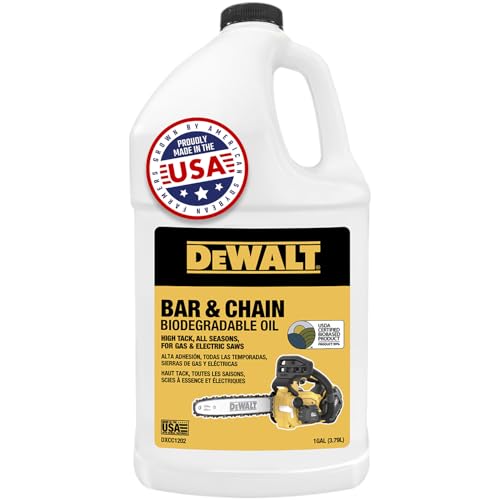
Pros
- Excellent adhesion reduces oil fling-off during high-speed cutting
- Formulated to resist washout in wet or dusty conditions
- Provides long-lasting lubrication for extended cutting sessions
- Compatible with a wide range of chainsaw brands and models
Cons
- Premium pricing compared to generic alternatives
- Can be messy if over-applied or spilled
- Not recommended for use as a general-purpose lubricant
Bar and chain oil is a specialized lubricant formulated specifically for chainsaw guide bars and chains. Unlike standard motor oils, it has a higher viscosity and tackiness to cling to moving parts under high centrifugal forces. This ensures consistent lubrication during cutting, reducing friction and heat buildup that can lead to premature wear.
This product is best suited for anyone who operates a chainsaw regularly, from DIY homeowners tackling property maintenance to professional loggers and arborists. Mechanics and contractors who use chainsaws for demolition or construction tasks will also benefit from its reliable performance. The oil's formulation helps protect against rust and corrosion, extending the life of both the bar and chain.
In real-world use, this oil maintains its viscosity across a range of temperatures, so it flows well in cold weather without becoming too thin in heat. Users report less chain stretch and fewer sharpening intervals, which translates to more productive cutting sessions. The anti-wear additives reduce friction between the chain and bar rails, minimizing heat and preventing galling or seizing.
The build quality of the oil itself is evident in its consistency and lack of impurities. The bottle is designed with a spout for easy pouring, reducing mess during refills. Storage is straightforward: keep the bottle sealed in a cool, dry place. No special maintenance is required beyond proper disposal of used oil according to local regulations.
A realistic limitation is that this oil is more expensive than generic alternatives. Additionally, it can be messy if over-applied or if the bottle is not handled carefully. It is not intended for use as a multipurpose lubricant, so users should stick to chainsaw applications only.
Overall, this bar and chain oil is a solid choice for those who prioritize chain and bar longevity. While the upfront cost is higher, the reduced wear and improved cutting efficiency may justify the investment for frequent users. DIY homeowners and professionals alike will find it a dependable lubricant for maintaining their chainsaw in top condition.
This bar and chain oil delivers consistent lubrication across a wide range of operating conditions. Its high tack formula reduces fling-off, meaning more oil stays on the chain and bar during high-speed cutting. This results in lower friction, less heat, and reduced wear on critical components. Users can expect smoother cuts and longer intervals between chain sharpening. The oil also resists washout from water or sap, maintaining protection in wet or resinous wood.

Pros
- Odor-free composition makes indoor and small garage shop cutting far more pleasant
- Built-in rust inhibitors protect expensive saw pans, shafts, and diamond blade cores
- Clear formula avoids clouding the work area during precision stone slicing
- Helps keep bearings running smoothly under extended cutting sessions
Cons
- Compact 8 oz bottle size is best suited for small trim saws rather than large slab saws
- Not intended for heavy-duty industrial metalworking flood systems
The UniSport Rock Saw Cutting Oil is a specialized lapidary coolant and lubricant engineered to keep rock cutting equipment running smoothly while protecting cutting tools from premature wear. Unlike standard petroleum-based industrial cutting fluids, this formula is tailored for stone slicing, gem trimming, and lapidary hobby work. It targets DIY craftspeople, lapidary hobbyists, rock hounds, and garage workshop users who need dependable heat management without dealing with the pungent odors common in conventional cutting fluids.
In practical cutting applications, proper fluid delivery is critical for blade longevity and cut quality. Diamond saw blades generate intense friction when slicing through dense agates, geodes, and hard mineral specimens. This lubricant reduces operational friction along the rim of the blade, dispersing heat to prevent warping and diamond glazing. It also lubricates the mechanical arbor and surrounding assembly, directly addressing the common issue of frozen bearings caused by coolant breakdown and grit accumulation.
A standout characteristic of this formulation is its clear, odorless profile. Traditional rock saw oils can make a basement workshop or enclosed garage uninhabitable due to heavy chemical vapors. By eliminating harsh smells, it allows users to work comfortably over longer cutting sessions. The clear consistency also ensures that layout marks and stone grain patterns remain visible during precision cuts, improving overall accuracy when trimming valuable slabs.
Corrosion protection is another vital feature packed into this fluid. Mineral slurries can quickly oxidize steel blade cores and saw sumps if left unchecked. The integrated anti-rust and anti-corrosion inhibitors create a protective barrier across metal surfaces, preserving arbor shafts, blade plates, and metal reservoirs between uses. Cleaning up requires standard degreasing practices, but the oil does not leave behind heavy, stubborn varnishes.
The primary limitation to note is the 8-ounce volume. While this size is exceptionally convenient for benchtop trim saws, small hobby rigs, or topping off existing fluid levels, users operating large slab saws with high-capacity reservoirs will burn through an 8-ounce bottle rapidly. For small-scale lapidary projects, mineral preparation, and craft workshop cutting, this oil represents a practical, user-friendly choice that keeps equipment running cool and rust-free.
Running a saw in a residential garage or basement requires fluids that balance mechanical efficiency with user comfort. The low-fume nature of this oil minimizes the need for high-velocity exhaust systems when operating compact trim saws, making it well suited for hobby spaces.
Its viscosity is balanced to carry rock silt away from the cut kerf without bogging down lower-horsepower motors. By keeping diamond rims free from compacted mud and cooling the contact patch, the fluid supports steady, bind-free feed rates through varied stone hardnesses.
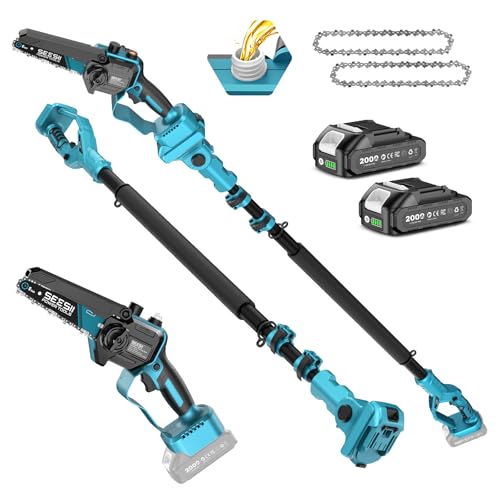
Pros
- Versatile 2-in-1 design saves money and storage space compared to buying separate tools
- Powerful brush motor delivers reliable cutting performance on branches up to 6 inches thick
- Automatic oiling reduces maintenance and keeps the chain running smoothly
- Lightweight and well-balanced for comfortable use over long periods
- Comes with two batteries and a complete accessory kit for immediate use
Cons
- Battery life may be limited for very large yards or heavy-duty professional use, requiring careful job planning
- Extension pole may feel slightly flexible under heavy load, though adequate for typical pruning tasks
- Chain tension adjustment may require occasional attention to maintain optimal cutting performance
The SEESII 2-in-1 Electric Pole Saw is a versatile tool that combines a handheld mini chainsaw with an extension pole, allowing you to trim branches from ground level up to 10 feet high. This battery-powered pruner is designed for DIY homeowners, gardeners, and professionals who need a lightweight, cordless solution for tree trimming and yard maintenance. With a 6-inch bar and a brush motor that cuts branches up to 6 inches in diameter, it handles most residential pruning tasks with ease.
Performance-wise, the brush motor delivers consistent power for clean cuts through green wood, and the automatic oiling system keeps the chain lubricated for smoother operation and longer chain life. The dual 21V 2000mAh batteries provide enough runtime for typical yard work, and swapping them is quick so you can keep going without long breaks. The adjustable cutting head lets you angle the saw for awkward branches, reducing strain on your arms and back compared to fixed-angle saws.
Build quality is solid for the price point, with a durable plastic housing and a metal bar that holds up well to regular use. The tool weighs only 3.4 pounds in handheld mode, making it easy to maneuver with one hand, and the extension pole adds minimal weight while providing good reach. The included accessories, such as a shoulder strap, goggles, gloves, and a carrying case, add value and make it a ready-to-go kit for most users.
Setup is straightforward: attach the pole, install the battery, fill the oil reservoir, and you are ready to cut. Maintenance is minimal thanks to the automatic oiler, though you will need to check chain tension periodically and sharpen or replace the chain as needed. The tool stores compactly in the included case, which keeps everything organized and protected.
One realistic limitation is that the battery life may not be sufficient for very large properties or heavy-duty professional use without extra batteries. The extension pole, while functional, can feel slightly flexible when cutting thick branches at full extension, so taking steady cuts is recommended. Also, the chain tension adjustment requires a small tool, which is included but could be more convenient if it were tool-less.
Overall, the SEESII 2-in-1 cordless pole saw is a practical choice for homeowners and light commercial users who want a safe, ladder-free way to trim high branches and handle general yard pruning. It offers good value with its dual batteries, automatic oiling, and complete accessory package. For those with larger properties or more demanding needs, investing in additional batteries or a gas-powered saw might be worth considering, but for most DIY and professional trimming tasks, this tool delivers reliable performance and convenience.
The SEESII 2-in-1 pole saw features a durable plastic housing that feels sturdy enough for regular yard work. The metal bar and chain are well-made, and the brush motor is sealed to resist dust and debris. The extension pole is made of aluminum with a secure locking mechanism, though it may flex slightly under heavy loads. Overall, the build quality is appropriate for the price and intended use, offering a good balance of weight and durability.
The package includes the 6-inch mini chainsaw, extension pole, two 21V 2000mAh batteries, a charger, two chains, an adjustable shoulder strap, an empty oil bottle, a chain sleeve, safety goggles, and gloves. This comprehensive kit allows you to start trimming right away without needing to purchase additional items. The carrying case keeps everything organized and portable.
Complete Lubrication Guide: Selecting and Managing Pole Saw Oil
Dedicated bar and chain oil is the direct, standard answer for virtually all pole saw cutting assemblies. Unlike standard engine lubricants, dedicated bar and chain fluid contains special tackiness additives that help the liquid cling to high-speed cutting teeth instead of flying off under centrifugal force. Without these tackifiers, thin oils quickly sling away from the tip of the guide bar, leaving moving metal parts dry and susceptible to rapid friction damage.
A pole saw guide bar experiences continuous friction as the drive links ride inside the narrow bar groove. When the saw chain rotates around the nose sprocket, friction generates severe heat that can dull cutting teeth, expand the drive links, and warp the steel bar. Applying the correct oil keeps the interface cool, flushes away fine wood dust, and prevents wood sap from fusing to the cutting teeth during extended tree trimming sessions.
Understanding Viscosity and Temperature Adjustments
Viscosity refers to the internal thickness of the oil and dictates how smoothly the fluid travels through automatic oil pump passages. Bar and chain oils typically come in summer weights, winter weights, and all-season multi-viscosity formulations. Selecting the correct viscosity ensures your pole saw reservoir discharges oil at a steady, reliable rate regardless of ambient temperatures.
During warm summer months, high ambient heat causes standard oils to thin rapidly. A designated summer-weight oil retains sufficient body to coat the metal components without thinning down into a watery consistency that flies off the bar nose. In contrast, operating a pole saw in sub-freezing winter conditions requires a lower-viscosity winter-weight formulation to prevent the oil from turning into thick sludge that blocks pump intake screens.
All-season formulations balance these temperature extremes by using viscosity modifiers that perform well across broad operating conditions. If you only prune trees intermittently throughout the spring and autumn, an all-season bar and chain oil offers practical versatility without requiring seasonal fluid flushes. Checking the fluid flow before making your first cut confirms whether your chosen oil flows freely through the bar discharge port.
Mineral-Based Versus Biodegradable and Plant-Based Oils
Petroleum-based mineral oils represent the traditional standard for chainsaw and pole saw bars. These formulas provide long-lasting film strength, high resistance to thermal breakdown, and reliable shelf stability across several seasons of storage. They remain an economical choice for routine property maintenance, though they persist in the soil beneath trimmed trees.
Biodegradable, plant-based bar oils offer an environmentally conscious alternative for property owners concerned about soil contamination or working near waterways. Formulated primarily from refined vegetable oils with added tackifiers, these lubricants break down naturally within organic matter without harming nearby garden beds. They match the lubricating qualities of petroleum oils when cutting green limbs and wet sapwood.
Plant-based oils do have specific storage limitations that require mindful tool management. Pure vegetable-based fluids can oxidize and harden if left inside an idle tool reservoir over months of winter storage, creating gummy deposits in small delivery tubes. If you switch to biodegradable oils, running a small amount of standard mineral oil through the system before long-term storage keeps the pump components clean.
Why Motor Oil and Used Engine Fluids Should Be Avoided
A frequent mistake among equipment owners is pouring leftover motor oil into a pole saw reservoir. Standard automotive engine oil is engineered to circulate inside closed, pressurized crankcases rather than sticking to an open, high-speed cutting chain. Because motor oil lacks tackiness agents, the spinning chain quickly slings the oil onto surrounding tree branches and operator clothing, leaving the cutting bar dry.
Used motor oil poses even greater hazards to both tool longevity and operator safety. Spent crankcase oil contains microscopic metal particles, corrosive acid residues, unburnt fuel fractions, and known carcinogens. Introducing these abrasive contaminants into the tight clearance between your drive links and guide bar groove accelerates metal wear and can quickly ruin the internal seals of automatic oil pumps.
Hydraulic oils, transmission fluids, and general workshop sprays also fail to meet the mechanical requirements of pole saw bars. While spray lubricants may provide momentary relief for tight chain links, they evaporate quickly under frictional heat and cannot sustain continuous cutting loads. Investing in genuine bar lubricant prevents costly bar scorches and protects internal oiling mechanisms from premature clogging.
Automatic Oiling Versus Manual Lubrication Systems
Modern pole saws utilize two distinct lubrication methods: automatic pump delivery and manual application. Tools equipped with automatic oiling systems, such as the Seesii PS600 2-in-1 cordless saw, continuously siphon oil from a built-in reservoir and pump it directly into the guide bar oil hole during trigger engagement. This automated delivery maintains a uniform protective film across the bar rails without forcing the operator to interrupt cutting.
Manual oiling designs require the operator to either depress a rubber primer bulb before each cut or manually apply drops of oil directly along the chain path. Saws with tool-free oil caps facilitate quick refilling, but they demand constant vigilance to prevent dry running. For manual setups, pausing to lubricate the chain every few cuts preserves cutting efficiency and prevents the motor from laboring against dry friction.
Regardless of system type, verifying active oil delivery takes only a few seconds before raising the saw overhead. Holding the bar tip near a clean piece of cardboard or wood stump and running the motor for five seconds should produce a light, visible spray of thrown oil. If no oil spatters onto the surface, the delivery channel is clogged or the reservoir requires immediate replenishment.
Diagnosing Oil Delivery Problems and Clogged Bar Ports
When an automatic pole saw stops discharging fluid, compacted wood chips and fine sawdust are the most common culprits. Fine sawdust mixes with tacky bar oil under the sprocket cover to form a dense paste that easily blocks the small oil discharge hole in the guide bar. Removing the side cover and clearing this channel with a small pick restores proper fluid flow.
Guide bar groove wear can also interfere with oil distribution along the cutting perimeter. As the chain travels thousands of revolutions, sawdust packs into the bottom of the guide rails, lifting the chain drive links out of the lubrication track. Scraping out the entire length of the bar groove with a specialized bar cleaning tool or a flat utility blade ensures the oil can flow freely from the inlet hole to the bar nose.
Air locks inside the oil pickup tube can occur if the reservoir is run completely dry during extensive tree pruning. To clear an air pocket, fill the reservoir completely, loosen the oil cap slightly to equalize pressure, and run the saw horizontally for thirty seconds until the pump primes. If the pump still fails to deliver oil, inspect the intake filter submerged inside the fluid tank for debris obstruction.
Evaluating Cordless Pole Saws and Reservoir Capabilities
Cordless battery-powered pole saws have transformed residential trimming by eliminating the fuel mixing and pull-cord maintenance required by older gas units. Models like the Seesii 2-in-1 Brushless Pole Saw feature lightweight modular extensions that allow ground-level wood cutting or extended high-branch reach up to fifteen or sixteen feet. Because these electric brushless motors produce instant torque, continuous chain lubrication is vital to prevent motor overloading.
A major advantage of modern 2-in-1 designs is their tool-free maintenance, allowing quick chain tensioning and fluid top-offs without specialized wrenches. When working overhead at full pole extension, monitoring fluid levels through translucent reservoir windows helps prevent running the bar dry. Pairing dual lithium battery setups with a regular oiling schedule ensures the mechanical cutting components outlast the runtime of the power cells.
While lapidary lubricants like UniSport rock saw cutting oil provide essential cooling for continuous stone and masonry slab cutting, they are strictly formulated for sealed mineral baths rather than high-speed outdoor tree saws. Using the right fluid for each specific saw category ensures the drive mechanism operates within its intended engineering limits. Just as selecting clean cutting saw blades improves precision on rigid plastics, matching the proper oil viscosity to your pole saw maintains smooth branch cuts without bogging down the electric motor.
Essential Operational Safety and Routine Maintenance Practices
Handling pole saw lubrication safely begins by isolating the tool from its power source before touching the cutting bar. Always disconnect the battery pack or unplug the extension cord before opening the oil reservoir, clearing sawdust obstructions, or adjusting chain tension. Accidental trigger activation while inspecting an oil port can cause severe lacerations to hands and fingers.
Wiping down the reservoir filler cap before opening it prevents gritty wood dust from falling directly into the oil reservoir. Contaminants inside the reservoir settle at the bottom, where they are sucked into the oil pump mechanism, causing premature pump gear failure. Keeping a dedicated shop rag with your pole saw kit makes it easy to clean the tank neck during outdoor work sessions.
Chain tension closely interacts with lubrication performance and should be checked every time you replenish the oil tank. A dry or loose chain risks jumping the bar rails, while an overtightened chain increases friction and prevents oil from reaching the bottom of the drive links. A properly tensioned chain allows the drive links to remain securely seated in the groove while pulling smoothly around the bar by hand with gloved fingers.
Routine maintenance concludes with proper seasonal storage preparation. When hanging a pole saw in a garage or workshop, temperature fluctuations cause remaining fluid in the reservoir to seep past seals and collect on the floor. Draining excess bar oil into its original container before storing the saw for the winter keeps your workspace clean and prevents oil seals from degrading while idle.
Selecting dedicated bar and chain oil matched to your operating season provides the exact tackiness, thermal stability, and friction reduction required for safe overhead limb trimming. Inspecting the oil reservoir before each cutting session and clearing debris from the bar groove guarantees reliable fluid flow, extends the working life of your saw chain, and keeps your equipment performing smoothly across every yard maintenance project.





Write Your Review
No reviews yet. Be the first to share your experience!