


Dull reciprocating saw blades turn simple demolition and pruning chores into frustrating, slow struggles that overheat your power tool. Learning how sharpen reciprocating saw blade edges can restore usable cutting teeth when you are in the middle of a project and need just a bit more service life from a specialty blade. A sharp edge reduces motor strain, tracks cleaner lines, and prevents excess chatter against tough stock.
While many demolition blades are treated as consumables, understanding blade metallurgy and tooth geometry helps you decide whether touching up a tooth profile is worth the bench time. If you frequently handle plumbing or remodeling, pairing the right blade type from our reciprocating saw blade guide with proper maintenance habits ensures smooth cutting across wood, pruning limbs, and sheet metal.

Pros
- Versatile tooth pitch options ranging from fine 24-TPI metal cutters to aggressive 3-TPI wood demolition blades.
- Dedicated landscaping pruning blade provides rapid cutting action on wet wood and tree limbs.
- Universal tang design seats firmly in keyless reciprocating saw chucks across major power tool brands.
- Included multi-slot carrying pouch prevents loose blades from damaging tool bags or dulling prematurely.
Cons
- Bi-metal blades will wear faster when cutting hardened structural bolts or thick cast iron compared to premium carbide-tipped alternatives.
- Fabric roll-up organizer lacks the rigid crush protection of a molded hard-plastic storage case.
The GRENPRO 34-Piece Reciprocating Saw Blade Set is a multi-purpose cutting accessory bundle designed for reciprocating saws and Sawzall-style tools. Rather than purchasing individual blades for every separate repair, this kit supplies a wide variety of blade lengths and tooth counts to tackle varied materials. It serves as a dependable choice for DIY homeowners, general contractors, plumbers, landscapers, and residential remodelers who regularly move between carpentry, plumbing pipe cut-offs, and outdoor yard clearing.
Cutting performance across the kit centers on application-specific metallurgy and tooth geometry. The metal-cutting blades utilize a bi-metal blend of M2 high-speed steel and 6150 spring steel backing, which helps resist tooth strip-out when cutting sheet metal, unistrut, conduit, and copper pipe. For framing and teardown work, the wood-cutting blades are shaped from 58CrV chrome vanadium alloy with precision-milled teeth. These aggressive profiles resist excessive binding, clear sawdust efficiently, and withstand sudden shock loads when slicing through hidden fasteners or thick construction lumber.
Outdoor maintenance is another strong point of this kit due to the specialized 9-inch 5-TPI pruning blade. Pruning wet wood or live tree branches often stalls standard wood blades because damp fibers clog the teeth. The widened gullets and anti-stick tooth design on this dedicated pruning blade clear wet shavings rapidly, allowing users to trim storm damage, fell saplings, and buck firewood with clean, rapid strokes.
Toolbox organization and jobsite transport are addressed with the included segmented fabric pouch. Loose reciprocating saw blades frequently end up jumbled at the bottom of tool bags, posing a cut risk and blunting sharp cutting edges. The internal slots keep blades organized by length and tooth count, making it straightforward to select the right blade for the job. Each blade utilizes a standard 1/2-inch universal tang that seats firmly inside keyless blade clamps from major brands such as Milwaukee, DeWalt, Makita, and Bosch.
While this set provides outstanding broad-spectrum utility, it has realistic limits. Contractors cutting thick cast iron soil pipes or hardened stainless steel will still want specialized carbide-tipped blades for sustained duty. However, for everyday residential remodeling, plumbing rough-ins, drywall cutouts, and routine yard cleanup, this set delivers generous cutting capacity, dependable steel durability, and great organizational convenience for any active garage or workshop.
Every blade in this set features a standard 1/2-inch universal tang designed to work seamlessly with virtually all corded and cordless reciprocating saws on the market. Whether you run Milwaukee Sawzall, DeWalt, Makita, Bosch, Porter-Cable, Ridgid, or Ryobi tools, the tang latches cleanly into tool-free quick-change chucks without slipping or wobbling under load.
The included roll-up organizer pouch rolls tight to fit inside standard contractor bags, rolling tool chests, or job boxes. The compartmentalized design prevents blades from rubbing against one another, preserving tooth sharpness and ensuring you always have the right blade pitch ready for wood, metal, PVC, or landscape cutting.

Pros
- Exceptional sharpness right out of the pack for clean cuts in wood and metal.
- Durable construction that holds up to repeated use across different materials.
- Universal fit works with all standard reciprocating saws, no compatibility issues.
- Compact storage pouch makes it easy to carry blades to job sites or keep them organized in the workshop.
Cons
- Pouch may not be as rugged as a hard case for heavy-duty transport.
- Some users might prefer color-coded blades for faster material identification.
- No TPI (teeth per inch) markings on individual blades, requiring visual sorting.
The SEDY 36-Piece Ultimate Reciprocating Saw Blade Set is a comprehensive kit designed to handle a wide range of cutting tasks around the home, workshop, or job site. With blades tailored for both wood and metal, this set is a practical choice for DIY homeowners, mechanics, contractors, electricians, plumbers, woodworkers, and garage enthusiasts who need reliable cutting performance without breaking the bank.
Each blade is described as razor-sharp, which translates to efficient cuts with less effort. For woodworking projects like demolition, pruning, or cutting framing lumber, these blades bite into material quickly. For metal cutting - think rebar, pipes, or sheet metal - the appropriate blades maintain their edge through repetitive use. The set includes 36 pieces, offering a variety of tooth configurations, though specific TPI details aren't listed, the range covers common applications.
Durability is a key focus here. The blades are engineered from premium materials that resist wear and corrosion, which is crucial when cutting through nail-embedded wood or abrasive metals. This longevity means fewer blade changes, saving time on the job. The universal compatibility is a standout feature - these blades fit all major reciprocating saw brands like Milwaukee, Dewalt, Makita, and Bosch, so you can use them in any saw you already own.
Storage is handled by a compact pouch that keeps blades sorted and accessible. While it's not a hard case, it's enough for most users to toss into a toolbox or tool bag without losing blades. For those who frequently travel between job sites, the pouch adds convenience over loose blades. Maintenance is straightforward - just wipe blades clean after use and store them dry to prevent rust.
A realistic limitation is the pouch's durability compared to a hard case, but it keeps the set organized and reduces clutter. Also, without TPI markings on each blade, you may need to visually match the blade to the material until you learn the set. Despite these points, the set offers strong value for its price point.
Overall, the SEDY 36-Piece Reciprocating Saw Blade Set is a solid investment for anyone needing a versatile blade collection. Whether you're a weekend DIYer tackling home repairs, a plumber cutting pipes, or a contractor on a construction site, this set covers the essentials. The sharpness, durability, and universal fit make it a practical addition to any tool arsenal.

Pros
- Cuts smoothly through green wood and dry branches.
- Good value for a 5-pack at this price point.
- Fits all standard reciprocating saws.
- Hardened steel teeth resist dulling during moderate use.
- Lightweight and easy to handle.
Cons
- Not ideal for metal or nail-embedded wood.
- Some users may prefer longer blades for thicker logs.
- Lacks impact-resistant coating for heavy demolition use.
These VICRING 9-inch reciprocating saw blades are purpose-built for cutting wood, making them a solid choice for pruning tree branches, trimming shrubs, and cutting small logs around the yard. The 5 TPI tooth design gives you an aggressive cut that goes through green wood and dry branches without bogging down. They also handle plastic pipes up to about 6.7 inches thick, so they're practical for light demolition and plumbing work around the house.
DIY homeowners and gardeners will find these blades a convenient addition to their tool kit. The high carbon steel construction, hardened to HRC48-52, provides decent wear resistance for regular use on soft to medium-hard wood. While these aren't meant for cutting metal or nail-embedded lumber, they hold up well for typical yard maintenance tasks. The alternating tooth pattern helps clear sawdust quickly, reducing friction and keeping the cut moving fast.
Compatibility is straightforward - these blades fit all standard reciprocating saws, so you can swap them into your Sawzall or any brand without needing an adapter. The blade itself feels sturdy enough for weekend projects and light-duty contracting work. For contractors clearing brush or trimming trees on a jobsite, these blades offer good value as disposable consumables that get the job done without breaking the bank.
One realistic limitation is that the blades are relatively short at 9 inches. If you need to cut through very thick logs or stumps, a longer blade might be more efficient. Also, the lack of a carbide-tipped or bi-metal construction means they won't handle nails or abrasive materials. But for pure wood cutting in the yard or workshop, they perform well.
Storage is simple thanks to the compact size - you can toss the pack in a toolbox or drawer without taking up much space. The blue color makes them easy to spot among your other saw blades. Maintenance is minimal; just wipe them clean after use and store them dry to prevent rust.
Overall, these VICRING pruning blades are a practical, cost-effective choice for homeowners and gardeners who need reliable blades for occasional pruning and light cutting tasks. If you're looking for a budget-friendly pack that works well with any reciprocating saw, this set is worth considering.

Pros
- Generous 15-inch length handles thicker tree limbs and hard-to-reach branches with ease
- Triple-ground offset Japanese tooth pattern cuts efficiently through fibrous wet and green wood
- Chrome vanadium steel build offers dependable durability and resists bending under load
- Universal tang fits standard reciprocating saw quick-release blade clamps without adapters
Cons
- Extra length can lead to blade flexing if too much forward pressure is applied during tight cuts
- Coarse 6 TPI Japanese tooth design leaves a rough finish unsuitable for clean carpentry or fine woodwork
- Large blade dimensions require careful storage to avoid bending teeth when stored in standard toolboxes
Yard cleanup and tree maintenance often present a challenge when branches are too thick for manual loppers but do not justify hauling out a heavy gas chainsaw. The SEDY 15-Inch Japanese Teeth Reciprocating Saw Blades offer an efficient solution for DIY homeowners, landscapers, and property maintenance workers looking to turn an existing reciprocating saw into a fast-clearing pruning tool. Sold in a practical three-pack, these extended blades are specifically configured for fast cuts through living limbs, wet logs, and green wood.
The standout feature of these blades is their 15-inch overall length combined with an aggressive 6 TPI profile. Engineered with Japanese-style teeth and an arc edge profile, the cutting surface uses a triple-ground offset tooth structure that establishes three cutting angles. This configuration works directly with deep tooth gullets to clear moist, fibrous shavings rapidly, which helps reduce binding and friction when cutting through thick sap-heavy branches or firewood sections.
Material construction relies on high-strength chrome vanadium (Cr-V) steel, providing the toughness and wear resistance needed for outdoor woodcutting. Green wood generates substantial lateral drag, and standard carbon steel blades can easily bend or lose their temper. The thicker body of these Cr-V blades helps maintain tracking stability and resists warping during demanding limb trimming, while the universal shank design ensures a reliable fit into standard corded or cordless reciprocating saw toolless clamps.
In practical use, these 15-inch blades offer major convenience by extending your reach into dense thickets and upper tree branches from the ground. However, working with a long blade requires mindful tool handling. Because of the extended profile, pressing excessively against stubborn limbs can induce flexing or vibration, especially when cutting closer to the tip. Letting the reciprocating saw stroke and the sharp Japanese teeth pull through the cut yields the cleanest and most controlled cutting action.
Buyers should keep in mind that this 6 TPI arc edge blade is engineered strictly for rough woodcutting tasks like tree pruning, cutting wet logs, and sizing firewood. The aggressive tooth set is not intended for clean finish carpentry, dry dimensional lumber where splinter-free edges are needed, or any metal or nail-embedded material. For seasonal yard prep, storm cleanup, and trail clearing, this SEDY three-pack delivers substantial cutting reach, fast chip evacuation, and strong overall value.
Pruning live trees and shrubs presents distinct cutting challenges because green wood contains moisture and stringy fibers that quickly clog conventional wood blades. The SEDY 15-inch pruning blades address this with deep gullets between the 6 TPI teeth, allowing wet chips to eject freely with each stroke of the reciprocating saw.
The curved arc edge geometry helps maintain optimal contact on rounded branch surfaces, reducing chatter when starting cuts on awkward limb angles. For property owners managing overgrown boundaries, prepping campfire wood, or clearing fallen storm debris, using a cordless reciprocating saw paired with these extended blades offers a lighter, quieter, and lower-maintenance alternative to running a small chainsaw.
Compatibility is straightforward thanks to the standard universal shank, which mounts securely into keyless and keyed reciprocating saw clamps from all major tool brands. The 15-inch total length provides ample stroke clearance even when cutting mid-sized logs up to several inches thick, ensuring the blade teeth do not bottom out or slip out of the kerf mid-cut.
Chrome vanadium (Cr-V) steel composition ensures good edge retention against abrasive bark while remaining pliable enough to absorb reciprocating shock without shattering. Replacing worn blades is quick, and having three identical extended blades in the pack ensures minimal downtime during larger property maintenance projects.
Pros
- Wide range of blade types and sizes covers most common cutting applications in one kit
- Cr-V steel and bi-metal construction offer good durability for heavy use
- Organizer pouch keeps blades accessible and tidy in a toolbox or tool bag
- Compatible with nearly all reciprocating saws, no special adapters needed
Cons
- Pouch is fabric and may not hold up to heavy jobsite abuse as well as a hard case
- Some users may prefer more aggressive tooth geometries for specific materials like thick metal or nail-embedded wood
- Blade tang design may vary slightly, but compatibility with standard saws is generally fine
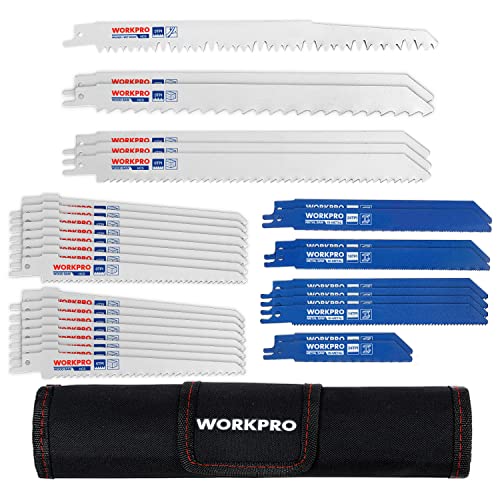
The WORKPRO 32-Piece Reciprocating Saw Blade Set is designed to be a comprehensive solution for anyone who frequently uses a reciprocating saw. Whether you are a DIY homeowner tackling weekend projects, a mechanic cutting exhaust pipes, or a contractor framing a house, this set provides the blades you need most. The combination includes wood blades with 6 and 8 TPI for general wood cutting, 3 and 6 TPI for faster ripping, plus thin and thick metal blades ranging from 14 to 24 TPI. There is also a dedicated pruner blade for wet wood and branches.
Performance-wise, the wood blades are made from chrome vanadium steel, which offers good edge retention and resistance to bending. They cut through dimensional lumber, plywood, and even thick firewood smoothly. The metal blades feature bi-metal construction, meaning they use high-speed steel teeth bonded to a flexible steel body. This design prevents tooth breakage when cutting through metal pipes, angle iron, or thin sheet metal. Based on the product specifications, these blades should handle typical workshop and construction materials without excessive wear.
Build quality is solid for the price point. The blades are heat-treated to reduce brittleness, and the coatings help resist rust. While they may not be the absolute toughest blades on the market, they offer reliable performance for most users. The inclusion of a fabric organizer pouch is a practical touch it keeps the blades separated by type and size, making it easy to grab the right one quickly. The pouch fits comfortably inside a standard toolbox or can be hung on a pegboard.
One realistic limitation is that the pouch is not a hard case, so it may not protect blades from heavy drops or crushing in a packed truck bed. Also, the set does not include specialty blades for cutting nail-embedded wood or abrasive materials. However, for general wood and metal cutting tasks around the home, garage, or job site, this kit covers the basics very well.
Overall, the WORKPRO 32-Piece Reciprocating Saw Blade Set is a practical investment for anyone who wants a versatile blade collection without breaking the bank. It suits DIYers working on home repairs, mechanics performing automotive work, woodworkers shaping lumber, and contractors tackling demolition. The combination of durable materials, thoughtful blade selection, and convenient storage makes it a smart addition to any workshop or job site toolbox.
The wood blades in this set are constructed from chrome vanadium (Cr-V) steel, known for its strength and edge-holding ability. The metal blades use bi-metal technology, which fuses high-speed steel teeth to a flexible steel body, reducing the chance of tooth breakage under stress. Heat treatment during manufacturing adds hardness and wear resistance. While the blades are not the thickest or stiffest available, they are appropriate for typical cutting tasks in wood, metal, and plastic. The pruner blade features a specially ground tooth pattern for efficient branch cutting. Overall, the build quality meets expectations for a mid-priced kit aimed at both DIY and professional users.
The set includes 32 blades in a variety of sizes and tooth configurations: 2x 4-inch thin metal blades (24 TPI), 4x 6-inch thick metal blades (14 TPI), 2x 6-inch thin metal blades (18 TPI), 2x 6-inch thin metal blades (24 TPI), 8x 6-inch wood blades (6 TPI), 8x 6-inch wood blades (8 TPI), 3x 9-inch wood blades (6 TPI), 2x 9-inch wood blades (3 TPI), and 1x 9-inch pruner blade (5 TPI). A bonus fabric organizer pouch is included, which has designated pockets for different blade sizes, making it easy to keep the set organized and portable.

Pros
- Versatile blade selection covers most common cutting needs in wood, metal, and demolition
- Universal shank fits almost all reciprocating saws, offering broad compatibility
- Blades are made from durable materials that hold up well to regular use
- Compact storage case helps keep blades organized and prevents loss
- Good value for a comprehensive set, suitable for both DIYers and professionals
Cons
- Some users may find the included blades not as aggressive as specialized single-purpose blades for heavy demolition
- Storage case could be more robust for frequent jobsite transport
- Limited information on specific blade materials and tooth configurations may leave some users unsure of best use cases
If you are looking for a versatile set of reciprocating saw blades that can handle a variety of cutting tasks around the home, workshop, or jobsite, this kit from B0CSYHKQJW is worth a closer look. Designed to fit most major reciprocating saw brands, these blades are intended for cutting wood, metal, and demolition materials, making them a practical addition to any tool collection.
This blade set is well-suited for DIY homeowners tackling weekend projects, mechanics cutting through exhaust pipes or brackets, contractors performing rough-in work, and woodworkers needing quick cuts in lumber. The assortment includes blades with different tooth configurations, allowing you to switch between materials without needing to buy separate packs. For general renovation, construction, or even plumbing repairs, this set provides a solid starting point.
In terms of real-world performance, the blades are designed to deliver efficient cuts with minimal effort. The precision-ground teeth help maintain a straight cutting line, which is especially helpful when working with metal or thick wood. While they may not be as aggressive as specialized blades for heavy demolition, they hold up well for most common cutting tasks and offer a good balance between speed and blade life. Users can expect reliable cutting performance for jobs like pruning branches, cutting PVC pipe, or trimming lumber.
Build quality appears to be a focus here, with blades constructed from durable materials that resist wear and corrosion. The universal shank ensures a secure fit in most reciprocating saws, reducing blade wobble and improving cutting accuracy. The included storage case is a nice touch, keeping the blades organized and protected when not in use. It fits easily into a toolbox or can be stored on a shelf, making it convenient for both workshop and jobsite use.
One realistic limitation to consider is that the set may not include specialized blades for very heavy-duty demolition or for cutting extremely hard metals. Users who frequently tackle intense demolition work might prefer to supplement this set with a few heavy-duty blades. Additionally, the storage case, while functional, may not withstand rough handling on active construction sites as well as a more rugged case would.
Overall, this reciprocating saw blade set offers a practical and cost-effective solution for anyone who needs a versatile cutting tool kit. It is a smart choice for DIYers, mechanics, contractors, and workshop users who want a reliable assortment of blades that can handle a wide range of materials. For the price, it provides good value and is likely to meet the needs of most general cutting applications.

Pros
- Versatile blade selection covers multiple materials in one affordable kit.
- High carbon steel offers good cutting speed and durability for general use.
- Works with most reciprocating saw brands, eliminating compatibility worries.
- Compact and lightweight, easy to store and carry to job sites.
Cons
- May not include specialized blades for heavy-duty or abrasive materials like stainless steel or thick rebar.
- Some users might prefer a larger set with more blade variety for professional use.
- The orange color may not appeal to everyone, but it helps with visibility in a toolbox.
The HORUSDY 10-piece reciprocating saw blade set is a practical and budget-friendly option for anyone who needs a basic selection of blades for common cutting tasks. This kit includes blades designed for wood, metal, drywall, and plastic, making it a versatile addition to any workshop, garage, or job site. Whether you are a DIY homeowner tackling weekend projects, a mechanic cutting exhaust pipes, or a contractor performing demolition work, this set covers the essentials without breaking the bank.
Performance-wise, the high carbon steel construction provides decent cutting speed and durability for most applications. Users can expect efficient cuts in soft metals like aluminum, thin steel, and various wood species. The blades are also suitable for pruning and drywall work, offering a good balance of sharpness and wear resistance. While they may not match the longevity of premium bi-metal blades, they hold up well for intermittent use and light to medium-duty tasks.
Build quality is solid for the price point. Each blade features a standard 1/2-inch universal tang that fits all major reciprocating saw brands, including DeWalt, Milwaukee, Porter-Cable, and others. The set comes in a simple orange plastic case that keeps the blades organized and protected. Storage is straightforward – the case is compact enough to slide into a toolbox drawer or hang on a pegboard, though it lacks a locking mechanism, so the blades can spill if the case is opened upside down.
Maintenance is minimal: wipe blades clean after use and store them dry to prevent rust. The high carbon steel is prone to corrosion if left wet, so a quick wipe-down is recommended. One limitation is that this set does not include specialized blades for thick metal, rebar, or abrasive materials like tile. For heavy-duty professional work, you may need to supplement with individual blades. However, for general-purpose cutting around the house, garage, or construction site, this kit is more than adequate.
Overall, the HORUSDY 10-piece reciprocating saw blade set offers excellent value for DIYers, mechanics, and tradespeople who need a reliable starter set or backup blades. It is not a replacement for high-end professional blades, but it delivers dependable performance for everyday tasks. If you are looking for an affordable, versatile blade set that works with your existing saw, this is a smart pick.
The blades are made from high carbon steel, which provides a good balance of hardness and flexibility for cutting wood, metal, and drywall. The teeth are sharp and well-ground out of the box, and the universal tang fits snugly into most reciprocating saws. The plastic storage case is basic but functional, holding the blades securely in individual slots. While the case does not have a locking latch, it keeps the blades organized and prevents them from rattling around in a toolbox. Overall, the build quality is appropriate for the price, offering decent durability for light to medium-duty use.
This blade set is designed to work with all major reciprocating saw brands, including DeWalt, Milwaukee, Porter-Cable, Makita, Bosch, Ridgid, and many others. The 1/2-inch universal tang ensures a secure fit in most saws, from corded models to cordless ones. Whether you are using a Sawzall or a compact reciprocating saw, these blades will lock in without any modification. This broad compatibility makes the set a convenient choice for professionals who own multiple saw brands or for DIYers who want a single set that works across different tools.
Pros
- Bi-metal blades combine durability with cutting edge retention for extended use
- Wide size selection covers many common cutting tasks without needing separate sets
- Sturdy plastic case keeps blades organized and protects them during transport
- Made by DEWALT with a reputation for reliable tool accessories and long service life
Cons
- Case is plastic and may not withstand heavy drops or extreme abuse on job sites
- Some users may find tooth configurations not aggressive enough for very thick metal
- Lacks specialized blades for specific materials like stainless steel or thick hardwood
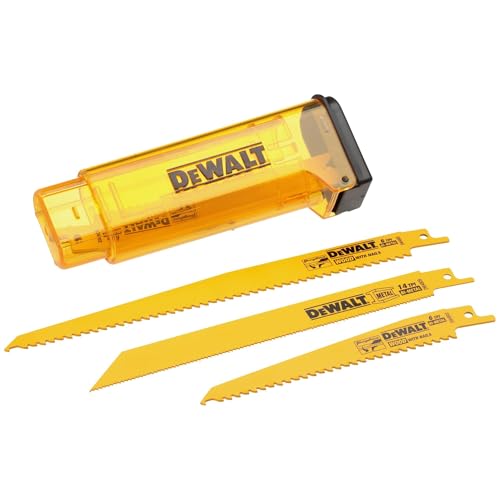
The DEWALT DW4898 is a 10-piece bi-metal reciprocating saw blade set that covers a range of common cutting jobs. It includes blades from 6 to 9 inches, making it suitable for wood, metal, and general demolition work. This combination set is designed for DIY homeowners, mechanics, contractors, electricians, plumbers, woodworkers, and construction professionals who need a versatile blade selection ready at hand.
Performance-wise, the bi-metal construction gives these blades good flexibility while maintaining a sharp cutting edge that lasts through multiple uses. According to product specifications, the heat-treated steel resists wear and breakage, so you can cut through nails, thin metal, wood, and even some pipe materials without frequent blade changes. The set is meant to improve productivity on job sites where switching between materials happens often.
Build quality is typical of DEWALT accessories: the blades feel solid, with laser etching for size and material type. The included plastic case is a strong point - it keeps blades organized and secure, and it's sized to fit inside larger tool boxes or power tool kit boxes. This makes storage and transport much easier, especially for tradespeople who keep multiple saw blades on hand.
One practical limitation is that this set is optimized for general use, not for specialized tasks. If you only cut thick steel or thick hardwood frequently, you may want a dedicated set with more aggressive teeth. The case, while convenient, is plastic and could crack under very rough handling. Also, some users might prefer a case with individual slots for each blade to prevent rattling.
For most garage users, workshop enthusiasts, and professionals, this set offers good value. It's a reliable starting point for anyone who needs a selection of blades for a reciprocating saw. The DEWALT DW4898 is a practical choice that balances versatility, durability, and organization for everyday cutting jobs.
The DEWALT DW4898 blades are made from bi-metal - a high-speed steel edge welded to a flexible back. This construction gives the blades ability to withstand bending without breaking while keeping a sharp edge for longer cuts. The teeth are precision-ground for consistent cutting performance. Each blade features a 1/2-inch universal tang that fits most reciprocating saws. The yellow coating on some blades helps reduce friction and corrosion. The included case is molded plastic with a clear top and snap closure, holding the blades in place securely. While not heavy-duty, it offers acceptable protection for everyday use.
This 10-piece set is designed to cover a variety of materials encountered in home remodeling, construction, and automotive work. With blades ranging from 6 to 9 inches, you can cut through wood, lumber with nails, PVC, drywall, thin metal, and even some light steel. The set includes blades with different tooth patterns: for wood cutting, for metal, and for demolition. For DIYers, it means one purchase for most reciprocating saw projects. For contractors, it's a convenient backup set to keep in the truck. The blades work well for plumbing cuts, electrical box openings, and tree trimming as well. Just be aware that for heavy-duty metal beam cutting or extensive hardwood ripping, you might need a more specialized blade.
Deep Dive: Restoring Edges and Choosing When to Sharpen Reciprocating Saw Blades
Sharpening a reciprocating saw blade requires matching your filing approach to the blade’s underlying steel and tooth spacing. Most standard blades use high carbon steel, chrome vanadium alloys, or bi-metal construction where a hardened high-speed steel cutting edge is electron-beam welded to a flexible spring steel backer. Understanding these metal properties helps determine whether hand-filing, rotary grinding, or outright replacement makes the most sense for your workshop workflow.
Evaluating Blade Condition and Tooth Geometry
Before unclamping a dull blade from your saw, inspect the cutting teeth under direct workshop light. A blade that has merely lost its keen apex can often be refreshed, but teeth with rounded shoulders, missing carbide tips, or stripped sections cannot be saved by simple touch-ups. Severe heat discoloration, showing up as deep blue or bronze shading along the gullets, indicates that the temper has softened from excessive friction.
Tooth count per inch, commonly abbreviated as TPI, dictates the physical feasibility of sharpening. Coarse woodcutting blades featuring 3 TPI to 6 TPI, such as those found in pruning sets, provide wide gullets that easily accommodate small files. In contrast, fine metal-cutting blades with 14 TPI to 24 TPI feature tiny teeth spaced mere millimeters apart, making manual tooth-by-tooth filing impractical for most users.
The tooth geometry also dictates how you must approach the filing stroke. Raker tooth patterns feature alternating left-and-right offsets with an occasional neutral clearing tooth to evacuate wood chips. Maintaining these original bevel angles is critical because altering the rake angle will cause the blade to bind inside the kerf or wander off your cut line during heavy crosscutting.
Required Tools and Workshop Setup for Manual Filing
Sharpening thin, flexible reciprocating saw blades requires rigid workholding to eliminate chatter. A heavy bench vise fitted with soft aluminum or hardwood jaw pads prevents the blade body from vibrating or warping under filing pressure. Clamping the blade so only the tooth line extends above the vise jaws creates a solid platform that dampens resonance and keeps your file strokes consistent.
Manual filing calls for a triangular saw file, often referred to as a slim taper or extra slim taper file, matching the gullet angle of your blade. For larger pruning teeth, a small round chainsaw file can help clean out the curved gullets before you re-establish the cutting facets. Ensure your file is clean and fitted with a comfortable wooden or composite handle for precise directional control.
Personal safety equipment must not be overlooked during bench sharpening tasks. Always wear safety glasses to guard against microscopic steel filings, and wear cut-resistant gloves when handling exposed reciprocating saw edges. Work in a well-lit area, preferably with a magnifying task lamp, so you can clearly observe the reflective wear bevel on each individual tooth apex.
Step-by-Step Manual Filing Technique
Begin by thoroughly cleaning resin, dried sap, and metal debris from the blade body using mineral spirits and a brass wire brush. Pitch buildup mimics dullness by increasing friction, so removing pitch allows you to see the real state of the cutting edge. Once clean, dry the blade and clamp it securely in your bench vise with the teeth facing upward.
Align your triangular file with the factory bevel of the first tooth pointing away from you. Most aggressive wood blades utilize a bevel angle between 15 and 20 degrees across the face of the tooth. Push the file across the cutting face in a smooth, forward stroke, lifting it on the return pass to avoid dulling the file teeth against the hardened steel.
Apply moderate, uniform downward pressure, counting two to three strokes per tooth until you see a crisp, matte cutting line replace the shiny, rounded wear zone. Work down the entire length of the blade, filing only the teeth angled in that direction. Once that sequence is complete, reverse the blade in the vise or change your stance to dress the alternating teeth angled in the opposite direction.
Using Rotary Tools for Fast Edge Touch-Ups
When dealing with harder bi-metal teeth where a traditional steel file slides off without biting, a variable-speed rotary tool equipped with an aluminum oxide grinding stone or diamond wheel provides a viable alternative. Select a grinding stone diameter that fits neatly inside the tooth gullet without contacting adjacent cutting tips. Keep the tool speed at a moderate setting to prevent localized overheating that could ruin the steel’s factory heat treatment.
Stabilize your hands against the vise body to maintain a steady contact angle with the tooth face. Touch the spinning stone lightly against the worn facet for just a fraction of a second, clearing away the rounded shoulder without removing excessive parent metal. If the steel sparks heavily and turns blue, you are pressing too firmly or lingering too long on a single tooth.
Rotary dressing works best on coarse demolition and tree-pruning blades where raw stock removal speed matters more than surgical smoothness. Inspect each tooth periodically with a pocket magnifier to verify that the apex has regained a distinct edge. After finishing all teeth, wipe down the blade with a light coat of machine oil to guard against surface rust during storage.
Understanding Tooth Set and Kerf Clearance
Restoring tooth sharpness addresses only half of cutting performance, because proper tooth set is equally vital. Tooth set refers to the outward bend applied to alternating teeth, which carves a kerf slightly wider than the steel blade body. Without sufficient set, the sides of the blade rub violently against the stock, generating massive friction and binding regardless of how sharp the teeth are.
Sharpening repeatedly reduces tooth height and gradually diminishes the effective set width. If you notice your freshly filed blade pinching in fresh timber or green branches, you may need to gently restore the offset using a dedicated saw set plier. Adjust the tool anvil to contact only the top third of the tooth, avoiding bending near the tooth root where brittle steel can easily snap.
Check the set alignment by looking straight down the blade spine from the tang toward the tip. You should see a distinct, symmetrical channel formed by the alternating tips. If one side projects farther than the other, the saw will pull persistently toward the wider side during operation, making straight cuts nearly impossible.
Comparing Blade Steels: High Carbon, Chrome Vanadium, and Bi-Metal
Blade steel composition plays a massive role in whether sharpening is practical or cost-effective. High carbon steel blades, frequently used for standard dry wood and light pruning tasks, are relatively soft and respond readily to standard hand files. They dull faster in abrasive materials, but a skilled user can restore an edge in the field with minimal effort.
Chrome vanadium construction, often labeled as Cr-V or 58CrV on aggressive timber and branch blades, balances tough shock resistance with good edge retention. These blades feature sturdy tooth profiles that handle heavy outdoor cutting, making them prime candidates for manual sharpening when cutting firewood or clearing branches. Their alloy makeup resists micro-chipping better than basic carbon steel under heavy reciprocal loads.
Bi-metal blades join a spring-steel alloy backing with high-speed steel cutting tips to deliver both flexibility and heat resistance. These blades are engineered to power through embedded nails and dense metal pipes, meaning the tooth steel is exceptionally hard. Trying to dress bi-metal teeth with a regular hardware store file often ruins the file, leaving diamond hones or specialized rotary stones as the only practical sharpening option.
Material Compatibility and Cutting Considerations
The material you intend to cut should guide both your sharpening efforts and your blade selection. Cutting synthetic materials like plastic plumbing requires sharp, clean edges that slice rather than melt. If you frequently cut plastic conduit or drain pipes, checking our PVC pipe cutting blade overview offers useful background on tooth counts that resist gumming and rough burring.
Green wood and wet pruning branches present unique challenges because fibrous sap and moisture pack into tight gullets. Large 5 TPI or 6 TPI blades with arched profiles or Japanese-style tooth grinds utilize aggressive chip evacuation pockets to clear wet wood pulp. When sharpening these outdoor blades, ensure you do not reduce the gullet capacity, or the blade will quickly bog down in wet timber.
Structural demolition involving drywall, plaster, and embedded fasteners quickly dulls sharpened edges through severe abrasion. Plaster contains grit that rounds teeth within seconds of contact. In heavy demolition environments, spending fifteen minutes filing a worn blade rarely yields enough cutting life to justify the labor, making blade replacement the smarter path.
The Practical Balance: Sharpening versus Multipack Replacement
A realistic evaluation of workshop time often shifts the decision from sharpening toward using affordable multipacks. Modern reciprocating saw blades are manufactured in automated high-volume production facilities, keeping per-unit costs low across broad combination sets. When a new blade costs only a modest amount, spending extensive bench time dressing inexpensive carbon steel rarely makes economic sense for busy contractors.
However, field sharpening remains an invaluable emergency skill when working off-grid or away from hardware retailers. If your only pruning blade dulls halfway through an urgent tree cleanup after a storm, having a slim taper file in your tool bag allows you to complete the project without delay. Sharpening is also practical for premium long-reach blades or specialized carbide-tipped demolition accessories where replacement unit costs are higher.
Balancing both strategies provides the most efficient workflow. Keep a dedicated multipack organized in a storage roll or tough case for regular daily tasks, while reserving manual sharpening techniques for large-tooth pruning blades or unexpected field touch-ups. This combined approach maximizes productivity while getting full utility out of your cutting tools.
Safety Protocols and Final Blade Inspection
After filing or grinding teeth, conduct a careful final safety check before mounting the blade back into your saw. Disconnect the power plug or remove the battery pack from your tool before inserting any blade into the keyless chuck. Ensure the blade tang seats completely and the locking collar snaps fully shut into its detent to prevent dangerous blade ejection during high-speed strokes.
Inspect the blade spine and body for straightness by sighting down the edge against a flat surface. Bending a blade back into shape after it has kinked during heavy demolition introduces metal fatigue that can lead to catastrophic blade breakage under load. If a blade shows stress cracks near the gullets or severe twist along the shank, discard it immediately rather than attempting to sharpen or straighten it.
Finally, always run the saw at low speed for a brief test cut in scrap material while wearing protective eyewear and hearing protection. Verify that the blade tracks straight without excessive vibration or chatter against the shoe. When maintained with sensible inspection habits and realistic filing limits, your reciprocating saw blades will deliver dependable, controlled cutting performance across every project.


Write Your Review
No reviews yet. Be the first to share your experience!