


Dull cutting teeth force woodworkers to push stock harder, increasing friction, burning wood fibers, and elevating kickback hazards during routine rips or crosscuts. Learning how sharpen table saw blade setups can restore crisp cutting action, reduce motor strain, and prolong the service life of premium carbide-tipped circular tooling. Many woodworkers prematurely discard high-grade plates when a modest touch-up or thorough resin cleaning would promptly recover factory-level precision.
Before jumping into abrasive grit and alignment jigs, you need to understand tooth geometries, carbide grades, and the physical limits of benchtop sharpening equipment. Specialized tooth profiles, such as alternating top bevel configurations found on precision crosscut plates, demand strict angular consistency to avoid unbalanced tracking. Similar precision applies across specialty cuts, which is why reviewing blade selection for aluminum cutting can clarify how tooth rake and grind angles govern material clearance and cutting temperatures.

Pros
- Compact and portable design fits easily in a garage or workshop without taking up much space.
- Dual wheel system (diamond and emery) handles both carbide and steel blades, increasing versatility.
- Tilting motor block allows sharpening of various tooth angles, improving precision for different blade types.
- Die cast aluminum construction offers good stability and durability for regular use.
- Indexing arm speeds up the sharpening process, boosting productivity for users with many blades to maintain.
Cons
- At 11.79 pounds, it is somewhat heavy for a compact sharpener, which may limit portability for some users.
- The learning curve for proper indexing and angle adjustment might be steep for beginners or casual DIYers.
- Limited to blades with arbors up to 1 inch, so larger industrial blades may not be compatible.
The YWTR 120 Volt Electric Circular Saw Blade Sharpener is a practical tool designed to help you maintain sharp blades without the hassle of sending them out for service. It combines a 4-inch diamond wheel for carbide-tipped blades and a 4-inch emery wheel for standard steel blades, giving you the flexibility to handle a range of cutting tools. This sharpener is best suited for DIY homeowners, mechanics, contractors, woodworkers, and anyone who regularly uses circular saws in their garage, workshop, or on the jobsite.
In terms of real-world performance, this sharpener focuses on restoring cutting efficiency and extending blade life. The motor block tilts 25 degrees left and right, allowing you to match the original tooth geometry of most blades. The indexing arm helps you position each tooth accurately, which can lead to consistent results and improved cutting performance after sharpening. For users who go through many blades, this tool can significantly boost productivity by reducing downtime spent waiting for sharpening services.
Build quality is a key consideration, and the YWTR sharpener uses a die cast aluminum base and indexing arm for stability. This construction helps reduce vibration during operation, which is important for achieving a clean edge on each tooth. The compact design means it won't take up much space in your workshop or garage, and the included diamond and emery wheels are ready to use right out of the box. The specialized blade receiver accepts arbors up to 1 inch, covering most common circular saw blades used in woodworking and construction.
Setup and use are straightforward, though there is a learning curve when it comes to indexing the blade and setting the correct angle. The manual provides guidance, and many users find that after a few tries, the process becomes quick and efficient. Storage is easy thanks to the compact footprint, and maintenance mainly involves keeping the wheels clean and replacing them when they wear out. The sharpener plugs into a standard 120-volt outlet, so no special wiring is needed.
One realistic limitation is the weight: at nearly 12 pounds, it is not the lightest portable sharpener, but it is still manageable for moving around a shop or taking to a job site. Also, the arbor size limit means larger industrial blades may not fit, so this is best for typical 7-1/4 to 10-inch blades used by most tradespeople and DIYers. Beginners might need some practice to get consistent results, but the indexing arm helps reduce guesswork.
Overall, the YWTR 120 Volt Electric Circular Saw Blade Sharpener is a solid investment for anyone who wants to keep their blades sharp without the recurring cost of replacements or sharpening services. It is particularly useful for contractors, woodworkers, and serious DIYers who value productivity and want to get the most out of their tools. If you regularly use circular saws and want a reliable, compact sharpener for your garage or workshop, this model is worth considering.
The YWTR sharpener features a die cast aluminum base and indexing arm, which provide a sturdy foundation for repeated use. The aluminum construction helps resist corrosion and keeps the tool stable during operation. The motor housing is made from durable materials, and the included diamond and emery wheels are designed to handle regular sharpening tasks. Overall, the build quality is appropriate for a workshop or garage environment where tools see consistent use.
In a workshop setting, this sharpener can help maintain a variety of circular saw blades, from carbide-tipped framing blades to steel combination blades. The tilting motor block allows you to match the tooth angle of most blades, which is important for achieving clean cuts. The indexing arm speeds up the process, so you can sharpen multiple blades in a short time. This can be a real time-saver for woodworkers and contractors who rely on sharp blades for quality work.
For garage users, the compact design of the YWTR sharpener means it can be stored on a shelf or in a cabinet without taking up valuable bench space. It plugs into a standard outlet, so no special electrical setup is needed. Whether you are a DIY homeowner working on weekend projects or a mechanic who occasionally uses a saw, this sharpener can help keep your blades in good condition. The dual wheel system adds versatility, allowing you to sharpen both carbide and steel blades.

Pros
- Exceptional cut quality on hardwoods, plywood, and engineered woods
- Low vibration during operation improves user comfort and control
- Long-lasting carbide tips reduce the frequency of blade replacements
- Clean, chip-free finish significantly reduces post-cut sanding work
- Good value for a professional-grade fine finish blade
Cons
- 80-tooth blade is best suited for fine finish cuts, not for fast ripping or heavy stock removal
- May require careful blade alignment and proper saw setup to avoid binding
- Some users might prefer a combo blade for greater versatility across different cuts
The DEWALT DWA11080 is a 10-inch table saw blade with 80 teeth, specifically engineered for fine finish cutting. It's part of DEWALT's lineup of ultra sharp carbide blades that prioritize clean edges and longevity. Whether you're a woodworker crafting furniture, a contractor installing trim, or a DIY homeowner tackling cabinetry, this blade is designed to deliver smooth, precise cuts with minimal tearout.
This blade shines on projects that demand a flawless finish. From ripping hardwood boards to crosscutting plywood sheets, the optimized tooth geometry and ultra sharp carbide tips work together to slice through material with remarkable accuracy. Many users will appreciate the low vibration provided by the patented body slot design, which not only improves cut quality but also reduces fatigue during extended use. According to the product description, this blade offers up to 3X longer life compared to standard blades, making it a reliable choice for frequent cutting sessions.
Build quality is a key strength here. The carbide tips are securely brazed and stay sharp through repetitive cuts. The blade body is engineered to withstand the heat and stress of continuous use in a workshop or on a job site. While it lacks explicit rust-resistant coatings mentioned in some competitor blades, the full-carbide construction and precise grinding ensure consistent performance over time.
Storage and maintenance are straightforward. You'll want to keep the blade in its original packaging or a dedicated blade guard to protect the teeth. After each use, especially when cutting resinous woods, cleaning the blade with a resin remover will help maintain its cutting edge. The blade's weight and size are typical for a 10-inch blade, so it fits easily into standard toolboxes or blade cases.
As a fine finish blade, it does have limitations. With 80 teeth, it's not ideal for fast ripping of thick lumber or aggressive stock removal. The blade can heat up and potentially bind if pushed too hard for those tasks. For general workshop use, some users may prefer a 40-tooth combo blade that balances ripping and crosscutting. However, if your primary focus is on achieving a ready-to-assemble finish on high-end woodworking pieces, this blade is hard to beat.
Overall, the DEWALT DWA11080 is a solid investment for anyone serious about fine woodworking. It delivers the clean cuts, low vibration, and durability that professionals and dedicated hobbyists expect. Pair it with a dedicated finishing saw or use it as a specialty blade in your table saw, and you'll see a noticeable difference in the quality of your projects.
In the workshop, this blade excels at producing smooth, chip-free edges on hardwoods, softwoods, plywood, and MDF. The 80-tooth configuration is ideal for crosscutting trim, molding, and cabinet parts where minimal sanding is a priority. While it isn't a heavy ripping blade, it handles thin-stock rips and precise joinery cuts with ease. The low vibration design also improves accuracy on miter saws, making it a versatile addition to any woodworker's blade collection.
For contractors, this blade is a reliable option for finish work on job sites where clean cuts save time on final installation. DIY homeowners working on furniture or shelving projects will find the cut quality well worth the investment. Just keep in mind that for general-purpose cutting, you'll want to switch to a ripping or combo blade to avoid dulling the fine teeth prematurely.

Pros
- Two blades cover both ripping and finishing tasks, reducing the need to buy separate blades.
- ATB tooth design helps produce smoother cuts with less tear-out on veneered plywood and laminates.
- Tungsten carbide tips hold up well in abrasive materials like MDF and particleboard.
- Hardened steel body adds rigidity for straighter cuts and longer blade life.
Cons
- Some users may find the blades require a stabilizer or zero-clearance insert for the smoothest cuts on thin materials.
- The 32-tooth blade may leave a slightly rougher finish on hardwoods compared to higher tooth count blades.
- Packaging is basic; storing blades separately in blade guards or cases is recommended for safety and longevity.
The Luckyway 10-Inch Table Saw Blade/Miter Saw Blade 2-Pack offers a practical solution for woodworkers, contractors, and DIY homeowners who need both a ripping blade and a finishing blade without buying two separate products. This set includes a 32-tooth blade for general cutting and a 60-tooth blade for finer crosscuts, making it a versatile addition to any workshop or job site.
These blades are best suited for anyone working with softwood, hardwood, plywood, MDF, chipboard, and laminate materials. The 60-tooth blade excels at producing smooth, splinter-free edges on plywood and melamine, while the 32-tooth blade handles faster ripping along the grain. Both blades feature an ATB (Alternating Top Bevel) tooth design, which scores the wood surface ahead of the cut to reduce tear-out. This is especially helpful for trim work, cabinetmaking, and furniture projects where a clean finish matters.
In terms of performance, the tungsten carbide teeth provide good wear and heat resistance, allowing the blades to maintain their edge through repeated cuts in dense materials. The fully hardened steel body resists bending and deflection, which helps promote truer cuts and reduces the need for frequent adjustments. Users can expect efficient chip removal thanks to the positive cutting angle, which also helps prevent binding during heavy ripping. While these blades aren't marketed as industrial-grade, they deliver reliable results for most home workshop and light commercial applications.
Build quality is solid for the price point. The blades have a silver finish and a standard 5/8-inch arbor that fits most 10-inch table saws, miter saws, and radial arm saws. They are relatively lightweight at just over three pounds for the pair, making them easy to handle and swap out. However, the blades come in basic packaging without individual blade guards or cases, so users may want to invest in blade storage sleeves or a dedicated blade case to protect the teeth and prevent accidents.
One realistic limitation is that the 32-tooth blade may leave a slightly rougher finish on hardwoods compared to higher-tooth-count blades, so for ultra-smooth cuts, the 60-tooth blade is the better choice. Additionally, some users might find that using a stabilizer or zero-clearance insert helps achieve the cleanest cuts on thin or delicate materials. Maintenance is straightforward: keep the blades clean of pitch and resin, and store them in a dry place to prevent rust.
Overall, the Luckyway 10-Inch Blade 2-Pack offers good value for anyone looking to cover basic cutting tasks without spending a lot. It's a practical choice for DIY homeowners tackling weekend projects, woodworkers building furniture, and contractors who need a backup set on the job site. While it may not satisfy the highest-end professional demands, it provides dependable performance for the price and is worth considering for your workshop.
The Luckyway blades are constructed with a fully hardened steel body that provides rigidity and resistance to bending during cuts. The tungsten carbide teeth are brazed onto the blade and offer good wear resistance for extended use. The ATB tooth geometry is precisely ground to help reduce splintering. While the blades lack a non-stick coating, the silver finish is corrosion-resistant. Overall, the build quality meets expectations for a budget-friendly set, though users should handle them carefully to avoid chipping the carbide tips.
In a typical workshop setting, these blades perform well for crosscutting and ripping a variety of woods and sheet goods. The 60-tooth blade delivers smooth cuts on plywood and MDF, making it ideal for cabinet and furniture projects. The 32-tooth blade is faster for ripping dimensional lumber. Both blades run true with minimal vibration when properly installed. Users may notice improved cut quality when using a zero-clearance insert or a stabilizer. The blades are suitable for most DIY and light professional tasks.

Pros
- Excellent cut quality with clean edges and reduced tear-out
- Long blade life saves money over time for frequent users
- Works well for both crosscutting and ripping in moderate stock
- Good value for a brand-name carbide blade under $25
- Easy to install with standard 5/8-inch arbor
Cons
- 40-tooth count is more suited for finish cuts; not ideal for aggressive ripping of thick lumber
- Some users may find the blade requires careful alignment to avoid vibration
- Limited to wood and wood composites; not designed for metal or masonry
The DEWALT DWA11040 is a 10-inch circular saw blade with 40 teeth, designed for table saws and miter saws. It's built for users who need clean, precise cuts in woodworking projects, from DIY home renovations to professional contracting work. The blade features ultra-sharp carbide teeth and an optimized tooth geometry that promotes accuracy and longevity.
This blade is best suited for DIY homeowners, woodworkers, carpenters, and contractors who frequently make crosscuts, miters, or rip cuts in softwoods, hardwoods, and plywood. The 40-tooth configuration places it in the fine-finish category, so it excels at producing smooth edges that require minimal sanding. For heavier ripping through thick stock, a lower-tooth-count blade might be more efficient.
Performance-wise, the DWA11040 delivers clean cuts with reduced tear-out, thanks to the ultra-sharp carbide tips. The blade is engineered to last up to three times longer than standard blades, according to the manufacturer, which can translate to fewer blade changes on the jobsite. The heat-treated steel body helps maintain flatness and resist warping, contributing to consistent cutting accuracy over time.
Build quality is solid for the price point. The carbide teeth are securely brazed, and the blade features an anti-stick coating (based on common DEWALT blade finishes) to reduce friction and pitch buildup. While it's not impact-rated like a metal-cutting blade, it's perfectly adequate for wood and wood composites. The standard 5/8-inch arbor fits most table saws, miter saws, and some circular saws with the correct bushing.
Storage and maintenance are straightforward. The blade typically comes in a protective plastic sleeve or cardboard pack; many users store it in a dedicated blade case to prevent damage. Regular cleaning with a non-toxic solvent will help maintain cutting performance. One realistic limitation is that the 40-tooth count may not be the best choice for fast, rough ripping of thick hardwood, where a 24-tooth blade would be more suitable. Additionally, some users have noted that proper alignment and a clean arbor are necessary to avoid vibration.
Overall, the DEWALT DWA11040 is a reliable, affordable table saw blade for anyone focused on fine-finish work. It's a practical addition to a garage workshop, job site, or home DIY tool collection. If you're looking for smooth cuts in plywood, hardwoods, or softwoods without breaking the bank, this blade is a solid choice.
The DWA11040 features a heat-treated steel body that resists warping and maintains flatness for accurate cuts. The carbide tips are braze-bonded for secure retention, and the blade includes a thin-kerf design to reduce material waste and strain on the saw. The anti-stick coating helps reduce friction and resin buildup, extending the blade's effective life between cleanings.
With 40 ultra-sharp carbide teeth, this blade excels at producing clean, smooth cuts in wood. It's optimized for crosscutting and rip cuts in materials like pine, oak, maple, and plywood. Users report minimal tear-out on melamine and veneers, making it suitable for finish carpentry and cabinet work. The blade's design also helps reduce vibration when properly mounted, contributing to a better cut quality.

Pros
- Fast sharpening speed restores dull blades at up to 30 teeth per minute
- Rigid tubular stand minimizes vibration for consistent tooth grinding
- Includes a wheel shaping tool to keep the 5-inch grinding wheel properly profiled
- Flexible 12V battery connection makes it usable at remote, off-grid sawmill locations
Cons
- Requires a separate 12V battery which is not included in the package
- Setup is specifically configured around 7/8-inch tooth spacing profiles
- Overall 60-pound footprint requires dedicated floor or bench space in the shop
The Wood-Mizer BMS25 Sawmill Bandsaw Blade Sharpener is a specialized workshop machine engineered to restore cutting edges on sawmill bandsaw blades. Regular sharpening is a routine necessity for anyone running a portable or stationary sawmill, as dull teeth reduce cutting efficiency, increase fuel or power draw, and produce wavy lumber. This unit is tailored for timber sawyers, woodworkers, homesteaders, and small-scale lumber producers seeking an in-house sharpening setup rather than relying on commercial sharpening services.
Sharpening productivity is a central feature of the BMS25. The mechanism is capable of advancing and grinding up to 30 teeth per minute, allowing operators to cycle through a standard sawmill band quickly. The included cam is designed for blades with 7/8-inch tooth spacing and a 10-degree profile, which represents one of the most common angles used for general-purpose softwood and hardwood processing. The included 5-inch grinding wheel works alongside a dedicated wheel-shaping tool, helping maintain the correct stone profile across repeat sharpening runs.
Build quality reflects the demands of heavy workshop use. Weighing approximately 60 pounds assembled, the sharpener maintains a solid footing on its included tubular steel stand. The 1-3/16-inch diameter legs provide adequate rigidity to prevent excessive deflection or chatter while the grinding head contacts the blade. Wood-Mizer finishes the unit in its signature powder-coated orange paint, offering dependable corrosion resistance against damp sawdust and workshop humidity.
Operation and power setup are tailored for flexibility. Powered by a 12V DC power source, this machine can be hooked directly to a deep-cycle battery or automotive-style battery, making it practical for off-grid operations directly at the log landing or in a dedicated garage workshop. Setup requires aligning blade supports to support the blade loop properly and adjusting the feed pawl so the grinding wheel makes precise contact with the face and gullet of each tooth.
There are practical limitations to keep in mind before purchasing. The machine requires a separately purchased 12V battery, and users working with alternative blade tooth spacings outside 7/8-inch will need compatible accessories. Dialing in the initial feed depth and cam timing requires careful attention to avoid overheating the tooth tips. For operators regularly processing logs who want to extend band life and minimize downtime, the Wood-Mizer BMS25 provides a reliable, self-sufficient blade maintenance solution.
Sawmill blades experience heavy friction and heat that dulls the tooth face and rounds the tip after several hours of rigorous sawing. The BMS25 automates the advance and grind cycle, ensuring each tooth receives consistent material removal. By maintaining the correct 10-degree face angle and proper gullet depth, blades run cooler and track straighter through dense hardwoods and knotted softwoods.
Because it operates on a 12V electrical connection, the machine can be deployed on a work truck tailgate or stationed permanently in a sharpening bay. The included grinding wheel dresser ensures the wheel matches the blade gullet radius over extended grinding cycles, preventing sharp corners that can cause stress cracks and premature blade breakage.

Pros
- Excellent cut finish for fine woodworking and cabinetry projects
- Thin kerf design reduces strain on the saw and cuts faster
- Durable carbide tips hold up well under regular use
- Smooth cutting with low vibration and noise
- Good value for a specialty finish blade
Cons
- Limited to finish crosscuts; not designed for ripping or heavy-duty tasks
- Some users may want a thicker kerf for stability on rough lumber
- Requires careful setup and feed rate to avoid burn marks on dense hardwoods
The FOXBC 10-Inch 80-Tooth Table Saw Blade is designed for woodworkers and contractors who demand a clean, splinter-free finish on crosscuts and miters. With its high tooth count and thin kerf, this blade excels on projects where surface quality matters, such as fine furniture, cabinetry, trim work, and moldings.
This blade is best suited for DIY homeowners tackling precision woodworking, professional carpenters installing crown molding or baseboards, and workshop users who frequently cut hardwoods like oak and maple. It also handles melamine and plywood without chipping the laminate, which is a big plus for cabinet work.
In real-world use, the 80-tooth ATB (Alternate Top Bevel) grind leaves a very smooth edge, often reducing the need for sanding. The thin 0.098-inch kerf removes less material, meaning you get more cuts per board and your saw motor doesn't have to work as hard. That said, this blade is not meant for ripping lumber; stick with a combination or rip blade for that.
Build quality appears solid for the price point. The plate is ground to reduce runout, vibration, and noise. The high-density tungsten carbide tips are brazed securely and should stay sharp through many cuts, though resharpening may be required after extended use. The 5/8-inch arbor fits most popular 10-inch saws from Dewalt, Makita, Skil, Metabo, and similar brands.
Setup is straightforward – just mount it on your saw’s arbor and check that the blade is seated correctly with proper flange and nut. No special tools are needed. When not in use, a blade case or sleeve is recommended to protect the carbide tips. Maintain cleanliness by removing pitch buildup periodically with a blade cleaner to maximize cutting performance.
If you spend time doing detailed woodworking or trim work, this FOXBC blade offers a great balance of cutting performance and value. It may not be a ripping workhorse, but for smooth crosscuts, miters, and fine joinery, it delivers a very clean finish that will please both pros and serious DIYers.
Pros
- Significantly extends the usable life of expensive oscillating multi-tool blades.
- Triangular anti-wobble shank mounts securely into standard corded or cordless drill chucks.
- Frameless design allows direct sightlines and flexible angles while shaping cutting teeth.
- Durable diamond abrasive coating grinds through hardened metal teeth efficiently.
Cons
- Restricted to blades with a maximum cutting width of 35mm (1-3/8 inches).
- Requires proper technique and intermittent grinding to avoid overheating the blade steel.
- Needs a stable drill setup or bench vise for safe and controlled sharpening.
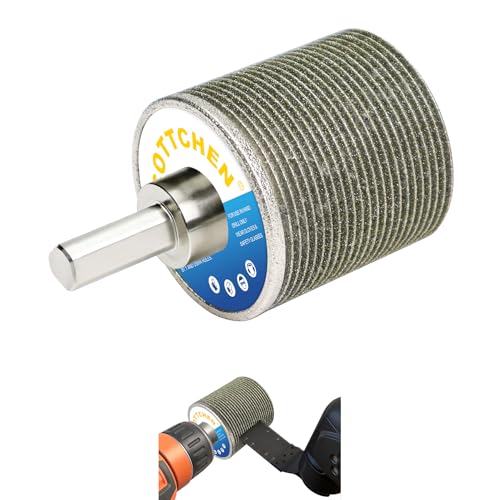
Oscillating multi-tools are staples on job sites and in home workshops, but replacement blades quickly become a major recurring expense. The SCOTTCHEN Oscillating Saw Blade Sharpener is a specialized power tool accessory designed to tackle that problem directly. Featuring a heavy-duty diamond abrasive layer bonded to an iron core, this rotary attachment mounts directly into a standard hand drill chuck to reshape and sharpen worn cutting teeth.
This tool accessory is suited for finish carpenters, flooring installers, drywallers, plumbers, and DIY remodelers who frequently chew through multi-tool blades on nails, plaster, and dense hardwoods. Instead of discarding a blade once the teeth flatten or burn out, users can mount this attachment in a cordless or corded drill to put a fresh cutting edge back on their accessories.
In terms of practical mechanics, the sharpener utilizes a triangular shank that prevents the bit from slipping inside a three-jaw chuck under rotational torque. SCOTTCHEN opted for an upgraded single-sided frameless build, which eliminates the restrictive outer housing found on older styles. This open format gives users clear line of sight to the contact point, making it easier to follow the natural contour of the blade teeth without gouging adjacent metal.
Achieving clean cutting teeth requires a bit of technique. Running the sharpener intermittently prevents excessive heat buildup that could ruin the temper of the blade steel. The manufacturer recommends lifting and shifting the blade slightly sideways across passes so the teeth form sharp, distinct points rather than broad, flat tips. Clamping the drill securely in a bench vise or against a stable work surface provides the necessary control for consistent results.
The sharpener is limited to blades measuring up to 35mm (1-3/8 inches) wide, meaning wider specialty scraping or broad plunge blades will not fit in a single pass. However, for standard wood and metal multi-tool blades, this accessory provides a cost-effective, space-saving solution that easily pays for itself after rescuing just a few dull blades from the scrap bin.
Setting up the SCOTTCHEN sharpener in a workshop or garage is straightforward. Securing a cordless drill into a bench vise allows you to hold the multi-tool blade with two hands, maximizing control against the spinning diamond wheel. Light, deliberate contact produces the best tooth geometry without burning the steel.
Because diamond abrasives cut cleanly without loading up as quickly as standard grinding stones, maintenance remains minimal. Keeping a light touch and allowing the abrasive to do the work ensures the diamond coating stays bonded for dozens of blade sharpening cycles.
Comprehensive Guide to Table Saw Blade Sharpening and Edge Maintenance
Sharpening a circular saw plate requires restoring the intersecting planes of carbide teeth without altering the plate diameter unevenly or rounding critical cutting edges. Tungsten carbide tips are extremely hard and brittle, meaning conventional steel files or standard silicon grinding discs will not produce a sharp edge. Mastering the process requires diamond abrasives, rigid tool holding, strict angle preservation, and an understanding of when a blade can be salvaged versus when replacement is necessary.
Diagnosing Blade Dullness Versus Pitch Buildup
Before altering any tooth geometry, you must confirm whether the cutting edge is truly dull or merely coated in baked-on wood resin. Pitch, sap, and adhesive from engineered sheet goods accumulate behind the tooth face during heavy cutting operations. This gummy buildup creates severe friction against kerf walls, generating scorching marks and feeding resistance that closely mimic a rounded cutting tip.
Inspect the carbide tips under bright task lighting using a handheld magnifying glass or jeweler loupe. A sharp tooth features a crisp, razor-sharp line where the face and top bevel meet, showing zero reflective wear facets. If you see a rounded, shiny white line along the cutting edge, the carbide has worn away and requires mechanical grinding to re-establish sharpness.
Clean the blade thoroughly using a dedicated pitch remover, citrus-based solvent, or diluted laundry detergent before conducting any abrasive work. Soak the plate in a shallow tray for fifteen minutes, then scrub the tooth pockets with a soft brass wire brush. Removing resin reveals the true condition of the carbide braze joints and ensures the plate seats perfectly flat against sharpening indexing jigs.
Required Sharpening Tools and Abrasive Selection
Tungsten carbide tips demand abrasive media that exceed the hardness of sintered metal matrixes, making diamond-coated grinding wheels the primary practical choice. Dedicated electric rotary sharpeners, such as the 120 Volt Electric Circular Saw Blade Sharpener, incorporate a four-inch diamond wheel alongside an emery wheel to dress steel bodies and grind carbide faces. Using improper abrasive stones can fracture the carbide matrix, generating micro-cracks that lead to catastrophic tooth failure under load.
For hand-held touch-ups without motorized indexers, fine diamond credit-card hones or diamond needle files rated between 600 and 1200 grit can lightly lap the face of each tooth. Hand honing can remove tiny metal burrs and polish the cutting face, but it cannot repair heavily chipped edges. Rotary sharpening machines provide the mechanical rigidity needed to maintain uniform material removal across all teeth on forty-tooth or eighty-tooth plates.
Never use standard aluminum oxide bench grinder wheels directly on carbide teeth because the heat generated will melt the braze compound or crack the tip. Emery wheels are useful strictly for cleaning gullets or relieving steel shoulder clearance behind the carbide insert. Keeping cooling fluids or water spray nearby prevents thermal expansion from distorting thin kerf blade bodies during repeated grinding passes.
Understanding Tooth Geometry and Grind Angles
Table saw blades utilize distinct tooth grinds optimized for specific grain orientations and material densities. General-purpose combination blades, such as the Luckyway 10 Inch Table Saw Blade, utilize an alternating top bevel (ATB) configuration where adjacent teeth angle oppositely to shear wood fibers cleanly. High-tooth-count finishing blades, like the DEWALT Table Saw Blade, 10 inch, 80 Tooth or the FOXBC 10-Inch Table Saw Blade, 80-Tooth, feature pronounced top bevel angles that slice through delicate veneers without tear-out.
When sharpening an alternating top bevel plate, you must maintain the exact bevel angle specified by the blade manufacturer, typically between ten and twenty degrees. The indexing arm and motor block on a dedicated machine must tilt left and right to match these alternating angles accurately. Grinding an ATB tooth flat converts it into a dedicated ripping tooth, which destroys its ability to crosscut sheet goods cleanly.
Ripping blades with flat top grind (FTG) teeth, such as certain teeth on a DEWALT Table Saw Blade, 10″, 40 Tooth, require square zero-degree face and top grinds. Triple-chip grind (TCG) blades alternate between a flat raker tooth and a higher chamfered tooth, requiring compound indexing setups. If you alter these bevel angles inconsistently across the plate circumference, individual teeth will shoulder disproportionate cutting loads, causing blade wobble and rough cut faces.
Step-by-Step Sharpening Procedure with a Benchtop Machine
Begin by securing the circular sharpener to a stable, vibration-free workbench using heavy bolts or clamps. Mount the clean saw plate onto the central arbor receiver, adjusting the centering cone to eliminate lateral play while allowing smooth rotational indexing. Adjust the blade receiver stop so the circular blade plate remains parallel to the diamond grinding wheel face.
Mark the starting tooth clearly with a black felt-tip marker on its steel body shoulder so you know exactly where the sharpening cycle began. Position the mechanical indexing arm against the rear shoulder of the starting tooth, ensuring the arm catches each tooth at identical radial positions. Adjust the motor tilt block to match the primary tooth rake angle and bevel orientation.
Set the depth stop on the grinding head so the diamond abrasive disc makes light, kissing contact with the carbide face. Switch on the motor, allow the diamond wheel to achieve full operating speed, and gently advance the wheel into the tooth face with smooth, controlled pressure. Retract the wheel immediately after making contact, advance the plate using the indexing arm, and repeat the process on every matching tooth.
For alternating top bevel designs, skip every other tooth during the initial pass to maintain a single machine angle setup. Once you complete a full revolution back to the marked starting tooth, stop the motor and recalibrate the tilt block to the opposing bevel angle. Complete the second pass on the remaining alternate teeth, maintaining identical plunge depth to preserve concentric tooth heights across the entire diameter.
Manual Diamond File Honing for On-the-Saw Touch-Ups
When you need to refresh an edge quickly without unmounting the entire setup, manual touch-ups with fine diamond hones offer a convenient field solution. Always disconnect the table saw power cord or disengage the main breaker switch before placing your fingers near the blade assembly. Clamp a wooden support block underneath the blade inside the saw throat opening to prevent the arbor from rotating while you apply lateral filing pressure.
Color the front face of each carbide tooth with a permanent marker to act as a visual grinding guide. Lay the flat face of a fine diamond credit-card hone directly against the carbide tooth face, taking extreme care to keep the hone perfectly parallel to the factory rake plane. Make four to five smooth, light forward strokes across the tooth face, observing the marker ink wear off evenly across the surface.
Never file the top clearance bevel freehand, because inconsistent hand angles will rapidly round off the cutting tips and produce uneven tooth heights. Working exclusively on the flat front face removes microscopic metal wash and sharpens the junction without changing the overall diameter of the plate. Check your progress with similar manual techniques used when maintaining clean cutting PVC saw blades to ensure that fine edges slice cleanly through plastic and wood alike.
Assessing Tooth Wear, Chipping, and Plate Flatness
Not all cutting problems stem from dull cutting edges, as damaged carbide inserts or warped steel plates will produce poor cutting performance regardless of edge sharpness. Inspect the perimeter for fractured or missing carbide tips caused by hidden nails, imbedded gravel, or severe knot impacts. A tooth missing more than twenty percent of its carbide mass cannot be safely restored on a standard bench sharpener and requires professional braze replacement.
Check the plate runout by mounting a dial indicator to the saw table with its contact tip riding along the rim just below the expansion slots. Slowly rotate the blade by hand to measure total indicated runout across a full rotation. If lateral deflection exceeds three to four thousandths of an inch, the saw plate is warped and will vibrate heavily during cuts, producing uneven kerf widths.
Expansion slots laser-cut into modern plates, including patented body slots designed for low vibration on DEWALT plates, dissipate heat and prevent core warping under continuous operation. If overheating causes discolored bluing around the gullets, the steel body has lost its factory tensioning. A detensioned or warped plate will flutter in the cut, meaning sharpening the teeth will not resolve wandering cuts or excessive motor bogging.
Safety Protocols and Operational Precautions
Grinding tungsten carbide produces extremely fine metallic dust particles that present serious inhalation hazards if handled without adequate precautions. Always wear an approved particulate respirator, such as an N95 or P100 mask, along with impact-resistant eye protection when operating rotary sharpening equipment. Sintered carbide powders contain cobalt binders that should never be inhaled into respiratory airways.
Wear durable, cut-resistant gloves whenever handling sharp circular saw plates or manipulating indexing arms near spinning abrasive wheels. Ensure that the sharpener safety guards remain properly seated and tightened over the rotating grinding wheels at all times. Keep clothing, loose hair, and workshop rags clear of the spindle to prevent entanglement accidents while reaching for indexing levers.
Never plunge an abrasive disc aggressively into a carbide tip, because sudden friction generates intense thermal shock that can dislodge the braze alloy holding the tip to the plate. Work with light, intermittent contact strokes to allow heat dissipation between teeth. When completing rough construction cuts, referencing an informative subfloor saw cutting guide reinforces how essential sharp, stable tooling is for operator control and kickback prevention.
DIY Workshop Sharpening Versus Commercial Servicing
Woodworkers must weigh the economic balance between purchasing sharpening hardware, hiring professional saw services, or replacing worn blades outright. Budget-friendly utility blades costing relatively little may not justify commercial regrinding fees, which frequently approach the price of a brand-new replacement blade. However, expensive specialty blades featuring thick carbide tips and high tooth counts are specifically designed to undergo three to five professional regrinds.
Benchtop sharpeners provide practical convenience for tradespeople maintaining dozens of jobsite framing and demolition plates where functional sharpness outweighs surgical perfection. In contrast, multi-axis computerized CNC grinding centers used by industrial tool service shops flood the blade with coolant while simultaneously grinding the face, top, and sides of each tooth to sub-micron tolerances. Commercial sharpening shops can also tension dished plates on hydraulic anvils and braze new carbide tips into damaged pockets.
If you primarily cut rough dimensional lumber or utility plywood, a home benchtop diamond sharpener will keep your fleet running smoothly without downtime. For high-end cabinetmaking, cabinet door joinery, or delicate architectural millwork, sending premium finishing blades to a certified sharpening facility preserves factory tolerances. Inspecting your tooling regularly, keeping teeth free of resin, and maintaining proper abrasive touch-up habits ensures clean, safe cuts across every project in your shop.




Write Your Review
No reviews yet. Be the first to share your experience!