


Operating a chainsaw above the ground requires dependable tool management to protect both the climber and crew members working below. Learning how to attach chainsaw lanyards correctly ensures that heavy wood-cutting equipment remains tethered to your climbing saddle without interfering with balance or limb positioning. While ground tasks such as bucking logs or practicing safe wood chopping mechanics allow you to set down a tool instantly, elevated cutting requires dedicated lanyards that absorb movement and maintain constant physical retention. Understanding how to mate the lanyard webbing to your saw and harness creates an efficient, organized canopy workspace.
Chainsaw lanyards typically feature an elasticized bungee core wrapped in heavy-duty nylon webbing, paired with stainless steel or aluminum connection hardware. Whether you operate a dedicated top-handle arborist chainsaw or a rear-handle ground saw hoisted for high canopy cuts, selecting the right attachment method prevents accidental drops. A proper connection balances physical reach during active cutting against a tidy, compact stow position when navigating limbs or transitioning between work stations.



Step-by-Step Chainsaw Lanyard Rigging and Connection Methods
Securing a chainsaw lanyard requires a reliable two-point connection that firmly anchors the saw to your arborist saddle. The tool end of the lanyard attaches directly to the chainsaw frame or rear attachment point with a girth hitch or locking cinch, while the opposite end clips to a dedicated tool-rated ring on your harness. This configuration keeps the powerhead securely tethered while allowing full arm extension during cutting operations. Completing this attachment accurately before ascending prevents dangerous dropped tools and maintains smooth tool handling aloft.
Locating the Dedicated Attachment Point on the Chainsaw
Top-handle chainsaws designed for in-tree canopy work feature a built-in lanyard connection point located at the back of the powerhead. Manufacturers build this as a cast metal loop, a retractable steel D-ring, or a reinforced molded nylon eyelet positioned directly behind the rear handle. Attaching your lanyard to this specific point allows the chainsaw to hang vertically with the guide bar pointing downward toward the ground. This natural orientation prevents the sharp cutters from brushing against your legs, climbing harness webbing, or life-support ropes while you climb.
Ground-oriented rear-handle chainsaws lack dedicated arborist clip loops because they are primarily intended for two-handed ground bucking and felling. When hoisting a larger rear-handle saw into a bucket truck or large canopy spar for heavy sectional cutting, the lanyard must be attached securely through the triangular rear handle opening. Passing the tether through the open handle structure behind the trigger interlock provides a stable lifting point that supports the heavier engine block. Never attach a lanyard loop to the front wrap handle, as this causes the saw to balance horizontally, projecting the guide bar outward into your work zone.
Attaching a lanyard near moving operational controls introduces severe mechanical and safety hazards. The tether loop must never loop around the throttle trigger, master control lever, or safety throttle lockout paddle. Placing webbing near these mechanisms can inadvertently pull the throttle open or jam control switches during tree maneuvers. Furthermore, you must keep the lanyard clear of the front hand guard and inertia-activated chain brake linkage to avoid disrupting safety brake engagement during kickback events.
Attaching the Lanyard to the Saw Using a Girth Hitch
The standard girth hitch remains the most widely trusted method for securing webbing lanyards to chainsaw attachment rings. To form this hitch, push the sewn loop end of the lanyard through the saw attachment ring until several inches of webbing clear the hardware. Next, take the opposite end of the lanyard along with its attached carabiner and pass it completely through the protruding loop. Pull the lanyard body taut until the webbing wraps snugly against the attachment point, ensuring the hitch is flat and free of twists.
Quick-cinch designs streamline tool attachment by eliminating the need to pass the entire length of the lanyard through the loop. Models such as the Notch Quick Cinch Chainsaw Lanyard 17mm and Notch Quick Cinch Chainsaw Lanyard 25mm utilize a specialized carabiner cinch or friction stop that clamps directly down onto the saw ring or handle. This design provides rapid installation and prevents the webbing from locking up so tightly under load that it becomes difficult to unhitch. The snug grip also prevents the loop from shifting sideways along the saw handle during angled cuts.
Modular lanyard configurations offer additional versatility for climbers who switch between multiple saws during a single tree removal. The Notch Modular Chainsaw Lanyard Extended Reach includes an independent handle loop that stays permanently hitched to the powerhead. When you need to trade a small pruning saw for a larger blocking saw, you simply unclip the main lanyard body from the tool loop and snap it into the secondary saw. This modularity speeds up saw transfers while ensuring the lanyard webbing never has to be laboriously re-threaded aloft.
Harness Connection Protocols and Carabiner Locking Mechanisms
The harness side of the chainsaw lanyard must be secured to a dedicated equipment carriage point rather than a life-support attachment. Modern tree-climbing saddles include reinforced textile gear loops, heavy-duty accessory D-rings, and molded plastic tool clip receivers on the hips and rear waist belt. Clipping the lanyard carabiner to a designated side gear loop keeps the chainsaw weight resting comfortably against your hip during limb transit. Placing the connection on your non-dominant side leaves your dominant hand free to position fliplines and reach for auxiliary gear.
Carabiner choice plays a crucial role in preventing accidental disconnects while maneuvering through dense branch unions. Many heavy-duty tethers, including options like the LEIFIDE Heavy Duty Chainsaw Lanyard with Carabiner and the LEIFIDE 3 Pack Chainsaw Lanyard with Carabiner, incorporate a screw-lock buckle or manual twist gate to ensure the connection stays closed under continuous vibration. A screw-lock sleeve prevents small twigs or flipline wraps from bumping the gate open unnoticed. Climbers must form the habit of verifying that the sleeve is fully threaded down whenever connecting the lanyard to their saddle.
Climbers should distinguish between load-bearing auxiliary carabiners and rigid harness tool holders such as plastic gate clips. While a plastic tool clip provides a rigid, one-handed parking cradle for the saw handle, the lanyard itself must anchor to a structural metal ring or heavy-duty fabric gear loop. If the saw slips out of the rigid plastic clip, the lanyard acts as the fail-safe drop tether that catches the falling tool. Relying solely on a plastic clip without an active lanyard anchor leaves your ground crew exposed to dropped equipment hazards.
Managing Working Reach, Bungee Tension, and Cord Stowage
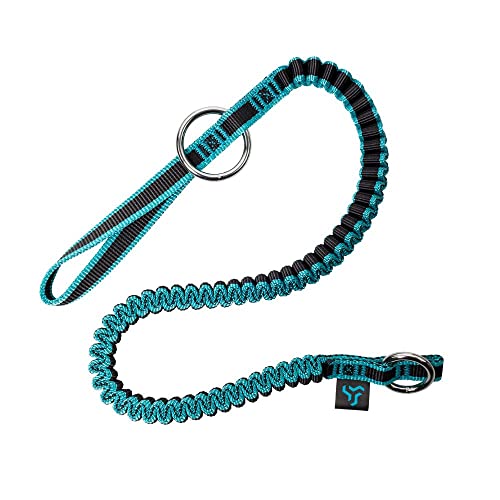
Bungee chainsaw lanyards utilize an internal elastic shock cord encased in woven tubular webbing to balance compact stowage with functional reach. Tethers like the Plus tard Heavy Duty Bungee Chainsaw Lanyard feature a resting length around 38.5 inches that can stretch smoothly out to 60 inches under extension. When you push the saw forward to execute a cut at arm length, the elastic core stretches without fighting your grip or pulling back abruptly. Once the cut is complete and you return the saw to your side, the cord retracts automatically to prevent loose slack from tangling in climbing ropes.
Excessive lanyard slack represents a major tripping and snagging risk when advancing spurs up a spar or navigating through crotches. An uncoiled strap that hangs past your knees can easily catch on branch stubs, climbing rope bights, or your own spur spikes. Extended reach models that expand up to 66 inches provide substantial freedom for overhead limb cuts, but they require careful management when climbing. Choosing a lanyard with balanced retraction tension ensures that the saw remains pulled tight against your body during ascents.
Many arborist lanyards integrate a welded steel ring or sewn webbing loop partway along their length to facilitate short-parking. This storage ring allows you to fold the lanyard in half and clip the intermediate ring directly to your harness tool holder. Short-parking raises the chainsaw several inches higher on your climbing saddle, tucking the engine body tight against your thigh. This elevated position keeps the guide bar from swinging into your calves and prevents the saw from snagging brush when you descend or reposition.
Safety Load Ratings, Safe Working Loads, and Tear-Away Limits
Every chainsaw lanyard comes with a designated load rating that dictates how much dynamic weight the webbing and stitching can tolerate. For instance, narrow 17mm webbing tethers typically provide a safe working load around 15 kilograms (33 pounds), while wider 25mm tethers support up to 25 kilograms (55 pounds). These ratings account for the static weight of the powerhead, guide bar, and full fuel tanks, along with minor dynamic bouncing during limb transit. Exceeding these limits by hanging excessively heavy commercial saws on lightweight tethers risks sudden structural failure.
Arborists must understand the critical operational difference between high-strength structural tool tethers and tear-away breakaway lanyards. If a falling trunk section or large branch catches an anchored chainsaw, a high-strength lanyard can transmit thousands of pounds of force directly into the climber’s saddle. This extreme load can pull the arborist off their work positioning stance or damage life-support lines. Tear-away lanyards incorporate engineered breakaway stitching that releases under heavy dynamic shock loads, sacrificing the saw to protect the climber from severe trauma.
Ground-based clearing work presents fundamentally different tethering requirements than aerial canopy pruning. When operators manage outdoor power gear on solid footing, they frequently transition between chain cutting tools and clearing dense brush on foot without any need for harness tethers. On the ground, physical freedom of movement and rapid drop clearance are essential for escaping sudden wood kickback or falling overhead deadwood. Restricting your saw to a fixed tether is strictly an aerial procedure designed for work aloft, where gravity creates constant hazards for personnel below.
Safe Operating Protocols and Aloft Holstering Workflow
A disciplined operational workflow is necessary every time you transition between climbing, cutting, and stowing your chainsaw aloft. Always engage the manual front hand guard chain brake before moving the saw toward or away from your saddle. Stowing a saw with an active, free-spinning chain risks slicing through your harness leg straps, lanyard webbing, or climbing line. Waiting for the chain to come to a complete stop and clicking the front hand guard forward ensures that accidental throttle bumps do not spin the cutter teeth against your gear.
Starting a chainsaw while suspended in a harness requires careful positioning to avoid binding the lanyard webbing. Drop starting a chainsaw by thrusting the powerhead downward while pulling the starter cord is dangerous and violates standard safety regulations. When starting a tethered saw aloft, hold the top handle firmly with one hand while locking the rear handle securely between your thighs. This braced position stabilizes the saw against your body, keeping the lanyard slack from tangling in the recoil rope while you make a smooth, controlled pull.
Developing smooth one-handed holstering habits allows you to secure the chainsaw without compromising your climbing stance. Keep your climbing spurs securely seated in the wood and maintain tension on your flipline before reaching for your saddle clip. Bring the powerhead back toward your hip with the guide bar angled safely backward and away from your body. Guide the lanyard storage ring or saw handle into your harness clip, give it a firm downward tug to confirm seating, and verify that the tether hangs free of tree bark before resuming climbing movements.
Inspection, Webbing Wear, and Retirement Criteria
Chainsaw lanyards operate in hostile canopy environments filled with sharp teeth, wood chips, and chemical contaminants. Inspect the full length of the nylon webbing before every climbing session, looking closely for frayed stitch patterns, abrasion furring, or heat glazing. Exposure to a scalding powerhead muffler can instantly melt synthetic webbing fibers, creating invisible weak spots that snap under minor loads. If you observe melted webbing, cut edges, or discolored chemical burns from spilled fuel, remove the lanyard from service immediately.
Hardware integrity requires just as much scrutiny as the synthetic webbing fibers. Examine metal carabiners, snap hooks, and welded intermediate rings for hairline stress cracks, metal deformation, or deep grooving from rope friction. Ensure that threaded screw collars spin smoothly without binding on sawdust and that spring-loaded carabiner gates snap shut automatically without hesitation. Corroded rivets or bent gate pins compromise tool security and demand immediate replacement of the connection hardware.
Internal elastic bungee cores naturally lose their elasticity over prolonged periods of heavy use and sun exposure. When a bungee cord degrades, the lanyard remains permanently stretched out, sagging below your knees and failing to retract when unweighted. Repeated saturation with petroleum-based bar oil and 2-stroke premix also degrades internal rubber strands, turning the elastic brittle. Replacing your lanyard whenever it loses recoil memory ensures your tools stay properly tucked against your saddle, preserving safety and efficiency on every climb.
Mastering proper lanyard attachment methods transforms how securely and efficiently you work in the canopy. Taking the time to properly dress your girth hitch, verify carabiner screw locks, and maintain an organized holstering routine keeps high-risk cutting tools firmly under your control. By pairing a well-maintained, appropriately rated lanyard with consistent chain brake engagement and disciplined aloft habits, you protect your valuable powerheads, secure your working positioning, and ensure a safer jobsite for everyone on the ground below.




Write Your Review
No reviews yet. Be the first to share your experience!