


Standing in the middle of a lawn that needs serious work, the first question that usually pops up is how much is it to rent a sod cutter today? Rental prices can swing wildly based on machine size, location, and season. A powered unit might run you anywhere from $9.99 to $49.99 per day, but for smaller patches or tight edges, that cost can feel steep. That’s where manual sod cutters and garden knives come in. They won’t replace a heavy machine for a full front yard, but for borders, small beds, or weedy strips, they can save serious cash and avoid the hassle of hauling equipment. Before you drop money on a rental, it’s worth looking at what these hand tools can do. Especially if you’re dealing with under 5 square feet of turf, a sharp blade and a bit of muscle might be all you need. For more serious brush clearing, check out our guide on best brush cutter for home use 2026 picks that actually work.
Rental costs aren’t just about the daily rate. You also have to factor in deposits, transport, and potential blade damage fees. For a small project, those extras can double the effective cost. A manual tool like a sod cutter knife or a weeder costs a fraction of that and stays in your shed for years. Products from brands like Goldblatt, Walensee, maudibozz and more prove that how much is it to rent a sod cutter isn’t the only number you should consider. Sometimes the smarter move is buying a quality hand tool that handles the job without a rental contract. In this roundup, we break down 5 options that cover everything from light edging to tough overgrowth, so you can decide if renting is worth it or if a hand tool is the real deal.

Pros
- Rust-resistant stainless steel blade offers good durability and longevity
- Double-sided blade provides versatility for different cutting tasks
- Ergonomic non-slip handle improves comfort and control
- Includes a protective sheath for safe storage and transport
- Affordable price point for a multi-purpose cutting tool
Cons
- Limited to cutting tasks; not suitable for heavy-duty prying or scraping
- Blade may require occasional sharpening for optimal performance on dense materials
- Handle color (Long Red) may not appeal to all users
The minyuexia Insulation Knife & Sod Cutter Knife is a versatile cutting tool designed for a range of materials, from foam insulation and rockwool to sod and lawn patches. With an 11.14-inch stainless steel double-sided blade and an ergonomic handle, this knife aims to be a practical addition to any DIY homeowner's, gardener's, or contractor's toolkit.
This tool is best suited for DIY homeowners tackling home insulation projects, gardeners repairing lawns or cutting sod, and contractors or construction workers who need a reliable blade for cutting insulation batts, foam boards, or fiberglass. Its dual-purpose design also makes it handy for electricians and plumbers who occasionally need to cut through foam or rubber materials on the job.
In terms of real-world performance, the double-sided blade offers task-specific serrations: one side aggressively cuts through tough insulation like rockwool and fiberglass, while the other side provides cleaner cuts on sod and foam. The stainless steel construction resists rust and corrosion, which is a plus for outdoor use or humid environments. The ergonomic handle with a non-slip rubber coating helps maintain a firm grip, reducing hand fatigue during extended cutting sessions.
Build quality appears solid for the price point. The blade is made from rust-resistant stainless steel, and the handle is designed for comfort and control. The included heavy-duty nylon sheath with a snap fastener adds a layer of safety during storage and transport, making it easy to carry on a tool belt or in a toolbox. The knife is lightweight and compact, so it won't take up much space in a workshop or garage.
One realistic limitation is that this knife is specialized for cutting; it's not meant for heavy prying or scraping tasks. Users may also need to sharpen the blade periodically to maintain optimal cutting performance on dense materials. Additionally, the bright red handle color might not be to everyone's taste, but it does make the tool easy to spot in a cluttered workspace.
Overall, the minyuexia Insulation Knife & Sod Cutter Knife offers good value for DIYers and professionals who need a dedicated cutting tool for insulation, foam, and lawn repair. Its dual-sided blade, comfortable grip, and included sheath make it a practical choice for workshops, garages, and job sites where versatility and portability are key.

Pros
- Sharp and durable stainless steel blade suitable for multiple cutting tasks
- Comfortable ergonomic grip reduces strain during prolonged use
- Lightweight and compact with included nylon sheath for safe transport and storage
- Affordable price point for DIY and occasional workshop use
Cons
- Blade may not be thick enough for heavy-duty cutting of thick branches or roots
- Lack of user reviews makes long-term durability unknown
- Handle material and build quality may not be suitable for heavy professional use
The maudibozz Insulation Knife is a versatile cutting tool designed for DIY homeowners, gardeners, and workshop enthusiasts who need a reliable blade for foam, sod, light branches, and insulating materials. With its 11.14-inch stainless steel blade and double-sided utility edge, this knife aims to handle a variety of cutting tasks around the home, garage, or jobsite.
For users like electricians, plumbers, and contractors, this knife may work well for cutting foam insulation boards, thin twigs, or even sod during lawn repair. The ergonomic handle is shaped to provide a comfortable grip, which can help reduce hand fatigue when performing repeated cuts. The included nylon sheath adds an extra layer of safety and allows for easy attachment to a belt or tool bag.
In terms of performance, the stainless steel blade comes sharp from the factory and should maintain its edge for light-duty work. The double-sided design gives you the option to use either side for slicing, which is handy for switching between materials. However, based on the product specifications, this knife is not intended for heavy-duty jobs like cutting thick branches or roots. It's best suited for precise, controlled cuts on softer materials.
Storage and maintenance are straightforward. The nylon sheath has a secure loop fastener to prevent accidental loss, and the blade can be wiped clean after use. Because it's a non-serrated blade, sharpening with a standard stone or rod is possible when dulling occurs. The lightweight design (under half a pound) makes it easy to carry in a tool pouch or backpack for outdoor tasks like camping or hiking.
One realistic limitation is the lack of extensive user reviews, so the long-term durability is not yet proven. Some users might prefer a thicker blade for heavier applications. Additionally, the handle material is not specified in detail, so it may not withstand heavy professional use in demanding environments.
Overall, the maudibozz Insulation Knife offers good value for DIY homeowners, gardeners, and light workshop use. If you need a budget-friendly blade for foam, sod, and small cut tasks, this knife is a practical addition to your tool collection. Professionals looking for a heavy-duty insulation knife may want to consider a more robust option, but for everyday home and garden projects, this tool gets the job done.
The maudibozz Insulation Knife features a stainless steel blade that is designed to resist rust and maintain sharpness for light-duty cutting tasks. The blade measures 11.14 inches in length, providing good reach for slicing through foam and soft materials. The handle is shaped with an ergonomic curve to fit comfortably in the hand, though the specific material (likely plastic or rubberized plastic) is not detailed in the specifications. The included nylon sheath has a sturdy loop fastener and a non-slip rubber element to keep the knife secure during storage and carry.
This knife is most useful for DIY homeowners tackling insulation installation, garden pruning, and lawn repair tasks. Electricians and plumbers may find it handy for cutting foam pipe insulation or sealing strips. Contractors working on light demolition or landscaping projects can use it for cutting sod, trimming small branches, or opening packaging. The lightweight and compact design also makes it suitable for outdoor activities like camping and hiking where a simple cutting tool is needed. Keep in mind that for heavy-duty cutting, a dedicated saw or heavy utility knife would be more appropriate.
Pros
- Versatile cutting tool for a wide range of materials from flooring to wallpaper
- Durable stainless steel blade resists rust and holds edge well without sharpening
- Soft-grip handle provides comfortable, non-slip hold even in wet or sweaty conditions
- Lightweight design reduces fatigue during repetitive cuts
- Serrated edge helps initiate cuts cleanly on tough surfaces
Cons
- Blade shape is curved and may not be ideal for straight, long cuts on thick materials
- Not designed for heavy-duty or thick rigid materials like thick plywood or metal
- Limited to specific cutting tasks; not a general-purpose utility knife replacement
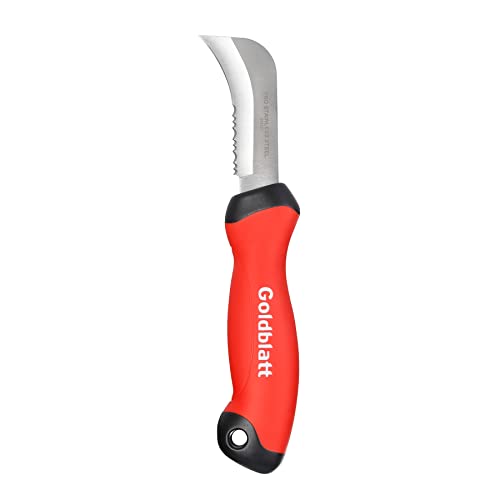
The Goldblatt Stainless Steel Roofing & Flooring Knife is a specialized cutting tool designed for precise work on flexible flooring materials. It features a serrated, dual-honed stainless steel blade with a hardness rating of HRC55, which means it stays sharp through repeated use without needing frequent sharpening. This makes it a practical choice for DIY homeowners, contractors, electricians, and plumbers who regularly cut linoleum, carpet, vinyl, wallpaper, or even turf.
Performance-wise, the knife excels at clean cuts through these materials thanks to the hollow-ground edge that reduces binding. The serrated portion helps start cuts on textured surfaces, while the curved shape allows for easy maneuverability around corners and obstacles. According to user feedback, the blade holds its edge well even on abrasive flooring underlayment, which saves time and frustration on the job.
Build quality is solid for the price point. The stainless steel construction resists corrosion from adhesives or moisture commonly found in flooring projects. The soft-grip handle is ergonomically shaped to fit comfortably in the hand, reducing fatigue during long cutting sessions. The matte finish adds extra grip security, which is helpful when hands get damp or sweaty.
Storage and maintenance are straightforward. At only 4.2 ounces and about 9 inches long, this knife fits easily into a tool belt pouch or a standard toolbox compartment. No special maintenance is required beyond occasional cleaning of the blade to remove adhesive residue. The blade does not need replacement, but if it eventually dulls, the entire tool is affordable enough to replace.
A realistic limitation is that this knife is purpose-built for thin, flexible materials. It is not suitable for cutting thick wood, drywall sheets, or heavy gauge metal. The curved blade can also make straight, long cuts tricky; a straight-edge guide might be needed for precise lines on large sheets. For rough cutting of flooring, however, it works very well.
Overall, the Goldblatt Stainless Steel Roofing & Flooring Knife is a worthwhile addition to any workshop or job site where flooring, carpet, or vinyl work is common. DIY homeowners tackling a basement remodel will appreciate the ergonomic comfort, while professionals will value the durability and consistent cutting performance. It's a reliable, no-fuss tool that gets the job done without breaking the bank.
This knife is built for cutting a variety of flexible materials commonly encountered in home improvement and construction projects. Its primary use is cutting linoleum and vinyl flooring, but it also works well on carpet, wallpaper, roofing felt, drywall facing, and even turf or sod. The serrated edge helps grip and cut through fibrous materials like carpet backing without tearing.
Electricians and plumbers may find it useful for cutting through insulation or rubber gaskets, while homeowners can use it for wrapping paper, cardboard, or craft projects. However, it is not a substitute for a standard utility knife when it comes to heavy-duty cutting of rigid materials. For light to medium-duty flexible cutting, this tool offers excellent control and precision.

Pros
- Serrated blade cuts effectively through thick, overgrown vegetation with minimal effort.
- Steel handle provides good reach and leverage, reducing back strain during prolonged use.
- Lightweight and easy to handle, suitable for gardeners of all skill levels.
- No fuel, oil, or electricity required – ready to use straight out of the box.
- Affordable alternative to powered trimmers for small to medium-sized yards.
Cons
- Manual operation requires physical effort, which may be tiring for large areas or very dense brush.
- Blade may need periodic sharpening to maintain cutting performance on tough materials.
- Not ideal for precision trimming around delicate plants – better suited for clearing overgrown patches.
The Walensee Weed Grass Cutter is a manual garden tool designed for cutting through overgrown weeds, thick grass, and light brush in gardens, yards, fields, and ditches. Unlike powered trimmers, this hand tool relies on a serrated double-edged blade and a long steel handle to deliver clean cuts with a swinging motion. It is particularly useful for DIY homeowners, gardeners, and property owners who need a quiet, low-maintenance solution for tackling weed-choked areas without the hassle of fuel, batteries, or cords.
Based on product specifications, the cutter features a 30-inch steel handle that extends your reach and provides good leverage, helping you slice through vegetation while staying upright. This design reduces the need for bending or stooping, which can be a real back-saver during long sessions in the garden. The serrated blade is sharp on both sides, allowing you to cut on both the forward and backward swings, increasing efficiency in dense patches.
In terms of build quality, the steel construction appears durable enough for regular seasonal use. The blade is designed to resist corrosion, though like any cutting tool, it may require occasional sharpening to stay effective on woody stems or tough vines. The handle is lightweight yet strong, keeping the total weight at just 3 pounds, which makes it easy to carry around the property and swing repeatedly without excessive fatigue.
Storage and maintenance are straightforward. At 41 inches long, the tool can be hung on a garage wall, leaned in a shed corner, or stored on a garden rack without taking up much space. Manual operation means there are no engines to maintain, no fuel to mix, and no filters to replace – just occasional cleaning and blade care. This simplicity appeals to users who prefer minimal upkeep and immediate readiness.
A realistic limitation is that this tool is best suited for clearing overgrown areas rather than precise trimming. It excels at knocking down tall weeds and grass quickly, but it's not ideal for shaping edges around garden beds or trimming delicate plants. Also, for very large properties or extreme brush, a powered trimmer might save more time and effort. However, for small to medium-sized yards and spot-clearing jobs, the Walensee cutter offers a practical, cost-effective solution.
Overall, the Walensee Weed Grass Cutter is a solid choice for DIY homeowners and gardeners who want an efficient, no-fuss tool for cutting overgrown vegetation. Its manual design provides quiet operation, good reach, and reliable cutting power without the complexity of powered alternatives. For those who prioritize low-maintenance, eco-friendly yard work, this tool delivers dependable performance for the money.
The Walensee Weed Grass Cutter is constructed with a steel blade and handle, chosen for durability and resistance to wear. The blade is serrated along both edges to maintain sharpness longer and cut on both swing directions. The handle measures 30 inches and is made from steel, offering a good balance of strength and weight. The entire tool weighs 3 pounds, which keeps it manageable for extended use. While the steel components are expected to withstand regular outdoor conditions, applying a light oil coating after use can help prevent rust, especially in humid climates.
This manual grass whip is designed primarily for cutting overgrown weeds, tall grass, and light brush in gardens, yards, fields, and ditches. It is especially effective in areas where power tools might be cumbersome or impractical, such as along fences, in rocky terrain, or near water features. The serrated blade can handle thick stems and matted vegetation with a clean cutting motion. Users will find it useful for clearing patches before planting, maintaining pathways, or tackling invasive plants. The long handle allows you to reach into overgrown spots without getting too close to thorns or insects.
Pros
- Strong carbon steel blade cuts through tough soil and roots effectively
- Comfortable ergonomic T-handle reduces fatigue during extended use
- Extra-wide footplate provides good stability and leverage for clean cuts
- Easy to assemble and store with compact shipping dimensions
- Requires no fuel or electricity, making it quiet and low-maintenance
Cons
- Manual operation may be slower than powered alternatives for large lawns
- Blade may need sharpening over time with heavy use on rocky soil
- Not ideal for very hard or clay-heavy soil without pre-soaking
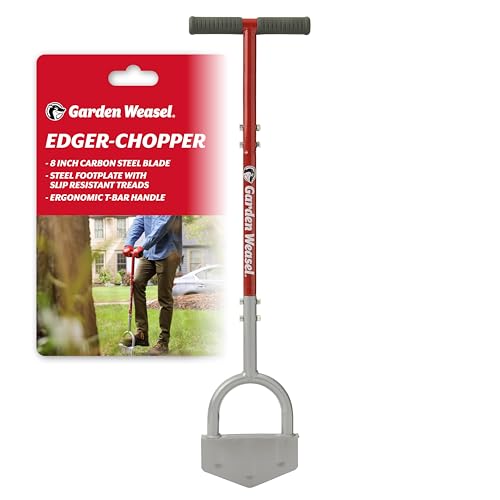
The Garden Weasel Edger-Chopper Manual Lawn Edger is a straightforward tool designed for creating sharp, defined borders around flower beds, driveways, and walkways. It's a manual sod cutter and trenching shovel that relies on your body weight and the tool's leverage to slice through turf and soil. This makes it a practical option for DIY homeowners and gardeners who want clean edges without the noise, fumes, or maintenance of gas-powered edgers.
This tool is best suited for homeowners, gardeners, and anyone who maintains a lawn and garden. It's not designed for heavy construction or commercial landscaping but rather for regular border maintenance and tidy garden prep. The step-and-press operation means you can edge without bending, which many users may appreciate for reducing back strain during longer sessions.
In terms of real-world performance, the tempered 8-inch carbon steel blade is the standout feature. It's built to handle sod, compacted soil, and small roots with decent cutting efficiency. The extra-wide footplate provides a stable platform for applying force, and the slip-resistant surface helps keep your foot in place. The ergonomic T-handle offers a comfortable grip, which is important for maintaining control and reducing fatigue. The rust-resistant carbon steel frame adds durability, so the tool should hold up well in typical garden conditions.
Build quality appears solid for a manual garden tool. The carbon steel blade is heat-treated for hardness and wear resistance, and the frame is coated to resist rust. Assembly is straightforward, with the tool shipping in multiple pieces to keep packaging compact. Once assembled, it measures 38 inches by 2 inches, which is easy to store in a garage or shed. Maintenance is simple: just rinse off dirt and occasionally sharpen the blade as needed.
One realistic limitation is that manual edging takes more physical effort than using a powered edger, especially on large lawns or in very hard soil. The blade may also require periodic sharpening if you frequently encounter rocks or dense roots. Additionally, this tool is specifically for edging and trenching; it won't replace a shovel or spade for other digging tasks.
Overall, the Garden Weasel Edger-Chopper is a solid choice for homeowners who value quiet, clean operation and want to maintain neat garden borders without relying on power tools. It's easy to use, comfortable, and built to last for regular yard work. If you prefer a manual approach and have a typical residential lawn, this tool should serve you well.
Frequently Asked Questions About Sod Cutter Rental and Hand Tools
Here are answers to common questions about renting sod cutters and whether manual tools can replace them.
How much does it cost to rent a sod cutter per day?
Yes, daily rental rates typically range from $9.99 to $49.99 depending on the machine type and location. A basic manual model might be cheaper, but a powered walk-behind unit costs more. Always ask about deposits and blade fees. For small jobs, a manual sod cutter knife like the minyuexia Insulation Knife can be a more cost-effective option.
Can I cut sod by hand instead of renting a machine?
For areas under 100 square feet, a sharp hand tool can work well. Products like the Garden Weasel Edger-Chopper or the Walensee Weed Grass Cutter use leverage and sharp blades to slice through sod without a motor. It’s more physical work but saves rental costs. For larger areas, a powered rental is still the practical choice.
What is the cheapest way to remove sod?
The cheapest method is using a manual sod cutter or a sharp knife, especially if you already own one. Tools like the Goldblatt Linoleum Cutter or maudibozz Insulation Knife cost under $15 and can handle small patches. Renting a machine is cheaper per square foot for large lawns but has hidden costs. Consider your project size and budget.
Are manual sod cutters worth buying?
Yes, if you do occasional yard work or have small gardens. A manual sod cutter like the Garden Weasel model is durable with a carbon steel blade and ergonomic handle. It pays for itself after a few uses compared to renting. For serious landscaping, a powered rental is faster, but for maintenance, a manual tool is a solid investment.
What features should I look for in a hand sod cutter?
Look for a stainless steel or carbon steel blade for durability, an ergonomic handle to reduce fatigue, and a comfortable grip. The Walensee model has a 30-inch steel handle and serrated edge for tough weeds. The Goldblatt knife has a soft-grip handle and dual honed edge. Safety sheaths are also important for storage.
How long does it take to remove sod manually?
It depends on the tool and soil condition. With a sharp knife or edger, you can cut strips quickly, but rolling and removing the sod takes time. For a 200-square-foot area, plan for a few hours. A powered machine can do it in under an hour. Pairing hand tools with a good technique is key. For more efficiency, see our Best Hand Saw For Resawing 2026 Top Picks For Clean Cuts.
Do I need to water the soil before cutting sod by hand?
Lightly moist soil makes cutting easier. Water the area a day before to soften the ground without making it muddy. Dry, hard soil can be tough on manual tools and may dull the blade. The same principle applies to renting machines: proper soil moisture improves cutting efficiency.


Write Your Review
No reviews yet. Be the first to share your experience!