


Stripped teeth and scorched workpieces are common headaches when forcing the wrong tooth profile through structural tubing or bar stock. Metal fabrication generates severe friction heat at the cut line, which quickly ruins standard carbon steel bandsaw bands. Setting up your machine with the best bandsaw blade for steel gives you clean, straight cuts without burning up the blade or bogging down your motor. Bi-metal construction combines high-speed steel cutting edges with a flexible alloy backing, helping each tooth withstand shock when biting into tough metal. Clean cuts also reduce edge cleanup time, though rough cut ends still benefit from quick passes with a DA sander for bodywork to eliminate sharp burrs before welding.
Selecting the right tooth pitch makes a massive difference between effortless slicing and stripped teeth. Thin-walled pipes require higher tooth density to keep at least three teeth in the cut, while solid billets need deeper gullets to clear metal chips effectively. Whether you run a horizontal stationary saw or a jobsite portaband, matching your blade length and pitch to your daily tasks ensures smooth feeding. Manufacturer specifications and user feedback confirm that premium bi-metal M42 steel bands deliver superior heat resistance across stainless stock and structural channel. Investing in reliable tooling eliminates blade wander, keeps feed pressure consistent, and protects your drive wheels from undue strain.
Pros
- M42 bi-metal teeth maintain sharpness on abrasive stainless alloys
- 14 TPI tooth spacing excels at cutting thin-walled tubing without tooth stripping
- Standard size fits a wide range of common 4x6 utility horizontal bandsaws
- Produces clean, square cuts that save time during edge preparation
Cons
- Not intended for non-ferrous metals like aluminum or soft brass
- Straight 14 TPI cuts slower through thick, solid bar stock than variable pitch blades
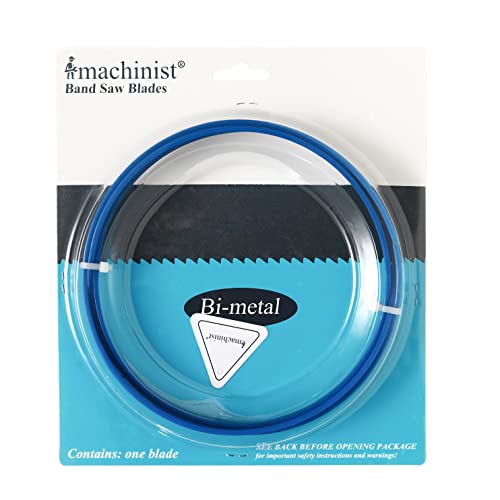
The Imachinist S64121214SS is a dedicated metal-cutting bi-metal bandsaw blade engineered for demanding fabrication tasks. Measuring 64-1/2 inches long, 1/2 inch wide, and 0.025 inches thick, this blade features a 14 TPI (teeth per inch) configuration. It is built using an M42 cobalt high-speed steel cutting edge electron-beam welded to an alloy spring-steel backing, producing a durable solution for small-shop metal cutting.
This blade is best suited for metal fabricators, automotive mechanics, exhaust builders, maintenance technicians, and serious DIY garage users. Anyone running a standard 4x6 inch horizontal or vertical metal-cutting bandsaw will find this size directly compatible with their tool. It provides the right balance of flexibility and tooth hardness needed for shop projects that involve routine cutting of tough ferrous metals.
In real-world workshop cutting, tooth stripping is one of the most common blade failures when tackling thin-walled material. The 14 TPI profile addresses this by ensuring that at least three teeth remain engaged in thin cross-sections like exhaust pipe, electrical conduit, and structural square tubing. The M42 tooth composition resists work-hardening effects often encountered with stainless steel, keeping the teeth sharp longer and reducing cutting friction.
Build quality centers around the bi-metal construction. The flexible spring-steel backer absorbs the continuous bending stress over small-diameter bandsaw wheels, which prevents fatigue cracking along the blade body. At the same time, the hardened M42 tooth tips withstand abrasive friction and moderate cutting temperatures. The consistent weld joint runs smoothly through blade guides and bearings without catching or causing erratic cuts.
Setup involves adjusting standard blade tension, setting tracking along the guide wheels, and aligning guide bearings close to the work piece. Because this blade features a fine 14 TPI straight pitch, it is specialized for thin-to-medium wall profiles and ferrous metals under 30 HRC. It is not recommended for soft non-ferrous materials such as aluminum, which can quickly load up fine teeth, nor is it optimized for rapid slicing through heavy solid billets.
For workshop owners and fabricators who frequently work with stainless steel tube, conduit, or light structural channel, this Imachinist blade offers a reliable, purpose-built upgrade over general-purpose carbon blades. Matching the material thickness to this fine tooth pitch yields clean, burr-free cuts that reduce prep time before fitting and welding.
Running an M42 bi-metal blade on a small horizontal bandsaw changes how cleanly a shop can process tough stock. The hardened teeth resist heat buildup during dry or lubricated cutting, maintaining their edge across repeated passes on stainless tubing and mild steel angles.
The 14 TPI tooth pitch provides smooth, controlled feed rates without grabbing or jumping into thin profiles. This stability protects both the blade teeth and the workpiece, leading to square cuts with minimal edge distortion that fit together cleanly during assembly and welding.
The 64-1/2 inch length and 1/2 inch width make this blade compatible with virtually all standard 4x6 inch utility horizontal-vertical metal-cutting bandsaws found in home workshops and fabrication garages.
It is specifically formulated for ferrous metals and stainless alloys rated under 30 HRC. For larger solid stock or soft non-ferrous alloys, users may prefer coarser variable-pitch blades, but for thin-wall metal profiles, this blade matches standard saw requirements seamlessly.

Pros
- Durable M42 bi-metal material handles frequent use without dulling quickly
- Variable tooth pitch reduces vibration and produces cleaner cuts on thin materials
- Compatible with many 93-inch bandsaw models, including popular 7x12 units
- Affordable replacement option for worn blades without sacrificing quality
- Good choice for cutting thin-walled tubing and profiles with minimal burr
Cons
- Not designed for cutting wood or non-ferrous metals efficiently; use a dedicated blade for those materials
- May require proper tension and speed adjustments on your saw for optimal cutting performance
- Limited to saws that accept 93-inch blades; verify compatibility before purchase
The Imachinist S933414 is a bi-metal band saw blade built for cutting soft ferrous metals, making it a practical addition to any garage, workshop, or job site. With a 93-inch length, 3/4-inch width, and a variable 10/14 TPI tooth pattern, this blade is designed to handle thin pipes, tubes, and profiles commonly encountered by mechanics, contractors, electricians, plumbers, and DIY homeowners. Whether you're working on automotive repairs, metal fabrication, or plumbing modifications, this blade offers a reliable cutting solution.
When it comes to real-world performance, the M42 bi-metal construction provides excellent wear resistance, helping the blade maintain its edge over repeated use. The variable tooth pitch (10/14 TPI) reduces vibration and chatter, resulting in smoother cuts with less effort. This is especially beneficial when cutting thin-walled materials that might otherwise snag or distort. Users can expect efficient cutting of mild steel, angle iron, and other soft ferrous metals, making it a solid choice for shop tasks that demand precision and productivity.
Build quality is a highlight here. The blade is made from high-speed steel teeth bonded to a flexible alloy steel back, giving it both cutting hardness and the ability to withstand tension without cracking. The 0.035-inch thickness strikes a good balance between rigidity and flexibility, allowing it to navigate around curves while staying straight on straight cuts. The silver finish adds a layer of corrosion resistance, which is helpful in humid basements or garages where moisture might be present.
Setup is straightforward on any bandsaw that accepts 93-inch blades - simply open the saw, thread the blade around the wheels, and tension it according to your saw's specifications. Maintenance is minimal: keep the blade clean and dry when not in use, and avoid forcing it through cuts to extend its lifespan. Storage is simple too; just hang it or keep it in a dry drawer to prevent accidental damage.
One realistic limitation is that this blade is specifically designed for soft ferrous metals and thin sections. It won't perform well on wood or non-ferrous metals like aluminum or brass, so you'll want a dedicated blade for those materials. Also, because it's a fixed 93-inch length, it only fits bandsaws that accept that size - be sure to check your saw's blade length requirement before ordering.
Overall, the Imachinist S933414 M42 bi-metal band saw blade is a dependable option for anyone needing a sharp, durable blade for cutting mild steel, pipe, and tubing. Its variable tooth design and robust construction make it a practical investment for mechanics, contractors, and workshop users who want consistent results without breaking the bank.
Pros
- Tough M42 bi-metal construction offers superior heat and wear resistance over standard carbon blades
- Fixed 14 TPI pitch cuts thin-walled metal tubing smoothly without catching or breaking teeth
- Exact fit for standard 7x12 horizontal and vertical metal band saw models
- Consistent weld quality allows smooth tracking across guide bearings with low vibration
Cons
- Not intended for thick solid steel billets or heavy bar stock due to the fine tooth spacing
- Limited primarily to soft ferrous metals and non-ferrous alloys rather than hardened specialty steels
The Imachinist S9334014 is a specialized replacement band saw blade designed for horizontal and vertical metal-cutting machines. Measuring 93 inches in length, 3/4 inch in width, and 0.035 inches in thickness, this blade uses a fixed 14 TPI (teeth per inch) configuration. Built with an M42 bi-metal design, it fuses high-speed cobalt steel teeth to an alloy spring-steel backer, delivering the flexibility needed to handle continuous bending over band saw wheels alongside the heat resistance required for friction-heavy metal slicing.
This blade is well suited for metal fabricators, automotive mechanics, maintenance technicians, vocational instructors, and dedicated home garage hobbyists. Anyone regularly cutting angle iron, unistrut, conduit, exhaust pipe, or hollow square tubing will appreciate the fine tooth count. Because coarse blades often hook and shatter teeth when engaging thin materials, having a dedicated 14 TPI blade ensures at least three teeth remain in contact with thin-walled workpieces at all times, drastically reducing chatter and tooth stripping.
In practical shop use, cutting efficiency depends heavily on matching feed pressure with the material profile. The fine tooth geometry glides through soft ferrous metals like mild steel tubing, light steel channel, and sheet profiles without grabbing. Edge retention stands out compared to basic carbon steel blades, as the M42 cutting edge withstands frictional heat buildup during dry cutting or flood-coolant operations. Operators will notice clean edges that require only quick passes with a deburring tool before welding or fit-up.
Build quality centers on solid weld alignment and reliable tooth hardness. A clean, flat weld joint prevents rhythmic thumping against guide bearings, which helps prolong the life of both the blade and the saw guide rollers. To get the longest working life out of this blade, proper machine setup is essential: maintaining correct blade tension, dialing in moderate blade speeds, and avoiding excessive downfeed pressure will keep the teeth sharp and prevent gullet clogging.
A clear limitation of this blade is its tooth pitch. A fine 14 TPI setup is intentionally restricted from cutting thick solid rounds or heavy structural plate, as small gullets quickly pack with metal chips and generate excessive heat. For workshops, fab shops, and maintenance facilities focused on thin-wall stock, light structural framing, and general metal repairs, this Imachinist blade offers dependable cutting performance and solid overall value.
This band saw blade measures exactly 93 inches in overall loop length and 3/4 inch in width, making it a direct match for most standard 7x12 horizontal metal-cutting band saws. Common machinery from brands like Jet, Grizzly, Baileigh, Central Machinery, and similar workshop platforms using 93-inch band dimensions will easily accept this specification.
Users should check their equipment manual to ensure their machine supports a 3/4-inch blade width, as smaller hobby saws are sometimes limited to 1/2-inch bands. When properly matched to compatible machines, the 0.035-inch thickness provides the right balance between beam strength for straight, square cuts and enough lateral flexibility to track smoothly across saw wheels.

Pros
- Milled teeth produce very smooth edge quality with minimal tool marks
- Runs under less tension than typical blades, putting less strain on the saw frame
- Flexible alloy steel resists fatigue failure during prolonged radius cutting
- Performs reliably across both softwoods and kiln-dried hardwoods
Cons
- Narrow 1/4-inch width is prone to wandering during straight resawing of thick stock
- Requires careful tension adjustment as it runs at lower tension than standard blades
The Timber Wolf 1/4-inch by 93-1/2-inch 6 TPI bandsaw blade is a specialized cutting accessory designed for curve cutting, template contouring, and general workshop joinery. Built from high-grade silicon steel rather than standard high-carbon stock, this blade is engineered to flex easily over wheels and deliver clean cuts without demanding excessive machine tension.
This blade is best suited for woodworkers, DIY makers, garage crafters, and patternmakers who regularly cut tight curves, bracket shapes, and small-to-medium decorative components. While contractors occasionally need a reliable bandsaw blade for trim scribing, this accessory truly shines in a dedicated woodshop where clean cuts and tight radius control directly reduce sanding time.
In practical cutting tasks, the milled tooth profile provides a noticeable advantage over standard stamped blades. Because each tooth is individually cut rather than punched, the cutting edge is razor sharp right out of the packaging. The 6 TPI positive claw design provides sufficient gullet clearance to eject chips cleanly in stock up to two inches thick, preventing heat buildup and surface scorching in dense hardwoods like cherry, walnut, and maple.
Build quality is centered around durability and tool longevity. The blade body uses a ductile Swedish silicon steel that resists micro-fracturing along the gullets, while precision induction hardening protects the tooth tips from rapid dulling. Because it requires roughly 20 to 30 percent less tension than conventional blades, it runs cooler and helps extend the lifespan of your bandsaw guide bearings, tension springs, and drive tires.
Setup is straightforward on standard 14-inch bandsaws that accommodate a 93-1/2-inch blade. Users should adjust guide blocks and thrust bearings carefully, setting tension slightly lower than usual to prevent excessive stretch. Keep in mind that a 1/4-inch blade is not made for heavy resawing or deep straight cuts, where wider blades like a 1/2-inch or 3/4-inch model would track better. For intricate scroll patterns and medium-radius shaping, this blade offers a dependable upgrade that enhances workshop productivity.
In standard workshop operations, tracking stability and edge retention are critical factors. This Timber Wolf blade holds its line predictably through tight curves down to approximately 5/8-inch radius without binding against the wood grain. The thin kerf reduces the strain on smaller benchtop and freestanding 14-inch motors, allowing faster feed rates without bogging down.
Dust extraction and chip clearing remain clean during continuous cutting, thanks to the positive claw rake angle. For hobbyists building band saw boxes, rocking chairs, or curved cabinet components, this accessory delivers smooth cut faces that require minimal cleanup with a rasp or oscillating spindle sander.

Pros
- Direct fit for industry-standard deep cut portabands including Milwaukee and DeWalt models
- Variable 14/18 pitch design significantly reduces blade chatter and tooth stripping
- Tough M42 bi-metal edge stands up well to heat buildup during continuous cutting
- Economical three-pack provides great value for active construction and garage projects
Cons
- Not compatible with compact or sub-compact portable bandsaws requiring shorter blade lengths
- Variable 14/18 tooth profile cuts slower through heavy, thick solid steel stock than low-TPI options
The FOXBC 44-7/8-Inch Portable Bandsaw Blades are replacement cutting accessories engineered for standard deep-cut portable band saws. Measuring 44-7/8 inches long, 1/2 inch wide, and 0.020 inches thick, these blades are designed as drop-in replacements for Milwaukee 48-39-0561 and DeWalt DW3986 blades. They fit a wide range of popular corded and cordless tools, including the DeWalt DWM120K and DCS374B, Milwaukee deep-cut units, Makita XBP02Z, Wen 94396, and Bosch models. Packaged as a 3-pack, they offer an accessible way to keep fresh cutting edges on hand for metal fabrication tasks.
These blades are well suited for electricians, commercial plumbers, mechanical contractors, and automotive hobbyists who frequently cut metal stock. Electricians slicing through EMT conduit and unistrut channels will appreciate the tooth pattern, while plumbers working with copper pipes, black iron, and threaded rod can make quick, clean cuts without excessive sparks. For general garage users and metal fabrication shops, having a reliable multi-pack prevents downtime when cutting structural tubing or angle iron.
Cutting performance centers around the 14/18 variable teeth-per-inch configuration. This wavy tooth profile excels at cutting mixed-thickness materials, dampening harmonic vibrations and reducing the chatter often experienced when cutting thin-walled pipe. The variable pitch also minimizes tooth stripping when snagging on jagged edges. Because portable band saws produce far less heat and debris than abrasive cut-off wheels, these blades allow tradespeople to make cooler, cleaner cuts with minimal burring, reducing secondary prep work.
In terms of build quality, FOXBC utilizes M42 bi-metal high-speed steel with a heat-resistant tooth edge joined to a flexible spring steel backing. This construction helps the blade withstand constant flexing over drive wheels while maintaining sharp cutting edges. The weld seam is ground smooth to promote steady tracking along the guide rollers, which prevents jumping and uneven wear during heavy pressure cuts.
Like any cutting accessory, these blades have operational boundaries. The 14/18 TPI setup is optimized for thin to medium-gauge metals; cutting thick, solid steel blocks or dense bar stock may feel slow compared to coarser 10/14 or 8/10 TPI blades. Proper installation tension and moderate feed pressure are necessary to ensure the teeth do not overheat or dull prematurely. Storing coiled spares flat in a tool chest or bag keeps them protected from accidental crimping before use.
For contractors, maintenance technicians, and DIY fabricators looking for dependable replacement blades at a reasonable price, this 3-pack is a sensible choice. It provides solid tracking, reliable tooth durability on conduit and structural shapes, and direct compatibility with major deep-cut portable band saws on the market.
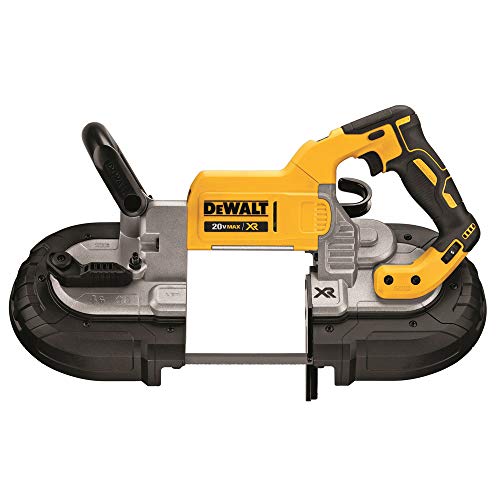
These replacement blades measure 44-7/8 inches in length, 1/2 inch in width, and 0.020 inches in thickness, which is the standard size for full-size, deep-cut portable band saws. They are compatible with Milwaukee 48-39-0561, DeWalt DW3986, D28770, DCS374B, DCS376B, DWM120K, and DW328. They also fit Makita XBP02Z, Wen 94396, and Bosch GCB10-5 portable band saws.
These blades will not fit compact, sub-compact, or mid-size portabands that require 32-7/8-inch, 35-3/8-inch, or other non-standard blade sizes. Users should always check their tool manual or existing blade specifications before purchasing to confirm that their tool takes 44-7/8-inch blades.

Pros
- Broad 3/4-inch width provides solid beam stiffness for straight resawing
- SK8 high-carbon steel construction offers dependable resistance to wear and heat
- Direct fit for most popular 14-inch stationary workshop bandsaws
- Deep gullets clear sawdust quickly to help prevent friction burn on hardwoods
Cons
- Wide 3/4-inch profile is not suited for cutting tight curves or delicate scrollwork
- Produces a rougher cut surface that requires light planing or sanding
- Requires proper saw tensioning that may challenge smaller or lighter bandsaw frames
The FOXBC 93-1/2 Inch x 3/4 Inch bandsaw blade is a heavy-duty cutting accessory tailored for stationary 14-inch workshop bandsaws. It is primarily geared toward woodworkers, cabinetmakers, DIY enthusiasts, and home shop fabricators who regularly tackle straight ripping or resawing thick boards. With its 4 TPI tooth pattern and wide beam, this blade serves as a dedicated workhorse for stock preparation rather than delicate scroll cuts.
Based on manufacturer specifications, the blade is fabricated from Japan SK8 high-carbon steel, selected for heat tolerance and tensile strength. The teeth are precision-milled and induction-hardened to stay sharp through tough species like oak, maple, and walnut. The joint weld is designed to run smoothly over upper and lower guide wheels, helping to reduce vibration and chatter during extended running sessions.
In shop environments, a 3/4-inch width offers the lateral stiffness needed to resist blade wandering when slicing thick veneers or splitting rough-sawn lumber. The aggressive 4 teeth-per-inch design provides deep gullets that clear heavy sawdust rapidly, preventing pitch buildup and friction burns. While built primarily for lumber, the tooth profile and carbon steel body also handle non-ferrous metals and dense plastics without binding.
Proper installation and guide bearing alignment remain essential to get the cleanest cuts from this blade. Because of its 3/4-inch width, smaller 14-inch saws with lighter cast iron frames or lower-tension springs may require careful adjustment to establish adequate blade tension. Users should note that this blade cannot navigate tight curves or intricate patterns, so swapping to a narrower blade will be necessary for curved band work.
Routine maintenance involves keeping the blade clean from resin using common shop solvents and backing off machine tension when parked for long intervals to preserve the steel core. For home woodworkers, furniture builders, and garage craftsmen seeking an economical blade to expand their resawing capability without flexing, this FOXBC replacement blade stands as a practical, dependable addition to the workshop tool rack.
This blade measures 93-1/2 inches in total loop length, which is the standard size for most 14-inch stationary bandsaws operating with stock wheel arrangements. Compatible machinery includes common workshop models from Delta, Rockwell, Jet, Grizzly, Rikon, Steel City, General, Ridgid, and older Craftsman units.
Before mounting, users should verify their specific machine documentation to confirm tension arm clearance for 3/4-inch blades. Aligning the cool blocks or bearing guides just behind the tooth gullets ensures that the induction-hardened teeth maintain their set while tracking true across the thrust bearings.
Pros
- Long blade life thanks to bi-metal construction and Tuff Tooth reinforcement
- Shatter-resistant design reduces risk of breakage during tough cuts or when hitting obstacles
- Consistent cut quality with 14 TPI for thin metals and tubing
- Good value with 5 blades per pack for frequent users
Cons
- 14 TPI may be too fine for thicker materials, resulting in slower cutting speeds
- No included storage case or organizer for the blades
- Price per blade may be higher than some generic alternatives
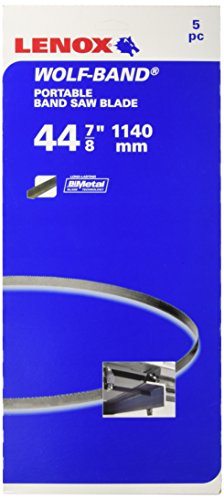
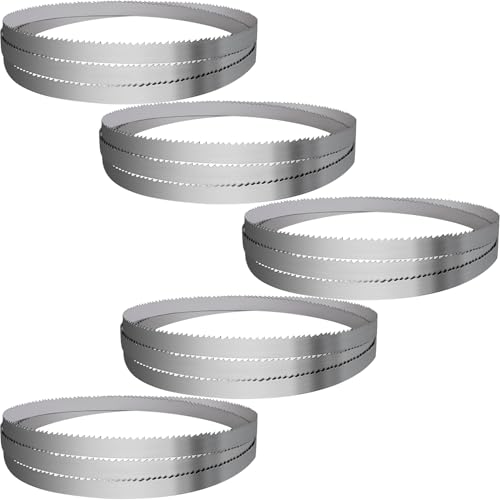
These LENOX portable band saw blades are a solid choice for anyone who regularly cuts metal in a workshop, garage, or on a construction site. Designed as a 5-pack of 44-7/8" x 1/2" x .020" blades with a 14 TPI tooth configuration, they are built for portable band saws and are suitable for cutting a range of materials, especially thin metals, tubing, and sheet stock.
Who will get the most out of these blades? Mechanics, contractors, electricians, plumbers, and woodworkers who need to cut metal occasionally will appreciate the durability and shatter resistance. DIY homeowners tackling garage projects or home repairs will also find them reliable. The bi-metal construction combines high-speed steel teeth with a flexible back, allowing the blade to bend without breaking while maintaining a sharp cutting edge. This is a practical advantage when cutting in tight spaces or around corners.
In terms of performance, the 14 TPI (teeth per inch) provides a smooth, relatively fast cut on thin materials like steel tubing, aluminum, or sheet metal. The Tuff Tooth design reinforces the tooth profile, reducing the chance of tooth breakage during aggressive cuts or when hitting unexpected hard spots. Users can expect consistent results without frequent blade changes, which boosts productivity on the job. The shatter-resistant feature also adds a layer of safety, as the blade is less likely to snap unexpectedly.
Build quality is where LENOX generally shines, and these blades are no exception. The high-speed steel teeth stay sharp longer than standard carbon steel, and the bi-metal back resists fatigue. The .020" thickness provides enough rigidity for precise cuts while still allowing some flexibility. However, there is no included storage case, so you will need to store them carefully to avoid damaging the teeth. A simple blade holder or a dedicated drawer works fine.
One realistic limitation is the tooth count. While 14 TPI is excellent for thin materials, it can be too fine for thicker stock, leading to slower cutting and potential clogging. If you frequently cut thick metal, you might want a lower TPI option. Also, the price per blade is a bit higher than generic brands, but the longevity and reliability often justify the cost for professionals who cannot afford downtime.
Overall, this 5-pack of LENOX blades is a practical investment for anyone who needs dependable metal cutting capability in a portable band saw. They are well-suited for automotive repairs, HVAC work, electrical conduit cutting, and general fabrication. For the DIYer or professional looking for a blade that balances durability, safety, and cut quality, these are a strong recommendation.
The LENOX bi-metal construction is the backbone of these blades' durability. High-speed steel teeth resist wear, while the flexible back prevents breakage during tough cuts. The Tuff Tooth design adds extra reinforcement at the tooth base, reducing the risk of tooth loss even when cutting through abrasive materials or hitting hard spots. This combination means longer blade life and fewer interruptions on the job.
Performance-wise, the 14 TPI configuration delivers clean, accurate cuts in thin metals, tubing, and sheet stock. The .020" thickness provides enough heft to maintain a straight line without excessive vibration. Users can expect consistent results across multiple cuts, making these blades a reliable choice for repetitive tasks like cutting conduit or rebar.
Frequently Asked Questions
What tooth pitch works best for cutting thin steel tubing?
A pitch between 14 TPI and 18 TPI is ideal for thin-walled steel tubing. You should always maintain at least three teeth engaged in the work material simultaneously to prevent tooth stripping. Variable pitches like 10/14 TPI or 14/18 TPI help damp chatter and vibration during the cut. For solid steel bar stock, you would want a much coarser pitch such as 4 TPI to 6 TPI to allow proper chip clearance.
Can I use a wood-cutting bandsaw to cut steel?
No, standard wood bandsaws run far too fast to cut steel safely. Woodworking saws typically run at blade speeds between 2,000 and 3,500 feet per minute, whereas cutting steel requires speeds between 80 and 250 FPM. Running any best bandsaw blade for steel at woodworking speeds generates extreme friction that instantly dulls the teeth and ruins the blade temper. To cut steel on a vertical saw, your machine must feature step pulleys or gear reduction to slow down blade rotation.
Why are bi-metal blades preferred over carbon steel for metal cutting?
Bi-metal bands feature high-speed steel teeth welded to a flexible spring-steel backing for superior heat and fatigue resistance. Cutting alloy steel creates significant heat that softens traditional carbon steel teeth within seconds. Premium M42 bi-metal teeth maintain their hardness even under high cutting temperatures and heavy feed pressures. The flexible alloy backer also withstands tight bending radii around bandsaw wheels without snapping.
How do I prevent blade drift when cutting steel on a bandsaw?
Set proper blade tension, square your guide bearings close to the stock, and check your tooth set. Inadequate tension allows the blade to bow and track off your cut line under feed pressure. Guide bearings should sit roughly a quarter-inch above the workpiece to minimize blade deflection. If the teeth on one side of the band become dull from uneven wear, the blade will wander toward the sharper side.
Which blade size fits standard portable band saws in 2026?
Standard deep-cut portable band saws take a 44-7/8 inch by 1/2 inch by 0.020 inch blade. Common portaband models from brands like Milwaukee, DeWalt, and Makita rely on this specific dimension for reliable tracking. Using the right best bandsaw blade for steel in this size makes fast work of electrical conduit, unistrut, and structural angle iron. After completing rough jobsite cuts, finishing edge contours in the shop is easy with an oscillator sander for woodworking and metal burr cleanup.
What is the best blade setup for cutting stainless steel?
Use an M42 bi-metal blade with 14 TPI running at slow speeds with steady feed pressure. Stainless steel work-hardens rapidly if the blade rubs rather than bites into the stock. Maintaining firm, steady downfeed pressure prevents the metal from glazing over and destroying tooth edges. Running cutting fluid or wax stick lubricant also keeps blade temperatures manageable during extended cuts.



Write Your Review
No reviews yet. Be the first to share your experience!