


Tackling Thick Hardwood Resaw Cuts Without Drift
Blade drift throwing rip cuts off the layout line can turn an expensive piece of figured walnut into scrap lumber within seconds. When tension drops or tooth gullets pack with fine dust, the blade wanders, and it’s frustrating to sand away uneven washboard ridges for hours. Upgrading your workshop setup with the best resaw blade for bandsaw provides the beam strength, aggressive tooth rake, and deep chip clearance needed for true, book-matched veneers. Careful analysis of tooth geometry, steel ductility, and manufacturer tension ratings shows that proper blade selection keeps cuts parallel without bogging down your motor. Smoothing these book-matched panels later with an oscillator sander becomes much faster when your saw delivers uniform slices right off the fence.
Ripping wide boards puts heavy demands on your bandsaw guide assemblies and wheel tires. Standard general-purpose blades can’t clear sawdust fast enough on tall boards, causing friction heat and premature dulling. Low-tension silicone steel bands and premium carbide-tipped designs solve this problem by slicing cleanly through dense grain while running cooler. Based on published blade specifications and workshop feedback, matching tooth pitch to board thickness eliminates excessive vibration and motor strain. Investing in a dedicated resaw blade transforms tough slicing chores into repeatable, shop-ready precision.

Pros
- Requires less tension than conventional high-carbon blades, saving wear on your bandsaw
- Milled teeth produce smooth cut faces that require minimal sanding or planing
- Excellent chip clearing prevents burning on deep hardwood cuts
- Consistent tracking makes slicing uniform veneer sheets much easier
Cons
- At 3/4-inch width, it is strictly intended for straight resawing and cannot handle tight curves
- Requires proper bandsaw guide setup and lower tension adjustment for optimal performance
The Timberwolf 3423VPC is a dedicated resaw bandsaw blade measuring 93-1/2 inches in length by 3/4 inch in width, featuring a variable positive claw 2-3 TPI tooth pattern. Designed specifically for deep straight-line ripping and board resawing, this accessory converts a standard 14-inch bandsaw equipped with a riser block into a capable lumber-milling workhorse. It is engineered from Swedish silicon steel, a material formulation known for high ductility and resistance to heat buildup under heavy cutting loads.
Woodworkers, custom furniture makers, and serious DIY hobbyists will find this blade particularly well-suited for their shops. If you frequently break down thick hardwood slabs, slice custom veneers, or salvage rough-sawn lumber, this blade provides the clearance and tooth geometry needed to prevent binding. Its wide beam strength resists wandering along the cut line, making it reliable for projects where consistent thickness across wide boards is critical.
Real-world cutting efficiency is where this design shines. The variable 2-3 TPI configuration features deep gullets that quickly evacuate packed sawdust from tall workpieces, preventing heat accumulation that normally leads to pitch buildup and premature dulling. Based on product specifications, the milled tooth edge undergoes precision induction hardening, offering substantially greater hardness and edge retention compared to standard flame-hardened alternatives without becoming brittle.
The standout advantage of the Timberwolf silicon steel composition is its low-tension requirement. Standard carbon steel blades often demand heavy tensioning to track straight, which can deflect lighter bandsaw frames and wear down guide bearings prematurely. This blade tracks true under lower overall tension, reducing mechanical strain on your saw while dampening vibration during heavy cuts. The 0.025-inch body thickness further reduces the cutting load on lower-horsepower workshop motors.
Setup does require following low-tension tuning methods rather than relying purely on factory spring indicators, which may involve a brief learning curve for newer woodworkers. Because of its 3/4-inch width, this blade is not meant for contour cutting or scrollwork. For shops prioritizing straight, stable resawing through tough domestic and exotic woods, this Timberwolf blade offers exceptional value, clean cuts, and prolonged flex life.
In daily workshop use, tracking stability and heat dissipation determine how well a resaw blade performs. The variable pitch geometry breaks up harmonic vibrations that typically cause blade chatter and rough washboard surfaces on tall cuts. Woodworkers will appreciate the cleaner surface finish, which significantly reduces the time spent at the drum sander or jointer after resawing.
The reduced kerf thickness minimizes wasted wood when producing sequence-matched drawer fronts or delicate veneers. As long as bandsaw guide blocks and thrust bearings are correctly adjusted just behind the gullets, the blade tracks straight through dense species like hard maple, walnut, and white oak without wandering off the cut line.
Pros
- Runs at significantly lower tension than standard carbon steel blades
- Variable tooth spacing breaks up harmonic resonance and reduces vibration
- Milled tooth geometry leaves a cleaner surface that requires less sanding
- Excellent blade life and flex fatigue resistance in hardwood lumber
Cons
- Strictly designed for straight slicing and resawing, not suitable for curved cuts
- Specific 105-inch length requires a matching machine setup such as a 14-inch saw with a 6-inch riser block
- Requires proper low-tension setup technique rather than relying on default saw tension gauges
The Timberwolf 3423VPC is a heavy-duty 105-inch by 3/4-inch bandsaw blade engineered specifically for resawing lumber. Utilizing high-ductility silicon steel and low-tension geometry, it is designed to relieve mechanical strain on your saw while producing straight, uniform cuts. This blade is best suited for woodworkers, furniture makers, cabinetry shops, and serious garage woodcraft enthusiasts who routinely slice rough-sawn planks into thinner boards or create bookmatched veneer sets.
In practical workshop cutting tasks, resawing tall hardwood puts immense heat and resistance on standard stamped blades. Timberwolf tackles this through milled teeth and a variable positive claw (VPC) profile spanning 2 to 3 teeth per inch. Because the teeth are milled rather than stamped or crush ground, they enter the timber with minimal friction. The varying gullet depths rapidly eject waste chips, keeping friction low and helping to prevent burning along the cut face.
Build quality centers on premium Swedish silicon steel treated with precision induction hardening. Unlike flame-hardened alternatives that can become brittle, induction hardening specifically tempers the tooth edge while keeping the blade body ductile and flexible. This creates a blade that withstands repeated cycles around bandsaw wheels without cracking at the weld seam or developing premature flex fatigue.
Setting up this blade requires adjusting your routine away from standard spring tension scales. Because silicon steel achieves optimal beam strength at roughly half the tension of high-carbon alternatives, users generally rely on the flutter method for tracking and tensioning. Once dialed in, the blade tracks true across both thrust bearings and guide blocks, minimizing barrel cuts and wandering.
As a specialized resawing accessory, this blade is not meant for tight radius work or fine scroll patterns. Its 3/4-inch beam is engineered strictly for straight cuts and requires a bandsaw with enough wheel diameter and guide clearance to accommodate a wider band. If your workshop setup features a 105-inch capacity, such as a standard 14-inch saw equipped with an aftermarket riser block, this blade is a dependable and practical investment for clean, reliable resaw production.
This blade measures 105 inches in length and 3/4 inch in width, making it a standard fit for most 14-inch woodworking bandsaws outfitted with a 6-inch riser block kit. It is essential to confirm that your specific saw frame, thrust bearings, and guide assemblies can accommodate a 3/4-inch wide band before purchasing.
Because this silicon steel blade is engineered for low-tension operation, setting it according to the factory gauge marks on your bandsaw will likely result in over-tensioning. Using the flutter-test technique allows the blade to run smoothly at lower PSI, extending the operational life of your machine bearings and the blade itself.

Pros
- Rigid 3/4-inch width keeps tall resaw cuts straight and true
- Deep gullets clear chips quickly on thick hardwood lumber
- Compatible with a broad range of popular 14-inch workshop bandsaws
- Hardened teeth resist premature dulling on tough materials
Cons
- Not intended for tight radius cuts or fine scrollwork due to the wide profile
- Coarse 3 TPI tooth count leaves a rougher surface that requires planing or sanding
- Requires a 14-inch saw capable of providing adequate tension for 3/4-inch blades
The FOXBC 93-1/2 Inch x 3/4 Inch bandsaw blade is a heavy-duty cutting accessory engineered specifically for 14-inch stationary vertical bandsaws. Featuring a wide beam profile paired with a coarse 3 TPI tooth configuration, this blade is tailored for woodworkers, furniture makers, and garage workshop users who regularly process thick stock. It fits many popular floor-standing bandsaws from major brands including Delta, Grizzly, Jet, Steel City, and Rikon.
When cutting dense lumber, the 3 TPI skip-tooth layout clears chips quickly to reduce friction and prevent burning during deep rip cuts. The 3/4-inch width provides substantial beam strength, which helps resist blade wander and deflection when slicing veneers or splitting rough-sawn boards. While optimized for hardwoods and softwoods, the blade geometry also handles non-ferrous metals and tough plastics when run at appropriate feed rates.
Material quality centers around Japan SK8 high-grade carbon steel with induction-hardened, precision-milled teeth. This treatment offers dependable edge retention and uniform tracking against guide blocks and thrust bearings. The smooth weld joint allows the blade to travel cleanly through guide assemblies without distracting thumps or excessive tool vibration, promoting steady workpiece feed and operator control.
Mounting the blade requires verifying proper tracking on your saw wheels and applying sufficient tension, as a 3/4-inch band demands more spring force than narrow contour blades. Because of its wide footprint, this blade is strictly intended for straight cuts and resawing rather than curved pattern work. Storing the coiled blade in a dry cabinet or hanging rack keeps the teeth protected and helps prevent workshop moisture from causing surface rust.
For woodworkers and DIY builders seeking consistent resaw performance without paying high carbide prices, this blade offers a dependable, budget-conscious workshop solution. It delivers the rigidity and chip clearance required for processing turning blanks, leveling timber, or slicing thin panels on standard 14-inch machines.
This 93-1/2 inch blade matches 14-inch two-wheel vertical bandsaws equipped with standard wheel setups or riser blocks requiring a 93.5-inch band length. Common compatible machine brands include Delta, Rockwell, Jet, Grizzly, Rikon, Steel City, General, Ridgid, and older Sears Craftsman models.
Before mounting, confirm that your bandsaw frame, tension spring, and tracking guides can accommodate a 3/4-inch wide by 0.025-inch thick blade. Saws with lighter stamped frames may require fine-tuning to achieve optimal tension for wide resawing tasks.
Pros
- Smooth weld joint runs quietly through thrust bearings without noticeable bumping
- Hardened teeth resist premature dulling when ripping dry domestic and exotic hardwoods
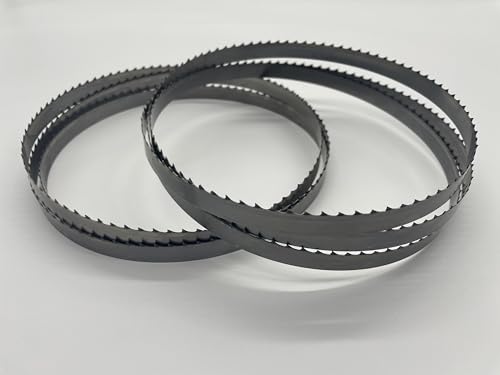
- Wide 1/2-inch profile keeps cuts straight with minimal blade drift during resawing
- Generous gullets evacuate chips cleanly to prevent heat buildup
Cons
- Coarse 4 TPI pattern leaves a rougher surface that requires planing or sanding
- Half-inch width is restricted to straight rips and gentle curves, not tight scrollwork
- Intended solely for wood cutting and not suited for steel or dense non-ferrous metals
The AYAO 93-1/2 Inch x 1/2 Inch Bandsaw Blade two-pack is a specialized power tool accessory engineered to turn standard 14-inch band saws into capable resawing and ripping machines. With a 4 TPI tooth configuration, this blade setup targets woodworkers, furniture makers, DIY builders, and garage workshop users who regularly dimension rough lumber. Whether you are slicing bookmatched panels, ripping thick hardwood boards, or squaring rough-sawn stock, these blades are designed to handle demanding cross-sections without bogging down the saw.
In woodworking shops, straight tracking and dependable cutting speed are critical factors. The half-inch blade width provides structural backbone, resisting the lateral deflection that often causes wandering cuts during tall resaw operations. Paired with a raker tooth set, the blade alternates tooth angles to effectively scoop out wood fibers and channel waste through spacious gullets. This efficient chip clearing reduces friction and prevents heat buildup, allowing the blade to maintain a steady feed rate through hard maple, oak, walnut, and resinous softwoods alike.
Build quality centers on heat-treated teeth and clean joint construction. The hardened teeth provide noticeable wear resistance against abrasive hardwoods, prolonging cutting sharpness over standard carbon steel blades. Equally important is the weld quality; AYAO uses a focused welding technique to ensure the joint remains flush and consistent with the rest of the blade band. A smooth joint is essential because uneven welds create repetitive thumping against guide blocks and thrust bearings, which introduces vibration, accelerates bearing wear, and degrades cut quality.
Installation and setup follow standard band saw practices. Thanks to the 0.02-inch thickness, the blade flexes easily over 14-inch wheels without putting excessive strain on tensioning springs or wheel tires. Getting the tracking centered and setting the guide bearings just behind the gullets is straightforward. Because bandsaw blades arrive coiled, careful handling and unfolding are required, and the second blade stores compactly flat on a shelf or hung on a workshop pegboard until needed.
Realistic limitations are tied directly to the blade geometry. A 4 TPI pattern cuts quickly, but the trade-off is a rougher kerf that requires a pass through a thickness planer or drum sander before final assembly. Furthermore, the 1/2-inch width cannot navigate tight contours, making it unsuitable for intricate scroll patterns or tight radius curves. However, for woodworkers and DIY remodelers seeking an affordable, dependable blade dedicated to ripping and resawing lumber, this two-pack represents a solid addition to any home or commercial shop.
These 93-1/2 inch blades are sized specifically for standard 14-inch band saws. They are compatible with popular models from manufacturers such as Delta, Rockwell, Jet, Rikon, Steel City, General International, Ridgid, Grizzly, Woodtek, Bridgewood, and older Sears Craftsman units that accept a standard 93.5-inch band length.
Before mounting, ensure your saw tensioner, wheel guides, and thrust bearings accommodate a 1/2-inch blade width. The 0.02-inch thickness conforms cleanly to standard rubber and urethane tires without causing excessive tensioning fatigue on the saw frame.
In real-world shop operations, a bandsaw blade must maintain tension and track predictably. The 1/2-inch beam strength of this AYAO blade significantly minimizes barrel cuts and wandering, which are common issues when attempting to resaw thick boards with thinner 1/4-inch or 3/8-inch blades.
The raker set arrangement creates balanced side clearance, keeping the kerf open and allowing the user to make minor steering adjustments against a rip fence. This balance between tooth geometry and structural rigidity helps ensure cleaner, more uniform boards right off the saw table.

Pros
- Versatile assortment covers common cutting needs from coarse resawing to fine scrollwork.
- High-quality SK5 steel resists wear and heat, maintaining edge longer than standard carbon steel blades.
- Precision sharpened and induction-hardened teeth produce clean cuts with minimal tear-out.
- Compatible with major band saw brands, making them a reliable replacement option.
- Good value for a three-pack, offering blades for multiple projects right out of the box.
Cons
- Blades are designed for wood and plastic only; not suitable for metal cutting.
- Some users may prefer a wider range of TPI options for specialized tasks.
- Pack includes only one of each size; for heavy use, additional singles may be needed.
The FOXBC 93-1/2 Inch Bandsaw Blade 3-Pack is a practical solution for woodworkers and DIY enthusiasts who own a standard 14-inch band saw. This assortment includes three blades: a 1/2-inch 6 TPI for resawing and straight cuts, a 1/4-inch 6 TPI for general curves, and a 1/8-inch 14 TPI for fine detail work. Whether you're a hobbyist building furniture, a contractor making rip cuts, or a home user tackling craft projects, this set covers a wide range of cutting tasks without the need to buy individual blades.
Performance-wise, these blades are made from premium Japan SK5 high carbon steel, known for its superior hardness and wear resistance. The teeth are induction hardened and precision milled, which helps maintain sharpness over time and reduces the need for frequent changes. Users report clean cuts with minimal vibration, thanks to the consistent tooth geometry. The 6 TPI options cut efficiently through thick hardwood and softwood, while the 14 TPI blade is ideal for tight curves and smooth finishes in plywood or MDF. This combination makes the set a versatile addition to any workshop.
Build quality is a strong point. The SK5 steel holds its edge well, and the welded seams are durable, minimizing the risk of breakage during operation. The blades track true on standard band saw wheels, and the tensioning process is straightforward. For those using Delta, Grizzly, Rikon, Jet, Craftsman, Shop Fox, or Rockwell 14-inch saws, compatibility is assured. The blades come with a black protective finish that resists rust, though a light oil after use is recommended for long-term storage.
In terms of storage and maintenance, the three blades are packaged in a simple cardboard sleeve that keeps them organized, but you'll likely want to store them in a blade storage rack or tube to prevent damage. Each blade is 93-1/2 inches long, so they fit typical 14-inch band saws without needing to cut or modify. Changing blades is quick, and the pack provides a good starting point for common woodworking projects.
One limitation is that these blades are designed only for wood and plastic. They should not be used on metals, as the tooth geometry and steel composition are not suited for metal cutting. Additionally, if you specialize in one type of cut, you may need to buy additional blades in the same size. The pack offers one of each, which is fine for general use but may not satisfy heavy-demand applications.
Overall, the FOXBC 93-1/2 Inch Bandsaw Blade 3-Pack is a solid choice for woodworkers and DIYers who want reliable, long-lasting blades for their 14-inch band saw. The blend of sizes and TPI options covers most residential and light professional needs. Given the quality of materials and competitive pricing for a three-pack, it's a practical addition to any workshop.
The FOXBC bandsaw blades are constructed from Japan SK5 high carbon steel, a material recognized for its excellent edge retention and resistance to heat buildup during cutting. This steel grade is commonly used in premium saw blades, and FOXBC's induction hardening process further enhances the durability of each tooth. The blades are precision milled to ensure consistent tooth sharpness and proper set, which reduces binding and improves cutting accuracy.
The welded joints are robust and undergo heat treatment to maintain strength under tension. The backing material remains flexible enough to tolerate the bending around band saw wheels without cracking. Each blade features a black oxide coating that offers basic corrosion protection, though a wipe-down with a light oil after use is advisable for long-term storage in humid workshops.
Overall, the build quality reflects a thoughtful balance between hardness for cutting performance and flexibility for reliable tracking. These blades are designed to withstand regular use in demanding woodworking environments, making them a dependable choice for both weekend projectors and serious woodworkers.

Pros
- Runs under noticeably lower tension to preserve bandsaw components
- Deep gullets clear chips smoothly in thick stock without bogging down
- Produces thin, clean kerf cuts that preserve valuable figured wood
- Stays cool during extended ripping and resawing sessions
Cons
- 3/4-inch width is dedicated to straight cuts and cannot handle tight curves
- Requires proper guide setup and tension calibration for best tracking
The Timber Wolf 111-inch by 3/4-inch 3 TPI bandsaw blade is a specialized cutting accessory engineered specifically for straight-line ripping and deep resawing. This blade is best suited for woodworkers, furniture makers, luthiers, and dedicated DIY hobbyists who regularly process rough-sawn lumber or cut custom veneers. Whether you are slicing bookmatched panels for a cabinet door or breaking down thick hardwood timbers in a home garage shop, this blade delivers the stability needed for demanding woodworking tasks.
In terms of real-world cutting performance, the combination of a 3/4-inch width and a 3 teeth-per-inch pitch handles deep cuts with minimal resistance. When cutting through dense species like hard maple, oak, or walnut, sawdust evacuation is critical. The deep gullets on this blade clear chips rapidly, preventing heat buildup that often leads to burned stock or blade bowing. User feedback consistently notes that the blade tracks true across wide boards, helping eliminate the cupping and belly cuts common with standard carbon steel blades.
Build quality centers on Timber Wolf's use of high silicon, low carbide steel. This metal composition allows the blade to flex easily around bandsaw wheels without fatiguing, while running at significantly lower tension than traditional bi-metal or high-carbon blades. Operating under lower tension puts far less mechanical stress on your bandsaw frame, tension spring, guide bearings, and motor. At a thin 0.032-inch thickness, the kerf is tight, which preserves more of your expensive project lumber and requires less horsepower from standard home workshop saws.
Setting up this blade is straightforward, though attention to tracking and tensioning is necessary. Because it requires less tension than standard blades, woodworkers often find that standard saw tension gauges read higher than needed. Tuning by the flutter method or following the manufacturer recommendations ensures smooth operation. Routine maintenance involves keeping the blade clean with standard pitch and resin remover, especially after milling resinous softwoods like pine.
There are a few practical limitations to keep in mind. At 3/4-inch wide, this blade is strictly intended for straight cuts and wide sweeping curves. It is not designed for scrollwork or tight radius contouring. Woodworkers with smaller 14-inch saws must also confirm that their guide assemblies and wheel clearance can accommodate a 3/4-inch wide blade properly before mounting.
For any woodworker looking to boost workshop productivity and achieve cleaner resaw results without upgrading to a heavy industrial machine, this Timber Wolf blade is a dependable, cost-effective upgrade. Its ability to run cool, cut true, and spare your saw motor makes it an outstanding addition to any serious woodworking setup.
In daily workshop operations, resawing thick lumber is one of the most demanding tasks a bandsaw handles. The Timber Wolf 111-inch blade excels in this role because its tooth geometry balances cutting speed with surface quality. The 3 TPI alternate set profile bites aggressively into hardwoods while leaving a clean enough face that minimal planer or drum sander passes are required afterward.
Another major performance advantage is thermal stability. High cutting friction often causes standard bandsaw blades to expand, lose tension, and wander off the cut line. Thanks to the silicon steel construction and low friction design, this blade dissipates heat efficiently, maintaining straight tracking throughout long rips on multi-board furniture projects.

Pros
- Carbide teeth retain cutting sharpness through abrasive and dense hardwoods
- Coarse 2 TPI hook tooth pattern evacuates sawdust rapidly in deep stock
- Wide 3/4-inch body helps maintain straight cuts across tall lumber faces
- Precision factory weld prevents excessive bumping against thrust bearings
Cons
- Requires a band saw frame and tensioning spring capable of properly tensioning a 3/4-inch wide blade
- Aggressive 2 TPI tooth pattern leaves a rough sawn texture requiring planing or sanding
- Not intended for curve cutting, scrolling, or thin metal cutting tasks
The Dark Stone DS23427 is a dedicated 111-inch carbide-tipped resaw band saw blade built specifically for cabinetmakers, furniture builders, and serious woodworkers. Featuring a 3/4-inch width and an aggressive 2 TPI hook geometry, this blade targets deep ripping operations where standard carbon steel blades dull quickly or wander under heavy feed pressure. If your workshop band saw takes a 111-inch loop and handles wide blades, this tool provides the beam strength needed for converting thick hardwood timbers into usable boards and shop-sawn veneers.
Resawing demands fast chip clearing and cool operating temperatures to prevent binding and scorching in thick stock. The coarse 2 TPI hook tooth profile incorporates deep gullets that pull sawdust out of the cut efficiently when feeding tall slabs of dense oak, hard maple, walnut, or exotic species. Carbide-tipped cutting edges retain sharpness through extended cutting sessions, which helps maintain consistent feed rates and dependable cut lines across deep stock where standard steel teeth would rapidly lose their edge.
Built on an alloy steel backer with a precision-welded joint, this blade is engineered to withstand the substantial tension needed to keep a 3/4-inch blade tracking true. A clean, balanced weld joint helps prevent noticeable clicking or bumping against guide blocks and thrust bearings, supporting steady operation without introducing rhythmic deflection marks into the workpiece face.
Proper installation requires confirming that your band saw frame and tensioning spring can handle a 3/4-inch wide blade at a 111-inch band length. Users should follow their saw manufacturer guidelines to adjust side guide blocks, thrust bearings, and fence alignment to account for slight band saw drift. Disconnecting the saw from power before mounting the blade is essential, as is ensuring proper tracking on the wheel crowns before applying cutting feed pressure.
This blade is engineered exclusively for straight resawing and thick rip cuts. Because of its wide 3/4-inch body and coarse 2 TPI spacing, it cannot cut contours or tight radii, and it will produce a noticeably rough sawn finish that demands subsequent jointing, planing, or drum sanding. In addition, smaller benchtop or lightweight band saws lack the wheel clearance, guide capacity, and spring strength to tension a 3/4-inch band properly, making tool verification crucial prior to purchase.
For woodworkers operating a compatible band saw calling for 111-inch blades, the Dark Stone DS23427 offers an accessible path into long-wearing carbide resawing. Its combination of aggressive chip evacuation, beam stability, and durable carbide teeth makes it a practical upgrade over disposable carbon steel bands for regular hardwood processing.
Compatibility is strictly determined by blade length and width. This model measures exactly 111 inches in length and 3/4 inch in width, a common configuration for 14-inch band saws fitted with riser block kits or specific 16-to-18-inch workshop models designed for wide resaw bands.
Before ordering, always check your saw manual or specification plate to verify that your machine accepts a 111-inch blade and has the structural rigidity to properly tension a 3/4-inch blade. Saws with underpowered tension mechanisms may experience excessive blade flutter or tracking difficulties with wider bands.

Pros
- Operates at lower tension to reduce wear on bandsaw wheel bearings and tension springs
- Deep gullets on the 2/3 TPI profile clear heavy chips cleanly without burning stock
- Excellent tracking stability for slicing accurate, uniform veneer sheets and thick slabs
- Durable Swedish alloy steel delivers consistent edge retention across dry hardwoods
Cons
- Wide 3/4-inch beam is strictly designed for straight cuts and cannot handle curved profiles
- Requires a bandsaw setup that accommodates 115-inch blades and 3/4-inch wheel capacities
The Timber Wolf 115-inch bandsaw blade is a heavy-duty cutting accessory engineered specifically for straight ripping and thick stock resawing. Built with a 3/4-inch width, an alternate tooth set, and a variable 2/3 teeth-per-inch (TPI) profile, this blade focuses on moving chips efficiently through dense materials. It is ideally suited for furniture makers, cabinet shops, carpentry professionals, and dedicated DIY woodworkers who frequently process rough-sawn lumber or split thick boards into bookmatched panels.
A standout characteristic of Timber Wolf blades is their proprietary high silicon, low carbide steel alloy. This material composition allows the blade to run cooler than standard carbon steel blades while maintaining flexibility and weld integrity. Because of this metallurgical design, the blade can be run at lower tension without sacrificing beam rigidity. Lower operating tension directly benefits the tool user by reducing fatigue on bandsaw wheel bearings, tension shafts, and guide components, while requiring less motor horsepower to maintain cut momentum.
In real-world workshop applications, the combination of a 3/4-inch beam and a 2/3 TPI variable pitch excels during aggressive resaw operations. The wide body minimizes blade drift and barrel cuts, ensuring that cuts through wide slabs of walnut, oak, or maple stay straight and true. Meanwhile, the alternating tooth layout and deep gullets clear out heavy swarf rapidly, preventing the heat buildup and blade binding that typically lead to scorched lumber or dull teeth.
Setup is straightforward on any bandsaw configured for 115-inch blade lengths, which is a common dimension on many 14-inch bandsaws equipped with 6-inch riser blocks as well as select medium-format shop saws. Because Timber Wolf recommends lower tensioning settings than conventional steel blades, users should take time to adjust tension according to tooth deflection rather than relying solely on generic machine tension gauges. Maintaining clean thrust bearings and aligning side guides just behind the gullets will ensure smooth tracking and prolonged blade life.
As with any dedicated resawing blade, there are practical limitations. A 3/4-inch blade is incapable of turning tight curves or handling scroll work, so it is strictly intended for straight-line ripping, resawing, and dimensional lumber preparation. For woodworkers seeking clean, flat cuts on thick hardwoods without bogging down a 1-1/2 to 2 horsepower bandsaw, this blade provides a reliable, high-yield cutting solution that maximizes lumber recovery.
When resawing wide dimensional stock, blade drift and heat buildup are the two primary obstacles woodworkers encounter. The 3/4-inch beam strength of this blade prevents the mid-cut flexing that causes uneven, dished boards, allowing users to shave off consistent 1/8-inch or 1/16-inch veneers with confidence.
The 2/3 variable TPI configuration plays a crucial role in performance by breaking up harmonic vibrations that can leave washboard patterns on cut faces. With fewer teeth in the cut, each tooth takes a clean bite and has ample gullet space to evacuate sawdust, resulting in smoother cut surfaces that require minimal drum sanding or hand planing afterward.
Frequently Asked Questions
What is the ideal blade width for resawing on a bandsaw?
A 1/2-inch or 3/4-inch blade width provides the optimal balance of beam strength and machine compatibility for resawing. Wider bands resist bending forces when feeding tall lumber against a rip fence, which prevents bowing inside the cut. Standard 14-inch cast iron frame saws typically perform best with a 3/4-inch or 1/2-inch blade to avoid over-stressing the tension spring.
How many teeth per inch should the Best Resaw Blade For Bandsaw have in 2026?
Two to three teeth per inch (2 to 3 TPI) is the recommended tooth count for resawing thick stock. Coarse pitch geometry provides extra-deep gullets that quickly pull heavy sawdust out of the cut. Using a blade with 6 TPI or higher on thick hardwood creates excessive friction, which slows feed rates and risks burning the timber.
Why does a bandsaw blade wander or drift off the cut line?
Inadequate blade tension, dull teeth on one side, or misaligned guide blocks cause bandsaw blade drift. When tension is too low, the blade deflects sideways under forward feed pressure rather than cutting straight. Adjusting your fence angle to match the natural drift line and setting your guides properly ensures flat, parallel veneers.
Can standard 14-inch bandsaws properly tension a 3/4-inch resaw blade?
Yes, most 14-inch bandsaws can tension a 3/4-inch blade, provided you use low-tension silicon steel models or upgraded tension springs. Traditional stamped-frame or cast-iron saws sometimes struggle to apply full tension to stiff, thick-gauge carbon steel bands. Choosing a specialized low-tension thin-kerf blade allows smaller 1-HP motors to slice smoothly without bogging down.
Are carbide-tipped blades worth the extra cost over carbon steel?
Yes, carbide-tipped bandsaw blades offer up to ten times longer edge retention than standard carbon steel when cutting abrasive hardwoods. While they carry a higher upfront cost, carbide teeth leave a smooth surface that requires minimal cleanup. For delicate small-part projects, a quick pass with a detailing sander easily clears away any minor tool marks.



Write Your Review
No reviews yet. Be the first to share your experience!