


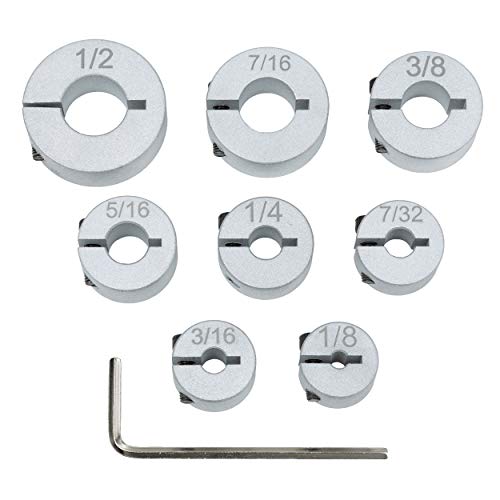
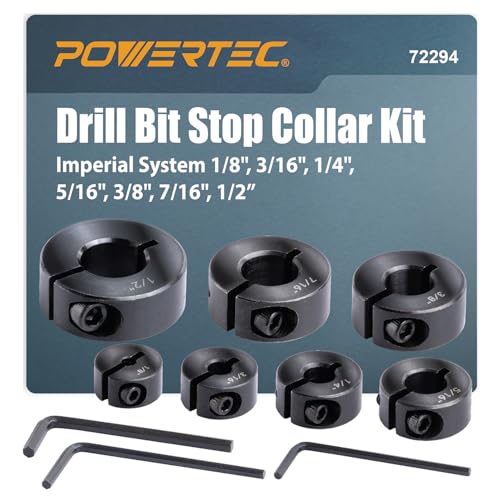
Drilling through the back of a finished cabinet carcass or punching through a hollow door creates instant workshop regret. A brief lapse in trigger control turns a clean blind dowel hole into ruined stock, which is why fitting the best drill bit depth stop onto your twist drills or brad-point bits is essential. Drilling repeatable holes for shelf pins, pocket joints, and euro-style hinges requires rock-solid mechanical limits rather than unreliable masking tape wraps that slide under friction. Evaluating collar clamp mechanisms and split-ring designs reveals how small collar shifts can compromise precision in dense hardwoods. When boring dowel joints, pairing your workshop setup with a compact detailing sander helps clean up stray wood fibers around the rim.
Standard solid collars with single grub screws often tilt off-axis, causing chuck wobble and marring delicate lumber. Upgrading to a balanced split collar provides uniform clamping force around the bit perimeter, eliminating runout and locking your target depth throughout repetitive drilling runs. Checking collar metallurgy and internal flute grip ensures your drill driver maintains accurate bore depths without marring fine furniture surfaces.


Frequently Asked Questions About Depth Stops
Do split-ring collars hold better than single set-screw collars?
Yes, split-ring collars provide far greater holding power and runout balance than single set-screw styles. Tightening a split ring compresses the entire collar circumference evenly across the drill bit flutes without marring the cutting edges. Single set screws push the bit off-center, causing rotational wobble that enlarges your bore hole. Split designs also resist vibration from high-speed drill drivers during repetitive drilling.
Can a best drill bit depth stop damage drill bit flutes during tightening?
Standard set-screw collars can easily burr or notch bit flutes if over-tightened. Direct pressure from a steel grub screw against the spiral flute edge creates rough metal burrs that hinder smooth chip evacuation. Split collars solve this problem by distributing clamping tension evenly around the outer bit flutes without biting into the sharp edges.
Why do depth collars slip during repetitive drilling?
Collar slippage happens when drill vibration, high feed pressure, and rotational impact loosen the locking mechanism. When a spinning collar strikes timber at 1,500 RPM, the sudden shock can knock loose standard single screws. Using balanced split collars prevents this creep during shelf-pin work. If you need to level timber plugs after deep drilling, an oscillating sander for woodworking helps flatten joint seams flush.
How do you prevent a spinning depth stop from marring wood?
Selecting a stop collar with an independent rotating outer sleeve or placing a nylon washer under the collar prevents friction burns on lumber. When bare metal collars contact wood at drill speed, friction generates heat marks and circular scoring. Lowering your drill motor speed just before reaching depth also minimizes surface impact damage.
Will a drill bit depth stop work on hammer drill masonry bits?
Most standard woodworking depth collars cannot endure the severe vibration of hammer drills. Percussion mechanisms deliver thousands of impacts per minute that quickly loosen set screws and crack aluminum collars. For concrete masonry drilling, use the metal depth gauge rod attached to your hammer drill side handle instead.





Write Your Review
No reviews yet. Be the first to share your experience!