


Ragged edges and blown-out veneers turn simple panel projects into frustrating headaches because dense particle cores chew through cheap cutting edges fast. The binding adhesives inside compressed wood dull standard teeth quickly, leading to chipping, binding, and wandered cut lines across sheet goods. Selecting the best saw for cutting chipboard requires matching the right cutting action and tooth profile to the density of particle-based boards. Clean results come from high tooth counts, rigid blade plates, and controlled feed rates that slice through wood fibers without blowing out the fragile underside.
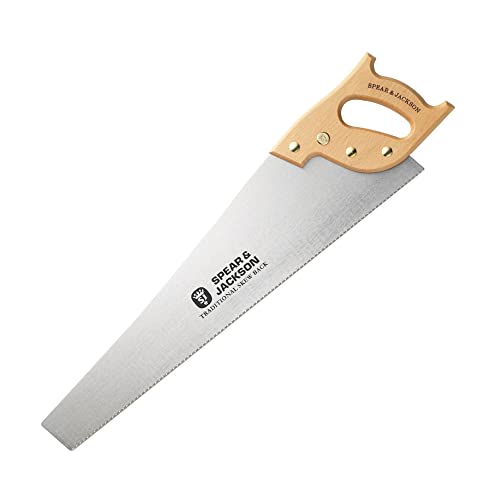
Whether sizing down shelving stock with fine-toothed hand tools like the Spear & Jackson Saw Skew Back 22 inch x 10 ppi or equipping benchtop power equipment with dedicated carbide tooling, clean chipboard cuts require the right tool geometry. Many workshop builders also cross-reference setup techniques used for compound miter saws for crosscuts to control tear-out on delicate surfaces. Investing in dedicated hand saws or high-tooth circular blades keeps edges crisp, protects laminated surfaces, and eliminates tedious edge-banding repairs on cabinetry builds.
Pros
- Resharpenable teeth offer long-term service life without having to discard the saw
- Skew back design improves balance and reduces blade drag during deep cuts
- Universal tooth design eliminates the need to switch saws between ripping and crosscutting
- Lightweight build provides excellent directional control
Cons
- 10 PPI cuts slower through thick framing lumber than aggressive 7 or 8 TPI saws
- Requires proper saw filing tools and technique to maintain teeth over time
- Blade requires periodic light oiling to prevent surface corrosion in humid garages
The Spear & Jackson 22-Inch Skew Back Hand Saw is a classic manual cutting tool engineered for general woodworking and carpentry. Featuring a 560 mm blade equipped with 10 teeth per inch (PPI), this saw provides a versatile tooth configuration designed to cut both along and across wood grain. Unlike modern disposable handsaws with impulse-hardened teeth, this model features precision cross-ground teeth that can be resharpened, making it an appealing option for woodworkers who prefer traditional maintenance and long service life.
This tool is well suited for finish carpenters, DIY homeowners, furniture makers, and general workshop users. Whether trimming interior molding, sizing 2x4 studs on a jobsite without power, or cutting sheets of plywood and chipboard in a home garage, this saw delivers reliable, quiet cutting capability. It provides a practical backup for contractors when power outlets are unavailable or when quick, precise cuts are needed without setting up a circular saw.
In practical cutting applications, the skew back profile plays a noticeable role in handling. By tapering the upper spine of the blade toward the toe, the saw achieves better overall balance and lower blade weight without compromising cutting depth at the heel. This design reduces surface contact within the kerf, helping to lower friction and prevent annoying blade pinch during extended push strokes. The 10 PPI tooth count delivers a clean cut on solid timber and composite boards without tearing out fibers excessively.
Build quality reflects classic hand tool design with a functional grip that allows the user to extend an index finger along the handle for enhanced directional accuracy. The steel blade retains adequate stiffness along its length to resist buckling on the push stroke when guided with a steady hand. Because the blade is made from serviceable tool steel, users will want to maintain it with a light coat of tool oil or paste wax to protect against rust in non-climate-controlled shops.
The primary consideration for potential buyers is the maintenance requirement. Saws with resharpenable teeth provide years of reliable service, but they require occasional dressing with a proper triangular saw file. Additionally, while the 10 PPI setup yields smooth edges on trim and sheet goods, it cuts slower through heavy structural lumber than a coarse 7 PPI framing saw.
For woodworkers, DIY remodelers, and workshop enthusiasts who appreciate serviceable hand tools with excellent balance, the Spear & Jackson 22-Inch Skew Back Saw offers dependable cutting performance and genuine long-term value for any workbench setup.
In daily workshop routines, this saw functions as a capable general-purpose workhorse. The universal teeth are set to clear sawdust effectively on both push and pull movements, allowing users to crosscut boards to length or rip narrower stock without changing tools.
The skew back geometry shifts the center of gravity closer to the handle, which noticeably decreases wrist strain during long sessions. For garage builders crafting workbenches, sawhorses, or cabinetry, the tool offers predictable line tracking and easy kerf correction.
Pros
- Cuts cleanly without burrs or heat discoloration, reducing secondary finishing work.
- Adjustable miter from 0 to 45 degrees for flexible angled cuts on the job site.
- Durable carbide blade lasts significantly longer than abrasive discs, offering better value.
- Relatively quiet operation compared to abrasive chop saws, improving workshop comfort.
- Easy to set up and use right out of the box with minimal adjustments needed.
Cons
- Heavier than some portable options, though the pressed steel base helps manage weight.
- Blade not optimized for stainless steel or aluminum; requires separate Evolution blade for those materials.
- Price point is higher than abrasive chop saws, but long-term blade savings offset the cost.
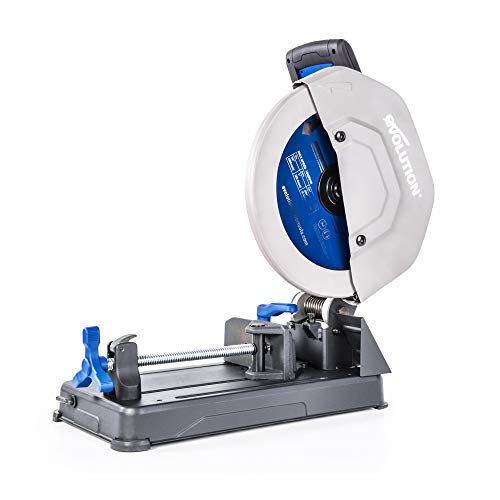
The Evolution S355CPSL is a 14-inch dry cut metal chop saw designed for professionals and serious DIYers who demand clean, precise cuts without the mess of sparks and grinding dust. Unlike traditional abrasive saws, this saw uses a carbide-tipped blade that slices through mild steel quickly while leaving a smooth, burr-free edge that's ready to weld or paint immediately.
This saw is best suited for contractors, mechanics, metal fabricators, and workshop enthusiasts who regularly cut angle iron, flat bar, tubing, or solid stock. The dry-cut technology means no coolant or lubricant is needed, and the integrated chip deflector directs debris away from the operator for easier cleanup. It's a practical choice for job sites, garages, and fabrication shops where clean cuts and productivity matter.
Performance-wise, the 15 Amp motor delivers consistent torque to maintain blade speed under load, preventing binding and ensuring straight cuts. The carbide-tipped blade is engineered to stay sharp for hundreds of cuts, reducing downtime for blade changes. Users appreciate the lack of heat buildup, which eliminates blueing or warping of the metal. The adjustable miter from 0 to 45 degrees with positive stops makes repeatable angled cuts simple and accurate.
Build quality is solid: the cast steel vise and fence provide a sturdy workholding platform, and the quick-release mechanism speeds up clamping. The pressed steel base is lightweight yet rigid enough to keep the saw stable during heavy cuts. The saw's compact footprint fits well on a workbench or portable stand, and the built-in chip deflector helps keep the work area clean.
One realistic limitation is the weight — at around 35 pounds, it's not the lightest saw to carry around, but the base design makes it manageable for moving between job sites. Also, while the included blade excels at mild steel, cutting stainless steel or aluminum requires swapping to Evolution's dedicated blades, which are sold separately. The higher upfront cost compared to abrasive saws is offset by the long blade life and reduced consumable expenses.
Overall, the Evolution S355CPSL is a worthwhile investment for anyone who cuts metal regularly and values precision, cleanliness, and durability. It's a reliable tool that will save time and frustration on projects ranging from home repairs to professional fabrication work.
The Evolution S355CPSL is built with a heavy-duty cast steel vise and fence that provide a rigid clamping surface for accurate cuts. The pressed steel base is lightweight but stiff, minimizing vibration during operation. The carbide-tipped blade is premium quality, designed for long life in continuous use. All controls, including the miter lock and quick-release vise handle, feel robust and precise. The saw carries a 3-year warranty, reflecting confidence in its construction.
Thanks to its 15 Amp motor and dry-cut design, the S355CPSL cuts through mild steel up to 4 inches thick with minimal effort. The blade spins at a lower RPM than abrasive saws, reducing heat and spark generation. Cuts come out clean and square, often requiring no deburring. The 0-45° miter adjustment is smooth and locks securely, with clear angle markings for repeatability. The quick-release vise allows fast workpiece changes without losing alignment.
This saw is ideal for metal fabricators, contractors, mechanics, and serious DIYers who need a clean, efficient way to cut steel. It's a great upgrade for anyone tired of messy abrasive saws that leave rough edges and create lots of sparks. If you work on gates, railings, structural steel, or automotive frames, the Evolution S355CPSL will improve your workflow and finish quality. It's also a solid choice for workshops that value low maintenance and long blade life.
Pros
- Sharp 65Mn steel blade stays durable and holds an edge well
- Comfortable TPR handle with non-slip grip reduces hand strain
- Versatile for cutting multiple materials on the job site or at home
- Lightweight and easy to carry in a tool bag
- Affordable price point for a professional-grade hand saw
Cons
- Blade may be too thin for heavy-duty framing or demolition work
- Plastic sleeve on teeth can slide off if not secured tightly
- Some users may prefer a longer blade for larger cutting tasks
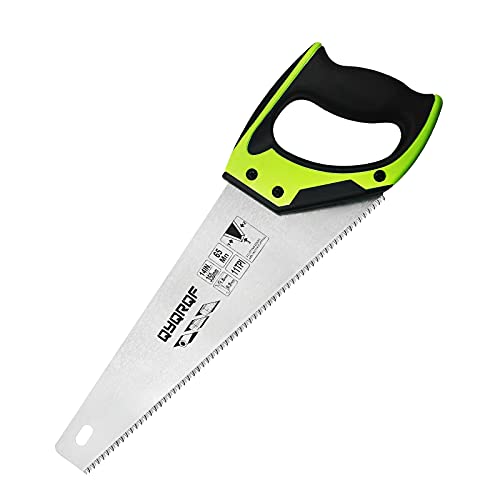
The QYQRQF 14-inch Pro Hand Saw is a versatile cutting tool designed for both DIY homeowners and professional tradespeople. With its 11 TPI fine-cut blade, this saw handles wood, drywall, plastic pipes, and plywood with ease. It's a solid choice for contractors, woodworkers, electricians, and plumbers who need a reliable handsaw for trim work, gardening, or light framing tasks.
Performance-wise, this saw stands out. The blade is made from heat-treated 65Mn steel, which offers good durability and edge retention. The three cutting surfaces allow for faster cuts on both push and pull strokes, while the deep gullets help clear sawdust quickly. According to the product description, this design can cut up to 50% faster than traditional handsaws. Users report that the low-friction coating reduces binding, making the cut smoother and less tiring.
Build quality is practical for the price. The TPR handle is ergonomically shaped and has a non-slip texture, which gives you solid control even when your hands are sweaty or gloved. The blade is 0.9mm thick, which is thin enough for precise cuts but still feels sturdy. The saw weighs only 0.75 pounds, so it won't weigh down your tool belt. It comes with a plastic sleeve over the teeth and a hard paper sleeve for safe storage, though some might prefer a full rigid case.
Setup is straight out of the box. Just remove the protective sleeve, and you're ready to cut. Storage is simple: slide the plastic sleeve back on and store in a drawer or tool bag. Maintenance involves wiping the blade clean and occasionally applying light oil to prevent rust. The heat-treated steel resists corrosion fairly well, but it's not stainless, so keeping it dry is smart.
There are a few realistic limitations. The blade is on the thinner side, so it's not ideal for heavy demolition or cutting thick lumber repeatedly. For big framing jobs, a larger saw or a power tool would be better. Also, the plastic tooth sleeve can slip off if not pushed on fully, but that's a minor inconvenience. The included paper sleeve is fairly basic for long-term storage.
Overall, this is a great value handsaw for anyone who needs a sharp, comfortable saw for everyday cutting tasks. Whether you're a DIY homeowner doing weekend repairs, a contractor trimming drywall, or a woodworker making precise cuts, the QYQRQF 14-inch saw delivers reliable performance without breaking the bank. It's a practical addition to any garage, workshop, or job site tool collection.

Pros
- Versatile double-edge blade delivers both rough cuts and fine finishing without changing tools
- Lightweight and well-balanced, reducing user fatigue during repetitive cutting tasks
- Sharp, durable SK5 steel with hardened teeth maintains edge longer than cheaper alternatives
- Ergonomic wood handle offers comfortable, secure grip for precise control
- Lifetime warranty provides peace of mind for both occasional and regular users
Cons
- 6-inch blade length may be too short for larger ripping or crosscutting tasks on dimensional lumber
- Japanese pull saw design requires a slight learning curve for those used to traditional Western push saws
- Some users may prefer a replaceable blade model for extended longevity without buying a whole new saw
The Frocopo 6-inch hand saw is a Japanese-style pull saw aimed at woodworkers, DIY enthusiasts, and homeowners who value precision and clean cuts. Unlike traditional Western saws that cut on the push stroke, a pull saw cuts on the pull stroke, which typically produces a thinner kerf and smoother finish. This model features a double-edged blade with 17 TPI (teeth per inch) on one side for fine, finish-quality cuts and 11 TPI on the opposite side for faster, coarser cuts. It is particularly well-suited for trim work, flush cutting dowels, small joinery, and garden pruning.
Based on product specifications and user feedback, the saw excels in situations where accuracy matters more than brute force. Woodworkers may find the 17 TPI side ideal for dovetails, tenons, and model making, while the 11 TPI side can handle general DIY cuts, PVC pipes, and softwood branches. The 6-inch blade length keeps the saw nimble and easy to maneuver in tight spots, but it may not be your go-to for ripping full sheets of plywood or crosscutting 2x4s. For those tasks, a larger panel saw or circular saw would be more efficient.
Build quality appears solid for the price point. The blade is made from SK5 steel, a high-carbon alloy known for its edge retention and hardness. Frocopo's triple-ground, quenched, and hardened tooth geometry helps maintain sharpness over repeated use. The wooden handle is shaped to fit the hand naturally and features an anti-slip texture that becomes more grippy when hands are warm or slightly sweaty. At 2.82 ounces, the saw is remarkably light, reducing fatigue during extended sessions of intricate cutting. However, the lightweight construction means you shouldn't apply heavy pressure let the saw's teeth do the work on the pull stroke.
Storage and maintenance are straightforward. The compact size (12.2 x 1.8 x 0.62 inches) allows it to slide into most toolboxes, apron pockets, or workshop drawers without taking up much room. No special storage case is included, but it's sturdy enough to toss in a tool bag with other hand tools. To keep the blade functioning well, wipe it clean after use, especially when cutting green or resinous wood, and apply a light coat of oil if storing for long periods. The saw is not designed for wet or excessively abrasive materials, so stick with dry wood, plastic, and soft metals like aluminum or copper.
As for realistic limitations, the pull saw technique does require a bit of adjustment if you're accustomed to push saws. The thin blade can also bind if you try to force it through thick stock, so proper technique and a steady hand are essential. Additionally, because the teeth are angled for pull cutting, using it like a Western saw (pushing hard) will dull the edge quickly and may even kink the blade. Despite these quirks, many users appreciate the level of control and the clean kerf it produces once they adapt.
Overall, the Frocopo 6-inch pull saw offers good value for woodworking enthusiasts, DIYers, and anyone who needs a precise, lightweight saw for small-scale cuts and flush trimming. It's not a heavy-duty construction tool, but for detail work, hobby crafts, and garden maintenance, it's a practical addition to any workshop or garage. If you're looking for a compact saw that delivers clean cuts without breaking the bank, this model is worth considering.

Pros
- Fast aggressive cutting with 8 TPI triple-ground teeth
- Durable SK5 steel blade resists bending and stays sharp
- Comfortable non-slip handle with built-in angle guides
- Teflon coating reduces friction and prevents rust
Cons
- Not ideal for fine joinery or precision cuts due to coarse tooth pattern
- Handle may feel bulky for users with smaller hands
- Teflon coating can wear over time with heavy use on abrasive materials
The Jorgensen 15-inch hand saw is a purpose-built cutting tool designed for both DIY homeowners and professionals who need quick, efficient cuts in wood, PVC, and soft materials. It features a 15-inch blade with 8 teeth per inch (TPI) and triple-ground teeth geometry that aggressively clears material, making it suitable for rough carpentry, pruning, trimming, and even cutting PVC pipe.
Who it's for: This saw appeals to woodworkers, gardeners, contractors, and anyone tackling home repair projects. Mechanics and electricians may find it handy for cutting PVC conduit or small lumber. It's also a solid choice for garage users who need a reliable handsaw for quick tasks without reaching for a power tool.
Performance and build quality: The blade is made from SK5 high-carbon steel, which is known for maintaining a sharp edge and resisting deformation. The Teflon coating serves two purposes: it reduces friction during the cut for smoother action and protects the steel from moisture and rust. Users report that the saw cuts through pine, plywood, and PVC with less effort than standard blades. The ergonomic handle features an aluminum frame overmolded with TPE and ABS for a secure, non-slip grip. Integrated angle guides at 45 and 90 degrees allow you to mark cuts directly – a thoughtful touch for accurate work.
Storage and maintenance: A plastic edge protector is included for safe storage and transport. After use, a quick wipe of the blade is usually sufficient; the Teflon coating minimizes sap and pitch buildup. Store in a dry place to keep the edge and coating in good condition. There's no need for oiling, but occasional light lubrication can help on sticky cuts.
Realistic limitations: The 8 TPI is considered a medium-coarse tooth count, so it's not ideal for fine joinery or veneer plywood where splintering is a concern. The handle, while comfortable for medium to large hands, might feel a bit large for smaller users. The Teflon coating is durable but can wear off over years of heavy use, especially if cutting abrasive materials like certain composites.
Buying recommendation: At its price point, the Jorgensen hand saw offers excellent value for DIYers and pros who need a general-purpose saw for around-the-home and jobsite tasks. It's particularly strong for pruning, rough carpentry, and PVC cutting. If you need a finer-tooth saw for trim or cabinet work, look for 12+ TPI options, but for fast, efficient cuts in common materials, this saw is a reliable choice.

Pros
- Exceptional cut quality on double-sided melamine and veneer plywood with minimal tear-out.
- TiCo carbide teeth stay sharp significantly longer than standard carbide blades.
- Positive hook angle makes feeding easier without sacrificing finish quality.
- Perma-Shield coating keeps the blade clean and reduces drag during long cuts.
- Versatile thickness range suits both sheet goods and dimensional lumber.
Cons
- Premium pricing may be overkill for occasional DIY users or rough framing work.
- 60-tooth count is optimized for crosscuts; not ideal for aggressive ripping of thick hardwoods.
- Requires careful handling to avoid damaging the Hi-ATB tooth geometry during cleaning or storage.
The Freud LU73R010 is a 10-inch circular saw blade built specifically for crosscutting tasks where finish quality matters most. With 60 teeth arranged in a high alternate top bevel (Hi-ATB) grind, this blade is engineered to produce exceptionally clean edges on materials like double-sided veneer plywood and melamine, which are notorious for chipping with lesser blades.
This blade is best suited for woodworkers, cabinetmakers, finish carpenters, and serious DIYers who demand smooth, splinter-free cuts in hardwood, softwood, plywood, and chipboard. It's also a strong choice for contractors working on kitchen cabinets, built-ins, or trim work where visible surfaces must be pristine. The positive hook angle helps the blade feed faster than typical crosscut blades, improving productivity without compromising cut quality.
Real-world performance is driven by Freud's TiCo Hi-Density carbide blend, which combines titanium and cobalt for exceptional edge retention and wear resistance. Users can expect the blade to stay sharp through many cuts, reducing downtime for changes. The Perma-Shield coating further enhances performance by minimizing friction and preventing resin buildup, which is especially useful when cutting resinous softwoods or plywood with synthetic glues.
Build quality is outstanding. The blade body is precision-ground and tensioned to reduce vibration, and the carbide teeth are brazed securely. The Hi-ATB grind alternates the bevel angle at 38 degrees, effectively slicing through the top layer of melamine or veneer before the tooth exits, minimizing chipping. This design is a hallmark of Freud's cabinetmaker series and reflects a focus on professional-grade results.
Setup is straightforward—mount the blade on any 5/8-inch arbor saw (table saw, miter saw, or circular saw) and ensure proper alignment for best results. Maintenance involves keeping the blade clean; the Perma-Shield coating makes this easier, but occasional cleaning with a blade cleaner will extend life. Storage in a protective sleeve or case is recommended to protect the fragile tooth geometry.
A realistic limitation is that this blade is not a general-purpose workhorse. Its 60-tooth count and Hi-ATB grind excel at crosscuts but are less efficient for ripping thick lumber. Also, the premium price reflects its specialized nature. For woodworkers who prioritize cut quality over versatility, the LU73R010 is a worthwhile investment that delivers consistent, clean results project after project.

Pros
- Sharp out of the box with hardened teeth that hold an edge well for a budget-friendly saw.
- Double-edge design adds versatility for cutting both hardwoods and softwoods without changing blades.
- Thin kerf allows precise, clean cuts with minimal material waste, perfect for fine woodworking.
Cons
- Small 6-inch blade limits capacity for larger stock; best suited for detail and trim work.
- Pull saw requires a different cutting technique than Western saws, which may take some getting used to.
- Beech handle, while comfortable, may not be as durable as hardwood or composite handles under heavy daily use.
The RUITOOL Japanese Hand Saw 6 Inch Double Edge Ryoba is a compact pull saw designed for precise woodworking cuts. Unlike traditional Western push saws, this pull saw cuts on the pull stroke, allowing a thinner blade and finer control. With a dual 14/17 TPI configuration, one side is optimized for rip cuts in softer woods while the other handles crosscuts in hardwoods, making it a versatile addition to any workshop or garage.
This saw is best suited for DIY homeowners, woodworkers, and hobbyists who need clean, flush cuts in trim, moldings, dovetails, and other detailed joinery. The 6-inch blade length is ideal for small to medium workpieces, giving you excellent maneuverability and access in tight spaces. The SK5 high-carbon steel blade is hardened to HRC 60-63, delivering strong edge retention and reliable cutting performance for many projects.
In use, the saw provides smooth, fast cutting with minimal effort thanks to the three-sided ground teeth that clear sawdust efficiently. The thin kerf helps you achieve accurate cuts with less waste, which is particularly valuable for furniture making and cabinetry. The beech wood handle feels comfortable in the hand and offers a secure grip, though the small size might not suit users with larger hands who prefer a full palm grip.
Build quality is good for the price point. The blade is securely fixed to the handle, and the teeth are consistently sharp out of the package. While the metal is flexible enough to avoid binding, it still maintains enough rigidity for clean cuts. One realistic limitation is the blade length; this saw won't handle large dimensional lumber or heavy framing tasks. It's clearly a detail tool, not a construction saw.
Storage is simple - it fits easily in a tool drawer or wall rack without taking up much space. Maintenance is minimal: keep the blade clean and dry to avoid rust, as SK5 steel is not stainless. A light oil wipe after use can help extend its life. Overall, the RUITOOL Ryoba saw offers excellent value for anyone doing fine woodworking, trim carpentry, or repair work where precision matters more than brute force.

Pros
- Cobalt-reinforced teeth deliver long-lasting cutting life in abrasive materials
- Wider blade profile helps resist wandering and bending under heavy downward pressure
- Universal tang provides broad compatibility across major reciprocating saw brands
- Handles mixed materials such as nail-embedded studs and steel pipe without teeth stripping easily
Cons
- Aggressive tooth pattern leaves a rough cut edge unsuitable for fine finish carpentry
- Pack size of five blades may require frequent reordering on large-scale framing teardown projects
The TOLESA 9-Inch Bi-Metal Demolition Reciprocating Saw Blades are heavy-duty power tool accessories engineered for demanding teardown tasks. Suitable for general contractors, remodelers, plumbers, and ambitious DIY homeowners, this 5-pack delivers the cutting strength required to power through tough construction materials. Whether clearing out old wall framing, cutting through rusty pipes, or tearing out subfloors riddled with fasteners, these blades offer a robust, reliable cutting solution.
Cutting performance in demolition hinges on tooth geometry and steel metallurgy. Featuring an 8+10 variable tooth pitch, these blades strike an effective balance between rapid wood clearing and controlled chip formation in steel. The alternating tooth layout helps minimize excessive blade chatter and vibration while ripping through nail-embedded 2x4s, conduit, and steel framing. This design allows the operator to maintain firm tool control with reduced motor drag and lower arm fatigue.
Build quality stands out due to the high-density bi-metal composition infused with 8 percent cobalt along the cutting edge. This alloy resists tooth chipping and thermal breakdown far better than standard high-carbon steel. Furthermore, the taller, thicker blade stock provides structural rigidity. This reinforced backbone helps prevent bending and blade deflection during heavy feed pressure, keeping cuts tracking straight through composite materials and metal pipes up to seven inches in diameter.
Blade compatibility and setup are straightforward thanks to the standard 1/2-inch universal shank. It fits directly into keyless chuck mechanisms on major reciprocating saws including Milwaukee Sawzall, DeWalt, Makita, Bosch, and Ridgid models. Swapping blades during a fast-paced teardown requires no special adjustments, allowing workers to maintain jobsite productivity without unnecessary interruptions.
While these demolition blades excel at heavy material removal, they are intentionally coarse and will leave rough edges that require sanding or deburring if used on visible surfaces. For residential remodeling, plumbing rough-ins, scrap metal preparation, and garage fabrication, this 5-pack provides an economical and dependable set of blades that hold their edge through tough cutting conditions.
On active construction and remodeling sites, demolition blades must handle sudden transitions between soft lumber, hardened drywall screws, and steel pipes. The TOLESA 8+10 TPI configuration manages these shifts without immediate tooth stripping, saving time on blade changes when tearing into concealed wall cavities.
The extended nine-inch reach allows tradespeople to reach behind framing studs, make clean flush cuts against subflooring, and cut through multi-layer assemblies in a single pass. For plumbing and mechanical work, the blade body maintains stability when cutting iron waste lines and thick conduit, ensuring productive and predictable teardown progress.
Frequently Asked Questions
What tooth geometry prevents tear-out when cutting chipboard panels?
A High Alternate Top Bevel (Hi-ATB) tooth geometry offers the cleanest cuts in chipboard and melamine. Blades featuring a steep bevel angle, such as the Freud Cabinetmaker’s Crosscut Saw Blade with TiCo, slice through brittle resin coatings before the main body of the tooth removes material. This shearing action prevents micro-fracturing along the cut line and maintains clean margins on both sides of composite boards.
Can a hand saw make straight cuts in composite chipboard without chipping?
Yes, a fine-toothed Japanese pull saw or hardpoint handsaw creates smooth chipboard cuts when used at a shallow cutting angle. Saws with 11 to 17 teeth per inch, like the Frocopo Hand Saw Woodworking Tools or RUITOOL Japanese Hand Saw 6 Inch Double Edge Sided, sever surface particles delicately. Keeping the blade nearly flat against the cut line reduces tear-out on the face veneer.
Why does chipboard dull standard saw blades faster than solid lumber?
Synthetic resins and binders used to compress chipboard particles are highly abrasive on steel teeth. Standard carbon steel blades lose their cutting edge rapidly against these synthetic glues, leading to increased friction, burning, and severe edge chipping. Utilizing carbide-tipped circular blades or induction-hardened handsaws resists this chemical wear and prolongs edge retention across multiple sheets.
Can reciprocating saws be used to cut chipboard panels cleanly?
No, reciprocating saws typically produce rough, splintered edges on chipboard and are suited primarily for rough demolition rather than precision joinery. Heavy-gauge demolition blades, like the TOLESA Bi-Metal Reciprocating Saw Blades, feature aggressive tooth spacing designed to clear material fast. For clean interior joinery, table saws, track saws, or fine-toothed handsaws remain superior options.
How do you safely install a fine-cut blade for cutting composite sheet goods?
Always disconnect power or remove the battery before handling any saw arbor and arbor nut. Clean the blade collars of resin buildup to avoid wobble, and follow established steps on how to change a miter saw blade safely before tightening fasteners. Proper collar seating prevents blade deflection and keeps delicate particle board cuts clean and accurate in 2026.




Write Your Review
No reviews yet. Be the first to share your experience!