


Taming Rock-Hard Decking Boards Without Tearout
Dense ironwood decking dulls standard carbide teeth in just a few passes and turns clean boards into splintered, charred messes. The natural silica and extreme density of Brazilian walnut generate intense friction, bogging down motors and causing severe kickback risks on typical jobsite saws. Selecting the best saw blade for ipe decking requires looking past standard framing blades toward specialized geometries that dissipate heat rapidly while maintaining razor-sharp edges. Solid jobsite tools like modern compound miter saws need high-density carbide and controlled tooth profiles to slice through stubborn hardwoods without bogging down.
Careful evaluation of tooth geometry, gullet clearance, and plate coatings reveals why modified triple chip grinds and negative hook angles yield superior results on dense timbers. Thin-kerf profiles reduce strain on portable jobsite saws, while anti-friction coatings prevent gummy sap and scorching pitch from adhering to the plate. Swapping out a worn blade properly using a practical blade change procedure protects your arbor and keeps your cutting line dead square throughout the entire build. Premium carbide formulations like TiCo hi-density carbide ensure the teeth endure hundreds of crosscuts without chipping or losing their edge.

Pros
- Exceptional melt-free and chip-free cuts in composite decking and PVC
- Long blade life thanks to TiCo carbide and Perma-SHIELD coating
- Thin kerf design works well with portable and low-power saws
- Precise negative hook angle enhances safety and control
- Versatile for both professional contractors and serious DIYers
Cons
- Premium price compared to general-purpose blades, may not be cost-effective for occasional users
- Not designed for cutting wood or metal, limiting its versatility
- Specialized tooth geometry requires proper alignment and feed rate for best results
The Diablo TrexBlade D1072CD is a purpose-built circular saw blade designed specifically for cutting composite decking and plastic materials. Unlike standard wood-cutting blades, this 10-inch blade features 72 teeth with a Modified Triple Chip Grind (MTCG) that prevents melting and delivers smooth, clean cuts. It is tailored for contractors, woodworkers, and DIY homeowners who frequently work with composite lumber, cellular PVC, or plastic sheets.
In real-world performance, this blade excels at reducing friction and heat buildup. The negative 3-degree hook angle combined with the thin .102-inch kerf keeps the material cool and minimizes chipping. Many users will appreciate how easily it slices through Trex and similar products without leaving melted edges or rough surfaces. The Perma-SHIELD non-stick coating further reduces gumming and corrosion, which translates to longer blade life and consistent cutting quality.
Build quality is a standout feature. The blade uses TiCo Hi-Density Carbide teeth that resist wear far better than standard carbide. The .071-inch plate provides stability, and the 5/8-inch arbor fits most circular and miter saws. While this blade is not intended for wood or metal, its specialized design makes it a valuable addition for anyone doing large decking projects or trimming plastic panels.
Setup and maintenance are straightforward. Simply mount the blade on your saw, ensure RPM does not exceed 6000, and let the blade do the work. The non-stick coating helps keep the teeth clean, but occasional cleaning with a blade cleaner can extend performance. Storage is easy with standard blade protectors or cases.
A realistic limitation is the price: at around $64, it costs more than a general-purpose blade. For someone who only cuts composites occasionally, a cheaper blade might suffice. However, for frequent use, the durability and cut quality easily justify the investment. This blade is best suited for professional contractors, remodelers, and serious DIYers who demand precision and efficiency on job sites.
Overall, the Diablo TrexBlade D1072CD is a top-tier choice for composite and plastic cutting. Based on product specifications and user feedback, it delivers on its promise of melt-free cuts, long life, and exceptional finish quality. If you spend significant time cutting decking or plastic, this blade will pay for itself in saved time and material.
Diablo is known for high-end saw blades, and the TrexBlade D1072CD is no exception. The blade body is constructed from hardened steel with precise tensioning to remain flat at high RPM. The TiCo Hi-Density Carbide tips are brazed securely and hold a sharp edge longer than standard carbide. The Perma-SHIELD coating is applied evenly and resists corrosive materials commonly found in composite decking treatment. The arbor hole is precisely machined to 5/8-inch for a wobble-free fit. Overall, the build quality is excellent for heavy-duty use.
On the job site, the TrexBlade shines when cutting composite decking and cellular PVC. The MTCG tooth geometry and negative hook angle work together to shear material cleanly without heat buildup. The thin kerf design reduces load on the saw motor, allowing for faster cuts even with underpowered circular saws. Users can expect minimal chipping and no melting, resulting in smooth edges that often require no sanding. The blade maintains its sharpness over many cuts, reducing downtime for blade changes.

Pros
- Designed specifically for composite and bamboo decking, ensuring optimal performance and longevity
- Non-stick coating helps prevent resin and material buildup, keeping cuts clean and consistent
- Modified triple-chip grind reduces heat and melting, a common issue with standard blades on composites
- 72-tooth count provides a very smooth finish, ideal for visible deck surfaces
- Ultra-thin kerf design is easier on the saw motor and produces less waste
Cons
- 12-inch size limits use to larger circular saws or table saws, not compatible with standard 7-1/4-inch saws
- Premium pricing may be a consideration for casual DIYers compared to general-purpose blades
- Limited to composite, bamboo, and PVC materials; not a general-purpose blade for wood or metal
The Norske Tools NCSBP230 is a specialized 12-inch circular saw blade engineered for cutting composite decking, bamboo decking, and cellular PVC materials. It features 72 teeth and a modified triple-chip grind (MTCG) profile, which is designed to produce clean, cool cuts that minimize the melting and gumming often associated with these synthetic materials. This blade is a solid choice for contractors, deck builders, and serious DIY homeowners who work frequently with Trex, other composite boards, or bamboo decking.
For professional tradespeople and dedicated DIYers, the primary advantage of this blade is its ability to deliver melt-free, chip-free cuts in composite materials. The MTCG tooth geometry, combined with a non-stick coating, helps reduce friction and heat, which prevents the plastic content in composites from melting and re-welding to the blade. This means cleaner cuts and less downtime for cleaning or replacing gummed-up blades. The 72-tooth count also provides a very smooth finish, often eliminating the need for sanding or additional edge finishing on visible deck surfaces.
Build quality is a key focus here. The blade is made with Japanese steel, which is known for its hardness and edge retention, and the non-stick coating adds a layer of protection against corrosion and material buildup. The ultra-thin kerf design not only cuts faster and more efficiently but also reduces strain on your saw's motor. This is a practical benefit for anyone using a battery-powered circular saw on a job site, as it conserves battery life and extends tool longevity.
In terms of storage and maintenance, this blade is straightforward. It comes with a 1-inch arbor, which fits most large circular saws and table saws. Proper storage in a blade case or on a wall-mounted rack will protect the teeth and coating. Cleaning is minimal due to the non-stick surface, but occasional wiping with a clean cloth can help maintain performance. The blade is not designed for general-purpose cutting of wood or metal, so it's best to keep it dedicated to composite and decking projects.
One realistic limitation is the blade's size. At 12 inches, it requires a saw that can accommodate that diameter, which typically means a larger worm-drive saw or a table saw. It won't fit standard 7-1/4-inch circular saws, so you'll need the right tool to pair it with. Additionally, the specialized design means it's not a one-size-fits-all blade; if you primarily cut dimensional lumber or plywood, this isn't the blade for you.
Overall, the Norske Tools NCSBP230 is a purpose-built blade that excels at its intended job. For contractors, decking professionals, or dedicated DIYers who regularly work with composite, bamboo, or cellular PVC decking, this blade offers a noticeable improvement in cut quality and reduced frustration from melting and gumming. It's a worthwhile investment for those who demand clean, efficient cuts and want a blade that lasts longer on these demanding materials.
The Norske Tools NCSBP230 uses Japanese steel, which is recognized for its hardness and ability to hold a sharp edge through repeated use. The blade body is heat-treated to maintain stability during high-speed cutting, reducing the risk of warping or wobble. The non-stick coating is applied to the entire blade, protecting against corrosion, heat, and the gumming that often occurs when cutting resin-rich composite materials. The carbide tips are securely brazed, and the modified triple-chip grind is precision-ground to ensure consistent tooth geometry for clean, accurate cuts.
This blade is engineered specifically for composite decking, bamboo, and cellular PVC, and it performs exceptionally well on these materials. The 72-tooth configuration with a modified triple-chip grind produces a very smooth, almost polished cut surface, which is ideal for visible deck boards. The ultra-thin kerf design reduces material waste and allows for faster cutting with less effort from the saw. Users report minimal melting or gumming, even on thicker composite boards, thanks to the non-stick coating and the cool-cutting tooth design. This translates to less downtime for blade cleaning and more productive work sessions on the job site or in the workshop.
Pros
- Specially engineered for composite and PVC materials, providing noticeably cleaner cuts than general-purpose blades
- Non-stick coating reduces friction and cleaning, keeping the blade performing longer
- High tooth count (64) delivers a smooth, finished edge with minimal chip-out
- Japanese steel provides good durability and sharpness retention over many cuts
Cons
- Limited to composite and PVC materials; not suitable for cutting hardwood or general lumber
- Ultra-thin kerf may be less stable during heavy-duty or deep cuts, requiring careful feed control
- Premium construction may be overkill for occasional composite cutting; a standard blade may suffice for light use
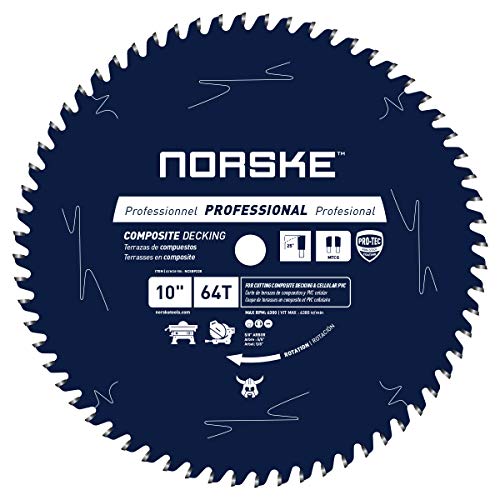
This Norske Tools saw blade is a specialized 10-inch circular saw blade designed to tackle composite decking materials like Trex and bamboo, as well as cellular PVC. With 64 teeth and a modified triple chip grind (MTCG) tooth profile, it aims to deliver a clean, melt-free cut that preserves the integrity of these sensitive materials. The blade also features a non-stick coating and an ultra-thin kerf to minimize drag and material waste.
This blade is best suited for contractors, deck builders, and DIY homeowners who regularly work with composite or PVC decking. It is not intended for general carpentry or cutting standard lumber, as its tooth geometry and grind are optimized specifically for plastics and composites. Workshop users and garage enthusiasts who take on decking projects will find it a valuable addition to their tool collection.
In terms of performance, the MTCG tooth profile combined with the non-stick coating significantly reduces heat buildup during cutting. This helps prevent the plastic within composites from melting and gummy residue from sticking to the blade. The ultra-thin kerf cuts quickly and efficiently, which is especially beneficial when using cordless saws, as it reduces battery drain and speeds through long runs. Users can expect a clean, smooth edge that often requires no additional sanding.
Build quality is a key strength here. The blade is made from Japanese steel, known for its ability to hold a sharp edge through many cuts. The non-stick coating also serves as a corrosion-resistant layer, protecting the blade from moisture and the sticky resin sometimes found in composite materials. The 5/8-inch bore fits most circular saws, and the blade diameter is standard for decking work.
When it comes to storage and maintenance, treat this blade like any precision cutting tool. Store it in a blade sleeve or case to protect the teeth from damage. Clean the blade occasionally with a specialized blade cleaner or warm soapy water to remove resin buildup and maintain performance. The coating helps, but periodic cleaning will extend its life.
A realistic limitation is that this blade is a niche product. If you only cut composite decking occasionally, a high-quality general-purpose blade may produce acceptable results. However, for those who install composite decks regularly, the Norske blade is a worthwhile investment. Based on its design and features, it earns a strong recommendation for professionals and serious DIYers who want consistent, clean cuts and longer blade life on composite projects.
The Norske Tools NCSBP228 saw blade is constructed from Japanese steel, a material known for its hardness and edge retention. This allows the blade to maintain sharpness through repetitive cutting of abrasive composite materials. The body is laser-cut and tensioned to stay flat during high-speed cuts, reducing vibration and improving accuracy.
The non-stick Protective coating is applied to the entire blade surface, including the arbor area. This coating serves multiple purposes: it reduces friction and heat buildup, prevents gumming from plastic residue, and provides a layer of corrosion resistance. The coating is also designed to shed debris easily, which helps keep the blade clean during long runs.
The 64 carbide teeth are brazed onto the blade body and feature a modified triple chip grind geometry. This grind alternates a chamfered tooth with a flat raker tooth, creating a shearing action that produces a smooth finish while reducing the chance of chipping or melting. The teeth are also inspected to ensure consistent height and bevel angles, which contributes to the clean cut quality reported by users.
Overall, the build quality reflects a focus on durability and performance in demanding, high-volume cutting environments. The combination of Japanese steel, a robust coating, and precision-ground teeth gives this blade a professional-grade feel that will hold up well in both job site and workshop settings.
Pros
- Excellent all-around combination blade for general woodworking tasks.
- TiCo carbide stays sharp noticeably longer than standard carbide blades.
- Perma-SHIELD coating effectively reduces pitch and resin buildup during long cuts.
- Thin kerf design reduces saw motor load and produces less waste.
- Runs true at up to 6,000 RPM with minimal vibration.
Cons
- Thin kerf may be prone to slight deflection when cutting very thick or knotty hardwoods.
- Premium price point compared to entry-level blades, but performance and longevity justify the cost.
- 60-tooth count may not be ideal for aggressive ripping of 4x4 or thicker stock—better suited for fine cuts.
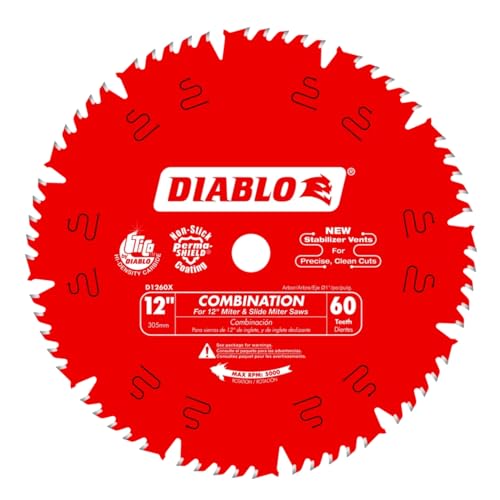
The Diablo D1260X 12-inch 60-tooth combination saw blade is a versatile woodworking tool designed for both ripping and crosscutting. It fits most table saws and miter saws with a 1-inch arbor, making it a go-to blade for a wide range of projects. Whether you're building cabinets, framing furniture, or tackling trim work, this blade aims to deliver clean, splinter-free results.
This blade is best suited for woodworkers, contractors, and serious DIY enthusiasts who need reliable performance in the workshop or on the jobsite. The TiCo Hi-Density carbide teeth are formulated to stay sharp through hundreds of cuts, reducing downtime for blade changes. Combined with the Perma-SHIELD non-stick coating, the blade resists heat buildup and gumming from pitch or resin, so you get consistent cuts even with dense hardwoods or pressure-treated lumber.
In terms of real-world performance, the thin laser-cut kerf minimizes material waste and allows the saw to cut faster with less effort. Many users report that the blade produces a finish-quality edge that often requires minimal sanding, especially on plywood and melamine. The tri-metal shock resistant brazing reinforces each carbide tip, helping the blade survive accidental impacts from nails or hard knots—a real plus for demolition or renovation work.
Build quality is a standout feature. The hardened steel body is heat-treated to resist warping, ensuring the blade stays flat and true even under heavy use. This stability translates to accurate cuts with less vibration, which is critical for fine woodworking. The blade also features a non-stick coating that makes cleanup easier and helps prevent rust when stored properly.
Storage and maintenance are straightforward. Keep the blade dry and clean between uses; a blade stabilizer can help maintain flatness if you're cutting very thin stock. One realistic limitation is the thin kerf design: while it's great for efficiency, it can deflect slightly when cutting thick, gnarly hardwoods at high feed rates. Also, the $46.90 price is higher than basic blades, but the extended sharpness and durability often make it a better long-term value for active users.
Overall, the Diablo D1260X is a strong recommendation for any woodworker or contractor who wants a reliable combination blade that balances speed, smoothness, and longevity. It's particularly well-suited for crosscuts on sheet goods, rip cuts on hardwoods, and everything in between. If you're looking to upgrade from a cheap blade or need a dependable workhorse for your saw, this is a solid investment that should serve you well in the workshop or on the jobsite.

Pros
- Delivers exceptionally clean, chip-free cuts on composite decking, reducing the need for touch-ups
- Laser-cut plate helps prevent blade overheating, which prolongs sharpness and blade life
- Modified triple chip grind geometry is designed specifically for tough composite materials, not just an afterthought
- Affordable price point makes it an accessible upgrade for DIYers and pros alike
- Fits standard 5/8-inch arbor saws, so compatibility is broad across common circular and miter saws
Cons
- Not intended for cutting dimensional lumber or plywood; performance on wood will be mediocre
- 40-tooth configuration may produce slower ripping cuts compared to a dedicated rip blade
- Limited to composite decking applications; not a general-purpose blade for all your sawing needs
The DEWALT DWA31740 is a 7-1/4-inch circular saw blade built specifically for cutting composite decking. It's a specialized tool rather than a general-purpose blade, and that focus shows in its design. Whether you're a weekend DIYer installing a new deck or a contractor finishing multiple backyard projects, this blade aims to make cutting composite materials cleaner and easier.
Who is it for? This blade is best suited for homeowners, deck builders, contractors, and woodworkers who regularly work with composite decking boards. It's not designed for framing lumber, plywood, or hardwood, so if your primary use is wood cutting, you'd be better off with a different blade. But if composite decking is your main material, this blade has the right tooth geometry and heat management to handle it well.
Real-world performance centers on the modified triple chip grind tooth design. This tooth pattern helps reduce chipping and fraying along the cut edge, which is a common problem with composite materials. The laser-cut plate also plays a big role: it keeps the blade running cooler, reducing friction and preventing the composite from melting or gumming up the teeth. The result is a cleaner cut with less cleanup afterward. Many users report that cuts come out smooth and require minimal sanding or trimming, which saves time on the jobsite.
Build quality is what you'd expect from DEWALT. The carbide tips are securely brazed and should hold an edge reasonably well through repeated use. The blade body is flat and runs true, which reduces vibration and helps maintain accuracy. The 5/8-inch arbor fits most circular saws and miter saws, so you can swap it into your existing setup without adapters. Storage is straightforward: it's a standard blade that can go in a blade case or hang on a wall peg.
One realistic limitation is its specialization. This blade excels at composite decking but will not perform well on wood or other materials. Also, the 40-tooth count means it's not the fastest for ripping long boards; it's more suited to crosscutting and mitering. If you need a do-it-all blade, this isn't it.
Overall, the DEWALT DWA31740 is a practical investment for anyone who frequently cuts composite decking. It delivers clean cuts, runs cooler, and is built to last through multiple deck projects. For the price, it's a solid value that can improve both the quality of your work and your efficiency on the job.

Pros
- Superior carbide formulation for extended life in abrasive materials.
- Clean, chip-free cuts on composite decking thanks to triple chip grind.
- Sturdy blade body minimizes wobble for accurate cuts.
- Optimized for miter saws, easy installation and compatibility.
- Thin kerf reduces strain on saw motor and speeds up cutting.
Cons
- Premium price point may be high for occasional DIY users.
- Designed specifically for composite decking, not ideal for general wood cutting.
- Some users might prefer a blade with more teeth for even finer finish, but 84 teeth is a good balance.
The Bosch DCB1284CD is a 12-inch, 84-tooth circular saw blade built from the ground up for cutting composite decking. This specialized blade is a smart pick for professional deck builders, contractors, and DIY homeowners tackling composite deck projects. It's engineered to handle the abrasive nature of composite materials while delivering clean, smooth cuts with minimal effort.
Performance is where this blade shines. The triple chip grind tooth geometry is designed to slice through composite decking without chipping or fraying the edges, leaving a finish that often requires little to no sanding. The brute carbide formulation provides enhanced impact resistance and extends the blade's life, even when cutting through tough, abrasive composites. A thinner kerf reduces waste and allows for faster feeding, which means you can get more work done in less time.
Build quality is impressive. The extra-hard steel blade body resists bending and deflection, keeping your cuts true and accurate. This is especially important when using a miter saw for precise angle cuts. The blade maintains its integrity under heavy use, so you can rely on consistent performance throughout the life of the blade.
Setup is straightforward. It fits any standard 12-inch miter saw, so you can mount it and start cutting right away. Maintenance is minimal just wipe down the blade after use to remove resin buildup, and store it in a blade case or its original packaging to protect the teeth. This blade doesn't require any special care beyond common sense.
One realistic limitation is its specialization. This is not a general-purpose blade. If you mostly cut dimensional lumber or plywood, a combination blade would be more versatile. Also, the price is on the higher side, which might be a consideration for the occasional DIYer. However, for those who frequently work with composite decking, the investment pays off in cut quality and blade longevity.
In summary, the Bosch DCB1284CD is a top-tier choice for anyone who regularly cuts composite decking. It delivers the performance, durability, and precision needed for professional-grade results. Whether you're a contractor building multiple decks or a homeowner doing a single project, this blade can make the job easier and the finished product look better.
The Bosch DCB1284CD features a brute carbide micrograin formulation that delivers exceptional impact resistance and longevity. The extra-hard steel blade body is engineered to resist bending and deflection, ensuring accurate cuts even under heavy use. Precision manufacturing and quality materials make this blade a reliable choice for demanding composite decking applications.
Frequently Asked Questions
What tooth grind works best on ipe decking?
A modified triple chip grind (MTCG) works best for ipe decking because it alternates between trapezoidal and flat-top teeth to distribute cutting resistance evenly. This specialized tooth geometry prevents tooth chipping in silica-rich exotic hardwoods and keeps heat low to prevent burning. Blades such as the Diablo TrexBlade Saw Blade for Composites leverage this tooth configuration to shave through tough composite and dense grain without chipping.
Why do standard framing blades burn when cutting ipe?
Standard framing blades burn ipe because their aggressive positive hook angles and low tooth counts bite too deeply into dense timber, generating extreme friction. Ipe possesses high natural density and silica content that rapidly dulls soft carbide, which causes standard blades to rub rather than shear the grain. Using a dedicated blade matched to precision saws, much like selecting a miter saw for precision trim, guarantees cleaner cuts and prevents dangerous workpiece kickback.
How does kerf thickness affect cutting performance on ipe deck boards?
Thin-kerf blades cut ipe more efficiently by removing less material, which reduces motor strain and limits thermal buildup during demanding crosscuts. Full-kerf blades demand greater wattage from your saw, often causing portable jobsite saws to bog down midway through a thick board. Blades like the Norske Tools NCSBP230 12 inch x 72T Composite use ultra-thin kerfs to allow rapid feed rates without sacrificing cut precision.
Can composite decking blades be safely used on ipe hardwood?
Yes, composite decking saw blades can cut ipe effectively if they feature high-density carbide and a modified triple chip grind. Manufacturers engineer composite decking blades to dissipate heat and survive abrasive synthetic fillers, characteristics that directly mirror the demands of silica-heavy ironwood. Options like the Bosch DCB1284CD 12 in. 84 Tooth Edge Circular Saw provide the robust tooth geometry and hard steel plate required for stable cuts in both dense synthetics and ultra-hard lumber.
What saw size is ideal for cutting thick ipe decking boards?
A 10-inch or 12-inch miter saw blade provides the ideal cutting depth and stability for trimming 5/4 ipe decking boards accurately. While a 7-1/4-inch circular saw blade like the DEWALT Circular Saw Blade, 7 1/4 Inch, 40 Tooth works well for trimming board overhangs in place, larger blades mounted in stationary saws minimize blade deflection across wide planks. Matching your cutting setup to the project scale, whether using a dedicated miter rig or a heavy-duty fence cutting saw, ensures smooth end cuts and tight joints throughout 2026.






Write Your Review
No reviews yet. Be the first to share your experience!