


Trimming door casings and trim flush against fresh underlayment can quickly ruin expensive molding if your tool lacks stability. Installing floating laminate, luxury vinyl plank, or hardwood demands clean horizontal clearances so new planks slip underneath without binding. Slicing through pine or solid oak casing with an improper blade often leaves jagged edges, splintered veneer, and uneven gaps that standard baseboards cannot hide. That is why having the best saw for cutting door jamb makes a massive difference in project speed and overall finished quality. While specialized equipment handles the bulk of shop trim, much like using compound miter saws for framing and accurate miters, dedicated undercut and jamb saws keep your cut line flat along the floor plane.
Careful evaluation of motor power, blade diameter, tooth geometry, and cutting depth reveals big differences between heavy-duty electric models and compact manual undercut saws. High-amperage dedicated units cut full inside corners cleanly and slice door bases effortlessly, whereas flexible hand flush saws grant quiet control for delicate, low-profile adjustments around tight architraves. Checking specifications such as carbide tip durability, height adjustment ranges, and arbor fit guarantees that you match your equipment to the exact thickness of your flooring materials. Reviewing manufacturer technical sheets and genuine user experiences helps you choose the right balance of speed, clean kerf action, and control for seamless flooring transitions.

Pros
- Robust 900-watt motor cuts cleanly through dense oak and pine millwork without bogging down
- Precise depth and height guides prevent accidental damage to underlying subfloors and wallboard
- Specialized corner geometry reduces the need for manual touch-up sawing in tight angles
- Rugged molded case keeps the unit and spare blades protected between jobsites
Cons
- At nearly 10 pounds, extended low-level operation requires solid arm strength and regular rests
- Creates significant fine wood dust indoors, requiring prompt cleanup or containment
- Specialized tool design offers limited versatility outside of flooring prep and trim installation
The ROBERTS 17076 6-Inch Jamb Saw is a purpose-built electric cutting tool designed specifically to undercut door jambs, millwork casings, baseboards, and door bottoms. For flooring contractors, finish carpenters, and ambitious DIY homeowners tackling whole-house flooring installations, undercutting door casings allows new tile, luxury vinyl plank, or hardwood to slide seamlessly underneath. Rather than struggling with manual flush-cut hand saws or oscillating multi-tools on large-scale jobs, this dedicated unit speeds up preparation significantly while ensuring flat, uniform horizontal cuts across every doorway.
Real-world performance centers around its industrial-grade 5.8-amp, 900-watt motor, which utilizes precision ball and needle bearings to withstand sustained jobsite use. Power delivery is managed through spiral ground gears that ensure quiet, low-vibration operation even when chewing through dense historic heart pine or seasoned white oak frames. The motor supplies steady cutting torque, allowing the included 6-3/16-inch carbide-tipped blade to glide through thick door casings and doors up to 1-3/4 inches without bogging down or tearing out delicate wood fibers.
Precision and damage prevention are vital when cutting in finished rooms. The ROBERTS 17076 features an adjustable cutting depth guide that stops the blade from cutting into drywall, plaster, or structural framing behind the molding. Its precision height adjustment mechanism allows adjustments from dead flush with the subfloor up to 1-1/16 inches high. This broad range makes it easy to set the exact clearance required for thin sheet vinyl, thick underlayment pads, or solid 3/4-inch strip flooring. Additionally, the tool head geometry is engineered to reach fully into inside molding corners up to 1/2-inch thick, cutting down on secondary hand chisel work.
Build quality reflects heavy-duty commercial intent, pairing a rigid metal gear housing and sturdy base with an ergonomic handle for guided stability. Weighing in at 9.8 pounds, the tool has enough heft to maintain flat contact with the subfloor during horizontal passes, preventing tipping that could ruin a clean cut line. Routine maintenance primarily involves clearing out sawdust accumulation around the arbor and inspecting blade sharpness. Transport is straightforward thanks to the included custom molded hard plastic carrying case, which keeps the power cord, guides, and carbide blade organized in a contractor van or workshop shelf.
There are a few practical considerations to keep in mind on the job. The substantial 9.8-pound operating weight can lead to forearm fatigue when working in awkward positions or trimming multiple rooms back-to-back. Furthermore, high-speed horizontal cutting naturally throws fine sawdust across the floor, so using drop cloths or running an air scrubber in finished living areas is recommended. It is also a highly specialized tool, meaning it will sit on the shelf between flooring installations rather than serving as a general-purpose workshop saw.
For dedicated flooring installers, general remodeling crews, and homeowners facing extensive floor renovation projects, the ROBERTS 17076 Jamb Saw offers a major upgrade in speed, cut accuracy, and finish quality. Its combination of stout motor power, precise depth control, and flush cutting capability makes door frame preparation fast, predictable, and professional.
On active construction and remodeling sites, the ROBERTS 17076 accelerates flooring prep by eliminating time-consuming manual undercutting. The tool rests flat on the subfloor or on a scrap piece of your new flooring material, ensuring every cut across door jambs and casing profiles matches your finished floor height perfectly.
Its ability to undercut doors up to 1-3/4 inches without pulling hinge pins saves notable labor when clearing thick rugs or raised transitions. The durable exterior housing handles minor bumps against framing and masonry, while the blow-molded case provides dependable protection in crowded work trucks.
Consistent cut height is essential for seamless flooring expansion gaps. The calibrated height adjustment on this saw locks firmly in place, preventing the blade from drifting or angling downward midway through a cut.
Combined with the integrated depth stop, operators can trim interior trim molding confidently without the risk of hitting drywall anchors, framing nails, or hidden wallboard. This level of control produces smooth horizontal cut faces that hide expansion gaps cleanly under the millwork.

Pros
- Flush-cutting geometry makes undercutting door casings straightforward for flooring jobs
- 12-inch replaceable blade design ensures continued utility after heavy use
- Substantial 1.6 lb weight provides good balance and downward cutting stability
- No cords, chargers, or heavy equipment needed for quick interior trim adjustments
Cons
- Manual cutting requires physical effort compared to motorized oscillating tools or electric jamb saws
- Limited to soft-to-medium wood trim and struggles against dense hardwoods or embedded finish nails
- Does not include spare replacement blades in the package
The MDMprint Undercut Door Jamb Saw is a dedicated manual handsaw engineered for trimming door bottoms, casings, and trim moldings flush with the subfloor. Designed primarily for flooring prep work, this tool creates the necessary horizontal clearance beneath jambs so hardwood, tile, laminate, or vinyl planks can slide underneath cleanly. It serves as an accessible, low-mess alternative to bulky power jamb saws for both DIY remodelers and finish carpenters.
This specialty hand saw appeals directly to flooring installers, finish woodworkers, general remodeling contractors, and DIY homeowners tackling flooring upgrades. For those who occasionally install laminate or luxury vinyl tile, renting or purchasing a heavy electric undercut saw is often impractical. This manual tool offers the right balance of precision and simplicity for single-room remodels, rental maintenance, and small residential renovation projects.
Equipped with a 12-inch replaceable blade, this saw reaches deep into wider frames and corner trim profiles with ease. In typical workshop and jobsite scenarios, the wide blade surface rests flat against a scrap piece of flooring, using it as a height guide to produce a level, accurate cut. The extended blade length delivers decent stroke efficiency on pine, fir, and standard interior casing stock, allowing users to cut through jambs cleanly without chewing up adjoining walls or baseboards.
Weighing in at roughly 1.6 pounds, the saw has enough heft to stay planted along the cutting plane without drifting upward. Its offset handle arrangement raises the user's hand away from the floor surface, preventing bruised knuckles against subfloors or concrete pads. The silver-finished blade mounts securely to the frame, resisting excessive flexing during back-and-forth strokes, which is crucial for maintaining a true horizontal cut line.
Because it is entirely hand-powered, cutting through dense oak frames, thick exterior jambs, or casing filled with old finishing nails will demand noticeable physical stamina. It will not work on metal commercial frames or masonry. Users planning extensive whole-home installations might prefer power options for pure speed, but having a manual undercut saw remains invaluable for tight spots where motorized blades cannot safely reach.
For DIYers preparing a room for new flooring or tradespeople who need a reliable backup trim saw in their truck, this MDMprint undercut saw provides practical value. Its replaceable blade system, solid balance, and straightforward operation make it a sensible addition to any residential renovation toolkit.
To achieve the best fit during flooring jobs, place an off-cut of your new plank along with any necessary underlayment directly against the door casing to serve as a height guide. Resting the wide 12-inch blade flat on top of that scrap piece keeps the finished cut aligned at the exact clearance level required for the floor to slide underneath.
Working with smooth, steady pull strokes prevents binding and ensures a clean finish on painted or stained trim. Always inspect the casing for buried finish nails before sawing, as avoiding hidden fasteners protects the blade teeth and keeps cuts crisp throughout your project.
Pros
- Dual-angle depth guide adjusts for straight-on and 45-degree cuts
- Exceptional clearance under cabinet toe kicks and inside corner spaces
- Comes complete with a rugged storage case and a carbide-tipped blade
- Substantially cuts down prep time on hardwood, laminate, and tile installations
Cons
- Requires attentive motor heat management during continuous heavy cutting
- Six-month manufacturer warranty is relatively short for professional tools
- Substantial 10.85-pound weight can feel tiring during extended use in tight positions
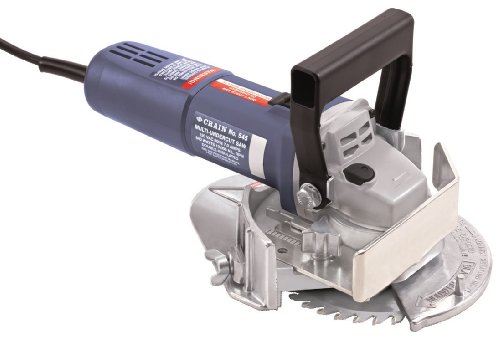
The Crain 575 Multi-Undercut Saw is a purpose-built electric cutting tool designed specifically for flooring installers, remodelers, and carpenters who need fast, flush horizontal cuts at floor level. Unlike standard circular saws or multi-tools that struggle with depth consistency along wide trims, this dedicated machine undercuts walls, door jambs, toe kicks, and inside corners cleanly. Serving as the updated successor to the classic model 545, the 575 preserves Crain's proven layout while delivering reliable power for both residential renovation and commercial floor prep.
Flooring contractors, carpenters, and serious DIY remodelers will benefit most from this tool. When laying down laminate, engineered hardwood, vinyl plank, or tile, door casings and base moldings frequently block smooth expansion gaps. Rather than prying trim off walls or sawing jambs manually with a hand flush-cut saw, users can set precise height and depth markers to trim an entire room in a fraction of the time.
Powered by a 120-volt, 6.2-amp electric motor, the saw produces sufficient cutting torque to slice through standard pine casing, dense oak jambs, and drywall edges. The integrated dual-angle depth gauge stands out as a practical feature, allowing operators to select either a straight cut or a 45-degree angled approach relative to the wall surface. This adjustability helps avoid binding in tight corners and protects finished walls while ensuring proper expansion room underneath.
Weighing approximately 10.85 pounds, the tool feels planted and stable against the subfloor, minimizing erratic blade wander. Its heavy-duty metal housing is paired with an ergonomic top handle and secondary grip to provide positive two-handed control during horizontal travel. The package comes with a long-wearing carbide-tipped blade that tolerates occasional trim nails, as well as a custom blow-molded carrying case that shields the tool in busy contractor vans or workshop shelves.
Operators should keep motor duty cycles in mind during extensive cutting sessions. The manufacturer cautions against motor overheating, meaning users should let the blade run at full speed without forcing the feed rate, especially when tackling thick solid hardwood. Keeping the motor housing vents clear of fine sawdust will also contribute to long-term reliability on demanding jobs.
For trade professionals handling frequent flooring installations or homeowners taking on whole-house renovations, the Crain 575 offers specialized capability that multi-purpose tools struggle to match. Its combination of rigid depth adjustment, inside-corner accessibility, and durable blade performance makes it a worthwhile investment for clean, professional flooring transitions.
On active flooring jobs, efficiency relies on how cleanly and quickly you can slide planks beneath existing door trim and cabinetry. The Crain 575 excels on jobsites by providing dedicated height clearance adjustments, ensuring the blade sits at the exact thickness of your new underlayment and flooring material.
The low-profile design easily slides underneath kitchen cabinet toe kicks where standard saws simply cannot fit. Paired with its dedicated carrying case, the tool travels securely between worksites while staying organized and ready for rapid setup on every trim prep phase.

Pros
- Direct fit for Roberts 10-46 and 10-55 jamb saws
- Tungsten carbide teeth resist heat buildup during wood and drywall cuts
- Hardened steel core helps maintain a rigid cutting plane for clean trimming
- Economical replacement alternative compared to original equipment manufacturer blades
Cons
- Specialized tool compatibility limits use to dedicated undercut and jamb saws
- Tooth count and arbor dimensions are not detailed in manufacturer specifications
- Not suitable for cutting masonry, tile, concrete, or metal framing
The Caliastro 6-3/16-inch undercut saw blade is a specialized replacement cutting accessory engineered for flooring installers, carpenters, remodelers, and DIY homeowners. Designed as an alternative to the Roberts 10-47 (63036) blade, it mounts directly to Roberts 10-46 and 10-55 jamb saws. For anyone installing hardwood, laminate, or vinyl plank flooring, having a dedicated undercut blade is necessary to trim door casings, jambs, and baseboards to the proper clearance height.
In practical cutting applications, this blade is designed to cut wood doors, door jambs, wood base, and drywall. Its 6-3/16-inch diameter allows the saw to slide flat against floor guides and reach into tight corners around entryways. The product description emphasizes straight, clean cuts, which helps prevent splintering or jagged edges along finished architectural trim during horizontal plunge and pass cuts.
Build quality centers on a hardened steel body fitted with tungsten carbide teeth. Undercutting door casings and drywall produces substantial friction, and tungsten carbide provides elevated heat resistance along with long-lasting edge retention. The hardened steel plate gives the blade structural rigidity, helping to reduce wobble and maintain a true line against the material being cut.
Handling and maintenance are straightforward due to the blade compact dimensions and manageable 0.66-pound weight. When installing or swapping out blades on a jamb saw, always disconnect the tool from its power source before following the tool maker instructions for blade retention. Routine maintenance involves wiping away residual wood resin and drywall gypsum dust between tasks to keep the carbide teeth cutting cleanly.
Users should consider the inherent boundaries of this blade design. Because it is engineered specifically for Roberts undercut models 10-46 and 10-55, it is not intended for standard circular saws, miter saws, or multi-tools. In addition, contact with embedded steel framing nails, tile backer, or masonry will quickly damage the carbide cutting edges.
For flooring pros and serious DIY remodelers operating Roberts 10-46 or 10-55 jamb saws, this Caliastro blade serves as a dependable, budget-conscious replacement. It delivers the material versatility and carbide durability required to complete clean trim preparations without paying a premium for brand-name accessories.
This Caliastro replacement blade is engineered specifically for use with Roberts Jamb Saw models 10-46 and 10-55. It is listed as a direct replacement for Roberts part number 10-47 (also identified as 63036).
Because undercut saws utilize specific mounting geometries and guarding setups, verify that your jamb saw accepts 6-3/16-inch diameter blades before purchase. This accessory is not rated or intended for use on general-purpose circular saws or table saws.
Cutting through drywall and resinous wood baseboards can lead to gypsum buildup and pitch accumulation on the carbide teeth. Inspect the blade periodically and clean off residues using an appropriate pitch and resin cleaner.
Always verify that power to the tool is completely disconnected before inspecting, cleaning, or changing the blade. Keep the blade stored flat in a dry environment between jobs to protect the hardened steel plate and carbide tips from accidental impact.

Pros
- Exact factory replacement fit for the ROBERTS 10-55 undercut jamb saw
- 36 carbide-tipped teeth provide smooth cutting performance in wooden jambs and baseboards
- Individually packaged to safeguard the cutting edges prior to tool mounting
- Lightweight build maintains the intended balance of the undercut saw assembly
Cons
- Specialized 6-3/16-inch diameter is tailored for dedicated jamb saws rather than standard circular saws
- Configured strictly for wood cutting and not suited for metal, masonry, or nail-embedded stock
The ROBERTS 10-47-2 is a specialized 6-3/16-inch, 36-tooth carbide-tipped saw blade manufactured as a direct replacement part for the ROBERTS 10-55 jamb saw. Designed with flooring professionals, carpenters, and DIY remodelers in mind, this accessory targets the precise demands of undercutting work during hardwood, laminate, vinyl plank, or tile flooring installations.
In practical flooring and remodeling workflows, undercutting door casings and baseboards is critical to allow new flooring materials to expand and slide underneath neatly without damaging the profile of decorative trim. This blade features 36 carbide-tipped teeth optimized for cutting wood, allowing users to make flush, controlled horizontal passes directly along baseboards and adjacent walls.
Measuring approximately 6.13 inches in diameter and weighing just 0.33 pounds, the blade matches the exact mechanical clearances of the ROBERTS 10-55 saw housing. The carbide cutting tips are bonded to the steel body to resist premature edge wear during repeated trim passes through solid wood jambs and casing stock. Each blade comes individually packaged to prevent tooth chipping while stored inside a toolbox or work vehicle.
Installing or swapping this blade requires following standard tool safety procedures, including disconnecting power before handling the arbor assembly. Once secured on the saw spindle, the blade works inside the tool guard assembly to produce clean cuts close to the floor line. Keeping the cutting zone clear of loose debris helps prevent binding and supports consistent cut depth along the perimeter.
While dependable for its intended role, the ROBERTS 10-47-2 is not a general-purpose circular saw blade. Its specialized 6-3/16-inch sizing makes it incompatible with standard 7-1/4-inch circular saws or compact saws. Furthermore, because it is engineered strictly for clean wood cutting, direct contact with hidden fasteners, drywall screws, or masonry subfloors will dull or damage the carbide teeth.
For flooring contractors and homeowners operating the ROBERTS 10-55 undercut saw, keeping a dedicated replacement blade on hand prevents jobsite delays. The ROBERTS 10-47-2 delivers a model-correct fit that restores clean, efficient cutting performance across residential and commercial trim preparation tasks.
The ROBERTS 10-47-2 blade is engineered specifically as a replacement blade for the ROBERTS 10-55 jamb saw. Buyers should verify their saw model before purchasing, as the 6-3/16-inch diameter matches the specialized housing and guard geometry of this dedicated undercut saw rather than standard handheld power saws.
Because undercut saws require tight vertical and horizontal clearances to cut flush with subfloors, substituting improper blade sizes can compromise tool performance and create safety hazards. Selecting this factory-specified blade ensures correct mounting, proper guard operation, and reliable saw balance.
With a 36-tooth configuration, this blade is optimized for clean cutting through solid wood door frames, exterior and interior door jambs, and wooden baseboards. The tooth count provides a practical balance between cutting speed and edge quality on finished millwork.
Before making undercut passes along walls, inspecting the cut line for hidden finish nails, drywall screws, or mortar residue is recommended. Avoiding foreign fasteners protects the carbide tips and prolongs blade life throughout extensive flooring jobs.

Pros
- Reversible blade adapts to left- or right-handed users and tight spaces
- Sharp, durable teeth cut smoothly without jamming
- Comfortable grip reduces fatigue during prolonged sawing
- Lightweight and easy to maneuver in vertical or overhead cuts
Cons
- Blade flexibility may require careful handling to avoid bending
- Limited to 10-inch length, not ideal for larger crosscuts
- Plastic tooth guard is basic; a more robust storage case would be welcome
The Jorgensen 10" Dovetail Reversible Saw is a specialized jamb saw designed for flush cutting in tight spaces. Whether you're a DIY homeowner trimming door frames, a contractor prepping for tile installation, or a woodworker making precise dovetail cuts, this saw aims to deliver clean, accurate results without damaging the surrounding surface.
Best suited for a wide range of users, this saw works well for mechanics, electricians, plumbers, and construction professionals who need to make quick, flush cuts in wood, millwork, or even tile backer board. Its reversible blade is a standout feature, allowing you to switch between left- and right-handed cutting with a simple spring-loaded mechanism. This makes it especially handy when working in corners or against walls where a standard saw can't reach.
In terms of real-world performance, the 13TPI double-ground teeth are induction hardened to HRC58-68, which helps them retain sharpness longer than standard blades. The SK5 steel blade is thin (0.6mm) and flexible, enabling flush cuts that follow the contour of the work surface without gouging. Users report smooth, straight cuts with minimal binding, thanks to the reinforced steel back that adds rigidity. The bi-material handle, with a soft TPR grip over a PP core, reduces hand fatigue during extended use, which is a real plus for contractors or DIYers tackling multiple cuts.
Build quality is solid for the price point. The blade is sharp out of the box and comes with a plastic tooth guard for safe storage. The handle feels secure and comfortable, even with sweaty or gloved hands. While the saw is lightweight and easy to carry, it doesn't include a storage case, so you'll need to store it carefully to protect the teeth. Maintenance is minimal just wipe the blade clean and keep it dry to prevent rust.
One realistic limitation is the blade's flexibility. While it's great for flush cuts, it can bend if you apply too much force or try to cut thicker materials. This saw is best for trimming, not heavy-duty crosscutting. Also, the 10-inch length may feel short for larger projects, but it's ideal for the jamb saw role it's designed for.
Overall, the Jorgensen 10" Dovetail Reversible Saw offers excellent value for anyone needing a precise, ergonomic flush-cut saw. It's a practical addition to any workshop, garage, or jobsite tool kit, especially for door fitting, tile prep, and fine woodworking. If you frequently work in tight spaces and value a comfortable grip, this saw is worth considering.

Pros
- Versatile reversible blade works for both left- and right-handed users
- Ergonomic ProTouch handle improves comfort and control during prolonged sawing
- Fine 14-point teeth produce clean, accurate cuts in hardwood and softwood
- Compact and lightweight for easy storage in toolboxes or workshop drawers
- Affordable price point offers good value for DIYers and professionals
Cons
- Limited to dovetail and flush-cut applications; not ideal for general ripping or crosscutting
- Some users may prefer a longer blade for deeper cuts in thicker stock
- Blade thickness of 2 inches may feel slightly rigid for intricate curves
The IRWIN Dovetail Saw (2014450) is a specialized handsaw designed for precise joinery and flush-cutting tasks. With its 10-inch blade and 14-point tooth configuration, this saw excels at creating clean, accurate cuts in dovetail joints, tenons, and other fine woodworking details. The spring-loaded, reversible blade is a standout feature, allowing users to switch between left- and right-hand cutting without needing a second tool.
This saw is best suited for woodworkers, DIY homeowners, contractors, and tradespeople who frequently work on furniture, cabinetry, trim, or other precision projects. The ergonomic ProTouch handle provides a comfortable grip that reduces hand fatigue during extended sawing sessions, making it a practical choice for both hobbyists and professionals. Its lightweight design (just 0.1 pounds) also makes it easy to carry around a workshop or job site.
Performance-wise, the 14-point teeth cut smoothly through both hardwoods and softwoods, leaving a clean edge that minimizes sanding. The blade's wide-body flush-cut design measures 50 mm, enabling close cuts along surfaces like door jambs or molding. While it may not replace a full-size handsaw for heavy ripping, it excels in detailed work where accuracy matters most.
Build quality is solid for the price, with a durable steel blade that resists bending during use. The reversible blade mechanism is simple to operate, though it may take a few tries to get used to the locking action. Storage is straightforward - the saw fits easily into a toolbox drawer or hanging rack, and its compact size means it won't take up much space.
One realistic limitation is that this saw is designed specifically for dovetail and flush-cut applications. It's not a general-purpose saw for crosscutting or ripping large boards. Additionally, the 10-inch blade length may feel short for deeper cuts in thick stock. However, for its intended use, it performs reliably.
Overall, the IRWIN Dovetail Saw offers excellent value for anyone needing a precise, comfortable saw for detailed woodworking. DIYers will appreciate its ease of use, while professionals will value its reliability on the job. If you regularly cut dovetails or need a flush-cut saw, this is a solid addition to your tool collection.
Frequently Asked Questions
What makes a dedicated jamb saw better than an oscillating multi-tool for trimming door frames?
A dedicated jamb saw provides fixed height accuracy and deep horizontal reach that oscillating tools struggle to maintain over wider moldings. High-torque electric jamb tools use wide circular blades with precision height guides, preventing blade wandering and ensuring a perfectly level plane across the casing. Oscillating tools work for single quick cuts, but a dedicated tool keeps cuts uniform throughout an entire home remodel.
Can you cut through nails embedded in door jambs with these blades?
Standard wood-cutting jamb saw blades will dull or chip instantly if they contact finishing nails or drywall screws. Most included blades feature tungsten carbide teeth engineered strictly for solid wood, drywall, and composite trim. When encountering hidden fasteners, you must extract the nail first or switch to an abrasive or metal-rated blade to protect the motor and cutting teeth.
How do you set the correct cut height for the best saw for cutting door jamb before laying new floor planks?
Place an offcut of your new flooring plus the underlayment upside down directly next to the jamb to establish your exact height benchmark. Rest the saw guide plate or blade flush against the scrap surface before locking the depth mechanism. This leaves just enough clearance for expansion while avoiding unsightly over-cutting, a principle similar to setting stop blocks for precision trim on a miter saw for crown molding.
Is a manual flush cut saw sufficient for standard residential door jambs?
Yes, a manual reversible flush cut saw works effectively for one or two doorways where renting or buying a power saw is impractical. Hand jamb saws with flexible steel backs and 13 to 14 teeth per inch yield remarkably smooth results without generating airborne drywall dust. They require steady arm stamina, but they offer maximum control in tight, awkward closet corners.
What blade diameter is standard for electric undercut saws?
Most commercial electric undercut and jamb saws utilize 6-inch to 6-3/16-inch carbide-tipped replacement blades. Units from major manufacturers typically require blades specifically designed with custom arbor holes to seat safely against the drive spindle. Always verify your tool arbor pattern and maximum blade diameter before purchasing replacement blades.




Write Your Review
No reviews yet. Be the first to share your experience!