


Splintered wood fibers and jagged tearout ruin fine trim work faster than almost any other workshop mishap. Making clean cuts across the grain demands a specialized tooth geometry and higher tooth density that cleanly severs wood cells rather than gouging them out. Choosing the best saw blade for cross cutting requires matching plate thickness, tooth profile, and kerf width to your specific workshop tools, whether you run high-capacity compound miter saws or dedicated jobsite bench saws. Careful analysis of product specifications and user feedback reveals that tooth count and alternate top bevel designs are vital for preventing blade chatter.
Thin kerf blades reduce motor strain and minimize stock waste, while robust carbide teeth maintain cutting edges through tough hardwoods, melamine, and plywood. Before swapping discs on your saw, learning how to remove blade from dewalt miter saw safely ensures correct arbor alignment and tight collar seating. Selecting the best saw blade for cross cutting eliminates time-consuming surface sanding and delivers smooth end grain straight off the tool.

Pros
- Versatile combination tooth pattern handles both rip and crosscut tasks effectively
- Carbide teeth hold an edge well through standard lumber and composite panels
- Anti-vibration features help minimize resonance and rough cut marks
- Standard 5/8-inch bore ensures straightforward installation on compatible tools
Cons
- The 9-inch diameter is less common than standard 7-1/4-inch or 10-inch blade sizes
- Strictly intended for wood and composite materials and cannot cut metal or masonry
- A 40-tooth count is less suited for ultra-fine cabinet trim work than high-tooth finishing blades
The KuangBBBTools 9-inch 40-tooth carbide circular saw blade serves as a dedicated cutting accessory designed for woodworking projects, carpentry repairs, and workshop material dimensioning. Built to fit stationary or portable saws configured for 9-inch blades with a 5/8-inch arbor, this combination blade provides a balanced profile for woodworkers, DIY hobbyists, and home garage mechanics who need a reliable blade for general lumber tasks.
Equipped with an alternate top bevel (ATB) tooth geometry and a 10 to 15-degree hook angle, the blade delivers efficient material removal along with smooth cut faces. The 40 carbide-tipped teeth bite cleanly into softwoods, dense hardwoods, plywood, chipboard, and composite laminates. Its 0.1-inch kerf maintains a solid compromise between minimal material waste and blade rigidity, preventing unwanted deflection during heavy cuts in thick stock.
Build quality centers around a 0.06-inch steel plate featuring anti-vibration characteristics. These dampening properties help reduce saw wobble and chatter, leading to cleaner edge finishes and less user fatigue on larger cutting jobs. The hardened carbide teeth are designed to withstand abrasive glues found in plywood and composite panels, maintaining working sharpness across repetitive cuts up to the maximum rating of 6,600 RPM.
Mounting the blade is quick on compatible table saws, miter saws, or chop saws equipped with a standard 5/8-inch arbor. Routine maintenance requires minimal effort, primarily involving periodic cleaning with pitch remover to dissolve resin buildup and preserve cutting efficiency. As with any cutting tool, user safety requires keeping feed pressure steady and checking arbor nut tightness prior to operation.
A practical limitation is the 9-inch diameter, which is less prevalent on modern jobsite power tools compared to standard 7-1/4-inch circular saws or 10-inch miter saws. Additionally, while the 40-tooth setup is ideal for general dimensioning, framing lumber, and basic cabinetry parts, fine finish carpenters crafting high-end trim may prefer a specialized 60-tooth or 80-tooth blade. For workshop users and DIYers seeking a dependable, budget-friendly replacement blade for a 9-inch saw, this KuangBBBTools model provides solid cutting performance for daily woodworking.
This saw blade features a 9-inch (230mm) outer diameter paired with a standard 5/8-inch (16mm) arbor bore. It is engineered to drop into matching table saws, radial arm saws, miter boxes, and bench saws that specify 9-inch blade clearances. Users should verify tool specifications before installation to ensure proper guard clearance and arbor fitment.
In practical use, the blade performs well on natural wood species as well as engineered panels such as MDF, particleboard, and structural plywood. It is not rated for masonry, stone, or ferrous and non-ferrous metals. Operating within the recommended speed rating up to 6,600 RPM ensures steady chip clearance and protects the carbide teeth from premature heat buildup.
Pros
- Excellent cut quality with no burrs or heat discoloration
- Long blade life thanks to high-quality carbide
- Reduced sparking makes it safer for indoor use
- Thin kerf preserves material and reduces strain on saw
- Versatile for mild steel fabrication and repairs
Cons
- Not suitable for hardened, galvanized, or stainless steel
- Requires a saw with proper RPM rating (1600 RPM recommended)
- Premium price compared to abrasive blades, but offsets with longer life and better cuts
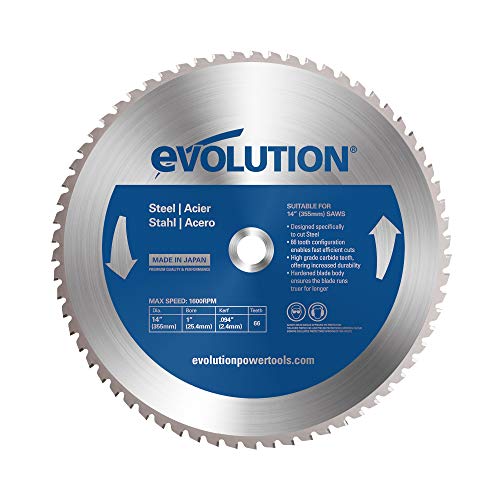
The Evolution Power Tools 14BLADEST is a 14-inch, 66-tooth carbide-tipped blade engineered specifically for cold cutting mild steel. Unlike traditional abrasive blades that generate intense heat, sparks, and messy burrs, this TCT (Tungsten Carbide Tipped) blade slices through ferrous metal with minimal friction. The result is a clean, cool cut that won't discolor or weaken the material, and a safer work environment with virtually no sparks.
This blade is a natural fit for mechanics, contractors, electricians, and plumbers who regularly cut mild steel conduit, straps, studs, or brackets. Serious DIYers and home workshop users will also appreciate the reduced fire risk and the ability to handle cuts right after finishing - no waiting for the metal to cool. Fabricators and metal artists will find the burr-free edges save hours of cleanup time.
Performance-wise, the blade lives up to its claims. According to product specifications and user feedback, the Japanese carbide teeth stay sharp through hundreds of cuts, and the thin kerf (.094 inches) reduces material waste and puts less strain on your saw's motor. The no-heat cutting action means the base metal remains dimensionally stable, so precision cuts stay true. Many users report being able to make multiple cuts in quick succession without the blade overheating.
Build quality is a standout feature. The blade body is heat-treated for durability and vibration dampening, and the carbide tips are precision-brazed for reliable retention. The 1-inch arbor fits most professional-grade chop saws and stationary circular saws rated for 1600 RPM. The blue coating adds a layer of corrosion resistance, though storing the blade in a dry environment is still recommended.
Ease of use is straightforward - mount it as you would any abrasive blade, and you're ready to cut. No special maintenance is required beyond keeping the teeth clean of resin or debris. The blade's design minimizes kickback and provides a smooth cutting action, which contributes to better control and accuracy.
However, this blade is designed exclusively for mild steel. It will not cut hardened steel, stainless steel, or galvanized metal effectively, and doing so can damage the teeth. It also requires a saw that operates at approximately 1600 RPM for best results. While the initial cost is higher than a pack of abrasive blades, the extended lifespan and superior cut quality make it a worthwhile investment for anyone who cuts mild steel regularly. For workshops, garages, and job sites where clean, safe, efficient metal cutting is a priority, the Evolution 14BLADEST is an excellent choice.
The Evolution 14BLADEST blade is built with a heat-treated alloy steel body that resists warping and dampens vibration during cuts. The teeth are tipped with premium Japanese carbide, known for its hardness and wear resistance. Each tooth is precision-ground to maintain consistent cutting geometry. The thin kerf design (.094 inches) reduces cutting resistance and extends the life of both blade and saw. The blue corrosion-resistant coating helps protect the blade when not in use, though storing it in a dry environment further extends its life.
In a workshop environment, this blade truly shines. The cold cutting action means you can cut metal without worrying about heat damage to surrounding materials or the risk of starting a fire. The virtually spark-free operation makes it safe to use near flammable liquids or dust. The burr-free cuts eliminate the need for additional deburring, saving time on every project. According to user reviews, the blade maintains its sharpness through extensive use, making it a reliable choice for daily fabrication tasks. The smooth cutting action reduces operator fatigue and improves accuracy, especially when making multiple cuts in succession.
Pros
- Exceptional finish quality with minimal tear-out on crosscuts and miters
- Thin kerf allows for efficient cutting with smaller motors and less blade binding
- Compatible with a wide range of 10-inch saws, including some sliding compound miter saws
- Affordable price point for a carbide-tipped blade with 80 teeth
Cons
- Thinner kerf may flex under heavy rip cuts or dense material, not ideal for rough lumber
- Arbor size is fixed at 5/8 inch; reducers may be needed for saws with smaller arbors
- Limited user reviews available to confirm long-term durability
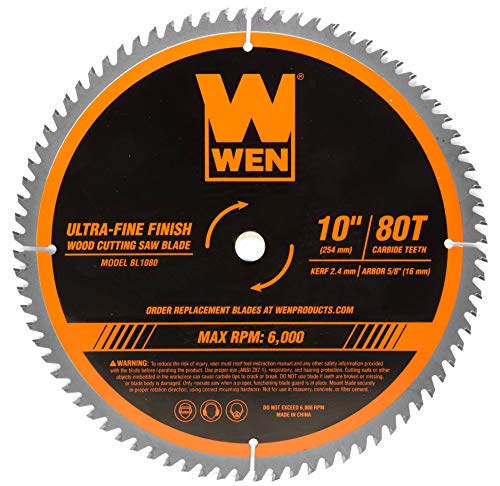
The WEN BL1080 is a 10-inch, 80-tooth carbide-tipped saw blade designed specifically for finish work on miter saws and table saws. It's built for woodworkers, DIY homeowners, contractors, and cabinet makers who demand clean, splinter-free cuts in hardwoods, softwoods, and plywood. Whether you're trimming baseboards, cutting crown molding, or making precise miter joints, this blade aims to deliver professional-grade results without breaking the bank.
In real-world use, the 80 teeth and thin 1/10-inch kerf work together to reduce tear-out and produce a smooth edge that often requires little sanding. The carbide tips stay sharp through extended use on materials like oak, maple, and pine. With a maximum rating of 6000 RPM, it handles fast cuts on most standard saws without bogging down. For workshop users focused on finish carpentry or fine woodworking projects, this blade offers noticeable improvements over general-purpose blades.
Build quality is solid for the price. The blade body is made from a silver-coated steel that resists corrosion, and the carbide teeth are securely brazed. While professional blades from premium brands may use thicker steel or more advanced coatings, the WEN BL1080 holds its own for light to moderate use. The 5/8-inch arbor fits most common saws, but if your saw uses a smaller arbor, you'll need a reducer ring (not included).
Storage and maintenance are straightforward. Keep the blade clean with resin remover and store it in a blade guard or case to protect the teeth. WEN does not include a storage case, so you may want to pick up a blade sleeve or keep it in the original packaging. The blade's lightweight design (just over 1.5 pounds) makes it easy to swap between saws without much hassle.
A realistic limitation is that the thin kerf isn't ideal for heavy rip cuts on thick stock. The blade can flex under pressure, leading to less accurate cuts or potential binding. It's best reserved for crosscutting, mitering, and finer ripping in materials up to about 1.5 inches thick. Additionally, since there are no user reviews yet, long-term durability is unproven, but WEN's reputation for value-oriented tools suggests it should hold up well for most hobbyists and DIY projects.
Overall, the WEN BL1080 is a smart buy for anyone who wants clean, finished cuts without spending a lot. It's especially suited for DIY woodworkers, garage workshop users, and contractors who do a lot of trim or cabinet work. For heavy-duty ripping or high-volume production, you may want a thicker kerf blade, but for everyday finish cuts, this blade delivers reliable performance at a great price.

Pros
- Exceptional build quality with premium walnut handle and traditional craftsmanship
- Taper ground design minimizes binding even in thick or green wood
- Comfortable ergonomic handle reduces hand fatigue during repeated cuts
- Accurate, straight cuts with minimal effort when used properly
Cons
- Premium pricing may be a barrier for casual or budget-conscious DIYers
- Not suitable for rip cutting; designed specifically for cross grain work
- Requires careful storage to protect the blade and handle from moisture or damage
The Disston D8 26-inch Professional Cross Cut Saw is a hand tool that brings together traditional design and modern precision. Built around a taper ground blade and a custom carved American Black Walnut handle, this saw is aimed at serious woodworkers, professional contractors, and dedicated DIY homeowners who value quality over cost. It is specifically designed for crosscutting operations, where clean, accurate cuts are essential for joinery and finishing work.
This saw performs best when used on dimensional lumber, hardwood boards, and plywood sheets. The taper ground blade is thinner at the back edge, which helps reduce friction and binding as you cut through the material. This feature is especially noticeable when sawing thicker stock or when working in humid conditions where wood tends to swell. Users can expect smooth, straight cuts with minimal wandering, thanks to the carefully set teeth and the carved tooth line that aids alignment.
Build quality is a standout aspect of this Disston model. The American Black Walnut handle is not only beautiful but also ergonomically shaped to fit comfortably in the hand. It offers a solid grip that reduces slipping even during extended use. The blade itself is made from high-carbon steel, heat treated for edge retention and durability. While the saw does not include a storage case, its compact dimensions (32 x 10 x 6.5 inches) make it easy to hang on a wall or store in a toolbox when kept dry and oiled occasionally.
One realistic limitation is the saw's single purpose as a cross cut tool. It is not intended for rip cuts or intricate curves, so woodworkers will need additional saws for those tasks. Additionally, the price point places it firmly in the premium category, which might deter casual users who only need an occasional cutting tool. Maintenance is straightforward: keep the blade clean and lightly oiled to prevent rust, and store it in a dry environment.
Overall, this Disston D8 cross cut saw is an excellent investment for anyone who regularly cuts wood by hand and demands precision and comfort. Professional carpenters, furniture makers, and serious hobbyists will appreciate the performance and heritage of this tool. For lighter tasks or budget-conscious shoppers, more affordable alternatives exist, but this saw delivers a level of quality that justifies its cost for those who use it frequently.

Pros
- Versatile 2-pack covers rough cuts and fine finishing without swapping blades
- Thin kerf design reduces strain on saw motors and improves cut control
- Tungsten carbide tips offer good durability for the price point
- Low-vibration operation thanks to stabilizer vents
- Compatible with most major brand 10-inch saws
Cons
- Thin kerf blades may deflect slightly in very thick or dense hardwoods
- Limited to 5/8" arbor saws; not for arbor sizes outside that standard
- Some users may prefer a full kerf blade for heavy-duty ripping in thick lumber
The Ryltanks 10-inch table saw blade 2-pack is a solid choice for anyone needing both a general-purpose ripping and crosscutting blade and a dedicated fine-finish blade. This set includes a 40-tooth blade for everyday cuts and a 60-tooth blade for smoother edges, making it a versatile addition to any workshop, garage, or job site. Both blades feature a 5/8-inch arbor and fit most popular table saws and miter saws from brands like DeWalt, Bosch, Makita, and Skil.
This combo is especially useful for DIY homeowners, woodworkers, and contractors who tackle a mix of rough framing and finish work. The 40-tooth blade handles ripping and crosscutting in hardwoods, softwoods, plywood, and OSB, while the 60-tooth blade delivers cleaner cuts in melamine, plywood, and hardwoods for projects like cabinets, furniture, and trim. The thin kerf design (0.098 inches) reduces the load on your saw motor, which is helpful for smaller saws or when cutting dense material, and it gives you more control over the cut.
In terms of performance, these blades use C3 grade tungsten carbide tips that hold up well against wear and maintain their sharpness through many cuts. The laser-cut stabilizer vents help keep vibration and noise low, which translates to smoother cuts and less fatigue during long sessions. Users report that the blades cut cleanly with minimal tear-out on plywood and melamine when using the 60-tooth blade, though the thin kerf can sometimes wander in very thick or knotty hardwoods if you push too hard.
Build quality is decent for the price. The carbide tips are securely brazed, and the blade body is flat and true out of the box. The thin kerf does mean the blades are more flexible than full-kerf models, so they may not be ideal for heavy-duty ripping in thick lumber day in and day out. However, for general workshop use, hobbyist projects, and light to medium contractor work, they perform well. Storage is simple since they come as a pair, and you can keep them in a blade case or drawer without taking up much space.
One realistic limitation is that the 5/8-inch arbor won't fit saws with different arbor sizes, so check your saw before buying. Also, while the thin kerf helps with power, it also means the blades remove less material, which can be an advantage or a disadvantage depending on your needs. For most users, this 2-pack offers great value and covers the majority of cutting tasks without needing to invest in separate blades for each job. If you're a DIYer or a professional looking for a cost-effective way to get both rough and finish cuts from one purchase, this set is worth considering.
The Ryltanks blades are constructed with C3 grade tungsten carbide tips that are brazed onto a hardened steel body. The carbide is designed to resist wear and maintain sharpness through repeated use. The blade body features laser-cut stabilizer vents that help reduce vibration and dissipate heat, which can extend blade life. The thin kerf design (0.098 inches) reduces cutting resistance but also makes the blade slightly more flexible than full-kerf models. Overall, the build quality is appropriate for the price point, offering good durability for DIY and light professional use.
In the workshop, this 2-pack covers a wide range of cutting tasks. The 40-tooth blade is ideal for ripping and crosscutting dimensional lumber, plywood, and OSB, while the 60-tooth blade excels at producing smooth edges on hardwoods, melamine, and plywood for finish work. The thin kerf design requires less power from the saw, which is beneficial when using a smaller table saw or miter saw. Users report clean cuts with minimal tear-out on plywood when using the 60-tooth blade. For heavy ripping in thick hardwoods, the thin kerf may deflect slightly, but for most projects, the blades perform reliably.
These blades feature a standard 5/8-inch arbor, making them compatible with the vast majority of 10-inch table saws and miter saws on the market. This includes popular models from DeWalt, Bosch, Evolution, Makita, Skil, and Metabo. They are not compatible with saws that use a different arbor size, such as 1-inch or 20mm arbors. Always verify your saw's arbor size before purchasing. The blades are rated for a maximum RPM of 6,000, which is suitable for most benchtop and stationary saws.

Pros
- Versatile blade selection covers most common cutting needs in wood, metal, and demolition
- Universal shank fits almost all reciprocating saws, offering broad compatibility
- Blades are made from durable materials that hold up well to regular use
- Compact storage case helps keep blades organized and prevents loss
- Good value for a comprehensive set, suitable for both DIYers and professionals
Cons
- Some users may find the included blades not as aggressive as specialized single-purpose blades for heavy demolition
- Storage case could be more robust for frequent jobsite transport
- Limited information on specific blade materials and tooth configurations may leave some users unsure of best use cases
If you are looking for a versatile set of reciprocating saw blades that can handle a variety of cutting tasks around the home, workshop, or jobsite, this kit from B0CSYHKQJW is worth a closer look. Designed to fit most major reciprocating saw brands, these blades are intended for cutting wood, metal, and demolition materials, making them a practical addition to any tool collection.
This blade set is well-suited for DIY homeowners tackling weekend projects, mechanics cutting through exhaust pipes or brackets, contractors performing rough-in work, and woodworkers needing quick cuts in lumber. The assortment includes blades with different tooth configurations, allowing you to switch between materials without needing to buy separate packs. For general renovation, construction, or even plumbing repairs, this set provides a solid starting point.
In terms of real-world performance, the blades are designed to deliver efficient cuts with minimal effort. The precision-ground teeth help maintain a straight cutting line, which is especially helpful when working with metal or thick wood. While they may not be as aggressive as specialized blades for heavy demolition, they hold up well for most common cutting tasks and offer a good balance between speed and blade life. Users can expect reliable cutting performance for jobs like pruning branches, cutting PVC pipe, or trimming lumber.
Build quality appears to be a focus here, with blades constructed from durable materials that resist wear and corrosion. The universal shank ensures a secure fit in most reciprocating saws, reducing blade wobble and improving cutting accuracy. The included storage case is a nice touch, keeping the blades organized and protected when not in use. It fits easily into a toolbox or can be stored on a shelf, making it convenient for both workshop and jobsite use.
One realistic limitation to consider is that the set may not include specialized blades for very heavy-duty demolition or for cutting extremely hard metals. Users who frequently tackle intense demolition work might prefer to supplement this set with a few heavy-duty blades. Additionally, the storage case, while functional, may not withstand rough handling on active construction sites as well as a more rugged case would.
Overall, this reciprocating saw blade set offers a practical and cost-effective solution for anyone who needs a versatile cutting tool kit. It is a smart choice for DIYers, mechanics, contractors, and workshop users who want a reliable assortment of blades that can handle a wide range of materials. For the price, it provides good value and is likely to meet the needs of most general cutting applications.

Pros
- Thin kerf design allows for faster cutting and less strain on the saw motor.
- 60 ATB teeth produce exceptionally smooth crosscuts on a variety of materials.
- Tungsten carbide tips offer long-lasting sharpness and durability.
- Compatible with many popular miter and table saw brands for broad usability.
- Affordable price point for a quality finish blade suitable for both DIY and professional use.
Cons
- Thin kerf blades may be more prone to deflection in thicker or harder materials during heavy use.
- Limited to crosscutting; not designed for ripping or heavy-duty construction cuts.
- Some users may find the 0.087-inch kerf too thin for certain saw models requiring standard kerf blades.
The FOXBC 10 Inch Thin Kerf Fine Finish Crosscut Table Saw Blade is a purpose-built accessory for woodworkers, DIY homeowners, contractors, and workshop enthusiasts seeking clean, precise crosscuts. With 60 tungsten carbide teeth arranged in an Alternate Top Bevel (ATB) grind, this blade is designed to slice through oak, pine, melamine, plywood, and moulding with minimal tear-out and a smooth edge.
This blade features a thin kerf of 0.087 inches, which means it removes less material per cut compared to standard kerf blades. That translates to faster cuts, less waste, and reduced demand on your saw's motor. For anyone using a 10-inch miter saw or table saw for frequent crosscutting, this can improve productivity and extend tool life. The plate is made from high-density tungsten carbide, which offers excellent wear resistance and maintains sharpness over many uses. According to the product description, the blade is engineered for low vibration and noise, which enhances control and comfort during extended sessions.
Compatibility is broad: it fits Dewalt DWE7491RS, DWS713, Skil MD6305-00, TS6307-00, SPT99-11, Metabo 10-inch table saws, and many other models. This makes it a versatile addition to a garage or workshop where you might switch between different saws. The black coating not only looks good but helps resist corrosion and reduces friction, keeping the blade cleaner for longer.
For woodworking projects like building cabinets, installing trim, or crafting furniture, this blade delivers the clean finish required without needing sanding or additional smoothing. It is also effective for crosscutting plywood and melamine, where chip-out can be a concern; the ATB geometry helps minimize it. Professionals who make precision cuts for moulding and finish work will appreciate the consistency.
One realistic limitation is that this is a dedicated crosscut blade—it is not meant for ripping or heavy-duty construction cuts. The thin kerf can also be more prone to deflection when cutting thick, dense hardwoods, so steady feed rates and proper saw alignment are advised. Additionally, some saws are designed for standard kerf blades; users should verify compatibility with their specific model, especially regarding arbor size (5/8 inch) and blade riving knife setups.
Overall, the FOXBC 10-inch thin kerf crosscut blade offers a solid value for anyone needing a reliable finish blade for miter and table saws. Its combination of thin kerf, ATB teeth, and durable carbide tips makes it a practical choice for workshops, garages, and job sites where clean crosscuts are the priority. With an accessible price point, it is a worthy addition to any tool collection focused on woodworking and fine finishing.
The FOXBC 10-inch thin kerf blade is constructed with high-density tungsten carbide tips brazed onto a hardened steel plate. The carbide is selected for toughness and wear resistance, which helps the blade stay sharp longer than standard steel blades. The thin kerf and plate dimensions (0.087-inch kerf, 0.039-inch plate) are precisely ground to minimize runout and wobble. The black coating adds a layer of corrosion protection and reduces friction, which can help prevent pitch buildup. Based on the product description, the blade is balanced to reduce vibration, which contributes to smoother cuts and longer saw bearing life.
This FOXBC blade is designed for any 10-inch miter saw or table saw with a 5/8-inch arbor. It is explicitly compatible with Dewalt DWE7491RS, DWS713, Skil MD6305-00, TS6307-00, SPT99-11, Metabo 10-inch saws, and many others. The ATB tooth configuration works best for crosscutting solid wood, plywood, melamine, and hardwood. It is not recommended for ripping, dado cutting, or use on materials like metal or masonry. Always check your saw's arbor size, blade diameter limitations, and kerf clearance before use.
Frequently Asked Questions
How many teeth are ideal on a 10-inch saw blade for cross cutting?
A 10-inch blade with 60 to 80 carbide teeth provides the cleanest cross cuts in solid wood and sheet goods. High tooth counts make frequent, small nibbles through the wood grain, which prevents splintering along delicate edges. If you are setting up a miter saw for crown molding, an 80-tooth blade like the WEN BL1080 delivers ready-to-finish miters without needing edge cleanup.
What tooth geometry works best for clean crosscuts?
Alternate Top Bevel tooth geometry performs best for crosscutting solid wood and composite boards. The alternating bevel angles knife through grain fibers from alternating sides, creating a clean score line on both edges of the cut. This shape minimizes tearout compared to flat-top grind teeth, which are intended primarily for ripping along the grain.
Can you crosscut lumber using a thin kerf blade?
Yes, thin kerf blades cut cleanly across wood grain while putting significantly less load on lower-horsepower motors. Measuring around 0.087 to 0.1 inches wide, blades like the FOXBC 10-inch model remove less material and reduce feed resistance. They work exceptionally well on portable jobsite saws and compact miter saws where motor efficiency is essential.
How does a crosscut hand saw differ from a circular crosscut blade?
A traditional crosscut hand saw features knife-edged teeth angled backward to slice fibers by hand, whereas circular blades rely on rotating carbide tips powered by a motor. Saws like the Disston 26-inch walnut handled hand saw use taper-ground steel to prevent binding in deep timber cuts without requiring electricity. They provide exceptional tactile control for fine furniture joinery and quiet workshop cutting.
Will a metal-cutting blade work for woodworking crosscuts?
No, blades engineered for mild steel should never be used for cutting lumber or general woodworking. Cold-cut metal blades, like the Evolution Power Tools 14BLADEST, feature specific carbide formulations and tooth pitch designed strictly for low-RPM ferrous metal chop saws. For building outdoor structures with wood or prepping materials with a saw for cutting fence panels, always select a dedicated woodworking crosscut blade.
Why is arbor size critical when selecting a replacement crosscut blade?
The blade arbor hole must match your saw spindle diameter precisely to prevent dangerous wobble and inaccurate cuts. Most standard 10-inch table saws and miter saws use a 5/8-inch arbor, whereas larger 14-inch chop saws often require a 1-inch bore. Installing a mismatched arbor size without a properly rated adapter ring compromises tool safety and blade balance.





Write Your Review
No reviews yet. Be the first to share your experience!