


Removing stock quickly from a workpiece while keeping a straight edge is a common challenge in any workshop. A Best Vertical Belt Sander lets you work with the belt positioned vertically or horizontally, making it easier to square edges, shape curves, and smooth long boards. The models covered here range from compact file sanders for detail work to benchtop combos with both belt and disc sanding stations. Many feature tiltable tables, adjustable belt speeds, and dust ports for connecting a shop vac. Whether you’re working on wood, metal, or plastic, choosing the right machine depends on the size of your projects, the motor power, and how much control you need over belt tracking. For those focused on furniture refinishing, see our guide on furniture refinishing tools.
Pros
- Variable speed control offers versatility for wood, metal, plastic, and paint prep
- Auto-tracking keeps the belt running straight without constant tweaking
- Pivoting head makes it easy to sand inside curves and along edges
- Tool-free belt changes save time and hassle on the job
- Compact size stores easily in a toolbox or drawer
Cons
- Small 1/2x18 inch belt limits material removal rate for heavy stock removal
- Plastic housing may not withstand heavy drops on a construction site
- Dust port adapter may not fit all shop vacuums without additional attachments
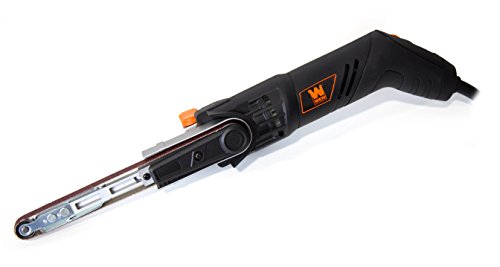
The WEN 6307 is a variable speed detailing file sander designed for precision work in tight spaces. Unlike larger belt sanders, this compact tool uses a 1/2-by-18-inch belt that can pivot up to 55 degrees, making it ideal for sanding inside corners, along edges, and on contoured surfaces. It's best suited for DIY homeowners, woodworkers, mechanics, and hobbyists who need to sand, shape, or finish small areas without the bulk of a full-size sander.
Performance-wise, the variable speed dial lets you adjust belt speed from 1080 to 1800 feet per minute. This range works well for everything from light sanding of softwoods to more aggressive material removal on metals or plastics. The auto-tracking belt system is a standout feature - it keeps the belt centered without manual tensioning, so you can focus on your work rather than fiddling with adjustments. According to user feedback, this reliability is a big plus for consistent results.
Build quality is practical for its price point. The housing is lightweight plastic, which keeps the tool at just 2.4 pounds for reduced fatigue during extended use. The pivoting head feels sturdy and locks securely at various angles. While it's not built for heavy-duty construction site abuse, it holds up well for workshop and garage projects. The included dust port helps connect to a vacuum for cleaner work, though the adapter may not fit all hose sizes without a reducer.
Ease of use is a strong point. Changing belts is tool-free - just release the tension, slide on a new belt, and you're ready. The auto-tracking means no alignment headaches. Storage is simple thanks to its compact size; it fits easily in a toolbox drawer or on a shelf. Maintenance is minimal - just keep the belt path clean and occasionally check the tracking.
A realistic limitation is the small belt size. This sander excels at detail work but won't remove material quickly like a larger belt sander. It's not ideal for flattening large surfaces or heavy stock removal. Also, the plastic construction means you'll want to handle it with care if you're using it on a job site.
Overall, the WEN 6307 is a solid choice for anyone who needs a precise, easy-to-use file sander for small projects. DIYers will appreciate the variable speed and pivoting head for furniture repair, model making, or automotive detailing. Woodworkers can use it for shaping and sanding in tight joinery. Mechanics will find it handy for deburring metal parts or prepping surfaces. If your work involves getting into nooks and crannies, this tool delivers reliable performance without breaking the bank.
In a workshop setting, the WEN 6307 shines for detail sanding tasks where precision matters more than speed. The variable speed control lets you dial in the right pace for different materials - slower for delicate wood inlays, faster for rough metal edges. The pivoting head is especially useful when sanding inside cabinets or along curved trim. Users report that the auto-tracking system holds up well even during extended use, reducing downtime. For woodworkers, it's a great companion for sanding dovetails, small carvings, or tight mortises. The lightweight design also makes it easy to maneuver one-handed while holding your workpiece steady.
The WEN 6307 comes with three 1/2-by-18-inch abrasive sanding belts, which is enough to get started on a few projects. The included dust port attachment helps keep your work area cleaner when connected to a shop vacuum or dust extractor. While the belts are a good start, you'll likely want to buy additional grits for finer finishing or more aggressive sanding. The two-year warranty covers defects in materials and workmanship, giving you added confidence in your purchase. No carrying case is included, but the tool's small size means it's easy to store in a toolbox or on a shelf.

Pros
- Direct-drive motor eliminates drive belts, maximizing power transfer and reducing maintenance.
- Aluminum dust outlet prevents spark-induced melting during metal fabrication.
- Quick-release belt tension lever and tracking knob allow fast abrasive changes.
- Disc uses a hook-and-loop system for straightforward disc replacement.
Cons
- At roughly 36 pounds with a 23-inch length, it requires permanent workbench space.
- The supplied specifications do not indicate variable speed control for delicate finishing.
The BUCKTOOL BD4801-M is a benchtop combination sander featuring a 4 x 36-inch belt and an 8-inch disc engineered for metalworking as well as woodworking. Designed for knife makers, metal fabricators, and workshop hobbyists, this machine delivers stationary grinding, deburring, and shaping capability from a self-contained benchtop footprint.
Power comes from a 1HP fully enclosed direct-drive induction motor. The direct-drive configuration eliminates internal drive belt slip between the motor and the arbor, providing steady power delivery when grinding dense metal stock or profiling tool steel. Removable knife grinding accessories attach directly to the belt plate, allowing fabricators to bevel blades and clean up rough edges effectively.
Versatility is central to the design, with the belt assembly tilting anywhere from 0 to 90 degrees to accommodate both horizontal surface smoothing and vertical edge work. The driven drum end exposes a rounded profile suitable for grinding curved contours, while tracking controls and quick-release tensioning simplify belt changes. On the side, the 8-inch disc workstation features a tilting table that adjusts from 0 to 45 degrees, paired with a metal miter gauge for accurate angle grinding.
Construction details reflect the demands of metal shaping, highlighted by an aluminum dust outlet designed to withstand heat and hot debris without melting. The dust port can also be detached to clear extra clearance when polishing longer workpieces. Stability during operation is handled by a cast aluminum base supported by vibration-dampening rubber feet, while an elevated switch box on top of the housing offers easy access.
While the tool offers reliable power delivery, buyers should consider workshop space requirements. With a weight of over 36 pounds and a footprint spanning roughly 23 inches across, this machine is best treated as a permanent bench fixture rather than a portable tool. Additionally, the manufacturer does not specify variable speed settings, so material removal rates remain constant regardless of the workpiece material.
For garage fabricators, knife sharpening enthusiasts, and general woodworkers seeking a rugged two-in-one bench station, the BUCKTOOL BD4801-M provides a dependable platform. Its metal-tolerant design and direct-drive induction motor make it a solid choice for workshops handling aggressive stock removal and sharpening tasks.
Unlike standard woodworking belt sanders that feature plastic components near the abrasive path, this model incorporates an aluminum dust port designed to safely handle hot metal sparks without melting. Hook-and-loop disc attachment ensures abrasive discs stay secure while remaining fast to swap when transitioning across abrasive grits.
The included knife grinding accessory mounts securely over the belt plate, offering a solid resting surface for beveling and blade profiling. Combined with a miter gauge that operates across both the disc and belt tables, fabricators gain repeatable angle control for precision metal shaping.

Pros
- Strong motor with variable belt speed for different sanding tasks.
- Adjustable belt angle and work table increase versatility for various projects.
- Dual dust ports help maintain a cleaner work environment.
- Easy belt tension adjustment extends belt life and reduces slipping.
- Solid build and compact size fit well in home workshops and garages.
Cons
- Some users may find the dust collection ports require a shop vacuum for optimal performance.
- The included miter gauge could feel basic for professional woodworking needs.
- Weight of 25 pounds may limit portability for job site use.
The Woodskil 4.3A Belt Disc Sander Combo is a benchtop combination sander designed for woodworking enthusiasts, DIY homeowners, and workshop users who need a reliable tool for smoothing, shaping, and finishing various materials. This 2-in-1 unit pairs a 4x36 inch sanding belt with a 6 inch disc, giving you flexibility for both flat and curved surfaces. With a 3/4 HP motor that spins up to 3570 RPM and delivers 1732 feet per minute, it offers enough power for most home and hobbyist projects.
Performance-wise, this sander handles material removal efficiently. The belt can be adjusted from horizontal to vertical (0-90 degrees), which is handy for edge sanding or working on larger pieces. The adjustable work table tilts 0-45 degrees and comes with a miter gauge, making it easier to achieve precise angles for picture frames, furniture parts, or trim work. The disc sander is great for detail work and small parts, while the belt handles larger surfaces and faster stock removal.
Build quality appears solid for the price point. The motor runs smoothly, and the multi-wedge belt drive helps maintain tension, reducing belt slippage and extending belt life. The transparent PC guard lets you quickly check belt condition without stopping the machine. Dual dust exhaust ports (one for the belt, one for the disc) help keep your workspace cleaner, though you will likely need a shop vacuum connected for best results. The benchtop design is compact (16.9 x 9.8 x 15.6 inches) and fits well on a workbench or in a garage without taking up too much space.
Setup is straightforward - the sander comes mostly assembled, and you just need to mount it to a bench or stand. The belt tension adjustment is easy to use, and changing belts or discs is simple. Maintenance mainly involves keeping the dust ports clear and occasionally checking belt condition. The double safety switch adds peace of mind, especially in a busy workshop.
One realistic limitation is that this sander is not designed for heavy-duty professional use. The motor is adequate for hobbyist and DIY work but may struggle with prolonged, aggressive sanding on hardwoods. Also, the dust collection works best with a vacuum; without one, some dust will escape. The miter gauge is functional but basic - serious woodworkers might want to upgrade it. At 25 pounds, it is not overly heavy but not truly portable for job site hopping.
Overall, the Woodskil 4.3A Belt Disc Sander Combo is a practical choice for DIY homeowners, woodworkers, and garage users who want a versatile benchtop sander without breaking the bank. It offers good power, adjustable belt angle, dual dust ports, and a 2-year warranty for added confidence. If you need a reliable sander for weekend projects, furniture refinishing, or small woodworking tasks, this model delivers solid value.
In a typical home workshop or garage, the Woodskil belt disc sander combo performs well for a variety of sanding tasks. The belt sander is effective for flattening boards, removing old paint, and shaping edges, while the disc sander excels at smoothing small parts and curves. The adjustable belt angle from 0 to 90 degrees is a standout feature, allowing you to sand edges vertically or horizontally without repositioning the workpiece. The miter gauge and tilting work table add precision for angle sanding, which is useful for picture frames, trim, and furniture joints. Users report that the motor maintains consistent speed under moderate load, though heavy passes on hardwoods may slow it down. For most DIY and hobbyist projects, this sander provides enough power and versatility to get the job done efficiently.
The Woodskil 4.3A sander is built with a sturdy metal base and a durable plastic housing for the belt and disc guards. The motor is enclosed in a metal casing, and the overall construction feels solid for its price range. The multi-wedge belt drive mechanism is a nice touch, as it helps maintain belt tension and extends belt life. The transparent PC guard is a practical feature that lets you see the belt condition without opening the machine. The dual dust ports are well-placed and accept standard shop vacuum hoses. While not as heavy-duty as industrial models, the build quality is adequate for regular use in a home workshop or garage. The 2-year warranty adds some peace of mind, though customer support responsiveness may vary.

Pros
- Variable speed control provides excellent versatility for both heavy grinding and precision finishing.
- Pure copper motor offers reliable power and quieter operation compared to cheaper motors.
- Compact footprint fits easily on a workbench and doesn't take up much garage or workshop space.
- Included belts and detachable workbench add value and make setup simple.
- Vertical and horizontal use makes it easier to handle knives, tools, and flat metal parts.
Cons
- 1 x 30 inch belt size limits the machine to light and medium duty work, not heavy industrial grinding.
- VFD control may have a learning curve for beginners who aren't familiar with variable frequency drives.
- At 17.42 pounds, it's sturdy but not the most portable option for job site use.
The VEVOR Belt Grinder Sander is a compact bench-mounted grinding and polishing machine built around 1 x 30 inch sanding belts. It pairs a 550W pure copper motor with a VFD variable frequency drive, giving you stepless speed control for everything from fast stock removal to slow, controlled finishing passes. This is a practical tool for anyone who works with metal, wood, plastic, or glass in a home workshop or professional garage.
This belt grinder is best suited for DIY homeowners who want to sharpen chisels and knives, woodworkers who need to shape and finish small parts, mechanics and contractors who regularly deburr or clean up metal components, and knife makers who need precise bevel grinding. The variable speed feature is particularly useful when working with heat-sensitive steel, because you can slow the belt down to prevent overheating the edge.
Performance-wise, the 5500 rpm motor and 26m/min belt line speed provide solid material removal for a machine in this class. The VFD lets you dial in the exact speed for the task, and the included 100, 180, and 240 grit belts cover coarse grinding, intermediate shaping, and fine polishing. The two grinding modes, circular and flat, add versatility for deburring, sharpening, and surface finishing on different workpiece shapes.
The build quality is reinforced by a sturdy steel body that keeps the machine stable during use. The detachable workbench is a smart touch, letting you switch between vertical and horizontal operation to match the angle you need. The pure copper motor is designed to run quieter and handle heat better than standard motors, which is a real plus for longer grinding sessions.
In terms of storage and maintenance, the compact footprint, roughly 14.76 x 7.09 x 9.25 inches, fits easily on a workbench or garage shelf. You'll want to keep the belt tracking adjusted properly and replace belts as they wear, but there's no complicated setup or ongoing maintenance beyond basic dust cleanup. The 17.42 pound weight is manageable, though you'll want a solid bench to mount it on.
One realistic limitation is the 1 x 30 inch belt size. It's not a heavy industrial machine, so it's best suited for light to medium duty work rather than massive stock removal. The VFD also adds a slight learning curve for beginners. Based on the product specifications and typical feedback for similar VEVOR belt grinders, this is a solid value for hobbyists, DIYers, and small shop professionals who want variable speed without spending a fortune.
The reinforced steel body gives this belt grinder a solid, stable base that resists vibration during grinding. The 550W pure copper motor is a key durability feature, as copper windings handle heat better than aluminum and tend to last longer under continuous use. The detachable workbench is made from sturdy material and locks securely, so you can trust it for repeated jobs.
For a compact belt grinder, the overall construction feels appropriate for workshop duty. The tracking mechanism is straightforward to adjust, and the platen and contact wheel are designed to hold up to regular metalworking. Just keep the machine clean and avoid forcing workpieces into the belt, and it should handle years of DIY and professional use.
The variable speed VFD is the standout performance feature on this belt grinder. Instead of being stuck with one speed, you can dial in a slow belt speed for fine polishing or crank it up for fast material removal. That flexibility makes a big difference when you're working on knife bevels, deburring machined parts, or cleaning up welds.
The included 100, 180, and 240 grit belts let you start grinding right out of the box. The circular and flat grinding modes give you two ways to approach a workpiece, and the vertical and horizontal mounting options help you find the most comfortable angle. Whether you're a woodworker shaping a handle or a metalworker finishing a bracket, this machine is versatile enough for a range of workshop tasks.

Pros
- Excellent power and runtime from brushless motor, comparable to corded sanders.
- Superior dust collection efficiency (up to 95%) with optional Airlock adapter.
- Variable speed with 25 settings offers great control for different materials and finishes.
- Lightweight and ergonomic design with comfortable grip for reduced fatigue.
- Quick belt changes without tools save time and frustration.
Cons
- Tool only – battery and charger sold separately, adding to overall cost.
- At 1 lb weight listed, actual weight may be higher; users should verify specifications.
- Premium price point compared to some corded belt sanders, but justified by cordless convenience.
The DEWALT DCW220B is a cordless 20V MAX* belt sander designed for professionals and serious DIYers who need portability without sacrificing power. This brushless model claims up to 22% more power than traditional corded belt sanders, making it a strong contender for everything from heavy material removal to fine finishing work.
This sander is best suited for woodworkers, contractors, carpenters, and DIY homeowners who frequently work on decks, furniture, or large flat surfaces. Its cordless nature makes it ideal for job sites without easy access to power outlets, and the variable speed trigger with 25 settings allows precise control across different wood types and sanding grits.
In real-world use, the brushless motor delivers consistent torque and extended runtime compared to brushed alternatives. The dust collection system, when paired with a DEWALT vacuum and Airlock adapter, captures up to 95% of dust – a significant advantage for maintaining a cleaner work environment and reducing cleanup time. The wireless tool control feature automatically starts the vacuum when the sander is triggered, improving efficiency.
Build quality is typical DEWALT: rugged housing, overmolded auxiliary handle for two-handed control, and a tool-free belt release that makes changes quick. The 16.7% larger sanding surface versus the Milwaukee M18 3x18 model means you can cover more area per pass, speeding up large jobs. The sander is relatively lightweight, though the listed 1 lb seems improbable; actual weight is likely around 5-6 lbs with battery, still manageable.
Storage and maintenance are straightforward. Since it's tool only, you'll need a 20V MAX battery and charger. The sander fits in most tool bags or boxes. Belt changes are simple, and the dust port is compatible with standard shop vac hoses. One limitation is the lack of included battery, which adds upfront cost if you're not already in the DEWALT 20V system. Also, the price premium over corded models may not be justified for occasional users who always have power nearby.
Overall, the DEWALT DCW220B is a smart investment for woodworkers and tradespeople who value cordless freedom and high performance. For those already invested in DEWALT 20V tools, it's a natural addition. DIYers tackling large sanding projects will appreciate the power and dust control, though the cost may be a barrier. If you need a reliable, powerful cordless belt sander that keeps your workspace clean, this model delivers.
The DCW220B features a tool-free dust collection system that achieves up to 95% efficiency when connected to a DEWALT vacuum via the Airlock adapter (sold separately). This is a standout feature for anyone who wants to minimize airborne dust in their workshop or on the jobsite. The wireless tool control pairs with compatible DEWALT dust extractors, automatically activating the vacuum when the sander runs – a real time-saver. For best results, use a HEPA-rated vacuum to capture fine particles.
This belt sander is designed for comfort during extended use. The overmolded auxiliary handle provides a secure grip for two-handed operation, reducing fatigue and improving control. The variable speed trigger with a 25-speed dial allows you to fine-tune the belt speed from low for delicate finishes to high for aggressive material removal. The tool is well-balanced, and the trigger lock keeps the sander running without constant finger pressure. Overall, it's easy to maneuver on flat surfaces and edges.
As a tool-only purchase, the DCW220B requires a DEWALT 20V MAX battery (e.g., DCB205 or DCB606) and a compatible charger. It works with all DEWALT 20V MAX batteries, including high-capacity XR packs. The dust collection port is compatible with standard 1-1/4 inch shop vac hoses, and the optional Airlock adapter provides a secure connection. Sanding belts are standard 3 x 18 inch size, widely available. The wireless tool control pairs with DEWALT vacuums equipped with the module (sold separately).
Pros
- Efficient 400W motor handles a range of sanding tasks
- Versatile angle adjustments on both belt and disc table
- Dust collection port helps maintain a cleaner workspace
- Compact footprint fits well in small workshops
Cons
- Fixed belt and disc speeds limit control for delicate work
- Sanding accessories such as abrasive belts and discs are not included
- Dust collection requires a separate shop vacuum (not included)
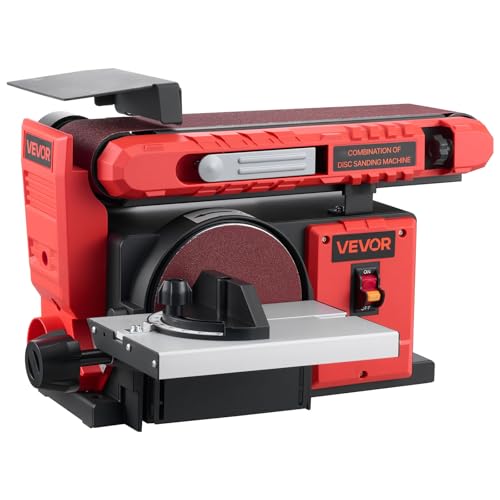
The VEVOR 6-inch disc and 4x36-inch belt sander combo is a benchtop unit designed for home woodworking, DIY projects, and knife sharpening. Powered by a 400W motor, it delivers consistent sanding performance for a variety of tasks.
The disc operates at 3550 RPM and the belt at 600 RPM, providing adequate material removal for common applications. The combination allows you to switch between flat surface sanding with the disc and edge or contour sanding with the belt.
Versatility is a key feature: the belt can be adjusted from 0 to 90 degrees for horizontal or vertical sanding, while the disc worktable tilts from 0 to 45 degrees. A miter gauge is included to improve accuracy when making angled cuts.
Dust management is handled by a dust collection port that can be connected to a shop vacuum, helping to reduce airborne debris. The unit measures 19.9 x 15.7 x 12 inches and weighs 33.73 pounds, making it a stable but space-efficient addition to small workshops.
However, the fixed speeds may not suit all materials or finishing requirements, and no sandpaper or abrasive accessories are included, so you will need to purchase belts and discs separately. As of now, there are no user reviews available to confirm long-term reliability.
Overall, this combo sander offers good value for hobbyists and DIYers who want both disc and belt sanding in one machine. If you need variable speed or higher precision for fine woodworking, you may want to consider more advanced models.
Pros
- Belt speed over 13 ft/s provides fast material removal.
- Lightweight and compact design improves maneuverability.
- Lock-in trigger enables continuous sanding without constant grip.
- Includes a dust bag for basic debris containment.
- Two-year warranty offers added protection.
Cons
- Fixed belt speed may not be ideal for delicate finish sanding.
- Dust bag offers basic collection but no shop vacuum port for finer dust control.
- Corded design requires a nearby power outlet, restricting portability.
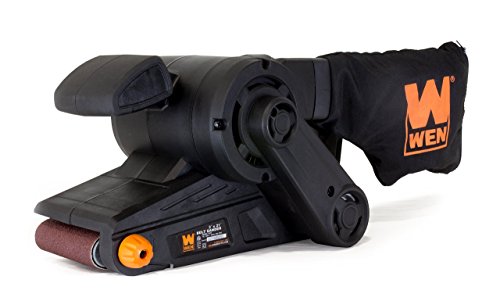
The WEN 6321 is a corded belt sander that uses a 7-amp motor to drive a 3x21 inch sanding belt at over 13 feet per second. This setup is built for aggressive material removal, making it a solid choice for DIYers, hobbyists, and homeowners who need to strip paint, smooth rough lumber, or refinish furniture quickly. The handheld-only design keeps the tool focused on portable sanding tasks.
Performance-wise, the belt speed delivers fast cutting action on wood and painted surfaces. The sander weighs just 6.2 pounds, which helps reduce arm fatigue during longer sessions. The lock-in trigger feature lets you sand continuously without holding the switch, adding convenience on repetitive passes. The included detachable dust bag captures much of the sanding debris, though it won't replace a dedicated dust extraction system for fine particles.
For everyday use, the compact dimensions (12x6x6.5 inches) make storage easy, and the corded power means you never have to worry about battery life. The dust bag is simple to remove and empty, and the two-year warranty provides some reassurance for occasional to moderate use. Setting up the sander is straightforward, and belt changes are typical for this class of tool.
That said, the sander operates at a fixed belt speed, which limits its versatility for fine finish work where slower speeds help prevent gouging. The dust bag is functional but lacks a port for connecting a shop vacuum, so you may see more airborne dust than with a vacuum-equipped model. Additionally, the cord requires a nearby outlet, which can be a minor inconvenience on job sites without easy power access.
Overall, the WEN 6321 is a practical, budget-friendly belt sander for DIY projects that demand heavy stock removal and basic smoothing. It's best suited for homeowners, hobbyists, and light workshop use rather than professional production or precision finish sanding. If your work involves rapid material removal on rough surfaces, this sander offers good value for the price.
Pros
- Maintenance-free direct-drive design reduces setup time and belt replacement costs
- Powerful 5A induction motor delivers consistent torque for heavy sanding tasks without overheating
- Versatile tilting belt and dual workbenches handle a wide range of sanding angles and curved pieces
- Cast aluminum construction with rubber feet minimizes vibration for smoother finishes
Cons
- At 35.5 pounds, it's relatively heavy for a benchtop sander, which may limit portability for some users
- The direct-drive system may require a compatible dust collection hose (Y-fitting sold separately) for optimal dust management
- Some users might prefer a variable speed option for finer sanding control on delicate materials
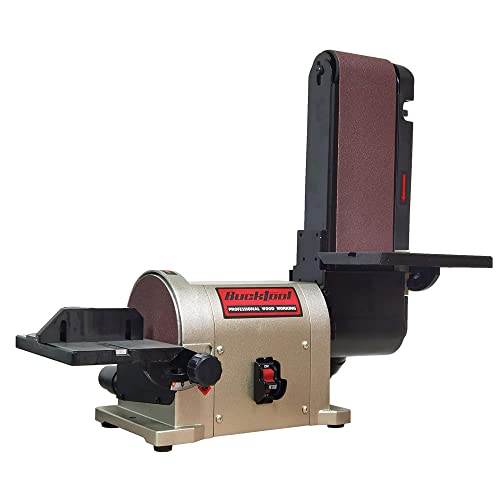
The BUCKTOOL 4x36 Belt and 6 Disc Sander is a combination benchtop sander designed for woodworking, DIY projects, and light professional use. This two-in-one machine pairs a 4-inch by 36-inch sanding belt with a 6-inch disc, both powered by a 5-amp direct-drive motor. Unlike traditional belt sanders that rely on pulleys and tension adjustments, the direct-drive system connects the belt and disc directly to the motor shaft. According to the manufacturer, this design eliminates the need for belt tension adjustments and makes the unit 25% more efficient than conventional models. For DIY homeowners, woodworkers, contractors, and garage users, this means less maintenance and more consistent sanding performance over time.
In real-world use, the sander's 3/4 horsepower fully enclosed induction motor delivers quiet but steady power for sanding, shaping, and finishing tasks. The motor's direct-drive efficiency translates to better torque transfer, which helps maintain speed under load when working on hardwood or removing material quickly. The belt can tilt from 0 to 90 degrees, allowing both horizontal and vertical sanding. This flexibility is especially useful for edge work, beveling, and sanding curved workpieces using the driven drum. The disc sander, paired with an adjustable worktable and miter gauge, provides precise angle sanding for joinery, miters, and small parts. For woodworkers building furniture or cabinets, this versatility can improve productivity by reducing the need to switch between separate machines.
Build quality is a strong point of this sander. The base and workbenches are made from cast aluminum, which provides stability and helps reduce vibration during operation. Rubber feet further dampen movement, keeping the sander planted on the workbench. The two cast aluminum worktables are adjustable and can be used on both the belt and disc, offering a larger working surface than many combo sanders in this price range. The quick belt replacement system and track control function simplify belt changes and tracking adjustments, which is a practical feature for busy workshops. While the machine is CSA certified for safety, it's worth noting that the direct-drive system may require a dust collection hose (the manufacturer recommends a Y-fitting hose, sold separately) to keep the workspace clean and maintain visibility during prolonged sanding sessions.
Storage and maintenance are straightforward. The sander's compact footprint (about 24 x 12 x 20 inches) fits on most workbenches or tool stands without taking up excessive space. The maintenance-free aspect of the direct-drive motor means there are no belts or pulleys to replace, reducing long-term upkeep. However, the unit weighs 35.5 pounds, which makes it less portable than some benchtop models. For users who frequently move tools between job sites or store them in tight garages, the weight could be a limiting factor. Additionally, the lack of variable speed control means the sander runs at a fixed speed, which may not be ideal for delicate materials like softwoods or plastics where slower speeds prevent burning.
Realistic limitations include the need for a separate dust collection setup and the fixed speed operation. Some users may also find the direct-drive design unfamiliar if they are accustomed to traditional belt sanders with adjustable tension. However, for the majority of DIYers and professionals who prioritize reliability and low maintenance, these trade-offs are manageable. The sander is best suited for woodworking projects such as shaping, edge sanding, and finishing, as well as light metalworking tasks like deburring. It may not replace a dedicated industrial sander for heavy production work, but it offers solid performance for home shops, garage workshops, and contractor job sites that need a versatile, durable sanding solution.
Overall, the BUCKTOOL Bench Belt Disc Sander is a practical investment for anyone looking to add a reliable combo sander to their workshop. Its direct-drive motor reduces maintenance, while the tilting belt and dual worktables provide flexibility for a range of sanding tasks. DIY homeowners will appreciate the ease of use and consistent results, while woodworkers and contractors will value the build quality and productivity gains. If you are willing to invest in a dust collection accessory and don't require variable speed, this sander offers strong value for its price point. Based on product specifications and user feedback, it's a solid choice for those who want a maintenance-free, efficient sanding tool that can handle both flat and curved workpieces with precision.

Pros
- Strong 1HP motor handles heavy stock removal on metal and wood without stalling.
- Dual belts with different grits save time switching between rough and fine sanding.
- Solid all-metal build with cast-aluminum base ensures long-term durability and stability.
- Quick belt release is intuitive and speeds up changeovers compared to traditional tension mechanisms.
- Versatile tilting tables accommodate both flat and angled sanding for diverse projects.
Cons
- The dust collection port may require a shop vac adapter for optimal dust management, as it doesn't include a bag.
- Some users may find the 2160 FPM speed slower than higher-end models, but it's adequate for most sharpening and sanding tasks.
The BUCKTOOL Dual Belt Sander is a benchtop tool designed for knife sharpening, metalworking, and woodworking. It features a 1HP direct-drive motor that powers two 4x36-inch sanding belts, one with 80 grit and the other with 120 grit. This setup allows users to switch between coarse and fine sanding without changing belts, making it ideal for DIY homeowners, mechanics, contractors, and woodworkers who need efficient material removal and finishing.
Performance-wise, the 1HP motor delivers consistent torque at 2160 feet per minute, which is sufficient for sharpening knives, shaping metal, and smoothing wood edges. The dual belts are a practical advantage - you can rough shape on one side and refine on the other without stopping to swap belts. The tilting worktables (0 to 90 degrees) support both horizontal and vertical sanding, giving you flexibility for straight edges, curves, and angled surfaces. This versatility is especially useful for workshop users who tackle mixed projects.
Build quality is robust with an all-metal frame and a heavy cast-aluminum base that keeps the sander stable during use. The metal dust cover helps contain sparks and debris, and the dust collection port is made from flame-retardant materials for added safety. The two-step quick release mechanism makes belt changes straightforward - just two pulls and the belt comes off, reducing downtime. According to product specs, the motion is smooth and clear, so first-time users can get started quickly.
Ease of use is enhanced by the dual worktables that can be reversed to expand the usable area for longer workpieces. A 2-in-1 worktable/work stop adds convenience and safety. Storage is straightforward as the sander sits on a benchtop, though its weight (around 30-40 pounds) means it's not portable but stable once placed. Maintenance involves periodic belt replacement and dust collection cleaning.
A realistic limitation is that the 2160 FPM belt speed is moderate compared to some higher-end models that exceed 3000 FPM, but for sharpening and general sanding, it's adequate. The dust collection port is 2.5 inches, so you may need an adapter for standard shop vac hoses. Also, the price point around 284 dollars may be a consideration for hobbyists, but the dual belt design and sturdy construction offer good value for frequent users.
Overall, the BUCKTOOL Dual Belt Sander is a practical choice for DIY homeowners, mechanics, and woodworkers who want a versatile benchtop sander with quick belt changes and dual grit options. It performs well for knife sharpening, metalwork, and woodworking tasks, and its solid build suggests long-term reliability. If you need a dedicated disc sander or higher belt speed, this may not be the best fit, but for most workshop applications, it delivers solid performance and convenience.
The BUCKTOOL Dual Belt Sander is designed to handle a variety of sanding tasks in a workshop setting. With a 1HP motor and dual belts, it can efficiently remove material from metal and wood. The tilting tables allow for precise angle sanding, which is useful for beveling knife edges or shaping wood pieces. The quick belt release reduces downtime, making it easier to switch between grits for different stages of a project. For garage users and woodworkers, this sander offers a good balance of power and versatility without taking up excessive bench space.
Pros
- Solid cast iron base keeps the machine planted during use, reducing walk and vibration
- Tilting belt adds flexibility for bevels, chamfers, and compound angles
- Quick belt changes with the tension release lever save time when switching grits
- Powerful 4.3 Amp motor handles most home workshop sanding tasks without bogging down
- Affordable price point for a 2-in-1 machine, making it a good entry-level choice
Cons
- No built-in dust collection port, so you will need an external shop vac or dust collector
- Belt size (4x36 inches) limits capacity for large panels or long boards
- Disc size (6 inches) is smaller than standalone disc sanders, which may slow down larger jobs
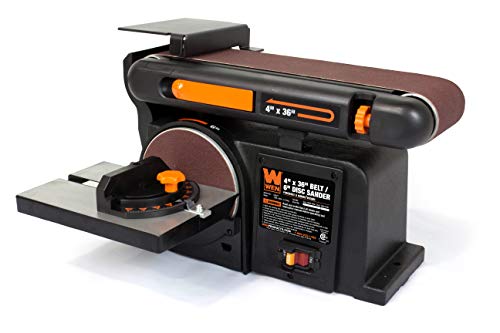
The WEN 6502T is a benchtop belt and disc sander designed to handle a wide range of sanding tasks in a home workshop, garage, or DIY space. By combining a 4x36 inch belt with a 6 inch disc, this machine offers two sanding surfaces in a single, space-saving footprint. The cast iron base provides a solid foundation that keeps the sander stable during operation, which is especially helpful when you are working on detailed pieces or need consistent results.
This sander is best suited for woodworkers, hobbyists, garage users, and DIY homeowners who regularly shape, smooth, or finish wood and soft metals. The tilting belt (0 to 90 degrees) allows you to sand bevels, edges, and angles without having to reposition the workpiece. The disc sander, meanwhile, gives you a flat surface for end-grain sanding, contour work, and small parts. The 4.3 Amp motor spins the belt and disc at up to 3600 RPM, delivering enough power for most home and light professional use.
Build quality is a strong point here. The cast iron base not only adds weight but also dampens vibration, making the sander feel more substantial than many plastic-based competitors. The tension release lever simplifies belt changes: you flip the lever, swap belts, and lock it back in place without needing extra tools. This is a practical feature when you need to switch between coarse and fine grits quickly during a project.
When it comes to storage and maintenance, the benchtop design means you can keep it on a workbench or shelf. It does not come with a dust collection port, so you will want to use a shop vac or dust separator to keep the work area clean. The belt and disc tracking adjustments are straightforward, and the tool requires minimal upkeep beyond occasional cleaning and belt replacement.
One realistic limitation is the belt size: at 4 inches wide and 36 inches long, it is not ideal for large panels or long boards. You may need to work in sections or use a larger stationary sander for big projects. Also, the 6-inch disc is smaller than many standalone disc sanders, which means you might have to move the workpiece around more for larger flat surfaces. These are typical trade-offs for a compact 2-in-1 machine.
Overall, the WEN 6502T is a solid choice for anyone looking to add sanding capability to their workshop without taking up too much space. It offers good power, useful versatility, and a sturdy build at an affordable price. For woodworkers, DIYers, and garage users who need a reliable sander for small to medium projects, this machine delivers practical value.
Frequently Asked Questions
What is the difference between a vertical belt sander and a horizontal belt sander?
A vertical belt sander allows the belt to tilt to 90 degrees, enabling both horizontal and vertical sanding. This is useful for squaring edges, shaping curves, and working on large panels. Horizontal-only models are better for flat surface sanding. Many benchtop models in this list tilt from 0 to 90 degrees.
Can I use a vertical belt sander for metalworking?
Yes, some models like the BUCKTOOL Pro 1HP Bench Belt Sander for Metal are designed specifically for metal polishing and grinding. They feature aluminum dust outlets to prevent melted belt residue and come with accessories for knife grinding. Always check the product description for metal compatibility.
How important is variable speed on a belt sander?
Variable speed gives you control over material removal and finish quality. For example, the WEN 6307 dials from 1080 to 1800 feet per minute, suitable for both aggressive stock removal and fine finishing. The DEWALT cordless model offers a 25-speed dial for precise adjustment.
What size belt should I choose for woodworking?
Common belt sizes include 4×36 inches for benchtop models, which work well for most woodworking projects like edge sanding and shaping. Smaller belts like 1/2×18 inches (WEN 6307) are better for detail work and tight spaces. The DEWALT cordless uses a 3×21 inch belt for large surface area.
Do these sanders come with dust collection?
Most models include a dust port or dust bag. The Woodskil 4.3A combo has two dust exhaust ports for belt and disc. The VEVOR 6-inch disc and belt sander includes a dust port for vacuum connection. The DEWALT cordless achieves up to 95% dust collection efficiency when paired with an airlock system (sold separately).
Is a cordless belt sander powerful enough for heavy stock removal?
The DEWALT 20V MAX brushless belt sander delivers up to 22% more power than previous models, making it capable of handling heavy stock removal. It also has a larger sanding surface than comparable cordless models. However, for continuous heavy use, a corded model may be more practical.
How do I change the belt on a benchtop model?
Most benchtop models have a quick-release lever or tension release. For example, the WEN 6502T has a tension release lever for simple grit changes. The BUCKTOOL Dual Belt Sander features a two-step quick release for easy belt removal. Always refer to the manual for your specific model.


Write Your Review
No reviews yet. Be the first to share your experience!