


When you need to sand in tight corners, remove rust from metal, or smooth welds, a standard palm sander often won’t fit. That’s where a Best Bandfile Belt Sander comes in. These compact tools use a narrow belt that can reach into awkward spots, making them useful for detail work on wood, metal, plastic, and more. The options range from affordable corded models like the WEN 6307 to cordless units that run on DeWalt or Milwaukee batteries, giving you flexibility based on your existing setup. Belt speed, rotating arm range, and variable speed control are key specs to consider when matching the tool to your project. For more on sanding in confined areas, see our guide on sanders for tight engine bay sanding.
Pros
- Variable speed control offers versatility for wood, metal, plastic, and paint prep
- Auto-tracking keeps the belt running straight without constant tweaking
- Pivoting head makes it easy to sand inside curves and along edges
- Tool-free belt changes save time and hassle on the job
- Compact size stores easily in a toolbox or drawer
Cons
- Small 1/2x18 inch belt limits material removal rate for heavy stock removal
- Plastic housing may not withstand heavy drops on a construction site
- Dust port adapter may not fit all shop vacuums without additional attachments
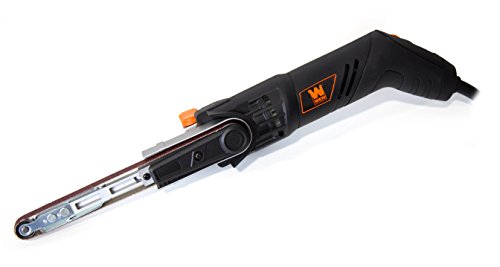
The WEN 6307 is a variable speed detailing file sander designed for precision work in tight spaces. Unlike larger belt sanders, this compact tool uses a 1/2-by-18-inch belt that can pivot up to 55 degrees, making it ideal for sanding inside corners, along edges, and on contoured surfaces. It's best suited for DIY homeowners, woodworkers, mechanics, and hobbyists who need to sand, shape, or finish small areas without the bulk of a full-size sander.
Performance-wise, the variable speed dial lets you adjust belt speed from 1080 to 1800 feet per minute. This range works well for everything from light sanding of softwoods to more aggressive material removal on metals or plastics. The auto-tracking belt system is a standout feature - it keeps the belt centered without manual tensioning, so you can focus on your work rather than fiddling with adjustments. According to user feedback, this reliability is a big plus for consistent results.
Build quality is practical for its price point. The housing is lightweight plastic, which keeps the tool at just 2.4 pounds for reduced fatigue during extended use. The pivoting head feels sturdy and locks securely at various angles. While it's not built for heavy-duty construction site abuse, it holds up well for workshop and garage projects. The included dust port helps connect to a vacuum for cleaner work, though the adapter may not fit all hose sizes without a reducer.
Ease of use is a strong point. Changing belts is tool-free - just release the tension, slide on a new belt, and you're ready. The auto-tracking means no alignment headaches. Storage is simple thanks to its compact size; it fits easily in a toolbox drawer or on a shelf. Maintenance is minimal - just keep the belt path clean and occasionally check the tracking.
A realistic limitation is the small belt size. This sander excels at detail work but won't remove material quickly like a larger belt sander. It's not ideal for flattening large surfaces or heavy stock removal. Also, the plastic construction means you'll want to handle it with care if you're using it on a job site.
Overall, the WEN 6307 is a solid choice for anyone who needs a precise, easy-to-use file sander for small projects. DIYers will appreciate the variable speed and pivoting head for furniture repair, model making, or automotive detailing. Woodworkers can use it for shaping and sanding in tight joinery. Mechanics will find it handy for deburring metal parts or prepping surfaces. If your work involves getting into nooks and crannies, this tool delivers reliable performance without breaking the bank.
In a workshop setting, the WEN 6307 shines for detail sanding tasks where precision matters more than speed. The variable speed control lets you dial in the right pace for different materials - slower for delicate wood inlays, faster for rough metal edges. The pivoting head is especially useful when sanding inside cabinets or along curved trim. Users report that the auto-tracking system holds up well even during extended use, reducing downtime. For woodworkers, it's a great companion for sanding dovetails, small carvings, or tight mortises. The lightweight design also makes it easy to maneuver one-handed while holding your workpiece steady.
The WEN 6307 comes with three 1/2-by-18-inch abrasive sanding belts, which is enough to get started on a few projects. The included dust port attachment helps keep your work area cleaner when connected to a shop vacuum or dust extractor. While the belts are a good start, you'll likely want to buy additional grits for finer finishing or more aggressive sanding. The two-year warranty covers defects in materials and workmanship, giving you added confidence in your purchase. No carrying case is included, but the tool's small size means it's easy to store in a toolbox or on a shelf.
Pros
- Runs on widely available DEWALT 20V MAX and Mellif 20V battery systems
- Uses standard 1/2 x 18-inch belts that are easy to source and replace without tools
- Lightweight 1.9-pound body and ambidextrous layout make maneuvering into narrow crevices straightforward
- Built-in low-voltage cutoff at 14.4V helps protect third-party batteries from damage
Cons
- Sold as a bare tool without an included battery or charging station
- Narrow 1/2-inch belt profile is engineered specifically for detail work rather than broad surface leveling
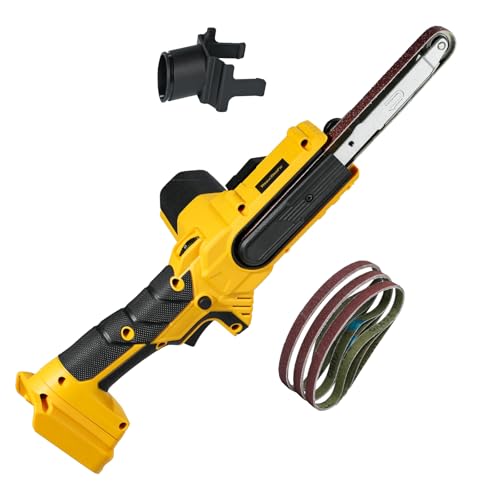
The MaxMore Cordless Detail Band File Sander is a specialized power file designed to tackle tight spots, complex contours, and recessed corners that standard orbital or sheet sanders cannot reach. Built to accept DEWALT 20V MAX and Mellif 20V lithium-ion batteries, this tool converts an existing cordless battery platform into a dedicated detail grinding and filing solution. It is aimed primarily at metal fabricators, automotive hobbyists, DIY renovators, and woodworkers who need rapid spot material removal without being tethered to an air compressor or power cord.
Material removal performance is driven by a motor capable of delivering belt speeds up to 2100 feet per minute. With six selectable speed settings, operators can throttle down for delicate woodworking projects and plastic trimming, or crank up the speed to grind down spot welds, deburr cut tubing, and strip heavy rust from automotive frames. To safeguard your battery packs, the unit includes integrated overcurrent protection and an automatic low-voltage shutoff that cuts power if system voltage falls below 14.4V, mitigating the risk of deep discharge damage.
Ergonomics play a central role in the utility of any band file, and this model keeps operator fatigue low by weighing in at just 1.9 pounds. Its balanced, slim profile measures 15.7 inches in length, permitting easy one-handed guidance from both left- and right-handed angles. A built-in safety lock switch minimizes the risk of accidental engagement when setting the tool down on a workbench. Replacing worn belts is equally straightforward, utilizing a tool-free tension release mechanism that gets you back to work in seconds without requiring hex keys.
Consumable management is practical and economical thanks to the standard 1/2-inch by 18-inch (13 by 457 mm) abrasive belt size. This footprint is readily available across numerous abrasive grades and grain types on the retail market, and the sander includes three initial belts in 40, 80, and 120 grits. Because this is a bare-tool configuration, you must have compatible 20V packs and a charger on hand. In addition, like most narrow file sanders, it lacks active vacuum collection, so using appropriate eye and respiratory protection in well-ventilated areas remains essential during operation.
For workshop enthusiasts and mobile repairers looking to grind narrow channels, smooth stubborn weld beads, or clean intricate ironwork, the MaxMore Cordless Detail Band File Sander offers a capable, cost-effective addition to an existing 20V battery kit. Its small form factor and dependable electronic protections make it a reliable companion for detailed surface preparation and metal shaping projects.

Pros
- Heavy-duty X-weight cloth backing holds up well during edge work and contouring
- Open-coat abrasive pattern reduces premature buildup on gummy or soft materials
- Broad compatibility with popular pneumatic, corded, and cordless bandfile models
- Generous 20-pack volume offers practical value for high-consumption grinding jobs
Cons
- Coarse 60-grit profile leaves rough scratch patterns requiring finer steps for smooth finishing
- Restricted strictly to sanders configured for 1/2-inch by 18-inch belt dimensions
The POWERTEC 401806 sanding belt pack delivers twenty replacement abrasive bands sized at 1/2 inch by 18 inches, tailored specifically for bandfile tools and mini belt sanders. Built with coarse 60-grit aluminum oxide abrasive, these belts are designed for aggressive material removal rather than final finishing. They offer a compact abrasive solution for reaching narrow recesses, cleaning up tight joints, and contouring curved edges where standard orbital or wide belt sanders cannot fit.
This package is well suited for metal fabricators, automotive restoration workers, welders, knife makers, and general woodworkers who frequently rely on power files. Whether stripping paint from irregular metal components, dressing welds, deburring cut tubing, or shaping knife bevels, the narrow footprint allows accurate targeting of localized work zones without marring surrounding areas.
Abrasive construction relies on industrial-grade aluminum oxide bonded to a strong X-weight cloth backing. The heavy backing helps prevent edge fraying and premature tearing when tracking across narrow contact wheels or pressing against sharp metal burrs. Additionally, the open-coat grain application leaves intentional spacing between abrasive particles, which helps shed swarf and minimize clogging when working on soft metals, resinous woods, or painted surfaces.
According to the manufacturer specifications, these belts work directly with standard 1/2 x 18-inch belt sanders and bandfiles. Supported models include the WEN 6307, Milwaukee M12 and M18 band files, DeWalt band files, and pneumatic tools such as the Astro 3037 air belt sander. Replacing belts on these tools is straightforward, sliding over the contact arm and tensioning mechanism quickly to minimize downtime in the shop.
A natural tradeoff with any 60-grit belt is the coarse scratch profile it produces. This grit is engineered for fast stock reduction, weld leveling, and heavy rust removal, meaning secondary sanding with finer grits will be necessary before applying stains, clear coats, or polished finishes. The belts are also dimensionally fixed, so users must verify that their specific tool accepts 1/2-inch by 18-inch abrasives rather than 3/8-inch or 1/4-inch configurations.
Overall, the POWERTEC 20-pack offers a practical and dependable abrasive replenishment for tradespeople and DIYers who operate detail bandfiles. For users needing rapid stock removal, edge deburring, or rust remediation in confined spots, this set provides an effective, hard-wearing consumable supply.
The 60-grit aluminum oxide formulation is rated for use across a wide variety of workshop materials, including hardwood, softwood, aluminum, fiberglass, rubber, plastic, and non-ferrous metals. The open-coat design helps reduce pitch and dust buildup when shaping soft or resinous materials.
These belts are built specifically for tools that accept 1/2-inch by 18-inch belts, including pneumatic file sanders, corded electric bandfiles, and cordless battery platforms like Milwaukee M12/M18 or DeWalt models. They will not fit standard 3x18 or 3x21 benchtop or handheld belt sanders.

Pros
- Assorted grits from coarse to fine cover all sanding stages without buying separate packs
- Durable X-weight cloth backing extends belt life compared to standard sandpaper sheets
- Wide compatibility with common mini belt sanders and band files for woodworking and metalwork
- Open-coat construction reduces loading and clogging, especially on soft materials like resin or aluminum
- Good value for the price, offering 50 belts at a budget-friendly cost
Cons
- Belts may wear faster on heavy metal or steel removal compared to ceramic or zirconia options
- 1/2 inch width limits use to small sanders and detail work; not suitable for large surface sanding
- No included storage case or organizer for the 50 belts, requiring separate storage
This POWERTEC 1/2 x 18 inch sanding belts 50-pack brings a versatile assortment of five grits - 40, 80, 120, 180, and 240 - each with ten belts. Designed for mini belt sanders and band files, these aluminum oxide belts work well on wood, metal, plastic, fiberglass, and more. They’re a practical choice for anyone needing precision sanding on small parts, curves, or tight spots.
Who should buy these? DIY homeowners working on furniture refinishing, woodworkers shaping small pieces, mechanics deburring auto parts, and contractors doing finish work on job sites. The 1/2 inch width is perfect for detail sanders, making it easy to reach into corners and along edges. Garage users and workshop owners will appreciate having a range of grits on hand for different tasks.
Performance-wise, the aluminum oxide grains provide consistent cutting throughout the belt’s life. The open-coat design helps prevent clogging with resin, paint, or soft metals - a common issue with cheaper belts. The X-weight cloth backing adds durability, though heavy use on hard metals may wear the belts faster than premium ceramic options. The grit range covers everything from heavy stock removal (40 grit) to initial smoothing (80), intermediate finishing (120/180), and fine finishing (240).
Build quality is solid for the price point. These belts feel well-made with even grain distribution and strong seams. They’re compatible with many common tools like the WEN 6307, Milwaukee M12 and M18 band files, Dewalt band file, and Astro 3037 air belt sander. Note that no storage case is included - you’ll need to sort and store the belts yourself to keep them organized.
Ease of use is straightforward: simply install on your compatible sander and start working. The assortment allows quick switching between grits without needing separate purchases. Maintenance involves keeping belts dry and avoiding excessive pressure during use. A realistic limitation is that the 1/2 inch width makes them less efficient for large flat surfaces compared to wider belt sanders.
Overall, this POWERTEC belt pack offers good value for DIYers and professionals who regularly use a mini belt sander or band file. Based on product specs and user feedback, they perform reliably for light to medium-duty sanding tasks. If you need a cost-effective way to cover multiple grits for detail work, this 50-pack is a practical addition to your workshop or garage.
In a typical workshop or garage setting, these 1/2 x 18 belts excel at detail sanding on projects like wooden chair legs, metal brackets, or plastic housings. The assortment lets you start with 80 grit to remove rough edges, then move to 180 for a smooth finish. The open-coat design is particularly helpful when sanding soft woods or aluminum that tends to load up standard belts.
Users who do auto body work or metal fabrication will find these belts useful for deburring cut edges and shaping small parts. The 40 grit handles aggressive material removal, while the 240 grit is fine enough for pre-polish finishing. Just keep in mind that for continuous heavy grinding on steel, you might want to step up to a ceramic belt for longer life.
These 1/2 x 18 inch belts fit a wide range of mini belt sanders and band files. Compatible models include the WEN 6307, Milwaukee M12 and M18 band files, Dewalt band file, Astro 3037 air belt sander, and many other standard 1/2 x 18 detail sanders. Always double-check your tool’s belt size before purchasing. The belts also work with benchtop sanders that accept this size, making them versatile for both portable and stationary use.

Pros
- Brushless motor delivers high surface speed up to 5,600 ft/min
- 104-degree rotating arm provides excellent access in tight clearances
- Tool-free belt replacement minimizes downtime during abrasive changes
- Dual speed adjustment using both a variable speed dial and trigger
Cons
- Sold as a bare tool without a battery or charger included
- The supplied specifications do not indicate onboard dust collection capabilities
The DEWALT DCM200B 20V MAX XR Bandfile is a specialized cordless belt sander designed for detailed material removal, weld cleanup, shaping, and surface preparation in confined work areas. Unlike wide flat-bed belt sanders, a bandfile utilizes a narrow contact arm that reaches into crevices, tight channels, and curved profiles where standard sanders cannot fit. This bare tool configuration is best suited for metal fabricators, automotive technicians, maintenance professionals, and advanced workshop users who already own compatible DEWALT 20V MAX batteries.
Material removal capability is driven by a brushless motor providing 700 max watts out (MWO) and surface speeds up to 5,600 ft/min. To maintain control across different materials and project phases, the sander incorporates both a variable speed dial and a responsive trigger. This dual-control setup lets operators match the belt speed to delicate finishing work or run at full throttle for rapid stock removal and deburring.
Maneuverability is a standout design priority on this model. The contact arm rotates up to 104 degrees, allowing the user to select an optimal working angle when maneuvering around framework, pipes, or vehicle components. The rotating arm also pivots into a more compact storage position when the job is done. A changeable contact arm system expands versatility across diverse project requirements, while the tool-free belt change mechanism simplifies swapping grits without hunting for wrenches.
At an overall weight of 3.66 pounds and measuring 11.69 by 6.65 by 5.55 inches, the tool remains reasonably lightweight and balanced for one- or two-handed handling. Because it operates on the cordless 20V MAX battery platform, it frees the operator from cumbersome air hoses, compressor maintenance, or restrictive power cords, delivering true jobsite portability.
The primary tradeoff is that the DCM200B is packaged as a bare tool only, meaning buyers must supply their own compatible DEWALT 20V MAX battery and charger. Additionally, bandfiles by nature produce directional debris without integrated vacuum extraction listed in the factory specifications. For craftspeople and trades workers looking for a versatile, narrow-profile sanding solution with cordless freedom, this bandfile provides capable speed, flexible arm adjustment, and dependable workshop utility.

Pros
- Powerful brushless motor provides strong performance for both metal and wood applications
- Variable speed control offers versatility for different materials and finishing needs
- Tool-free belt changes make swapping grits fast and convenient
- Rotating arm improves access in confined spaces like engine bays or cabinet interiors
- Lightweight and cordless for easy maneuverability and portability
Cons
- Battery and charger not included, requiring an existing DEWALT 20V system or separate purchase
- Limited to 0 customer reviews, making long-term reliability unknown
- Potential learning curve for users new to bandfile sanders or variable speed controls
The VERVEWAVE 20V Cordless Belt Sander is a practical addition to any workshop or garage, especially for those already invested in DEWALT's 20V battery system. This bandfile sander is designed for a range of tasks, from smoothing rough wood edges to grinding down metal welds. Its cordless nature means you can move freely around a project without hunting for an outlet, which is handy for on-site repairs or working in tight spaces.
This tool is well-suited for DIY homeowners tackling furniture refinishing, mechanics cleaning up engine components, woodworkers shaping intricate parts, and contractors performing touch-ups on the go. The brushless motor is a standout feature, offering efficient power delivery that helps maintain consistent speed under load. That's a real advantage when you're working on harder materials like steel or dense hardwoods, where a less capable sander might bog down.
Performance-wise, the six adjustable speed settings give you decent control over the sanding action. Lower speeds are useful for delicate work or softer materials, while higher speeds let you remove material quickly. The tool-free belt change is a nice convenience, letting you swap between coarse and fine grits without fumbling for a wrench. The rotating arm adds another layer of versatility, allowing you to angle the sanding head up to 170 degrees to reach into corners, along edges, or around pipes.
Build quality appears solid for its price point, with a gray housing that feels durable enough for regular use. The sander is lightweight, which reduces arm fatigue during extended sessions. Since it's compatible with DEWALT 20V MAX batteries, anyone with a DEWALT tool collection can share batteries and chargers, simplifying storage and reducing clutter. However, it's worth noting that the sander does not come with a battery or charger, so factor that into your purchase if you're starting from scratch.
Storage is straightforward thanks to its compact size, and the lack of a cord makes it easy to toss into a toolbox or hang on a pegboard. Maintenance is minimal, mostly involving keeping the belt tracking adjusted and cleaning dust from the vents. One realistic limitation is the lack of user reviews, so long-term durability and customer support experiences are unproven. Additionally, beginners might need a bit of practice to get comfortable with the variable speed and belt changes, but it's nothing a short learning curve won't solve.
Overall, the VERVEWAVE 20V Cordless Belt Sander offers good value for DIYers and professionals who need a portable sanding solution for metal and wood projects. It's a practical choice for garage workshops, job sites, and home repairs, especially if you already own DEWALT batteries. While it's not a heavy-duty industrial sander, it fills a useful niche for light to medium tasks where maneuverability and cordless convenience matter most.

Pros
- Variable speed dial provides excellent control for delicate or aggressive sanding tasks
- Pivoting arm design improves access to corners, curves, and tight spaces
- Compact and lightweight build reduces hand fatigue and improves maneuverability
- Works effectively on both wood and steel materials for multi-material versatility
Cons
- 3/8-inch belt width may be too narrow for large flat surfaces, requiring more passes
- Premium price point compared to basic belt sanders may not suit budget-conscious DIYers
- Limited availability of replacement belts in some local hardware stores
The Makita 9032 is a specialized belt sander that stands out for its compact size and adjustable sanding arm. Unlike traditional belt sanders that are bulkier and less maneuverable, this tool is designed for precision work on smaller surfaces and hard-to-reach areas. It's a versatile sander that handles both wood and steel, making it a practical addition for woodworkers, artists, sculptors, door hangers, and handymen who need a reliable tool for detailed sanding tasks.
This sander is best suited for DIY homeowners tackling furniture refinishing or trim work, as well as contractors and woodworkers who require fine control on curved or contoured pieces. The variable speed control dial allows you to adjust the belt speed from 980 to 5,600 feet per minute, which is a key feature for matching the sanding action to the material. Slower speeds work well for plastics or soft woods, while higher speeds handle steel and heavy material removal efficiently.
Performance-wise, the 21-inch belt length provides a decent sanding stroke of up to 4-5/16 inches, which helps speed up work on small to medium projects. The pivoting sanding arm is a standout feature - it rotates up to 100 degrees, giving you access to inside corners, door jambs, and sculpted surfaces that a standard sander simply cannot reach. This makes it a valuable tool for restoration work, custom cabinetry, and automotive bodywork where precision matters.
Build quality is typical of Makita tools: a durable housing, reliable motor, and well-placed controls. Weighing only 3.3 pounds, it's easy to handle for extended periods without fatigue. The sander accepts standard 3/8-inch by 21-inch belts, which are widely available from multiple brands. While the tool is built for longevity, the narrow belt width does limit its application on large flat surfaces - you'll need to make multiple passes or use a wider sander for big jobs.
Storage and maintenance are straightforward. The sander is compact enough to fit in a standard toolbox or on a workshop shelf. Belt changes are quick thanks to a simple tension lever. There's no included case, but the tool's size makes it easy to store. Keep the dust port clear for better performance and longer belt life.
Overall, the Makita 9032 is a niche but highly capable belt sander. It's not the best choice for large deck sanding or floor work, but for detailed sanding, contour work, and reaching tight spots, it excels. If you're a woodworker, sculptor, or handyman who frequently deals with curved surfaces or confined areas, this sander is a worthwhile investment. The variable speed and pivoting arm justify the premium price for those who need that level of control.

Pros
- Compact head and lightweight body make it easy to control in tight spaces.
- Cordless M12 design removes the hassle of cords and air hoses on job sites.
- Bare tool option saves money for users who already own M12 batteries.
- Standard belt size means replacement belts are easy to find.
Cons
- Requires a separate M12 battery and charger, which adds upfront cost for new users.
- Small 1/2 x 18 inch belt limits heavy material removal compared to larger belt sanders.
- Premium price point makes it a bigger investment for casual DIYers.
The Milwaukee M12 FUEL 1/2 x 18 inch Bandfile is a compact cordless belt sander built for detail work in tight spaces. It uses standard 1/2 x 18 inch sanding belts and runs on the M12 battery platform. This bare tool version comes without a battery or charger, so it's a smart choice for people who already own M12 batteries and want to expand their tool collection.
This tool is well suited for a wide range of users. DIY homeowners can use it for paint prep, rust removal, and small metal repairs around the house. Mechanics and automotive enthusiasts can reach into engine bays, around brackets, and along exhaust components. Contractors, electricians, and plumbers can use it for deburring, trimming, and finishing on job sites. Woodworkers and workshop users may appreciate its ability to sand curved edges, tight corners, and small profiles.
Performance-wise, the M12 FUEL brushless motor is built to keep the belt moving with consistent power. The lightweight 2.54 lb body helps with control, and the compact head gets into spots that full-size belt sanders can't reach. Whether you're blending a weld, cleaning up a cut, or smoothing a wooden edge, this bandfile gives you a more precise option than a grinder or a large sander. The adjustable speed settings let you match the belt speed to the material, which helps with both control and surface finish.
Build quality follows Milwaukee's typical M12 FUEL approach. The housing is designed for jobsite use, and the compact footprint makes it easy to store in a toolbox, service cart, or workshop drawer. Standard 1/2 x 18 inch belts are easy to find, and changing belts is straightforward. Maintenance is minimal, but keeping the belt path clear of dust and checking the drive roller now and then will help keep the tool running smoothly.
There are a few realistic limitations. Because it's a bare tool, you need an M12 battery and charger, which adds cost if you're not already in the system. The 1/2 x 18 inch belt is smaller than a full-size belt sander, so this isn't the tool for aggressive stock removal. It's a finishing, deburring, and detail tool. The price is also on the higher side, so it's best for users who need the portability and compact size that the M12 platform offers.
For anyone who does detail sanding and finishing as part of their work or projects, the Milwaukee M12 FUEL Bandfile is a practical addition to the toolbox. If you already own M12 batteries and need a compact way to smooth metal, wood, or plastic in tight spaces, this bare tool is worth considering. For a casual DIYer, the extra cost of a battery and charger might be a bigger factor, but for mechanics, contractors, and workshop users, the convenience and portability can make it a strong buy.
Milwaukee builds the M12 FUEL Bandfile around a brushless motor and a compact housing. The bare tool weighs only 2.54 lb, which keeps it manageable for one-handed use in tight spots. The body is designed to hold up on active job sites, and the small footprint means it stores easily in a toolbox or drawer. Since it uses standard 1/2 x 18 inch belts, replacement belts are widely available, and the belt change process is simple enough for routine use.
In a workshop or garage, this bandfile is useful for detail sanding, deburring, and finish work. It can handle curved surfaces, inside corners, and awkward angles that are tough with a disc sander or angle grinder. The M12 FUEL motor provides consistent power for small to medium material removal, and the cordless design makes it easy to move around a bench, vehicle, or work area. For woodworkers, it's handy for shaping and smoothing small parts. For metalworkers, it works well for weld blending and edge breaking.
Frequently Asked Questions
What is a bandfile belt sander used for?
A bandfile belt sander is designed for detail sanding in tight spaces, such as corners, edges, and inside profiles. It works well on metal, wood, plastic, and painted surfaces for tasks like weld smoothing, rust removal, and paint stripping.
Should I choose a corded or cordless bandfile sander?
The choice depends on your workspace. Corded models like the WEN 6307 offer continuous power and are lighter, while cordless options like the MaxMore or DEWALT provide portability without a cord. Cordless tools require compatible batteries, which are sold separately for bare-tool models.
What belt size is standard for these sanders?
Most bandfile sanders use a 1/2-inch by 18-inch belt, which is a common size for detail sanding. The Makita 9032 uses a slightly different 3/8-inch by 21-inch belt. Replacement belts are widely available in various grits for both sizes.
How important is variable speed on a bandfile sander?
Variable speed allows you to match the belt speed to the material and task. Slower speeds are better for plastic or heat-sensitive materials, while higher speeds work well for metal removal. Most models in this guide offer variable speed dials with ranges from around 1000 to 5600 feet per minute.
Can I use a bandfile sander on metal?
Yes, many bandfile sanders are designed for metal work, including rust removal, deburring, and weld smoothing. Models with higher belt speeds and brushless motors, such as the DEWALT DCM200B, are well-suited for metal applications. Always use the appropriate grit belt for metal.
Do these sanders come with dust collection?
Some models include a dust port that can be attached to a shop vacuum, like the WEN 6307. Others rely on the user to manage dust. For better dust control, consider using a vacuum with a compatible attachment. See our guide on sandpaper grits for disc sanders for more on dust management.
Are these cordless sanders compatible with DeWalt batteries?
Several models, such as the MaxMore and VERVEWAVE, are compatible with DeWalt 20V MAX batteries. The Milwaukee M12 FUEL uses its own M12 battery system. Always check compatibility before purchasing a bare tool, as batteries and chargers are sold separately.


Write Your Review
No reviews yet. Be the first to share your experience!