


Refinishing hardwood floors means matching the right abrasive to each stage of the job. From aggressive initial stripping to final buffing, the grit sequence and tool compatibility can make or break the finish. Best Hardwood Floor Sander often comes down to choosing between drum sander supplies, edger discs, and versatile machines like the Oreck Orbiter. Whether you need fast stock removal with a coarse belt or a fine screen for between-coat polishing, the products listed here cover the full sanding cycle. For more on choosing the right tool for smaller surfaces, check out our guide on palm orbital sander options.
This roundup includes abrasives from Dechours, Mercer Abrasives, and makiwork, plus the Oreck multi-purpose floor machine and replacement pad drivers. Each item targets a specific need in floor sanding, so you can build a complete kit or replace worn consumables.
Top Products

Pros
- Durable X-weight cloth backing helps prevent edge fraying and disc tearing
- Sharp zirconia grain provides lasting material removal across dense hardwoods
- Convenient 25-pack quantity supplies enough abrasives for large residential jobs
- Standard 7-inch by 7/8-inch sizing fits common dedicated bolt-on floor edger models
Cons
- Requires a floor edger with a 7/8-inch arbor, making it unsuitable for 5/16-inch or hook-and-loop pads
- The 100-grit rating is tailored for intermediate smoothing rather than aggressive initial stock removal
The Mercer Industries 410100 Zirconia Cloth Floor Sanding Edger Discs are dedicated abrasive consumables engineered specifically for floor edger machines. Measuring 7 inches in diameter with a central 7/8-inch mounting hole, these discs are designed to smooth and level the perimeters of hardwood rooms where drum and belt sanders cannot fit. Supplied in a 25-pack, they provide wood flooring installers, general contractors, and serious DIY remodelers with the necessary abrasive stock for intermediate surface preparation.
Each disc utilizes zirconia abrasive grain, an abrasive type known for maintaining a sharp edge and durable cutting action across wood surfaces. Supporting the abrasive grain is a heavy X-weight cloth backing. This rugged cloth structure provides the physical stability needed when pressing into corners, closets, and along baseboard trim. The cloth foundation helps prevent the disc from tearing prematurely under the friction, heat, and rotational torque common to dedicated floor edgers.
With a 100X grit rating, these discs serve as an intermediate refinement stage in standard hardwood sanding sequences. Following heavier cut passes made with coarser grits, the 100-grit surface removes residual cross-grain scratches and smooths perimeter wood fibers. The manufacturer notes compatibility with all hardwood floors, making these discs suitable for blending perimeter borders on oak, maple, and other common hardwood flooring types prior to staining or sealing.
Mounting these discs involves centering the 7/8-inch arbor hole over the edger pad retaining bolt and securing it firmly to the machine pad. Because floor edgers operate at fixed high speeds, secure mechanical fastening is essential. The heavy cloth construction prevents the disc center from pulling through the retaining washer during rapid movement across floorboards.
Before purchasing, confirm the edger arbor size required by your equipment. These discs feature a 7/8-inch center hole and non-adhesive backing, meaning they will not fit tools requiring a 5/16-inch bolt or hook-and-loop retention. For flooring tradespeople and DIYers operating compatible 7-inch floor edgers, this 25-pack of 100-grit zirconia cloth discs offers a tear-resistant, reliable solution for smooth perimeter floor preparation.
Edge sanding is a critical phase in hardwood floor restoration, ensuring the borders of a room match the uniform appearance of drum-sanded central expanses. The 100-grit Mercer Industries zirconia discs are tailored to refine coarser scratches along walls, toe-kicks, and doorways.
The combination of a tough cloth backing and sharp zirconia grain ensures consistent performance across residential and commercial hardwood species. Maintaining a fresh 100-grit disc on the edger helps prevent burning the wood surface while producing an even scratch profile ready for finish coats.

Pros
- Covers a full sanding sequence with five grits, saving time and money on separate purchases
- Aluminum oxide grain provides consistent cut and even scratch pattern on hardwoods
- Durable cloth backing and resin bond hold up well under heat and pressure from drum sanders
- Reinforced taped seam minimizes belt vibration and tracking issues
- Compatible with popular EZ-8 drum sanders and other 8x19 inch machines
Cons
- Limited to 8x19 inch drum sanders, so not usable with other belt sizes
- No finer grits above 120 included, which may require additional belts for high-gloss finishing
- Some users may prefer a higher count of belts per grit for larger projects
These Dechours 8x19 inch sanding belts are designed for drum floor sanders, specifically the EZ-8 model and other compatible machines. The 10-pack includes two belts each of 40, 60, 80, 100, and 120 grit, giving you a full sanding sequence from aggressive material removal to final surface prep. This makes them a practical choice for refinishing hardwood floors in both residential and commercial settings.
DIY homeowners tackling a weekend floor project will appreciate the convenience of having all the grits needed in one package. Professional contractors and woodworkers who regularly sand large areas will also find these belts useful for their consistent performance. The aluminum oxide grain is suited for hardwoods and provides a steady cut with a controlled scratch pattern, reducing the risk of uneven surfaces.
Build quality is a highlight here. The belts feature a heavy-duty cloth backing bonded with resin, which helps resist tearing, heat buildup, and grit shedding. This means longer belt life even during extended sanding sessions. The reinforced taped butt-splice seam is well-designed to keep the belt running smoothly on the drum, minimizing bump or chatter that can leave marks on the floor.
In terms of practical use, the belts are true to the 8x19 inch size, so they should fit EZ-8 sanders without issues. Setup is straightforward - just slide them onto the drum and tension accordingly. The assorted grits allow you to progress through the sanding process efficiently, from 40 grit for leveling uneven boards to 120 grit for a smooth pre-finish surface.
One limitation is that these belts are only compatible with 8x19 inch drum sanders, so they won't work on other belt sizes. Also, the highest grit is 120, which may be fine for most finishes but some users might want finer grits for a higher gloss. For typical floor sanding projects, however, this range should cover the majority of needs.
Overall, this belt pack offers good value for anyone needing a versatile set of sanding belts for an EZ-8 drum sander. The combination of durable construction, consistent cutting, and a thoughtful grit progression makes it a solid pick for both DIYers and professionals looking to get consistent results on hardwood floors.
The Dechours sanding belts are built with a heavy-duty cloth backing and a resin bond that helps them withstand the heat and pressure of drum sanding. The aluminum oxide grain is held firmly, reducing grit shedding even during aggressive passes. The reinforced taped butt-splice seam is a key durability feature - it prevents the belt from coming apart at the joint and helps maintain smooth tracking. Users should expect these belts to hold up well for multiple sanding sessions on hardwood floors, though heavy commercial use may wear them faster than occasional DIY projects.
For workshop and job site use, these belts deliver consistent performance across the grit range. The 40 grit cuts quickly for leveling, while the 60 and 80 grits refine the surface without leaving deep scratches. The 100 and 120 grit belts provide a smooth finish ready for staining or sealing. The controlled scratch pattern helps avoid the need for extra sanding steps. The belts track well on the drum sander, with minimal vibration thanks to the reinforced seam. This reduces the chance of chatter marks, which is especially important when working on visible floor surfaces.

Pros
- Aggressive 36-grit cuts quickly through tough finishes and uneven surfaces
- Sturdy cloth backing and resin bond enhance durability and reduce belt breakage
- Smooth taped seam minimizes vibration for better sanding control
- Good value for a 10-pack at this grit size
Cons
- Coarse 36 grit leaves a rough surface that requires finer grits for finish work
- Only compatible with EZ-8 style drums, not universal for all drum sanders
- Limited to 10 belts per pack, which may be consumed quickly on large jobs
If you are tackling a hardwood floor refinishing project or need to remove a lot of material quickly from a woodworking piece, the Dechours 8x19 Sanding Belts in 36 grit are worth a close look. These belts are designed for use with EZ-8 style expanding drum sanders, which are common on job sites and rental fleets. The coarse 36-grit abrasive is all about aggressive stock removal, making it a solid first-cut option for stripping old finish, leveling uneven floorboards, or shaping wood.
This product is best suited for flooring contractors, serious DIY homeowners, and woodworkers who need to remove material fast. The premium aluminum oxide grain delivers strong cutting action and a consistent scratch pattern, which helps you work efficiently without leaving deep gouges. The heavy-duty cloth backing and resin bond are built to resist tearing and heat buildup, so the belt holds up under pressure and lasts longer than cheaper alternatives.
In terms of real-world performance, the reinforced taped butt-splice seam is a practical feature. It helps the belt run smoothly and track steadily on the drum, reducing bump and chatter during passes. That means you get more control and a more even cut, which is especially important when you are sanding large areas like hardwood floors. The 8x19 size fits expanding drums precisely, so you do not have to worry about slippage or misalignment.
Build quality appears solid for the price point. The cloth backing is tough, and the resin bond helps prevent the grit from shedding prematurely. While these belts are not designed for fine finishing, they excel at the heavy lifting stage of sanding. For storage, the belts come in a simple pack that you can toss in your toolbox or sanding cart. They do not require any special maintenance beyond keeping them dry and free of debris.
One realistic limitation is that 36 grit is very coarse, so you will need to follow up with finer grits (like 60 or 80) to achieve a smooth finish. Also, these belts only fit EZ-8 style drums, so make sure your sander is compatible before ordering. For large jobs, a 10-pack may not last long, so you might want to buy multiple packs upfront.
Overall, the Dechours 8x19 sanding belts in 36 grit are a practical choice for anyone needing aggressive material removal on hardwood floors or woodworking projects. They offer good durability, smooth tracking, and fast cutting at a reasonable price. If you are a flooring pro or a dedicated DIYer, these belts can help you get the job done efficiently.
The Dechours sanding belts are built with a heavy-duty cloth backing and resin bond that resist tearing, heat, and grit shedding. This construction helps the belts hold up during aggressive sanding sessions on hardwood floors. The reinforced taped butt-splice seam also contributes to durability by reducing seam failure and belt breakage. While no belt is indestructible, this design is well-suited for demanding jobs.
In the workshop, these 36-grit belts excel at rapid stock removal. They are ideal for leveling uneven wood, removing old finishes, or shaping large pieces. The consistent scratch pattern helps you achieve a uniform surface before moving to finer grits. The smooth tracking and reduced chatter from the taped seam improve control, making them a reliable choice for benchtop drum sanders and floor sanders alike.

Pros
- Variable speed allows matching belt speed to the task, from aggressive sanding to delicate finishing
- Bench sander conversion adds versatility for stationary use, especially for small parts and precise edges
- Generous 10-piece belt assortment saves money and time by providing common grits out of the box
- Effective dust collection with both bag and vacuum adapter keeps the work area cleaner
Cons
- 7-amp motor may struggle with heavy-duty continuous use on hardwoods or large surfaces compared to higher-amp models
- Belt tracking may need occasional adjustment during use to keep the belt centered
- Plastic dust bag can be less durable than cloth alternatives over long-term use
The Jellas 7Amp Handheld Belt Sander is a versatile tool designed for woodworking enthusiasts, DIY homeowners, and workshop users who need reliable material removal and finishing capabilities. This 3x21 inch belt sander combines a 7-amp motor with variable speed control, allowing you to adjust the belt speed from 120 to 400 RPM depending on the task. Whether you are stripping paint, shaping wood, or smoothing surfaces, the speed dial gives you the flexibility to match the tool to the material.
One of the standout features is its ability to convert into a bench sander. The package includes two metal C clamps that let you secure the sander upside down to a workbench. This turns it into a stationary sander, ideal for detailed edge work or small parts. The lock-on button keeps the sander running without holding the trigger, reducing hand fatigue during extended use. This dual-mode design makes it a practical addition to any garage or workshop where space is limited.
Performance-wise, the 7-amp motor delivers adequate power for most DIY and light professional tasks. The variable speed control is a real advantage, letting you dial in slower speeds for delicate surfaces or higher speeds for aggressive stock removal. The included 10 aluminum oxide sanding belts cover a range of grits from 40 (coarse) to 180 (fine), so you can start with heavy material removal and progress to a smooth finish without buying extra belts. The belt installation is straightforward, but it is important to align the arrow on the belt with the arrow on the machine to avoid scratches and extend belt life.
Dust collection is handled by a detachable bag and a dual-size vacuum adapter (35mm and 32mm). While the plastic dust bag works for basic collection, connecting a shop vacuum significantly improves dust containment, keeping your workspace cleaner. The 10-foot power cord is a thoughtful touch, offering plenty of reach for larger work areas without needing an extension cord. The soft grip handle and low-profile design help reduce vibration and fatigue, making the sander comfortable to use for longer sessions.
Build quality is solid for its price point. The housing is durable plastic with a rubberized grip, and the metal clamps for bench conversion feel sturdy. However, the 7-amp motor may not be ideal for continuous heavy-duty sanding on hardwoods or large surfaces; it is best suited for intermittent use on typical DIY projects. The belt tracking may require occasional adjustment during use, which is common for belt sanders in this class. The plastic dust bag might not hold up as well as cloth bags over many years, but it is replaceable.
Overall, the Jellas belt sander is a practical choice for DIY homeowners, woodworkers, and workshop users who want a versatile sander that can switch between handheld and bench modes. It is well-suited for furniture refinishing, paint removal, edge sanding, and general woodworking projects. While it may not replace a heavy-duty industrial sander for daily professional use, it offers good value for hobbyists and occasional users who appreciate variable speed and included accessories. If you need a reliable, budget-friendly belt sander for your garage or workshop, this model is worth considering.
In a workshop setting, the Jellas belt sander proves its versatility by offering both handheld and bench-mounted operation. The variable speed control is particularly useful when working on different wood types or when switching between aggressive material removal and fine finishing. The 7-amp motor provides enough power for typical DIY projects like shaping wood, removing old paint, or smoothing rough lumber. The bench sander conversion is a space-saving feature that allows you to use the tool for precision edge sanding or small part finishing without needing a separate stationary sander. The included dust bag and vacuum adapter help keep sawdust under control, though connecting a shop vacuum is recommended for the best dust management. For workshop users who tackle a variety of projects, this sander offers good flexibility without breaking the bank.
The Jellas belt sander comes with a useful set of accessories that add value right out of the box. You get 10 aluminum oxide sanding belts in five grits: two each of 40, 60, 80, 120, and 180. This range covers everything from heavy stock removal to fine finishing, so you can start most projects immediately. Two metal C clamps are included for converting the sander into a bench sander, along with a detachable dust bag and a dual-size vacuum adapter (35mm and 32mm) for connecting to your shop vac. The 10-foot power cord is also a practical addition, giving you extra reach without an extension cord. These accessories make the sander a complete package for DIYers and workshop users who want to get started right away.

Pros
- Durable silicon carbide grain for fast, even sanding on multiple floor types
- Heavy paper backing offers excellent tear resistance during high-speed sanding
- Resin bond enhances grain retention, improving overall performance per roll
- Large 50-yard length minimizes roll changes on large-scale projects
Cons
- 100 grit may be too coarse for fine finish work, requiring finer grit for final sanding
- Roll format may be cumbersome for small or intricate sanding tasks compared to sheets
- No included dust bag or attachment meant for specific compatibility check with floor sander model
The Mercer Industries 400100 is a professional-grade silicon carbide floor sanding roll designed for heavy-duty refinishing work. It measures 8 inches wide and 50 yards long, with a 100F grit rating, making it a go-to choice for contractors, woodworkers, and dedicated DIYers tackling hardwood floors and concrete surfaces.
This abrasive roll is built around silicon carbide grain, known for its sharpness and consistent cutting action. The resin-on-resin bond locks each grain in place, reducing shedding and extending the usable life of the roll. According to the product specs, the extra-heavy paper backing adds significant tear resistance, which is crucial when running a floor sander over rough or uneven floors. For professionals on a job site, this means fewer roll changes and less downtime.
In real-world applications, this sanding roll handles both hardwood and concrete with reliability. Woodworkers will appreciate the steady stock removal on oak or maple floors, while contractors working on concrete prep or grinding will find the silicon carbide grain effective. The 100 grit strikes a balance between aggressive material removal and a moderately smooth finish, though many users may prefer to follow with a finer grit for final polishing.
Build quality is a strong point here. The heavy backing prevents tearing under the high centrifugal forces of a floor sander, and the resin bond holds up well against heat buildup. There is no ergonomic grip or handle since it's a consumable roll, but the product's durability reduces the physical effort of frequent roll swapping. Storage is straightforward: keep the roll in a dry area away from moisture to maintain grain integrity.
A realistic limitation is that the roll format is best suited for large, open areas. For small rooms or detailed edge work, you would need to cut pieces manually or use a different abrasive. Additionally, at 100 grit, it is not a finishing abrasive, so plan on multiple grits for a complete floor refinish. Also, it is a heavy roll, weighing several pounds, which may be a consideration for transportation.
Overall, the Mercer Industries 400100 floor sanding roll delivers strong value for anyone serious about floor sanding. Contractors and woodworkers tackling multiple projects will benefit from its durability and long length. DIY homeowners refinishing a single room may find the roll more than they need, but it still performs well if you have a compatible floor sander. For a reliable, heavy-duty abrasive that minimizes interruptions, this roll is a practical investment.

Pros
- Effortless fingertip control with random orbital action reduces user fatigue during long floor jobs
- Eliminates brush marks and gouges common with rotary floor machines - safe for delicate surfaces
- Works on tile, vinyl, laminate, wood, and carpet with appropriate pads - great for mixed-use workshops
- Lightweight and compact enough to store on a garage shelf or in a tool cabinet
- Trusted Oreck brand with decades of commercial cleaning experience
Cons
- Premium price point may be high for casual DIY users compared to basic floor scrubbers
- Requires purchase of separate pads for different tasks - add-on cost to get full versatility
- Not a wet vacuum or extractor - excess water must be picked up manually or with a separate device
The Oreck Orbiter Hard Floor Cleaner is a multi-purpose floor maintenance machine designed for sealed hard floors and carpets. While it might not be a typical hand tool or power tool accessory, it's an invaluable piece of equipment for any garage, workshop, or home where floor care is a priority. This unit strips, sands, scrubs, waxes, and polishes tile, vinyl, laminate, and wood, and with the right pad it can deep clean carpets. Its main appeal is saving you from renting expensive floor machines or hiring pros for routine upkeep.
This machine is best suited for DIY homeowners, garage users, workshop owners, and contractors who maintain large floor areas. If you have a workshop with concrete or epoxy floors, a garage where you work on vehicles, or a home with multiple hard floor surfaces, the Orbiter simplifies everything. Mechanics will appreciate how it scrubs oil stains from garage floors, while woodworkers can use it to apply floor finish evenly. The random orbital motion is key - it prevents swirl marks and gouges that rotary machines leave, delivering a smooth, professional finish every time.
In terms of performance, the Oreck Orbiter excels at even cleaning without brush marks. It's not overly aggressive unless you use a sanding pad, giving you control. The machine's durability is typical of Oreck's commercial roots - solid construction with a reliable motor. The long 50-foot cord allows you to cover entire rooms or shop bays without stopping to change outlets. While it won't replace a heavy-duty floor sander for deep refinishing, for regular maintenance and light sanding, it's very effective.
Build quality is straightforward and robust. The Orbiter is mostly plastic but feels sturdy, and its maintenance-free design means no belts or brushes to replace. The brush head's random orbital drive is sealed and requires little attention. Storage is easy - the unit is relatively compact at 13x4x5 inches (though the listed dimensions may be packaging; actual unit is larger) and can be hung on a wall hook or stored on a shelf. Considering its weight of about 28 pounds, it's manageable for most users to carry short distances.
One realistic limitation is that the Orbiter is not a wet/dry vacuum - it can't pick up water or cleaning solution. You'll need to mop up excess liquid separately or use a squeegee. Also, while it's versatile, achieving different tasks requires buying separate pad sets (e.g., scrubbing, polishing, sanding), which adds cost. The price tag is on the higher side, but you get the versatility of multiple machines in one. For serious floor maintenance in a garage or workshop, it's a worthwhile investment that eliminates the need to rent machinery for each job.
For DIY homeowners who want to maintain their own floors without hiring pros, or for garage and workshop owners who keep a clean, safe work environment, the Oreck Orbiter is a practical buy. It's not a replacement for a heavy-duty commercial scrubber, but for typical residential and light commercial use, it's reliable and easy to use. If floor care is part of your workshop routine, this machine deserves a spot in your equipment lineup.

Pros
- Reusable design helps reduce waste and saves money over disposable sandpaper
- Works well with standard floor buffers for fast material removal
- Clog-resistant mesh stays effective longer on gummy finishes
- Can be used on multiple floor types including hardwood, concrete, and tile
- Both sides are usable, doubling the working life of each sheet
Cons
- May be overkill for small DIY projects better suited to hand sanding or smaller sheets
- Requires a compatible floor buffer or rotary machine for best results
- Some users may prefer a different grit progression for specific floor refinishing tasks
If you are refinishing hardwood floors or tackling heavy-duty sanding projects around the house, the HUAALIUCHE 12x18 inch 120 grit sanding screen sheets are worth a look. These are not your typical sandpaper sheets. They are mesh-style screens designed for use with floor buffers and rotary machines, making them a solid fit for DIY homeowners, woodworkers, and contractors who need to strip old finishes or smooth out drywall compound quickly.
What stands out about these screens is the silicon carbide abrasive and the open mesh construction. The mesh helps prevent clogging, which is a common issue when sanding finishes like varnish or wax. Because the material can be used on both sides, you get more work done per sheet compared to standard sandpaper. The 12x18 inch size is a standard fit for many floor buffers, so setup is straightforward. Users can choose from 60, 120, or 220 grit depending on whether they need aggressive removal or finer finishing.
Build quality appears solid for professional and DIY use. The screens are designed to maintain consistent contact with the floor surface, which helps produce even results. They work on hardwood, concrete, stone, and tile, making them versatile for different jobs around the garage, workshop, or job site. For contractors refinishing rental properties or homeowners restoring old floors, these screens offer a practical balance of durability and performance.
One thing to keep in mind is that these are meant for machine use. If you are doing a small touch-up by hand, a smaller sanding block or sheet might be easier to manage. Also, while the 120 grit is a good middle ground, you may want to pair it with coarser or finer grits depending on the condition of your floor. The price for a 10-pack is reasonable given the reusable nature and the area each sheet covers.
Overall, these sanding screen sheets are a smart addition to any workshop or garage where floor refinishing or large-scale sanding happens. They save time, reduce dust loading, and hold up well under aggressive use. Whether you are a DIYer giving new life to old floors or a pro looking for reliable consumables, the HUAALIUCHE screens deliver consistent results without breaking the bank.

Pros
- Strong pad grip with harpoon-style needles reduces slipping and improves productivity
- Wide compatibility with most 17" floor buffers and rotary sanders
- Versatile for multiple floor types including hardwood, concrete, and tile
- Easy installation with online guides available
Cons
- No installation instructions included; users need to watch online videos
- Limited to 16" pad drivers; not suitable for larger or smaller buffer sizes
- Some users may need to verify clutch plate fit with their specific machine model
If you're in the market for a floor buffer pad driver that can handle heavy-duty cleaning and refinishing tasks, the Dilomber 16" Floor Buffer Pad Driver Replacement is worth a close look. Designed as a direct replacement for the Malish 782016, this unit comes with a universal NP-9200 clutch plate, making it compatible with most 17" low-speed floor buffers and rotary sanders. Whether you're a DIY homeowner looking to restore hardwood floors or a professional contractor tackling concrete and tile, this pad driver aims to deliver reliable performance.
One of the standout features here is the harpoon-style locking needles. These small, sharp needles grip nylon and polyester pads like glue, preventing them from slipping or shifting during operation. For anyone who has dealt with pads that constantly need re-centering mid-job, this is a real time-saver. The anti-slip design keeps the pad firmly fixed, which not only improves work efficiency but also ensures a more consistent finish across the floor. This is especially useful for large areas where stopping to adjust the pad would break your rhythm.
Build quality appears solid, with a metal construction that feels durable enough for regular use in a workshop, garage, or on a job site. The included riser and clutch plate are designed to drop below the metal base of the buffer, which helps solve compatibility issues with many mainstream machines. This thoughtful engineering means you can likely install it on your existing buffer without major modifications. The product does not come with written instructions, but the manufacturer recommends watching online installation videos, which is a practical workaround.
Versatility is another strong point. This pad driver works well on hardwood, concrete, and tile surfaces, making it a useful tool for a range of tasks from stripping old finishes to removing tough stains and dirt. Professional cleaners will appreciate the ability to switch between floor types without needing a different driver, and DIY users will find it straightforward enough for home maintenance projects. The 1-year replacement warranty adds a layer of confidence, though you'll want to confirm compatibility with your specific buffer model before purchasing.
On the downside, the lack of included instructions might be a minor inconvenience for some users, especially those who prefer a printed guide. Additionally, this is a 16" pad driver, so it's designed for standard 17" buffers; it won't fit smaller or larger machines. As with any replacement part, it's wise to double-check that your buffer's clutch plate pattern matches the NP-9200 style to avoid fitment issues. Overall, this Dilomber pad driver offers a good balance of grip, compatibility, and durability for anyone who needs a reliable floor maintenance tool.

Pros
- Consistent cutting performance with silicon carbide grain
- Durable X-weight cloth backing resists tearing
- Fits standard floor sanders with 2-inch hole
- Good value for 20-disc pack
- Works on both hardwood and concrete
Cons
- Limited to 100 grit - not suitable for very coarse or very fine finishing
- No user reviews yet, so real-world performance is unverified
- Price may be higher than some competing brands
The Mercer Industries 426100 Silicon Carbide Floor Sanding Disc is a 16-inch diameter abrasive disc designed for floor sanding machines. It features a 2-inch center hole to attach to most standard floor sanders, and the 100X grit is suitable for fine sanding on hardwood floors or concrete surfaces. This 20-pack provides a decent quantity for medium-sized projects or multiple jobs.
This product is best suited for contractors, woodworkers, and DIY homeowners who are refinishing hardwood floors or preparing concrete surfaces. The silicon carbide grain offers a consistent cut, which helps achieve a smooth finish without excessive loading or clogging. The heavy X-weight cloth backing adds strength, making these discs less likely to tear under pressure compared to lighter backings.
In real-world performance, the silicon carbide abrasive is known for its sharpness and ability to cut efficiently on both wood and concrete. The 100 grit is a fine grade, ideal for final sanding passes before applying finish or sealer. The 2-inch hole ensures a secure fit on most drum sanders and orbital floor machines, reducing downtime during attachment changes. However, because there are no verified user reviews yet, the actual durability and wear resistance are based on the product specifications.
Build quality appears solid with the X-weight cloth backing, which is a heavy-duty fabric that resists tearing and fraying. The discs are designed to maintain their shape and cutting ability over time. Storage is straightforward - the discs come in a box, and they can be stacked flat or hung on a peg if space allows. Maintenance involves simply replacing discs when worn, and no special care is needed other than keeping them dry.
A realistic limitation is that this pack only offers 100 grit. For jobs requiring coarse sanding (like removing old finish or leveling concrete), you would need to purchase additional discs in lower grits separately. Also, the price point is on the higher side compared to some generic options, but the Mercer brand is reputable in abrasives.
Overall, this disc pack is a practical choice for professionals or serious DIYers who need reliable, fine-grit floor sanding discs. If your project requires a smooth finish on hardwood or concrete and you have a compatible floor sander, these discs should perform well. Just be aware of the grit limitation and the lack of user feedback to date.
The Mercer Industries floor sanding discs use a heavy X-weight cloth backing, which is a robust fabric that provides excellent tear resistance and dimensional stability during use. The silicon carbide grain is bonded securely to the backing, ensuring consistent cutting performance throughout the disc's life. The 2-inch center hole is cleanly cut and aligns well with standard floor sander attachments. Overall, the materials and construction suggest a durable product suitable for professional and demanding DIY applications.
Silicon carbide is an aggressive abrasive that works well on both hardwood and concrete. The 100 grit is fine enough to produce a smooth surface without excessive scratching, yet it cuts efficiently to remove minor imperfections. The cloth backing helps the disc maintain flat contact with the floor, reducing chatter and uneven sanding. For best results, use these discs on a variable-speed floor sander at appropriate speeds. They are suitable for final sanding passes before applying stain, sealer, or paint.
Pros
- Seamless joint design reduces snagging and produces a smoother finish
- Aluminum oxide construction offers good durability and cutting efficiency
- 12-pack provides good value for frequent sanding tasks
- Compatible with many 8 x 19 inch drum sanders
Cons
- Limited to 80 grit, which may be too coarse for fine finishing work
- Brand is relatively new with limited user feedback on long-term performance
- Some users may prefer a higher grit range for final polishing steps
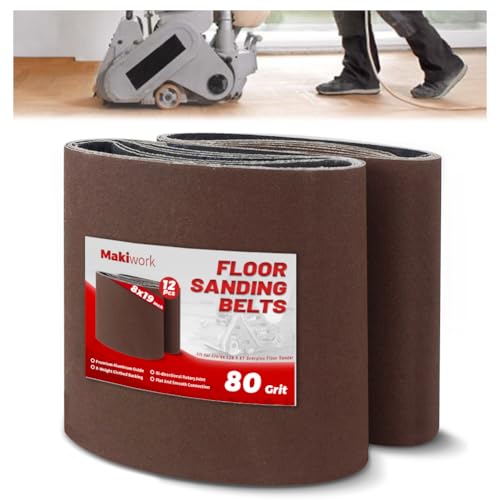
If you're working on woodworking projects or refinishing hardwood floors, having the right sanding belt makes a real difference. The Makiwork 8 x 19 inch 80 grit sanding belts come in a 12-pack, offering a practical solution for both DIY homeowners and professional contractors who need consistent material removal without frequent belt changes.
These belts are built with X-weight cloth backing and premium aluminum oxide particles. This combination means they can handle moderate to heavy sanding tasks, whether you're stripping old finish off a floor or shaping a piece of hardwood. The 80 grit is a versatile medium-coarse option, ideal for initial sanding passes or removing paint and varnish. For woodworkers, this grit works well for smoothing rough lumber, while contractors will appreciate its efficiency on job sites where time matters.
One of the standout features here is the seamless joint technology. Unlike traditional belts that can have a noticeable bump at the seam, these belts are designed to run smoothly in both directions. That translates to less vibration and a more consistent finish, which is especially important when working on large surfaces like flooring. It also helps extend the belt's life since there's no weak point that can catch or tear prematurely.
In terms of build quality, the aluminum oxide abrasive is a solid choice for general-purpose sanding. It's durable enough for metal grinding tasks too, so these belts aren't limited to just wood. The X-weight cloth backing adds flexibility while maintaining tear resistance, making them suitable for contour sanding on curved surfaces. Just keep in mind that 80 grit is on the coarser side, so you'll want to follow up with finer grits for a polished finish.
Storage is straightforward since the belts come in a simple pack. They're easy to grab and swap out as needed, and the 12-count means you won't run out mid-project. There's no carrying case included, but that's typical for bulk sanding belts. Maintenance is minimal - just store them in a dry place to prevent the adhesive from degrading.
If you're a garage user tackling a floor refinishing job or a woodworker who needs reliable belts for a drum sander, this set is a practical choice. The seamless joint and consistent grit make it a trustworthy option for achieving smooth results. While the brand may not have extensive reviews yet, the specs suggest good value for the price. For anyone needing a steady supply of 80 grit belts, this pack is worth considering.
Frequently Asked Questions
What grit sequence should I use for hardwood floor sanding?
A typical sequence starts with a coarse grit like 36 for initial removal, then moves to 60 for leveling, followed by 80, 100, and 120 for final smoothing. The Dechours assorted grit pack includes 40, 60, 80, 100, and 120 belts, which covers the main stages for most floor refinishing projects.
Can I use a handheld belt sander for hardwood floors?
Yes, a handheld belt sander like the Jellas 7Amp model can work for small areas or edges, but it is not a substitute for a drum sander on large open floors. The Jellas includes variable speed and a dust bag, making it useful for detailed work or as a bench sander when clamped to a table. For broad floor sections, a drum sander with 8×19 belts is more efficient.
What is the difference between aluminum oxide and silicon carbide abrasives for floors?
Aluminum oxide is common for wood sanding because it cuts steadily and lasts well. Silicon carbide is sharper and often used for final finishing or on harder surfaces like concrete. The Mercer silicon carbide roll and discs are designed for floor sanding and can also work on concrete. Both types are represented in this list.
Do I need a floor buffer or a drum sander for refinishing?
A drum sander is best for removing old finish and leveling wood. A floor buffer with sanding screens (like the HUAALIUCHE sheets) is used for screening between coats or light abrading. The Oreck Orbiter can also sand with appropriate pads, but it is more versatile for cleaning and polishing. Many projects use both types of machines.
How do I choose the right edger disc for floor sanding?
Edger discs are typically 7 inches with a center hole. The Mercer Industries 410100 discs use zirconia grain for long life and come in 100 grit. Match the grit to your sanding stage, and ensure the hole size (7/8 inch) fits your edger. For heavy material removal, start with coarser grits like 24 or 36, available in the same series.
Can I connect a shop vacuum to these sanders?
The Jellas belt sander includes a 2-in-1 vacuum adapter (35mm and 32mm), so you can connect a standard shop vac. For drum sanders and floor machines, dust collection usually requires a dedicated floor sander vacuum or a dust collection system. The Oreck Orbiter has a brush head design that minimizes dust, but it does not have a standard dust port. Check your machine’s compatibility before purchasing.
What size sanding belts do I need for a drum sander?
Most drum sanders use 8×19 inch belts. The Dechours and makiwork belts in this list are specifically sized for EZ-8 style drum sanders. Always verify your machine’s belt size and whether it uses continuous-loop expanding drums. The makiwork belts feature a seamless joint for smoother operation.




Write Your Review
No reviews yet. Be the first to share your experience!