


Sanding joint compound often creates a fine dust that settles everywhere, making cleanup a chore and adding extra prep time before painting. Choosing the right Best Sander For Joint Compound can help you achieve a smooth finish while keeping the workspace cleaner and reducing the effort involved. Options range from wet sanding sponges that trap dust with water to drywall screens that work with a vacuum, plus pole sander heads for overhead work and hand sanders for corners.
Each product type addresses a different part of the job. Sponges and hand sanders give you direct control for small patches and edges, while pole-mounted heads let you reach ceilings and upper walls without a ladder. Abrasive screens with open mesh resist clogging and can be rinsed clean for repeated use. If you are looking for related tools, check out our guide on drum sanders for woodworking or miter saws for finish carpentry.
Top Products
Pros
- Effective dust suppression during wet sanding for a healthier work environment
- Reusable design offers long-term value and less waste
- Dual grit surfaces handle both rough and fine finishing tasks
Cons
- Only suitable for wet sanding, not for dry sanding applications
- Limited to drywall compound and similar materials; not designed for wood or metal
- No customer reviews yet to confirm long-term durability and performance
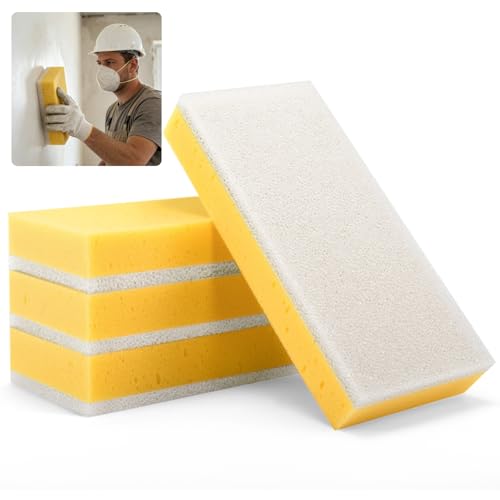
The FKBYM Drywall Wet Sanding Sponge is a 4-pack of washable, dual-sided sanding blocks designed specifically for wet sanding drywall compound, spackle, and plaster. Unlike traditional sandpaper, this sponge uses water to trap dust, creating a nearly dustless sanding experience. It is best suited for drywall professionals, painters, and DIY homeowners who regularly finish sheetrock seams and want to minimize airborne dust.
The dustless wet sanding feature is the standout benefit. By wetting the sponge before use, the sanding action captures fine particles in the water, keeping them out of the air and off surrounding surfaces. The product description lists this as a true dustless sander sponge, making it a practical choice for indoor finishing work where cleanliness is a priority.
Each sponge measures 9 by 3.15 by 1.38 inches, offering a comfortable grip for hand sanding. The dual-sided design provides a coarse grit surface on one side and a fine grit on the other, allowing you to switch between rough shaping and final smoothing without changing tools. The high-density sponge material is described as balancing flexibility and longevity, suitable for repeated use.
One of the key advantages is that the sponge is washable and reusable. After sanding, you can rinse it clean under running water and use it again. The 4-pack gives you multiple sponges on hand for larger projects or for having different grit pairs ready. This reusable approach reduces waste compared to throwaway sandpaper sheets and can save money over time.
A realistic limitation is that this sponge is intended only for wet sanding. It will not perform well in dry sanding applications, and it is not designed for wood, metal, or painted surfaces. The product data does not specify the exact grit ratings, so users may need to test the coarse and fine sides to gauge their aggressiveness. Additionally, the product has no customer reviews yet, so long-term durability feedback is unavailable.
Overall, the FKBYM Drywall Wet Sanding Sponge is a practical, economical choice for anyone who finishes drywall regularly. If you want a cleaner, less dusty sanding process and a reusable tool that outlasts sandpaper, this 4-pack is worth considering. It is especially useful for jobsite finishing and home remodeling projects where dust control matters.

Pros
- Dual grits provide both removal and smoothing in one tool
- Flexible foam conforms to curved and irregular shapes
- Reusable after rinsing, offering good value for light to moderate sanding
- Can be used wet or dry for different applications
- Won't leave color residue on the work surface
Cons
- Not as fast or aggressive as a power sander for large flat areas
- Size may be small for covering large drywall surfaces quickly
- Exact grit numbers are not specified, so users must rely on feel
The 3M Drywall Sanding Sponge is a hand sanding tool designed for moderate sanding and smoothing of joint compounds, as well as wood, metal, and plastic. It comes in a black foam block measuring 4-7/8 inches by 2-7/8 inches, with fine and medium grits on opposite sides. This dual-grit approach allows you to start with the medium side to remove material or imperfections, then switch to the fine side for a smoother finish without changing tools.
This sponge is best suited for DIY homeowners, drywall professionals, and remodelers who need to sand contoured surfaces, corners, or tight areas where a power sander might be too bulky. The flexible foam conforms to curves and flat surfaces alike, making it useful for finishing drywall seams, smoothing wood trim, or preparing metal and plastic for paint. Because it can be used wet or dry, you can minimize dust by dampening the sponge, which is a practical advantage in finished spaces.
In everyday use, the block shape provides a comfortable grip, and the sponge is lightweight at just over 0.07 pounds. The mineral color of the foam is designed not to transfer onto the work surface, so you won't see discoloration on your project. After use, you can rinse the sponge to remove sanding residue, extending its life through multiple sessions. This makes it a cost-effective option for light to moderate sanding tasks.
However, it's important to note that this is a manual sanding tool, not a power sander. It will not remove material as quickly as a power tool, and for large, flat drywall areas, a pole sander or power sander may be more efficient. The sponge's size is compact, so covering large surfaces requires more strokes. Additionally, the exact grit rating is not specified on the product data, so you may need to test the sponge on a scrap piece to gauge its aggressiveness.
Overall, the 3M Drywall Sanding Sponge is a practical addition to any sanding kit for detail work, touch-ups, and contoured surfaces. It is especially useful for drywall finishing and surface preparation in small projects or for pros who need a reliable hand sanding option. If you value versatility and reusability in a hand sanding tool, this sponge is a solid choice for American DIYers and tradespeople alike.

Pros
- Reusable design saves money and reduces waste compared to disposable sandpaper
- Wet/dry capability allows use with water to minimize dust and clogging
- Universal compatibility with many hand and pole sanders adds convenience
Cons
- Only available in 120 grit, which may limit its use for rough sanding or fine finishing
- Compatibility with sanders other than the Tools 09165 is not guaranteed by the manufacturer
- Lacks customer reviews, making real-world performance difficult to assess
These MAOKLA drywall sanding screens are a practical accessory for anyone finishing drywall. They come as a 15-pack of 120-grit screens, each measuring 4-3/16 by 11-1/4 inches, designed to fit the Tools 09165 Dust-Free Vacuum Hand Sander. The manufacturer also states they are compatible with most standard hand sanders and pole sanders, making them a flexible option for different sanding setups.
For drywall finishers and DIYers, the main benefit is the dust-free sanding capability. The screens connect directly to a wet/dry vacuum, which captures dust at the source. This can lead to a cleaner work environment and less cleanup time. The screens are also reusable; you can rinse them with water to clear debris and reuse them multiple times, which adds value over disposable sandpaper.
These screens are intended for sanding joint compound, spackle, and patching plaster. The 120 grit is a medium grit suitable for smoothing dried compound before priming. The screens can be used dry or wet, giving you the option to wet sand to reduce dust further. The material is described as durable and abrasion-resistant, which should hold up to multiple uses.
One limitation is that the product is only available in 120 grit. If you need a coarser grit for initial shaping or a finer grit for final finish, you would need to look elsewhere. Also, while the manufacturer claims compatibility with most hand and pole sanders, this is not a guarantee, so you may want to verify fit with your specific tool. The product has no customer reviews yet, so real-world feedback on durability and performance is not available.
For a drywall finisher or a homeowner tackling a drywall project, these screens offer a convenient, reusable sanding solution. The dust collection feature is a clear advantage for maintaining a cleaner workspace. Just be aware of the single grit option and check compatibility with your sander before purchasing.

Pros
- Quick hook and loop disc changes save time
- Large 9-inch sanding area increases productivity
- Tapered edge helps avoid gouging and swirl marks
- Compatible with standard 9-inch hook and loop discs and poles
- Low-profile design for overhead sanding comfort
Cons
- Requires a separate drywall pole sander handle (not included)
- Compatibility with all pole sander brands is not confirmed
- No sanding discs are included with the head
This Gator 6459GA is a replacement sanding head for drywall pole sanders, not a complete power sander. It is designed for drywall finishers, painters, and remodelers who frequently sand ceilings and walls. The head uses a hook and loop system to attach 9-inch sanding discs, and its large diameter helps cover more area quickly.
The 9-inch sanding surface speeds up drywall finishing by reducing the number of passes needed. The tapered edge allows you to sand right up to corners and edges without flipping the head, which helps maintain consistent contact and avoid gouging. The hook and loop attachment makes disc changes fast and simple, letting you switch grits without tools.
This head attaches to most standard drywall pole sander handles, though the supplied data does not confirm compatibility with all brands. Its low-profile design keeps the head close to the wall, improving control and reducing fatigue during overhead work. The head works with any 9-inch hook and loop sanding discs, offering flexibility in grit selection.
A key limitation is that the head requires a separate pole handle and sanding discs, which are not included. Additionally, since no pole is provided, you must ensure the head fits your existing handle. The head itself does not include any dust collection features, so you may need to manage dust separately with a vacuum attachment or dust mask.
Overall, this sanding head is a practical upgrade for professionals who need a large, fast-working sanding surface for drywall finishing. It is best suited for contractors and serious DIYers who already have a compatible pole sander and want to replace a worn head or switch to a hook and loop system. For occasional home use, a complete pole sander kit might be a more convenient option.

Pros
- Open mesh resists clogging for longer sanding life
- Can be rinsed and reused, extending usability
- Double-sided for efficient use of each sheet
- Fits most standard hand and pole sanders
- Good value with 12 sheets per pack
Cons
- Only available in 60 grit, limiting use to medium sanding tasks
- May not be compatible with all sanders; verify fit before purchase
- Not designed for heavy material removal on wood or metal surfaces
These SCOTTCHEN drywall sanding screen mesh sheets are a practical accessory for anyone finishing drywall. Each sheet measures 4-3/16 by 11-1/4 inches, a common size that fits most hand sanders and pole sanders used in wall and ceiling work. The open mesh design is a key feature, as it resists clogging when sanding joint compound or patching plaster, allowing the abrasive to stay effective longer than traditional sandpaper.
The double-sided construction means you can use both sides of the sheet before replacing it, which extends the life of each piece. These sheets can be used dry or wet, and the manufacturer states they can be rinsed and reused. This makes them a cost-effective option for drywall finishers who go through a lot of abrasives. The black color helps you see when the mesh is loaded with dust.
At 60 grit, these are a medium-grade abrasive, suitable for smoothing dried joint compound and removing small imperfections. They are not intended for heavy stock removal on wood or metal, but rather for the final finishing stages of drywall work. The 12-sheet pack gives you a decent supply for a typical room or two.
One limitation is the single grit option. If you need a finer or coarser abrasive for different stages of drywall finishing, you would need to look elsewhere. Additionally, while the sheets fit most hand sanders, it is always wise to check the dimensions of your tool to ensure a proper fit. Some users may prefer a different hole pattern for better dust collection.
Overall, these SCOTTCHEN sanding screen mesh sheets are a solid choice for DIYers and professionals working on drywall. They offer good resistance to clogging, can be reused, and come in a convenient size. If you are finishing joint compound and want a reliable, reusable abrasive, these sheets are worth considering.

Pros
- Convenient ready-to-use formula eliminates mixing steps
- Trusted brand quality from US Gypsum
- Compact quart size ideal for small-scale projects
- Off-white color matches standard drywall surfaces
Cons
- Small 1.75-quart size may not be enough for large drywall jobs
- Limited to off-white color only; not available in other tints
The U S GYPSUM 380270 Ready-To-Use Joint Compound is a pre-mixed drywall compound designed for taping, bedding, and finishing drywall joints. It comes in a 1.75-quart container, making it a practical choice for small repair projects, touch-ups, or patch jobs around the home. This product is best suited for DIY homeowners, painters, or remodelers who need a small amount of joint compound without the hassle of mixing powder.
As a ready-to-use formula, it can be applied directly from the container to drywall seams, nail holes, or minor cracks. The off-white color blends naturally with most painted drywall surfaces, reducing the need for heavy priming. The compound is designed to be sanded once dry, allowing for a smooth, professional-looking finish. For best results, apply thin layers and allow adequate drying time between coats.
Given its size, this quart is ideal for small-scale tasks such as fixing a single hole, repairing a corner, or finishing a small patch. It may not be sufficient for large rooms or multiple joints, where a larger bucket of compound would be more practical. The brand, US Gypsum, is well-known in the drywall industry for quality finishing materials, adding confidence in the product's performance.
One limitation is that the compound is only available in off-white, which is standard for most drywall work. Additionally, the small container size means it may not be the most economical choice for larger projects, but it offers convenience for those who only need a small amount. Overall, this joint compound is a practical option for homeowners and DIYers tackling minor wall repairs who want a ready-to-use solution.

Pros
- Lightweight for easier handling and less dust
- Offers a range of setting times to match project needs
- Manufactured in the USA
Cons
- Only 4 pounds – may not be enough for larger drywall jobs
- Setting time selection must be mixed carefully to achieve desired working window
The Sheetrock Lightweight Joint Compound is a setting-type drywall compound designed for small-scale repairs and finishing work. According to the product specifications, it is produced in the United States and comes in a 4-pound package. The features list multiple setting time options, including 8-12 minutes, 20-30 minutes, 30-60 minutes, and 60-120 minutes, giving you flexibility depending on how quickly you need the compound to harden.
This compound is best suited for DIY homeowners, painters, and drywall professionals tackling small patch jobs or touch-ups. Its lightweight formula helps reduce sagging on vertical surfaces, making application smoother. The 4-pound size is convenient for carrying to the jobsite or storing in a workshop, but it is not intended for covering large areas.
Once set, the compound is designed to be sandable, which is critical for achieving a smooth finish before painting. The stated sanding time of 85 to 130 minutes in the product title suggests an optimal window for sanding after mixing, though you should always test the surface firmness before sanding. Being a setting compound, it hardens chemically rather than by evaporation, so it can be recoated sooner than drying-type compounds.
A key limitation is the small quantity: 4 pounds may only cover a few small holes or seams. For larger drywall projects, you would need multiple units or a larger bucket. Additionally, the multiple setting time options imply that you need to select the right mix for your working speed; if you choose a very fast set, you must work quickly.
Overall, this lightweight joint compound is a practical choice for minor drywall repairs where a quick, sandable finish is desired. Its made-in-USA origin and flexible setting times add value. For anyone patching nail pops, small cracks, or screw dimples, this product deserves consideration.

Pros
- Block shape improves access to tight spaces and edges
- Aggressive aluminum oxide abrasive handles tough materials
- Works for wet or dry sanding without issues
Cons
- Fine grit may not be suitable for heavy material removal or rough surfaces
- Lack of specific grit rating makes it hard to match exact sanding needs
- May wear faster than sandpaper on prolonged use
The ALLWAY ASB-F Fine Grit Angled Sanding Sponge is a hand sanding block designed for moderate sanding tasks. It is not a power sander but a manual abrasive tool that combines a foam core with an aluminum oxide coating. The product description highlights its use for smoothing joint compounds and other surfaces, making it a practical choice for drywall finishing, touch-up work, and small refinishing projects.
This sanding sponge is best suited for DIY homeowners, painters, and remodelers who need to smooth out joint compound, spackle, or paint between coats. Its block shape is specifically angled to help reach corners, crevices, and contoured surfaces where a standard sanding block might struggle. The resilient foam core provides consistent pressure distribution and helps the sponge hold its shape during repeated use.
The aluminum oxide abrasive coating is described as aggressive, which suggests it can cut through tough materials like dried joint compound or paint. However, the grit is listed as fine, so it is best for final smoothing rather than heavy stock removal. Users who need to take down large amounts of material may want a coarser option. The sponge is also suitable for wet or dry sanding, which adds flexibility for different applications.
At 3.5 x 5 x 1 inches, the sponge is compact and easy to handle. The fine grit may load up quickly when sanding soft materials, but the wet sanding capability can help reduce clogging. Since the product comes without additional accessories or spare sponges, it is a basic, single-use item. The supplied data does not specify the exact grit number, so buyers should rely on the fine description for their expected finish.
One limitation is that the product is a manual sanding sponge, not a power tool, so it requires physical effort and time for larger areas. It is also not designed for high-volume production work. For occasional use around the home or on small jobs, this sponge offers a convenient and affordable way to achieve a smooth surface.
Overall, the ALLWAY ASB-F Fine Grit Angled Sanding Sponge is a practical choice for light to moderate sanding tasks, especially in tight spots. It is recommended for homeowners and DIYers who need a simple, effective tool for smoothing joint compound or touch-up sanding. For heavy-duty sanding or professional production, a power sander or coarser abrasive would be more appropriate.

Pros
- No-flip design prevents corner scuffing and saves time
- Quick-change system allows fast abrasive changes
- Made in USA with quality materials from a family-owned company
- Covers more surface area, reducing sanding time
Cons
- Requires a separate drywall sanding pole, which is not included
- The provided data does not specify the type of sandpaper or pad attachment beyond the quick-change system
- As a newly listed product, there are no customer reviews to verify performance claims
The Trim-Tex Black Widow #540 Pro Drywall Sander Head is a purpose-built attachment for drywall finishing, designed to be used with a compatible sanding pole. Unlike a complete power sander, this head focuses on manual sanding efficiency, making it a targeted tool for professionals who spend hours on walls and ceilings.
According to the product description, the Black Widow head covers more surface area than standard designs, which can reduce sanding time on large flat areas. The standout feature is its no-flip design, which eliminates hard edges that typically scuff inside corners. This allows the user to sand right up to a corner without marking the adjacent wall, a common frustration in drywall work.
The quick-change system is another time-saver, letting you swap sanding pads without tools or hassle. For professionals who need to switch grits frequently between coats, this can make a real difference in workflow. The head is proudly made in the USA by a family-owned company, which suggests attention to quality and durability.
That said, the Black Widow is a head only, so you will need a separate drywall sanding pole to use it. The supplied data does not detail the specific abrasive attachment method beyond the quick-change system, so you may want to verify compatibility with your preferred sandpaper or pads. Also, as a relatively new product, there are no customer reviews yet to confirm long-term performance.
This setup appears best suited to drywall professionals and serious remodelers who want a reliable, USA-made head that speeds up corner sanding and reduces fatigue. For DIY homeowners doing occasional drywall patches, the investment may be harder to justify unless they already own a compatible pole. Overall, the Trim-Tex Black Widow #540 offers smart design choices for those who sand drywall regularly.

Pros
- Long 81-inch pole extends reach for ceilings and high walls.
- Swivel head provides flexibility for sanding corners and edges.
- Includes multiple grit discs for various stages of finishing.
- Low weight helps reduce arm fatigue.
Cons
- Manual operation requires physical effort; no power assist.
- No dust collection system included; sanding creates airborne dust.
- Only 15 discs provided; may need additional for larger projects.
This product is a manual drywall pole sander kit, not a power tool. It consists of a 9-inch sanding head attached to an 81-inch extension pole. Designed for drywall finishing, ceiling sanding, and stucco preparation, it is best for DIY homeowners and drywall finishers who need extra reach without the cost of a power sander.
The 360-degree swivel head allows sanding in any direction, helping to achieve a uniform finish on walls and ceilings. The 9-inch head covers substantial area, making it efficient for large surfaces. The included sanding discs are made from aluminum oxide with a flocked back for secure adhesion.
Setup is straightforward - attach the disc to the head using the adhesive backing. The extension pole is made of stainless steel, providing durability. The lightweight construction (about 2.2 pounds) reduces strain during overhead work. No power source needed, so it is ready to use anywhere.
The kit includes 15 discs in 5 grits, allowing progression from coarse to fine sanding. However, for larger projects, additional discs will be needed. There is no integrated dust collection, so a mask and drop cloths are recommended.
Limitations include the manual effort required - it is hand-powered, so arm fatigue can set in during lengthy jobs. Also, without dust collection, the work area can become messy. The pole is long, which is great for reach but may be unwieldy in tight spaces.
Overall, this is a practical, budget-friendly option for occasional drywall sanding and ceiling work. It suits DIYers and professionals who want a reliable manual tool for finishing tasks. For heavy-duty or frequent use, a powered drywall sander might be a better investment.
Frequently Asked Questions
What is the best type of sander for joint compound?
The best type depends on the area you need to sand. For small patches and corners, a dual-grit wet sanding sponge like the FKBYM Drywall Wet Sanding Sponge gives you control and reduces dust. For large flat walls or ceilings, a pole sander head that accepts hook-and-loop discs helps cover more surface quickly.
Can I use a drywall sanding screen with any hand sander?
Many drywall sanding screens are designed to fit standard hand sanders and pole sanders. The MAOKLA 15-Pack screens are pre-cut at 4-3/16 by 11-1/4 inches, which matches most common sanding blocks. Checking your sander’s dimensions before buying ensures a proper fit.
How does wet sanding help when finishing joint compound?
Wet sanding uses water to lubricate the abrasion and trap dust particles, reducing airborne dust significantly. Sponges like the FKBYM Drywall Wet Sanding Sponge are designed for this method and can be rinsed clean after each use. It also helps produce a smoother finish with fewer scratches.
What grit should I use for sanding joint compound?
For joint compound, start with a medium grit (around 120) to remove ridges and high spots, then switch to a fine grit (around 220) for a smooth final surface. Many products like the 3M Drywall Sanding Sponge offer dual grits in one sponge, handling both steps without changing tools.
Are pole sander heads compatible with most extension poles?
Most pole sander heads use a standard threaded connection that fits common extension poles. The Gator 6459GA head, for example, is designed for 9-inch hook-and-loop discs and attaches to standard poles. Check the head’s connection type to confirm compatibility with your pole.
How do I clean and reuse drywall sanding screens?
Mesh screens can be rinsed with water to remove compound dust and debris. After rinsing, let them dry before next use. Both the MAOKLA and SCOTTCHEN screens are made from durable mesh material that holds up to multiple cleanings, making them more economical than disposable sandpaper.
Can I use a wet sanding sponge on drywall without water?
You can use a wet sanding sponge dry, but you will lose the dust-trapping benefit. The sponge is still abrasive and will sand joint compound effectively. However, dry use produces more airborne dust, so wearing a mask is recommended. The product is labeled suitable for wet or dry sanding.




Write Your Review
No reviews yet. Be the first to share your experience!